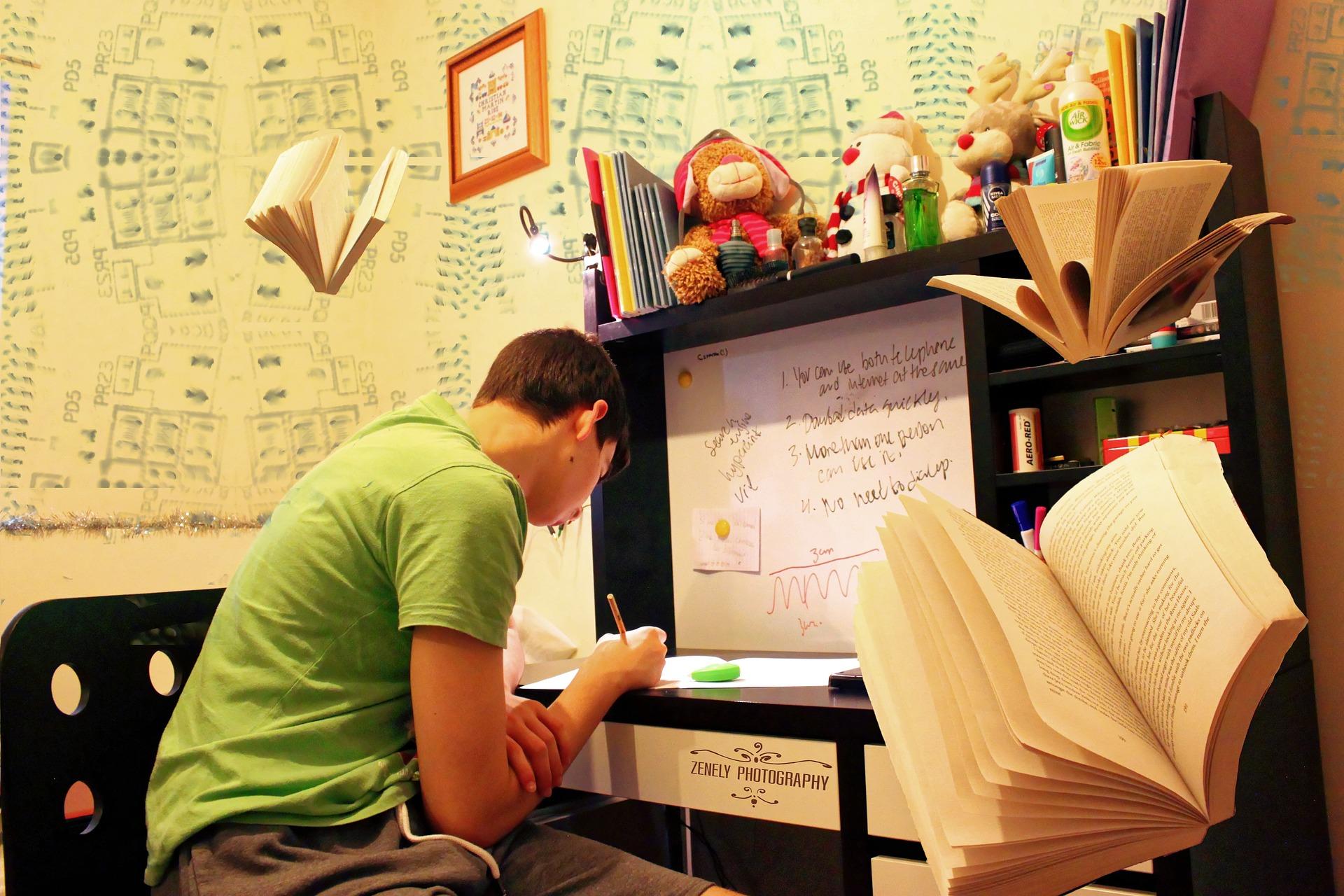

Decades ago, parents didn't have to worry about their children's educational options. At around 11 years old, every student in English schools submitted to a battery of exams to determine their future. That 11-Plus exam would decide which learning path students were best suited for.
Some learners completed their secondary education in a technical learning facility and moved on to a career in the trades. Others attended a secondary modern school for work in sales and middle management jobs. Students with the highest marks completed their compulsory education in one of the country's elite grammar schools.
This 'Tripartite' system has long been dismantled but across England, 163 top-tier grammar schools remain. So does the 11 Plus exam, but it is no longer mandatory. Instead, it serves as an entrance exam to these elite schools.
In bygone days, pupils' educational paths were decided for them. Today, learners choose their future careers on their own. They select the subjects they want to study for their General Certificate of Secondary Education (GCSE) and beyond.
Caregivers are more involved in their children's educational choices under the current system. Some even aim for their child to attend a college, independent school or one of England's prestigious grammar schools.
Indeed, you might have started your search for your 11-plus child's best educational opportunities. As you consider a grammar school education, you should know the steps involved for your child to qualify for entry.
You'll search for schools with the learning programs you want and attend Open Day. Then, you'll discover what that campus' admission requirements are. You'll also learn about entrance exam requirements.
In this article, Superprof explains the 11 Plus exam syllabus, though that's an inexact proposal. Each school sets its own admission policies and chooses its exam components. Still, some 11 Plus exam features across the board. So we detail exam particulars, including:
- what to expect on the Maths 11 Plus exam
- how to prepare for the 11 Plus English paper
- what to know about 11 Plus non verbal reasoning
- practice exercises for the 11 Plus verbal reasoning paper
You may already know that only the Maths and English components are standard for every school. Some grammar schools also administer one or both reasoning exams; others don't feature either of them.
Still, those papers test valuable skills. You may want to help your child build them whether they need them for an exam or not. In that spirit, we present tips, tricks and strategies for exam success in all four components.



What Is the 11 Plus Exam English Paper?

Reading from as many sources as possible is the key to success on the 11 Plus exam English component. This paper tests your child's reading comprehension skills. It also features lots of spelling, grammar and punctuation (SPAG) questions. However, they too depend on your child's ability to understand what they read. (Photo by Getty via Unsplash)
The reading comprehension section features a lengthy passage, roughly 2 A4 sides. This text might be fiction or non-fiction, poetry or prose. Students must first read this passage and then, answer around 20 questions.
These questions measure your child's literal understanding of written English, as well as their ability to deduce information. They will demonstrate how well they understand English vocabulary in context. They will also prove they can infer detect and interpret nuance and implied meaning.
The SPAG portion is slightly longer. This paper contains three SPAG sections, each with about a dozen questions. They typically revolve around two tasks: spotting mistakes and completing sentences. Your chosen school may opt for 24 'complete the sentence' challenges and 12 'spot the mistake' or vice versa.
Every grammar school administers the 11 Plus English exam. However, only a handful of them include a creative writing task. For this paper, your child will receive a prompt and between 30-45 minutes to write about it. That time is on top of the 50 minutes allotted for the English paper.
11 Plus Curriculum for Maths 11 Plus
Like the 11 Plus English exam, 11 Plus Maths tests your child on Key Stage 2 (KS2) curriculum topics. That adds a new dimension to the 11 Plus challenge as your child will sit this exam before learning KS2 material. That doesn't mean that all is lost. With practice and revision, they can score well in both subjects. (Photo by Getty via Unsplash)

The Maths 11 Plus tests your child in two competencies: numerical reasoning and number fluency. As a young student, your child might not have worked too many word problems in their maths classes. Those are exactly what numerical reasoning is. In a nutshell, these types of problems entail converting word problems into mathematical values.
Numerical reasoning includes interpreting data and graphs. Your child must first understand what the question asks, and then arrive at their answer. Maths questions are all in multiple-choice format; they will have to select the correct answer from those choices.
Number fluency means working with numbers efficiently. For this portion of the exam, knowing basic maths facts is essential for high marks. Those facts include multiplication tables, order of operations, and working with decimals and seven-digit numbers.
Though number fluency and numerical reasoning are two main skills under test, your child needs to know about more advanced maths concepts. Those include ratios and proportions, algebra and geometry, and measurement. They must also answer questions involving data analysis.
The Maths 11 Plus paper typically presents 50 questions; your student will have 50 minutes to complete it. They should count on the number fluency questions outnumbering the numerical reasoning question 5-1. As much of this paper is on material your child hasn't yet studied in school, Maths should take priority in your revision planning.
What is the 11 Plus Non Verbal Reasoning Exam?

Most people assume that non-verbal reasoning must mean communicating without any words. In general terms, they are correct. However, the 11 Plus non verbal reasoning paper does not involve communication. It tests your child's problem-solving skills using only visual information. (Photo by George Dagerotip via Unsplash)
The 11 Plus non verbal paper targets your child's ability to recognise patterns and think logically. It tests their spatial and other cognitive skills essential for STEM subject studies. STEM is an acronym for Science, Technology, Engineering and Maths.
This paper presents what look likes doodles, shapes and geometric forms. Some questions ask your child to visualise the next shape in the sequence. Others require them to find the 'odd one out'. Still others challenge your child to group shapes according to common features.
These types of exercises take a lot of practice to master. They aren't standard academic questions like Maths and English papers pose. Indeed, these types of questions feature on intelligence quotient (IQ) exams; they don't test intellectual knowledge. Your child must build different cognitive skills to succeed on this exam.
Playing with building blocks and Legos, and even playing video games helps build visualisation skills. Beyond those, your child should also develop critical thinking skills and build their logic
Your school may include the non verbal reasoning paper in their 11 Plus assessment. This exam typically comprises 80 questions grouped into four segments of 20 questions apiece. Note that each section is timed. Your child must wait for the invigilator to announce the start of each section.
11 Plus Curriculum for Verbal Reasoning
Just as people believe non-verbal reasoning must be some form of sign language, verbal reasoning must be about building arguments. In the mainstream sense, they are right. However, when it comes to the 11 Plus exams, they must apply that term's second definition. (Photo by Getty via Unsplash)

Verbal's second definition is 'pertaining to words'. That gives us our biggest hint of what this exam tests. Your child's vocabulary and ability to use and manipulate words are the focus of this exam.
All the reading your child should do to prepare for the 11 Plus English paper will help them grow their vocabulary. That won't be enough for success on this paper. They should also master words' synonyms, antonyms and homonyms. Going further, they need to know number, letter and symbol codes.
Logic, problem-solving and critical thinking play as large a role in this exam as they do in the non-verbal reasoning paper. Your child must spot and follow patterns and make deductions based on given information.
Like its non-verbal counterpart, this paper presents 80 questions; students have 60 minutes to answer them. That's less than a minute per question so your child will have to build their word skills before exam day. Word games like anagrams, word jumbles and crossword puzzles are a fun way to do so.
Whether or not your school presents the 11 Plus verbal exam, your child will need guidance and support as they revise. You can find 11 Plus practice papers online and manage exam revision yourself. Better yet, you should engage a private tutor who specialises in all aspects of 11 Plus preparation. Your tutor can tackle the skills-building work while you provide encouragement and support.
Summarise with AI:
Did you like this article? Leave a rating!

 Loading...