
London is a global city, one people from around the world visit, study, work and live. As such, you're likely to hear a range of accents as you amble around, from Chinese and Indian English speakers to American English. However, distilling London accents to only those native speakers talk in, four speech patterns emerge.
What Accent Do London People Have?
- The Cockney accent historically defines the working class
- Estuary English forms a bridge between Cockney and 'the posh accent'
- Received Pronunciation (RP) is 'the posh accent', considered the standard British accent
- Multicultural London English: words, phrases, and intonation influenced by ethnic-minority, working-class youths


🌆An Overview of London Accents
The London metropolitan area counts a population of more than 15 million (2025 count). Nearly half of the people who call our capital city home were born in another country. They took all the proper steps to earn their right to live here: filing paperwork, proving financial stability, and learning the English language.

However, their native languages' speech patterns - tone and inflection, syntax and grammar, overlay their use of English vocabulary.
For instance, a French native speaker in London might not stress English words properly because that's not a feature of the French language. Or, they might rely on French word order rules instead of English ones, making what they say hard to understand.
French native speakers are just over one per cent of the London population; you can see where not being understood could be a problem.
Irish native speakers have the same difficulties; the Irish intonation and speech patterns are very different from 'standard' English (Irish make up 1.1% of London's population).
With over 40% of London's population from different countries, the range of accents is infinite.
However, if we apply the "What accent do London people have?" question to just the native population, the answer is far smaller. Just four accents dominate the London linguistic landscape.
Particular to East End London
Traditionally the speech of the working class Slang rhyming phrases
A relatively modern accent
Takes aspects of Cockney and RP
Considered the 'mainstream' accent
London's newest standard accent.
Has words and features from other languages.
Borrows from Cockney and RP.
Called 'BBC English' or 'the Queen's English'
Historically tied to the upper classes
Taught the world over
Just as you'll find no universal Scottish accent as you ramble from Glasgow to Aberdeen, you'll hear no unifying British London accent across London. Instead, treat your ear to a melting pot of tones and sounds as you travel through the city. But listen for these four distinctive ways of speaking.
🥚Cockney: the Workingman's Accent from London
We could go on and on about this London accent's particulars to impress upon you how distinctive Cockney is. However, introducing this speech pattern with a film clip will be far more effective. As a bonus, the film My Fair Lady positions Cockney opposite of RP to highlight how dramatic the contrast is.
Notably, Ms Hepburn faced much criticism for her role as Eliza Doolittle. Not for her Cockney accent, but because her playing a 21-year-old flower girl stretched the imagination too far. By contrast, she gained much praise for her Cockney accent and transformation into a refined, high-class English speaker.
Features of the Cockney Accent
Some might consider the Cockney accent rude and unpolished. In fact, it's a clever language style that challenges the intellect of speakers and listeners alike. Nowhere is that more obvious than in its rhyming slang.
| 🥇Original rhyme | ⌛Derived slang word | 📖What it means How to use it |
|---|---|---|
| Adam and Eve | Adam and Eve | believe I'm all Adam and Eve about it! |
| Britney Spears | Britney | beer "Three more Britneys and I'll be fine" |
| butcher's hook | butcher | a look "Let's have a butcher, then" |
| Gregory Peck | Gregory | neck "Stop breathing down me Gregory!" |
| Hampstead Heath | Hampsteads | teeth "Clean yer Hamsteads before bed!" |
| mince pie | mince | eyes (typically minces) "Ain't ye a sight fer me minces" |
| loaf of bread | loaf | head "Use yer loaf fer once, will ye!" |
| plates of meat | plates | feet "I don't care where yer plate's ha'been, get'em off me sofa!" |
| tomfoolery | tom | jewellery "No matter how much they got, wimmin always want more tom!" |
| trouble and strife | trouble | wife "Get away! I got me trouble at 'ome." |
| Turkish bath | Turkish | laugh "We had us a good Turkish that night!" |
| whistle and flute | whistle | suit "Well, inn't ee sharp in his whistle!" |
Otherwise, the Cockney accent follows British English language conventions, much as the Welsh English accent does.
How the Cockney Accent Came to Be
Cockney English has been around for a very long time, but its first recorded use came in 1362. Like the London accents that emerged later, Cockney drew on other languages to shape itself.
Initially, the term 'cockney' described city-dwelling dandies. The word comes from Middle English, originally meaning: "small, misshapen egg". Hardworking rural people called such 'effeminate fellows' coken-ey. Over time, the word Cockney (and the people it describes) became associated with London.
🤵Estuary English: the British London Accent Bridge
Estuary English (EE) describes the sliding range of London accents. It stretches from just under RP to just above full-on Cockney, folding in elements of both. Essentially, EE forms a bridge between the two London accent extremes.
We needn't look any further than Ricky Gervais for a prime example of the EE accent. Besides, he's everywhere; we can't help but look at him! 🥰
As Ricky describes his aunt, you will likely pick up traces of the Mancunian way of speaking in his 'big-mouth' vowel sounds. You'll surely hear his dropped his /h/-sound, a hint of Irish patter, and a touch of RP. All of these are hallmarks of the EE London accent.
👑Received Pronunciation: the Posh London Accent
Of all the accents one hears across Britain, RP stands for the class, quality, and value of a person. Why an accent should stand for such is a mystery 😤, but so it has been across societies, since recorded history.
RP has a far longer history than most people give it credit for. The generally-accepted date for RP's emergence is around the 1900s. However, evidence exists that people aimed to speak this way since around the 1500s. In fact, the City of London established a type of Standard English in the late 1400s.
As you might guess, RP took a very long time to catch on. Trouble was, this accent based itself on the intellectual speech patterns of Oxford, Cambridge, Eton, and Harrow schools.
The average Briton didn't have the money or social clout to gain acceptance there, so they likely saw no point in talking as if they did.
Alternate definitions of 'received' include 'understood' and 'accepted'.
'Received wisdom' is wisdom that's widely accepted, such as parables, for example.
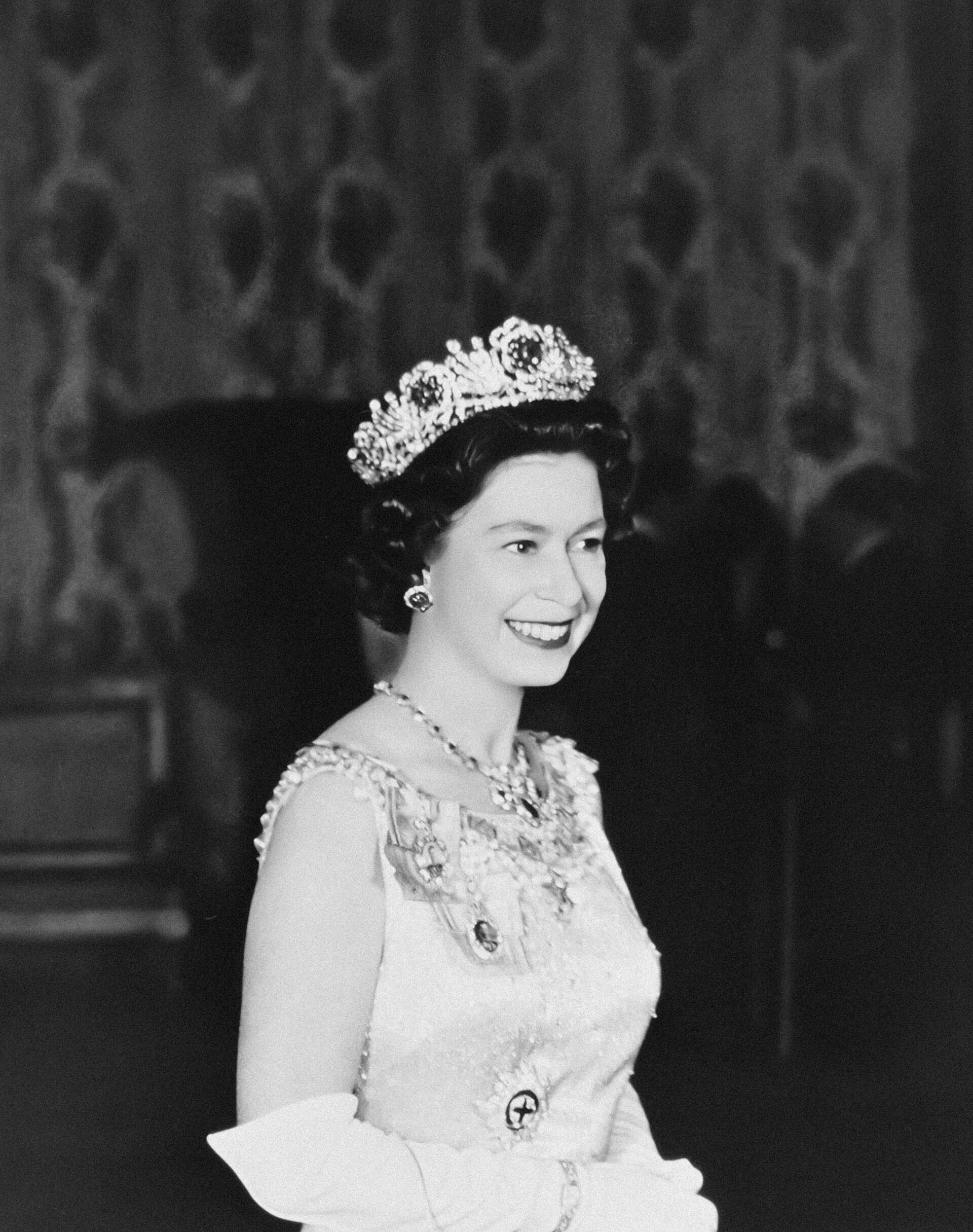
RP came into its own in 1922, when the BBC declared it its official language. Since then, various groups have tried to change RP's name to BBC English so that people wouldn't feel like those presenters were talking down to them. Those efforts came to nothing, especially after Queen Victoria II entered public service.
All attempts to relieve RP of its posh associations stopped with that broadcast. In fact, the trend reversed as RP gained a new name: the Queen's English. Here, you can discover what makes this accent so posh.
| 🔠Letter | 📏Rule | 👨🏫Example |
|---|---|---|
| /p/ /t/ /k/ /tʃ/ | A strong burst of breath if the letter is at the beginning of a syllable. Unless a completely unstressed vowel follows. | im-Passe versus com(p)ass. a-Tone versus pla(t)e a-Kacia versus (c)anard. |
| /m/ /n/ /ŋ/ | may become syllables if they appear in unstressed syllables | postmorteM(e) antimoN(e) |
| /l/ | Light (clear) sound if at the start of a word. Dark (guttural) sound elsewhere in the word, typically after a vowel. | light, love, laugh ball, call, pillow |
| /r/ | Drop it if it comes after a vowel but before a consonant. If a vowel follows it, pronounce it. Add /r/ to words that end with A | fork, firm, bard over, forest, worry idear, Mariar, banabar |
| /ɪ/ /ʊ/ /e/ /ʌ/ /æ/ /ɒ/ /ə/ | These are short vowels. Clip them as much as possible. | kit, rabbit cook, book dress, merry curry, strut marry, trap lot, orange ago, sofa |
| /iː/ /uː/ /ɛː/ /ɜː/ /ɔː/ /ɑː/ | These are long vowels. Give them extra emphasis | fleece, teeth goose, boot bear, hair furry, nurse force, thought father, start |
🔢Multicultural London English: The Modern English London Accent
We end our exploration with the latest London English accent. MLE grew out of every type of accent you might hear in London. It features vocabulary from other languages, tones from other regions across the UK, and traces of ethnic stylings. Its speakers are young and working-class, particularly from the multicultural parts of London, like this Chicken Connoisseur.
As he describes his food, you can clearly hear the glottal stops. Ts that make no sound ("I-h had a li-uh bi- o' hea-" for 'it had a little bit of heat'), and turning 'th' into 't' or 'd'. Like most British accents, /r/ is only minimally pronounced.
More than anything, you can hear the musical tones, so like those that make Caribbean speech patterns such a delight to listen to (at 2:22, for example).
That sing-song quality is far more pronounced than the lilt you hear in the Liverpool English accent. Otherwise, this young presenter blends the clipped vowel sounds characteristic of RP with the 'big-mouth' vowel pronunciations from Cockney. The first vowel, /a/ is pronounced either [eɪ] or [eː], depending on the word (and the speaker).
According to linguist Geoff Lindsay, /s/ and /z/ are hyper-pronounced. Listen for such in the vid.
For our money, the slang is the most remarkable aspect. "It's kinda peak!" sounds more relatable than "It's rather expensive!" and 'hench' describes the burger in one word. You also likely caught liberal uses of 'fam' throughout.
Take a moment to review these slang terms before you rewatch this vid or others in his catalogue. They are swear down peng, as my man says. 😎
| 📖Slang term | 🔍Word type | 🎯What it means |
|---|---|---|
| Blud | noun | friend, someone close (from blood) |
| Ends | noun | neighbourhood |
| Gyal Gyaldem | nouns | girl a group of girls |
| Roadman | noun | a street youth, ruffian, hooligan. |
| Wasteman | noun | a wastrel, a useless person |
| Allow (it/that) | verb | let an insult go; exercise restraint. |
| Chirpse | verb | flirt |
| Lips | verb | kiss someone on the mouth |
| Pattern | verb | fix something up fix yourself up get something done |
| Touch yard | verb | arrive home |
| Buff Leng Peng Piff | adjectives | something/someone attractive something good |
| Booky Bookey Bookie Buki | adjectives | suspicious, strange |
| Dead Bad Wet | adjectives | boring, empty, uncool |
| Butters Dutty | adjectives | ugly, disgusting dirty, ugly, bad |
| Gassed | adjective | happy, excited, high on oneself |
| Hench | adjective | physically fit, strong |
| Dun know | interjection | of course, you already know (from you done know) |
| Big man ting | interjection | seriously! |
| You man Youse lot | pronouns | plural 'you' |
| My guy my G | pronouns | friend or mate |
Summarise with AI:
Did you like this article? Leave a rating!

 Loading...