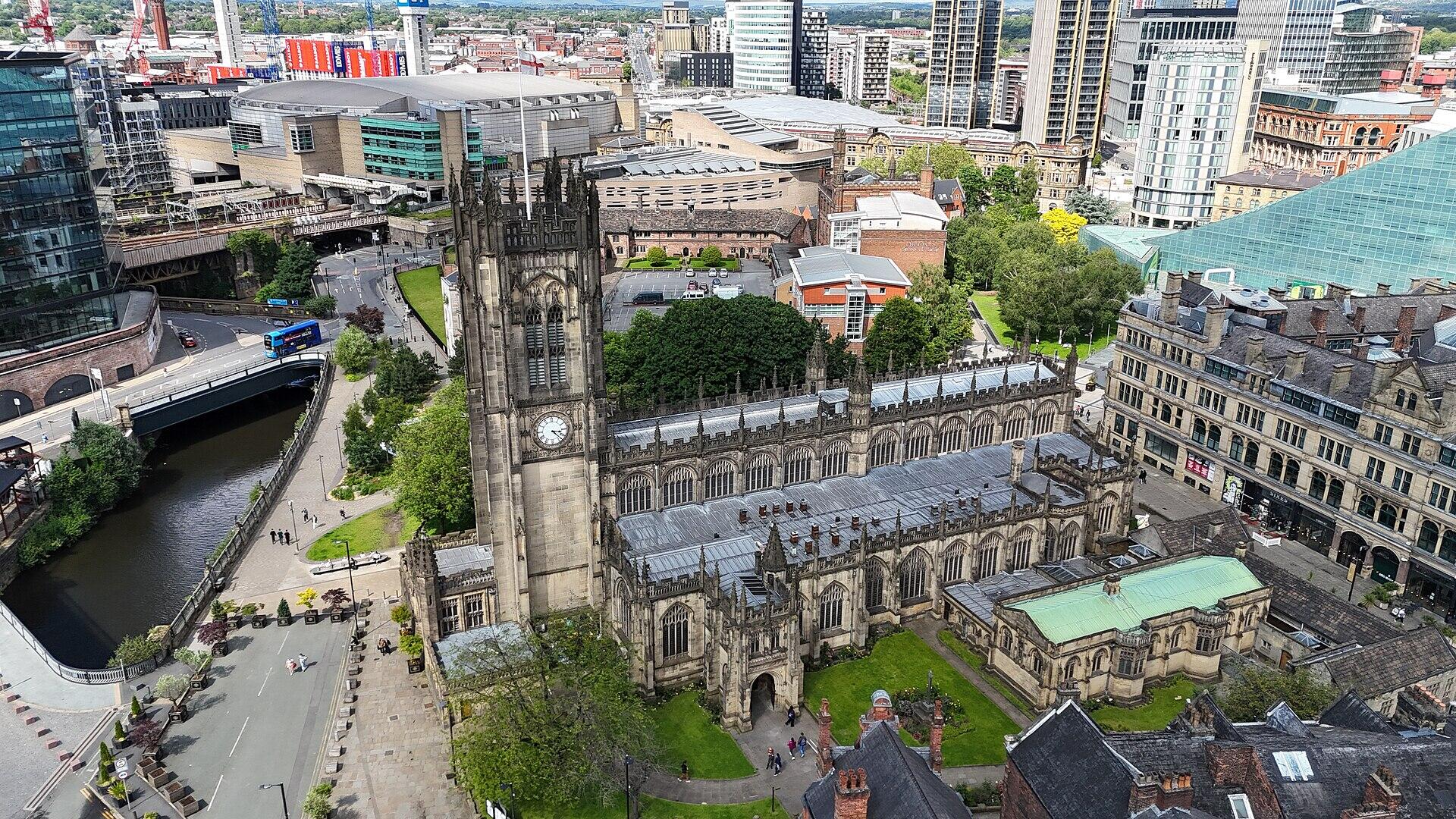

Greater Manchester has been particularly good at turning native speakers into superstars. Not just the Gallagher brothers mentioned above, but actors, poets, and plenty of other musicians, too. For those from a certain era, Davy Jones of The Monkees will forever be the shining representative of the Mancunian accent. Others consider Jason Manford, Dominic Monaghan, and Michelle Keegan the accent's best ambassadors.
What to Know about the Mancunian Accent
- Manchester, the seat of the First Industrial Revolution, welcomed workers from around the world.
- Those workers' native languages influenced Manchester's vocabulary and speech patterns.
- The Mancunian accent is far twangier than other regional accents around Britain.
- The Mancunian accent has variations, depending on where in the city you are.


🤔How Did the Mancunian Accent Develop?
Until the late 1700s, Manchester was just another English town. People living there spoke roughly the same Lancashire dialect, with more or less vowel slide or inflection. And then, the Industrial Revolution happened.
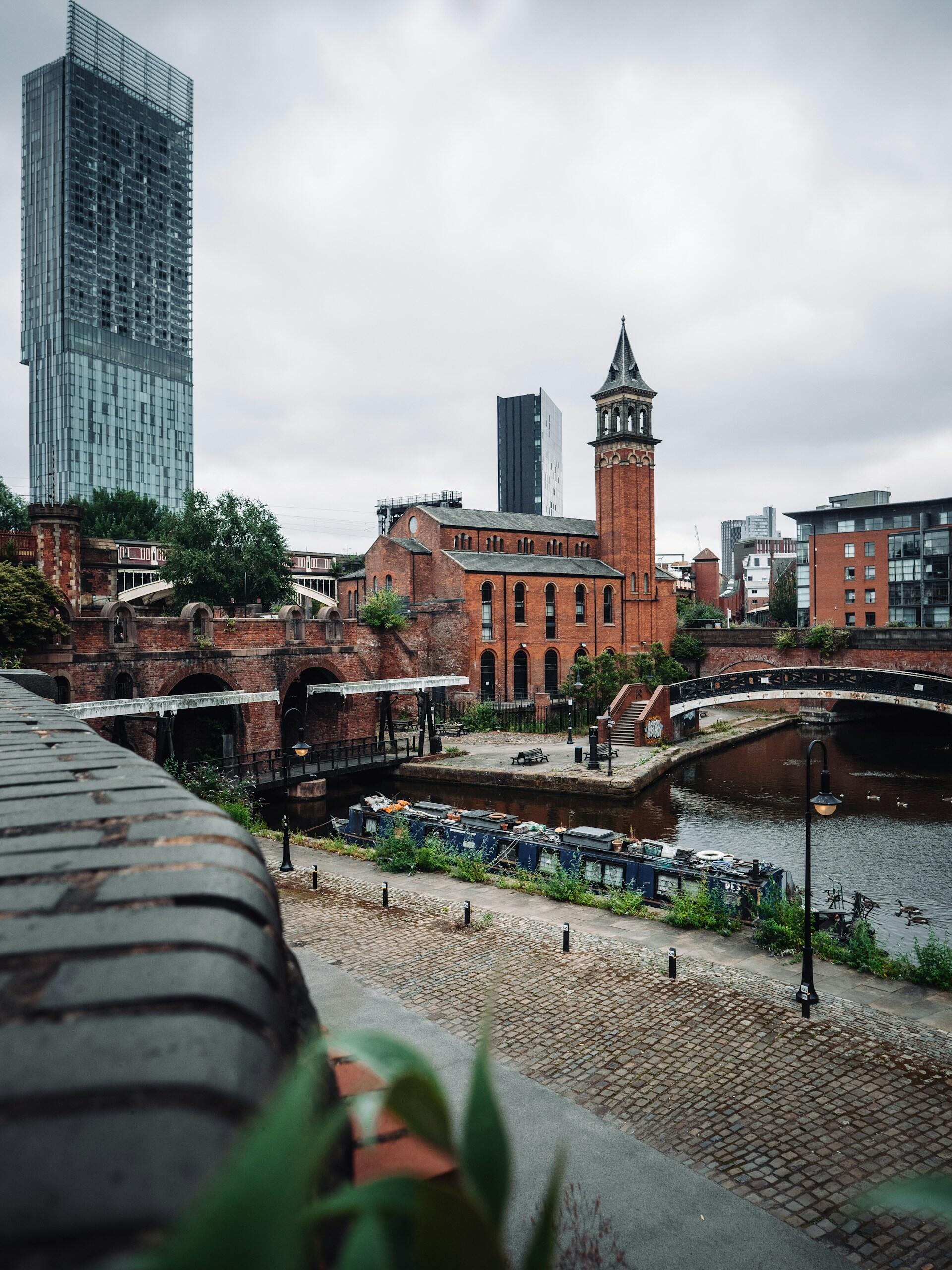
Manchester's relative closeness to Liverpool helped create shipping routes to send industrial-grade goods out into the world. The River Mersey and the Bridgewater Canal, in use since 1776, helped float those goods to Liverpool's docks and out to the Irish Sea. By the same token, those roadways and waterways made it easy for people from all over the world to report for work in Manchester.
The city's population, a mere 10,000 or so before the industrial boom, swelled to around 700,000.
People from Italy, Eastern Europe, Ireland, and all parts of England reported for duty. They settled in and around Manchester, making their customs and language patterns a part of the city's cultural fabric.
Despite Liverpool's impact on Manchester's population, that city's Scouse accent didn't gain any traction. That's likely a good thing, as Mancunians had plenty of accents to deal with already.
This accent gets its name from the people who speak it.
The name used to identify natives of Manchester, their demonym, is 'Mancunian'.
Today, we recognise Manchester as one of England's most international cities. It's home to people with Indian roots, a substantial Polish population, and many inhabitants from the West Indies. As more people from around the world arrive and settle in Manchester, the Mancunian accent evolves to keep up with them.
Today, young people from around the UK who come to Manchester bring their regional accent and slang terms with them.
Features of the Mancunian Accent
Though Irish folk have a long history in Manchester, you'll hardly hear the Irish accent's musical flow. Mancunian tends to be rather sharp and somewhat rough. It can be twangy as a plucked guitar, with sharper sounds smoothed to make pronunciation easier. In this clip, you can hear all that, plus a few slang words.
@_theaccentguy Learning Manchester…
♬ Monkeys Spinning Monkeys - Kevin MacLeod & Kevin The Monkey
As a parting shot, we have to talk about how people in the region feel about the Manchester accent. Before doing that, you should know that it's not all the same accent all across Greater Manchester and surrounding areas. North of the city, speakers stick more closely with the Lancashire dialect. Southern districts' and urban areas' speech patterns are rougher and, some say, less appealing.
In 2015, the Manchester Metropolitan University conducted a study.
It found that Salford residents had the most unpleasant version of the accent.
Bolton-Bury area residents had the most pleasant speech patterns.
🎇Celebrities With Mancunian Accent
As we hinted at in this article's introduction, the list of celebrities who speak Mancunian is very long. Almost as long as those who flex their London accent every chance they get.
In 2007, The Independent said of Morrissey: "Most pop stars have to be dead before they reach the iconic status he has reached in his lifetime." His music speaks especially to Latino listeners and members of the LGBTQ+ communities worldwide.
Dominic wasn't born in Manchester but he grew up there. He makes sure to put his Mancunian bona fides on display every chance he gets (notice his shirt in the photo above!). In fact, he spoke in his Mancunian accent in Lost, as well as the American series FlashForward.
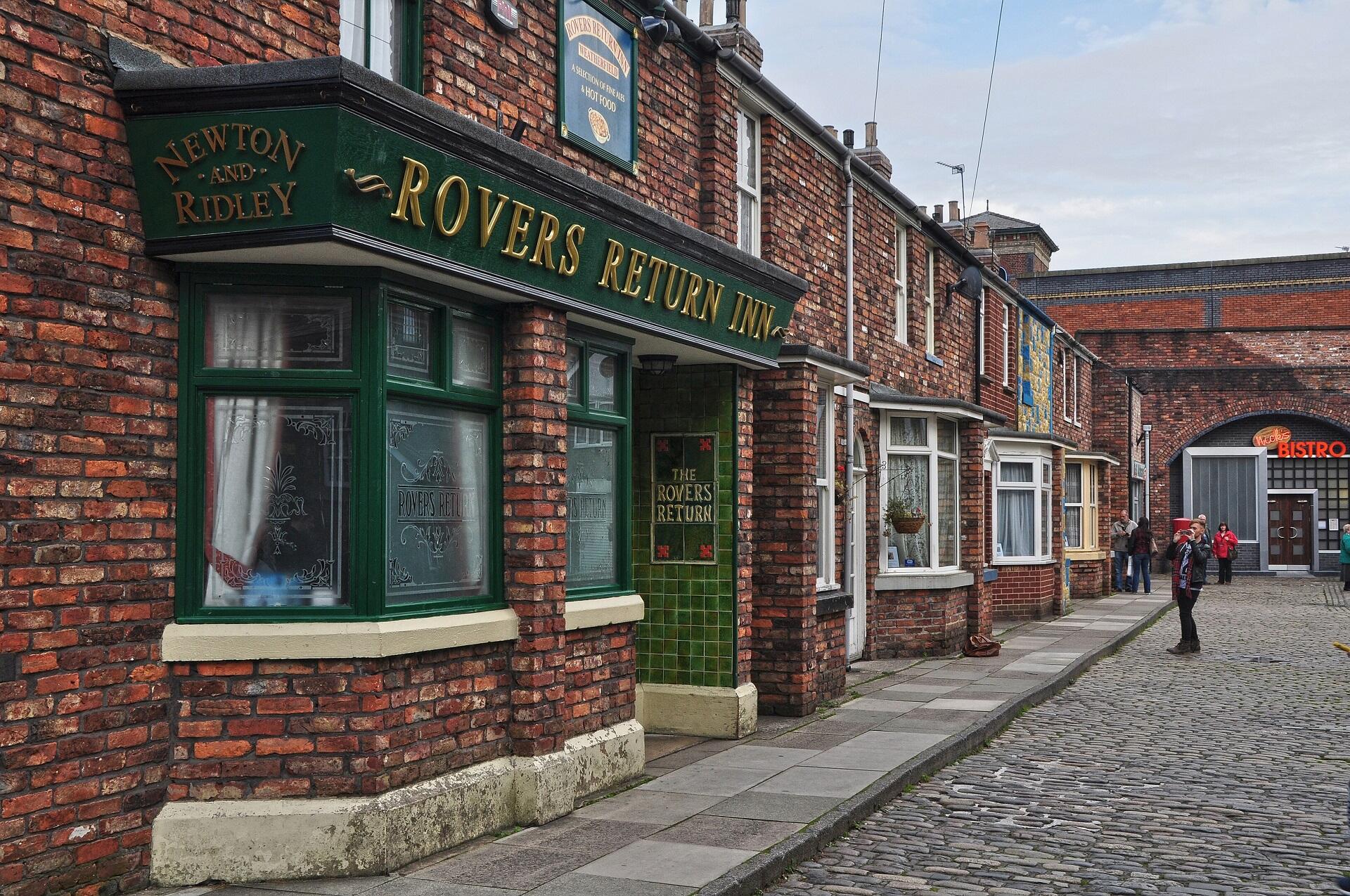
This long-running series is set in Manchester (Salford) but doesn't emphasise the Mancunian accent. Still, many of those actors speak Mancunian, including Helen Flanagan, Simon Gregson, and Michelle Keegan.
In fact, that show features a range of accents from across Britain. If you listen carefully, you might pick a few out.
👩🎓How to Do the Mancunian Accent
Now, we get into the meat of the Mancunian lesson. The first thing to know is that this accent takes heavy influence from Irish-speaking patterns.
In that short TikTok above, you heard the tone at the end of those sentences rise, rather than fall. That's standard across many British accents, as well as in Ireland. Dropping the H is another fairly standard trait of British English across the country that marks the Mancunian accent. In Manchester, you'd say 'ouse' instead of 'house', for instance.
Finally, Mancunians' short, clipped tones are somewhat like those you might hear from people speaking with a Scottish accent. The slight trill on Mancunian Rs deepens that impression.
Now, let's study individual letters and how they sound in Mancunian.
When followed by a vowel, /r/ receives a slight trill. To make this sound, briefly push the tip of the tongue to the roof of the mouth. Try pronouncing 'arise', 'orals', and 'alright'.
These consonant features both smooth the Mancunian accent out and make it harsher. By contrast, vowel distinctions all fall on the smoother side.
All this writing about the Mancunian accent might be confusing. This voice coach gives examples of everything you just read.
📖 Master the Mancunian Accent With These Words and Phrases
As we wrap up our lesson on how to do a Mancunian accent, we have to point out two more exclusive features.
me mum, not my mum
me ouse, not my house
coot me air, not cut my hair
me gaff, not my house
me kid, not my friend
'Youse ave a mo', not 'You all have a moment'
'Youse comin round la-er?', not 'Are you lot coming around later?'
With those two distinctive qualities sorted, we can cover a list of words and phrases, each one serving as a Mancunian accent example.
| 📖Mancunian word | 🎯What it means | 🤔How to use it |
|---|---|---|
| bobbins | worthless, rubbish | He's bobbins, that one! Just sits around all day! Bobbins! I never (said that)! |
| buzzin(g) | very happy, excited | I'm buzzin' over me gran's present! You buzzin' over gettin' your licence, yeah? |
| dead | very | She's dead friendly, she'd make friends with a lamp post. I wunt go out, I'm dead tired. |
| gaff | where you live; a house or flat | Me gaff's a right mess, let's go somewhere else. Youse gaff big enough for all of youse? |
| hangin' (angin') | disgusting | What's that angin smell? She's proper angin, that one! |
| kid | mate, friend, someone you feel affection for | That's our kid, dead friendly to everyone! A-ight, kid? |
| madferit | mad for it (love it) | "Wanna go oot?" "Madferit!" So ee asked er and, accourse, she was madferit. |
| mither | annoy or bother; also whinge or complain | Quit yer mithering and do it, already! That's you, mithering again! |
| muppet | idiot, fool | Quit yer mithering, you muppet! That muppet doesn't have the sense to know is own gaff. |
| pure | a large quantity | That place was pure busy (lots of people there). I'm pure ragin' over what he said! |
| safe | on good terms | We safe, then? (after an argument) Oh yeah, me an' her? We safe. |
| scran | food | Fancy some scran, kid? Me scran went cold while he mithered on. |
| snide | stingy, tight-fisted | I wunt go wif 'im again, ee's right snide! Me da's pure snide, give me nuffin for any scran. |
| sorted | taken care of, understood | That's us sorted, then. Those madlads need sorting, they're proper angin. |
| sound | trustworthy | Yeah, ee's sound, you can buy it off 'im. That muppet's nowhere near sound! |
In many ways, every Mancunian accent example carries a hint of the Welsh speaking tones, though you might be hard-pressed to hear any mention of it. Workers from Wales came to Manchester for their share of the Industrial Revolution fortune, just as Irish and Polish labourers did. But if you tune your ear carefully and practise hard, you too will take on hints of the Welsh accent when you speak Mancunian.
Summarise with AI:
Did you like this article? Leave a rating!

 Loading...