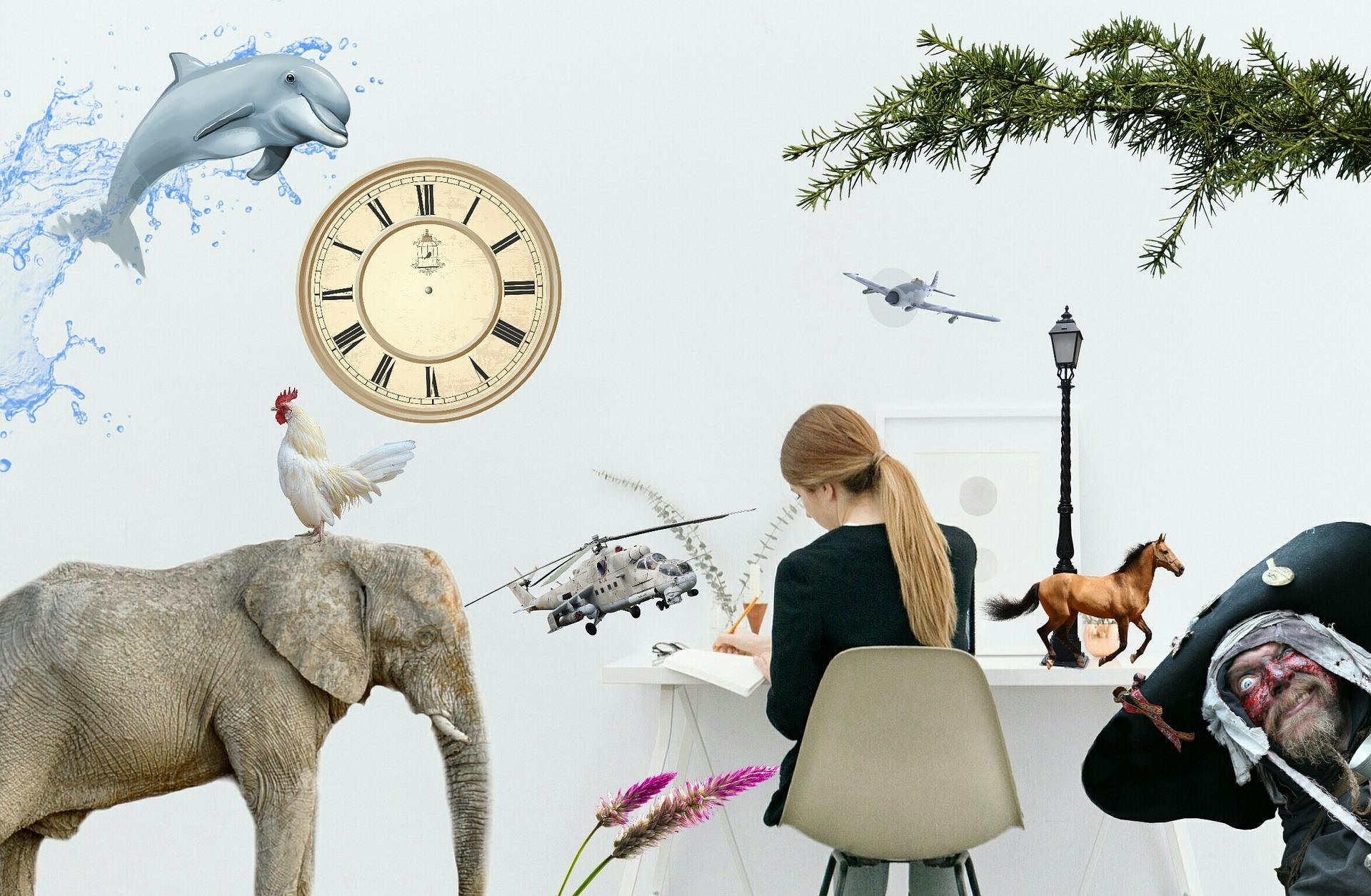

“Supertutor” Mark Maclaine is Superprof's Co-founder and Director of Learning. Mark is currently working on his new book, which is based on a series of real-life clients and the experiences he has gained over his many years of tutoring. This series looks at ‘Maintaining your memory banks’ and the first chapter looks at how the brain thinks and how tutors can help certain tasks to become automatic.
Want to give private lessons?
Join the Superprof community and share your knowledge with interested and motivated students.
What is learning?
Learning can be thought of as both a noun and a verb, both of which relate to each other.
Verb: The process of acquiring new knowledge and or skills.
Noun: The result of the process of learning.
In essence, learning can be defined as both the steps and the outcomes of tuition, study, experimentation and practice.
Oxford Languages describes learning in much the same way (as a noun and a verb):
The acquisition of knowledge or skills through study, experience, or being taught,
And: A thing learned by experience; a lesson.
As a tutor, it’s very important to understand how all of them come together to benefit the student and help them develop the competence and skills they need as efficiently as possible.
How does learning work?
Learning, and the use of learning can be broken down into three key stages. Encoding, Consolidation, and eventually Retrieval. Let’s take a look at them to understand what goes on when we take in new information, and how we eventually use this information to inform our thoughts and decisions later on.
Encoding is the process that occurs when we take in new information. This process begins with the input of external stimulus via our senses, where we compare it to the things we already know and look for a match; this is why images generated by AI to look like familiar objects, without actually having any form, can look so uncanny to us. Try looking at this picture, for example.
You’ll probably notice that your brain can’t quite make sense of any of the objects, yet they seem so familiar, like objects we’ve seen before. The phenomenon is triggered by the image activating our brains with a stimulus that is designed to look like the information we already have in our memory. I think that the image above gives a great insight into how the encoding process, along with the others, take certain cues, turn them into chemical and electrical signals and then store them for later.
Consolidation is the stage that is most closely associated with the word “learning”, and it’s the stage at which we properly process all the new connections and imagery that’s entered our memory, filtering it, organising it and filling in the gaps until everything is coherent and comprehensible for when we later need to retrieve it. This can happen while we’re awake to a certain extent, but scientists who study sleep theorise that this is most likely what happens when we sleep and dream, some even suggest that our dreams, which we often seek meaning for, are simply a by-product of the filtration of all the stimulus we’ve seen throughout the day, which is why we can often remember important places and people in our dreams, whom we are familiar with, but quickly forget smaller irrelevant details, which are perhaps what our brain is getting rid of.
Retrieval is what happens when we need to use information that we’ve stored in our long term memory; this can be during work, problem-solving, or anything that requires us to think, really. When we see an associated stimulus, our brain checks it against our neural pathways and finds a match; since these pathways are all connected to each other, we can use the first connection to retrieve other related and relevant information. A great example of this being useful is in conversation, where the participants are expected to contribute back and forth with related ideas to keep the conversation going. If you want more information on neural pathways and how they relate to thinking and learning, be sure to check out the article “how the brain thinks” where we go into this in more detail.
A last note on these three processes, it’s quite useful to think of our brain as a computer when it comes to memory and information. If you know anything about computers, our working/short term memory is similar to the RAM (random access memory) in a computer, and the long term memory is like the storage drive. Even more similarly, the way we make associations between our past experiences can be thought of as using folders to sort things in our computers; we sort things by shape, size, time, mood and just about anything without even realising it. This phenomenon might also account for the strange feelings of familiarity, nostalgia and deja-vu we experience in our daily lives; seeing something new, but associating it with something in our past that we might not consciously remember.
Is the brain a muscle?
As educators, we can use this information on how the brain learns to create strategies and tools that can help our students learn more information more efficiently. I’m going to introduce one of the most popular ways of thinking about this, and then a few additional strategies that will help elevate your skills as a tutor.
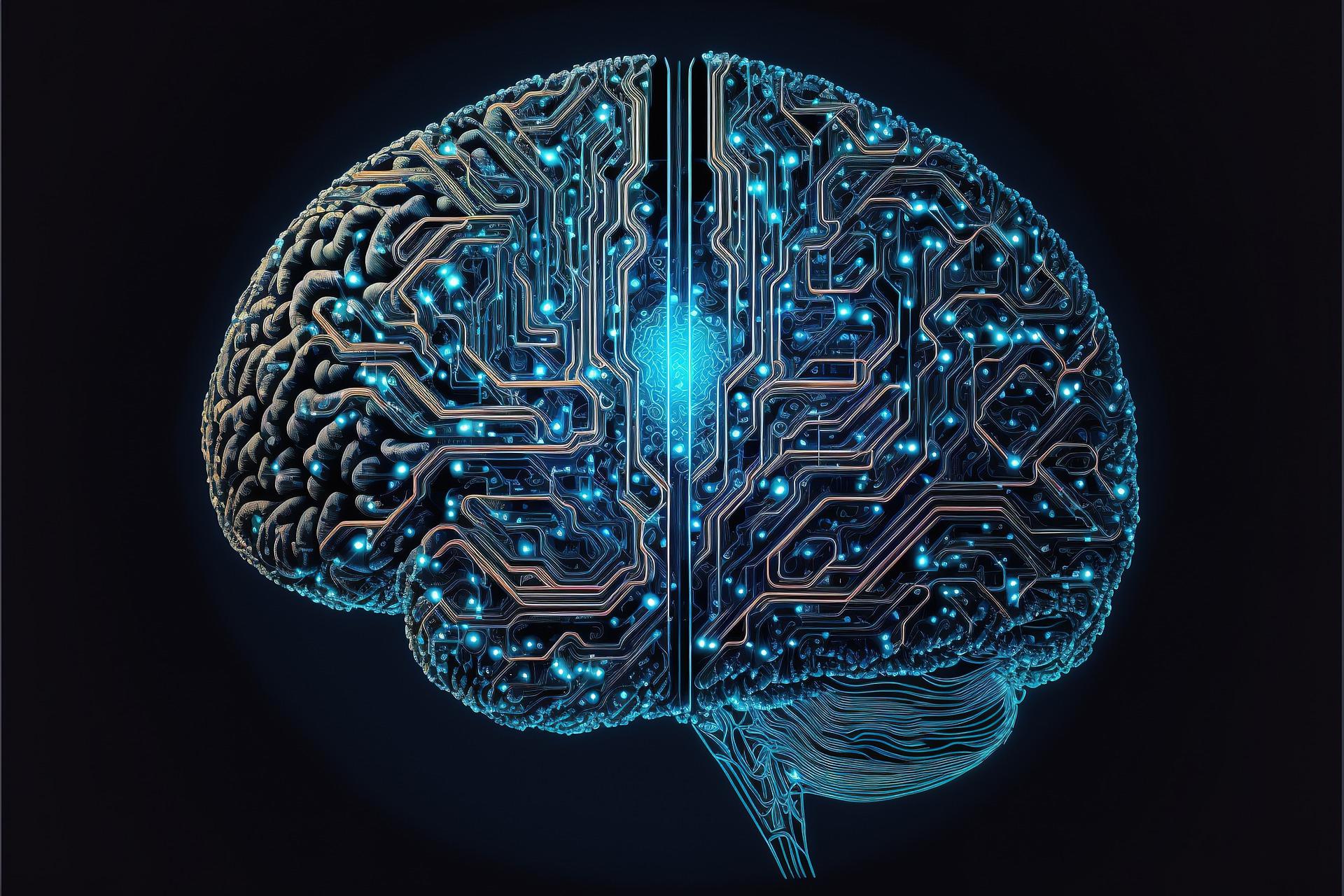
So what do we mean when we refer to the brain as a muscle? It’s not literally made of muscle tissue, but the way it responds to practice and training couldn’t be more similar. When we exercise a muscle, we perform many repetitions of highly stimulating and challenging movements, to break and rebuild the muscle fibres and condition them to handle more and more weight and stress. We can think of learning the same way. If we really want to become skilful or knowledgeable about a particular thing, then we can repeat it to ourselves, practise it and use it as often as possible. This is because just like the muscle fibres, the neural pathways in our brain are constantly being created and destroyed, but we can strengthen the ones we need by creating more of them for a given idea, skill or concept. The more links we have to a given thing or idea in our brain, the more easily we can access the idea via different stimuli. As tutors, this is why repetition is key in driving home certain key concepts with our students. We should also use this realisation to link as many ideas as we can back to other things we’ve taught, like rules and word groups when learning a language. After all, our brain loves association, since that’s kind of how it makes sense of everything.
Going back to strategies for tutors, a great one is to take advantage of multiple senses to create a stronger and more vivid memory in our students minds. Since our brains are more likely to remember something with several neural pathways leading to it, we can add extra sounds and pictures to the concepts we teach to enhance our students' ability to retrieve the information later. I’m sure we’ve all seen it before in our own learning; teachers using mnemonics for example to remember complex series of words or ideas. When it comes down to it, it really is as simple as having something lurid and memorable to go along with whatever it is we’re trying to teach or learn. This brings me on to the final strategy I'll talk about in this article.
Storytelling is one of the best ways of passing on information that we have, because it combines our logical and computational nature as humans with the equally human, emotional and experience nature of our minds. One of the most powerful things we can do as an educator is not just to numbly echo the words in textbooks to our students, but to really tell the story of the concept we’re teaching. Like the sights and sounds that I mentioned early as memory strategies, stories offer an emotional connection to a theoretical idea. The things we remember the most in our lives are the things which were most emotional for us, and it's important that we leverage this to teach and learn too. If you don’t believe me, try recalling the plot of the last film or book that made you laugh or cry, then try to recall the plot of some media that didn’t make you feel anything. For most of us, the media that earned our emotional investment will have the far more vivid memory in our minds.

What now?
If you enjoyed this article and want to learn more about how the brain works, how to use storytelling as a tutor, or just how to be a better tutor in general, make sure to check out the other articles in our advice for tutors series right here on Superprof. If that’s not your cup of tea, there’s plenty more articles on all sorts of subjects, so make sure to take a look around. We hope to see you again soon!
Want to give private lessons?
Join the Superprof community and share your knowledge with interested and motivated students.
Summarise with AI:
Did you like this article? Leave a rating!

 Loading...