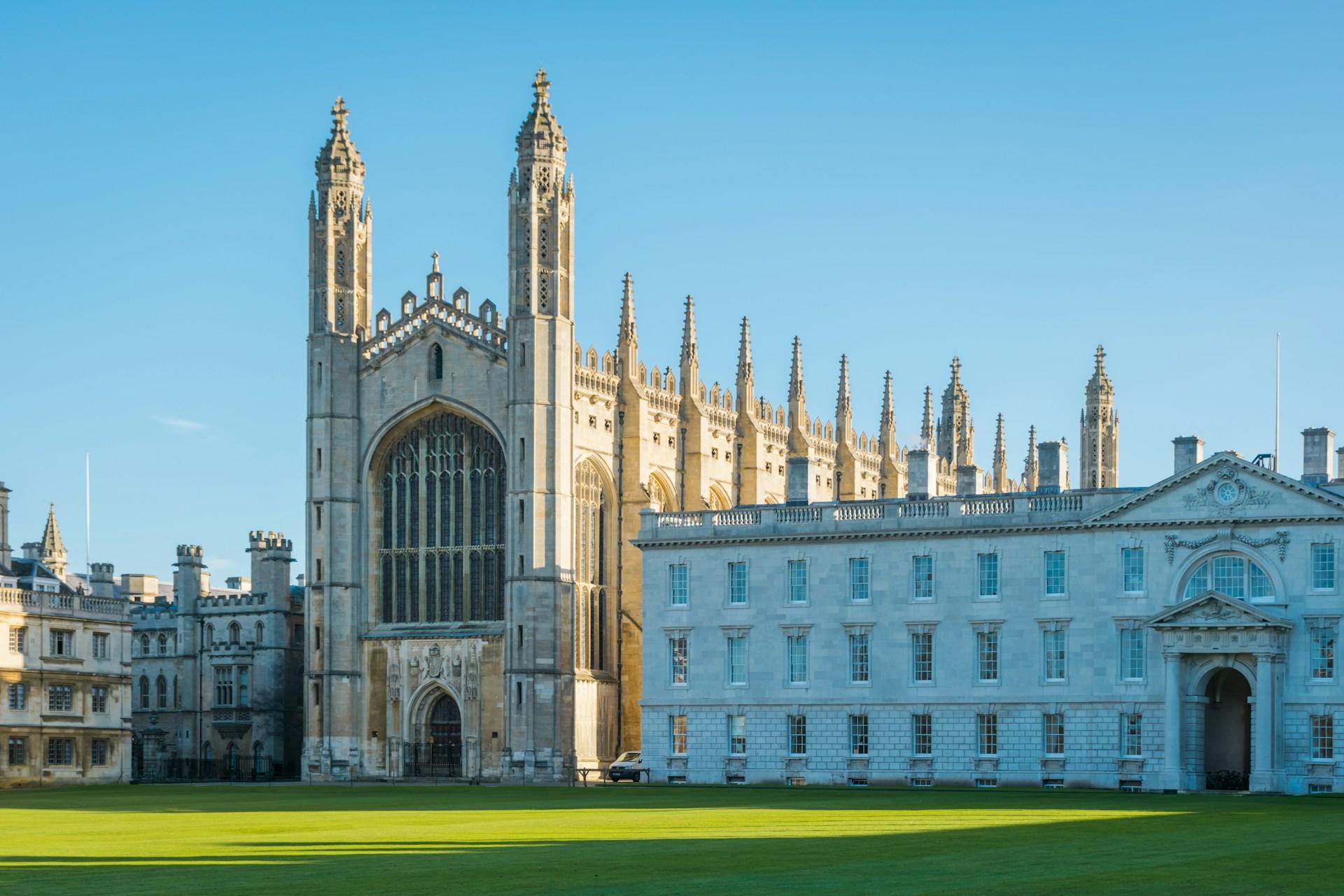

I find Cambridge an asylum, in every sense of the word.
A. E. Housman
If this venerable English poet expresses truth, getting into Cambridge sounds like it's very hard, indeed. After all, asylums are typically well guarded and fortified. Many believe it's easier to break out of an asylum than slip into one. But we don't know if he was describing Cambridge University - where he taught, or the hamlet of Cambridge, where he lived.
Students who wonder how to get into Cambridge likely see it as an asylum for quality learning. They fret over how many UCAS points to get into Cambridge, and work hard to earn their maximum number. But access does not depend only on what grades do you need to get into Cambridge.
This article describes the steps for how to get into Cambridge University:
- Cambridge Admissions Statistics: know your challenge
- Explore the Cambridge course catalogue: find your path
- Submit the required paperwork: the Cambridge University application package
- Getting into Cambridge: the timeline for requirements


Cambridge Admissions Statistics

The University of Cambridge maintains a website loaded with information for prospective students. There, you'll find course overviews and a snapshot of what student life is like. You may also explore the various colleges, and discover financial support initiatives.
Students applying to Oxford University will find the same topics discussed on that university's pages. In fact, so similar are these schools that people call them Oxbridge. Their websites have one more feature in common: a statistics page.
This question ranks among the most frequently asked about the Cambridge University application process.
As with Oxford admissions, your Cambridge application success relies only in part on the grades you earn. Entry into this elite school is so competitive, the admissions officers consider a range of criteria before making any offers. These measures help them sort through the deluge of applications they receive each year.
and description
These applications come from across the UK and around the world. Cambridge enrolment statistics represent disabled students and mature learners, as well as members from ethnic and religious communities. Naturally, this data represents gender ratios, as well. What does all this matter to you and your chances at entry?
Administrators ensure a fair distribution from all the applications, demographics, and circumstances.
Of those 21 000+ received applications in 2023, Cambridge advanced 4 553 offers. Of those, 3 557 students accepted. That ~1 000-count gap presents your first ray of assurance statistics offer. This table may present more, depending on your circumstances.
| 👩🎓Student demographic | 📆2023 | 📆2022 |
|---|---|---|
| Accepted students male/female ratio | 50/50 | 49/51 |
| Maintained schools Independent schools (economic indicator) | 72.6% 27.4% | 72.9% 27.1% |
| Disabled applicants | 13.2% | 10.5% |
| Accepted students by ethnic background | 34.0% | 33.6% |
| Mature learners (21+ years) acceptance rate | 6.1% | 5.8% |
| International students | 10.9% | 9.8% |
What Grades Do You Need to Get Into Cambridge?
Unlike an application to LSE - the London School of Economics, entry to Cambridge does not rely solely on students' marks. However, the Cambridge website's student page is quick to note the school's requirement for top grades.
Reading further, you'll discover other criteria for consideration. Some Cambridge courses and colleges specify that your grades must be subject specific.
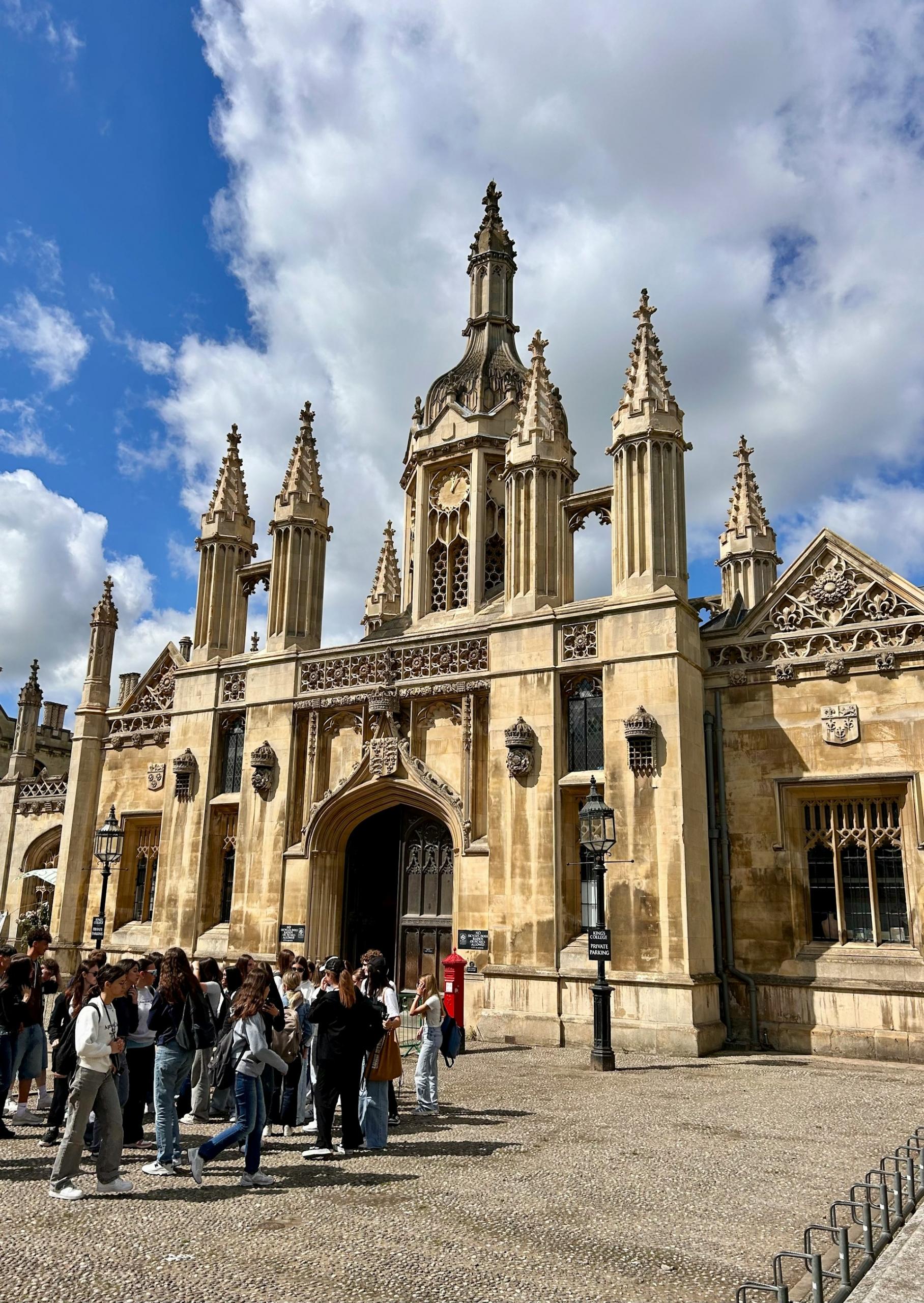
For instance, if you apply for an Engineering course, Maths and Physics must be among your A-Level subjects. Furthermore, those subjects must also appear in your GCSE exam profile - and, you must have top marks. Comparing these three courses demonstrates how different entry requirements can be.
🤔Philosophy, BA (Hons)
- Grade requirements: A*AA
- Mandatory courses: none
- Recommended courses: vary by college
- Desired courses: Religious Studies, Philosophy, Mathematics, English, History, Languages
🤩Design, BA (Hons)
- Grade requirements: A*AA
- Mandatory courses: Mathematics
- Recommended courses: vary by college
- Desired courses: none
🤑Economics, BA (Hons)
- Grade requirements: A*A*A
- Mandatory courses: Mathematics
- Recommended courses Further Maths (and others, by college)
- Desired courses: none
📩Going Above Minimum Requirements
The Cambridge University course catalogue outlines minimum requirements for entry into each study program. Meeting those standards does not guarantee you a place - or even consideration. Thus, this school often makes offers 'above the minimum requirement'.
The admissions officer believes an application shows potential, but needs to assure themselves of that student's viability as a candidate.
Let's say your personal statement wasn't quite as assertive as it could have been. Your admissions officer needs to ensure your personal characteristics are in line with your stellar academic record. Thus, they might assign you an extra task - an exam, or an interview.
This officers typically assign 'above minimum requirements' to determine placement for popular courses. Strong competition for those programs compels them to propose challenging offers. This gives applicants another chance to prove their academic bona fides.
This system feels like a sneaky way to assign extra work, especially at one of the most stressful times of our lives. However, it's really a way to ensure the most worthy candidates find acceptance.
After all, few people ever do things perfectly the first time around. These admissions officers go to great lengths to help students hit all their marks. This clip reveals a few of their strategies.
Your Cambridge University Application
As a student living in the UK, you must register with the Universities and Admissions College Service (UCAS) if you plan to enrol at university. To enrol at Cambridge, you should first explore this school's colleges. This university comprises 30 such facilities, each offering a range of courses.
As you apply for your course at Cambridge, you may select your preferred college, or opt for open application. In that case, the school will decide which college you'll attend.
With your registration complete, it's time to focus on your personal statement. For many students, this is the application process' most challenging exercise. It doesn't help that, despite it being 'personal' it's not about you. Rather, it's about your academic achievements and dedication to your subject.
Cambridge bases their admission decisions on academic criteria. Using your grades as a starting point, these officers look for signs of your potential and abilities as they relate to study. Your personal statement gives them insights into your motivations to learn, and your passion for your subject.
It should also give the admissions office an idea of your thought processes and communication skills. Thus, you should write as thoughtfully as possible, without descending into introspection. Use clear, direct language, and be sure to focus on your accomplishments as they relate to your chosen subject. This chart gives you points to consider as you plan your statement.
✅Do this:
- keep your narrative on your subject
- communicate ideas clearly
- prove your interest in various ways
- provide supporting evidence
- keep your tone enthusiastic
- be assertive
- be honest - no AI or plagiarism!
❌Don't do this
- make it about you
- be vague or unclear
- forget to cite examples
- use clichés or trigger words
- use weak language
- use bad grammar
- fail to proofread
As information-laden as the Cambridge student guidance page is, it lacks specific instructions for drafting a worthy personal statement. Instead, it recommends following UCAS guidelines for writing this document. However, looking further through this site, you will find a link to another page, which does give concrete writing advice.
Cambridge warns against hiring consultants to help you through your application process.
Of all the UCAS university application processes we've examined, Cambridge is the most emphatic about not hiring admissions consultants. These administrators assure students that these for-profit enterprises are not privy to information that's already available for free. Besides, as the clip above, shows, candidates can get help from their admissions officer.
How to Get Into Cambridge University
Getting into Cambridge is no more difficult than, say, the application process for UCL - University College London. It's Cambridge's reputation and status as a top university that makes candidates feel like entry must present an extraordinary challenge.

Admittedly, earning the grades that put you in the running for candidacy can be a hurdle. However, universities the world over follow the same method: top marks go to the best schools. To Cambridge's credit, admissions officers make sure candidates from each demographic in the application pool has representation.
Cambridge does not release excess places to Clearing. All slots are filled from the yearly applicant pool.
Admittedly, Cambridge is selective in its admissions, but it does not lack prospective students. Those who have the grades and the academic chops to make the cut will find their place.
You only need to follow this university's application best practices. That includes keeping ahead of application process deadlines, as this short clip informs us.
📆Timeline for Cambridge Application Processes
30 April 2024
Cambridge course catalogue 2025 went live
Students may begin to search courses
14 May 2024
UCAS application utility 2024 is live
Students may begin filling out applications
18 June 2024
Specialised testing registration opens
ESAT, LCAT, UCAT, TMUA
3 September 2024
UCAS permits application submissions
16 September 2024
Registration deadline for testing
15 October 2024
UCAS submission deadline
6PM UK time
22 October 2024
My Cambridge application submission deadline
6PM UK time
November 2024
Cambridge begins interviews
You will receive an offer to interview, if shortlisted.
January 2025
Decision letters
Summarise with AI:
Enjoyed this article? Leave a rating!

 Loading...