

Chinese culture has different ways for saying thank you and expressing gratitude. They range from the standard 谢谢 (xièxiè) to the informal 谢你啊 (xiè nǐ a) - 'thank you' and 'thanks', respectively. And several other phrases, besides.
As you learn how to speak Mandarin, you must know that Chinese society has its formal aspects. Thus, you likely know that you have to use the right 'thank you' for the occasion. And you must do so with a level of cultural competence.
Here's an overview of the different ways to express thanks in Chinese, which we'll explore in more detail throughout the article:
| Chinese Phrase | Pronunciation | English Meaning | Usage Context |
|---|---|---|---|
| 谢谢 (xièxiè) | Thank you (standard) | General, everyday use | |
| 谢谢你 (xièxiè nǐ) | Thank you (informal) | Casual conversations | |
| 谢谢您 (xièxiè nín) | Thank you (formal) | Formal situations, elders, teachers | |
| 非常感谢 (fēicháng gǎnxiè) | I really appreciate it | Expressing strong gratitude | |
| 多谢 (duōxiè) | Many thanks | Informal, friendly thanks | |
| 感激 (gǎnjī) | Grateful | Deep gratitude, literary use | |
| 谢啦 (xiè la) | Thanks! (casual) | Very casual, among friends | |
| 谢了 (xiè le) | Thanks (shortened, informal) | Shortened, very informal use | |
| 辛苦了 (xīnkǔ le) | Thanks for your hard work | Used to thank workers, employees, colleagues | |
| 万分感谢 (wànfēn gǎnxiè) | Deepest thanks | Extremely formal, written or speeches |


Xièxiè: More Than Just Thanks
From our earliest days, our parents insisted we should say 'thank you' to everyone, for everything. In China, you won't hear too many parents exhorting their children to thank all and sundry. Likewise, few would thank the cashier for ringing up their purchases or the waitstaff for bringing their food. In this culture, 关系 (guānxì) - 'relation' is more important than saying 谢谢 at every turn.
You should say 谢谢 (xièxiè) when appropriate, of course. If someone does you a favour, your thanks implies that you will do something for them at some point. If someone you don't already have 关系 with gives you a gift, you will be effusive in your thanks and repay the esteem shown with an equally expensive (or meaningful) gift later.
However, if someone pays you a compliment, you must brush it off. This society prizes humility. Thanking someone for a compliment implies you know you deserve it, a profoundly distasteful attitude in China.
The proper response in this case is 哪里哪里 (nǎli nǎli) - literally 'where? where?', as though you too wanted to catch sight of such a terrific person. Alternately, you may respond with 不不 (bù bù) - 'no, no!' while averting your eyes and shaking your head.
In China, 'thank you' is neither rote nor transactional. Like every other aspect of this timeless culture, thanks are laden with meaning and carry a promise of ongoing connection. Saying the right 'thanks' at the right time could see you build 关系 all across China.

Various Ways to Express Gratitude in Mandarin
The 谢 character features in every form of Mandarin 'thank you', more often once than doubled. You can use the doubled 谢谢 as a standalone expression or go with 谢你了 (xiè nǐ le) - about on par with 'thanks, mate'.
You should use the double form to thank someone for something specific. For instance, if someone helped you do something, you would say 谢谢你的帮助 (xièxiè nǐde bāngzhù). If a classmate informs you that today's lecture is cancelled, be sure to tell them 谢谢你告诉我 (xièxiè nǐ gàosù wǒ).
More casual 'thank you's typically use the single 谢 form. 'Many thanks' is 多谢 (duō xiè), typically followed up with 你啊. The 啊 (a) - 'ah' particle lends the phrase intimacy. Put together, 多谢你啊 (duō xiè nǐ a) is 'many thanks to you, aight?'. You can see other such combinations in this table:
| Expression | Pinyin | Meaning | When to Use |
|---|---|---|---|
| 感谢你 | gǎn xiè nǐ | 'feeling thank you' | slightly more powerful than 谢谢 |
| 太谢谢你了 | tài xièxiè nǐ le | 'thank you so much' | when someone does you a big favour |
| 非常感谢你 | fēicháng gǎnxiè nǐ | 'thank you very much' | the ultimate 'thank you' |
| 你太客气了 | nǐ tài kèqì le | 'you're too kind' | when receiving a gift |
| 谢谢你们俩 | xièxiè nǐmen liǎ | 'thank you both' | when thanking two people |
| 谢谢你们都 | xièxiè nǐmen dōu | 'thank you all' | when thanking a group |
| 谢谢大家 | xièxiè dá jiā | 'thank you, everyone' | when thanking a crowd |
Incidentally, expressing love in Chinese culture is equally convoluted. You won't find any of the outward signs or coy games that Western lovers seem to enjoy. Like other aspects of Chinese society, romance in China is more pragmatic. Still, the Chinese have endearing and remarkable love expressions you might add to your repertoire.

Thank you In Chinese In Different Contexts
You might be tempted to adopt the ultimate 'thank you' and use it in every situation, just to make sure you cover all the bases. At best, you'll get some strange looks. At worst, your path to building 关系 (guānxì) would be permanently blocked.
Lest you remain forever an outsider, you must learn to use the right 'thank you' for a given situation. In most situations, 谢谢你-, followed by whatever you're thankful about is appropriate. For instance, 谢谢你邀请我晚饭 (xièxiè nǐ yāoqǐng wǒ wǎnfàn) - 'thank you for inviting me to dinner'. This table summarises which thank you expression is appropriate in different contexts:
| Situation | Chinese Phrase | Usage Context |
|---|---|---|
| General Thanks | 谢谢 (xièxiè) | Everyday situations |
| Expressing Specific Gratitude | 谢谢你 + [specific reason] | When expressing thanks for a specific action |
| Utmost Gratitude (Emergency) | 非常感谢你 (fēicháng gǎnxiè nǐ) | For extreme gratitude, such as emergency help (accompanied by a gift) |
| Thanking Younger or Same-Age Individuals | 谢谢你 / 谢谢你们 (xièxiè nǐ / xièxiè nǐmén) | Used for friends, peers, and younger individuals |
| Thanking a Group (5+ People) | 谢谢大家 (xièxiè dà jiā) | When addressing a large group (5 or more people) |
| Thanking an Older Person or Authority Figure | 感谢您 / 感谢您们 (gǎnxiè nín / gǎnxiè nínmén) | When addressing elders, teachers, or bosses formally |
| Formal 'Thank You' Gesture | 感谢您 (gǎnxiè nín) with right fist in left palm | A traditional formal gesture to show cultural respect |
Save 非常感谢你 for the utmost of gratitude expressions. Help in a dire emergency qualifies for such a degree of thanks. You should emphasise your thanks with a generous gift of fruit or other foodstuffs. Never offer money; that's considered vulgar in China.
You should also make sure you're addressing the person/people correctly. 'You' (你) is for people around your age and younger. If you're thanking more than one such person, you must use the plural form: 你们 (nǐmén). Note that 大家 (dá jiā) is the proper way to address groups of five people or more.
To thank someone older or in a position of authority - your teacher or boss, you must address them formally. For that, convert 你 to 您 (nín) or 您们 (nínmén), if you're thanking more than one such person. The actual 'thank you' does not change form.
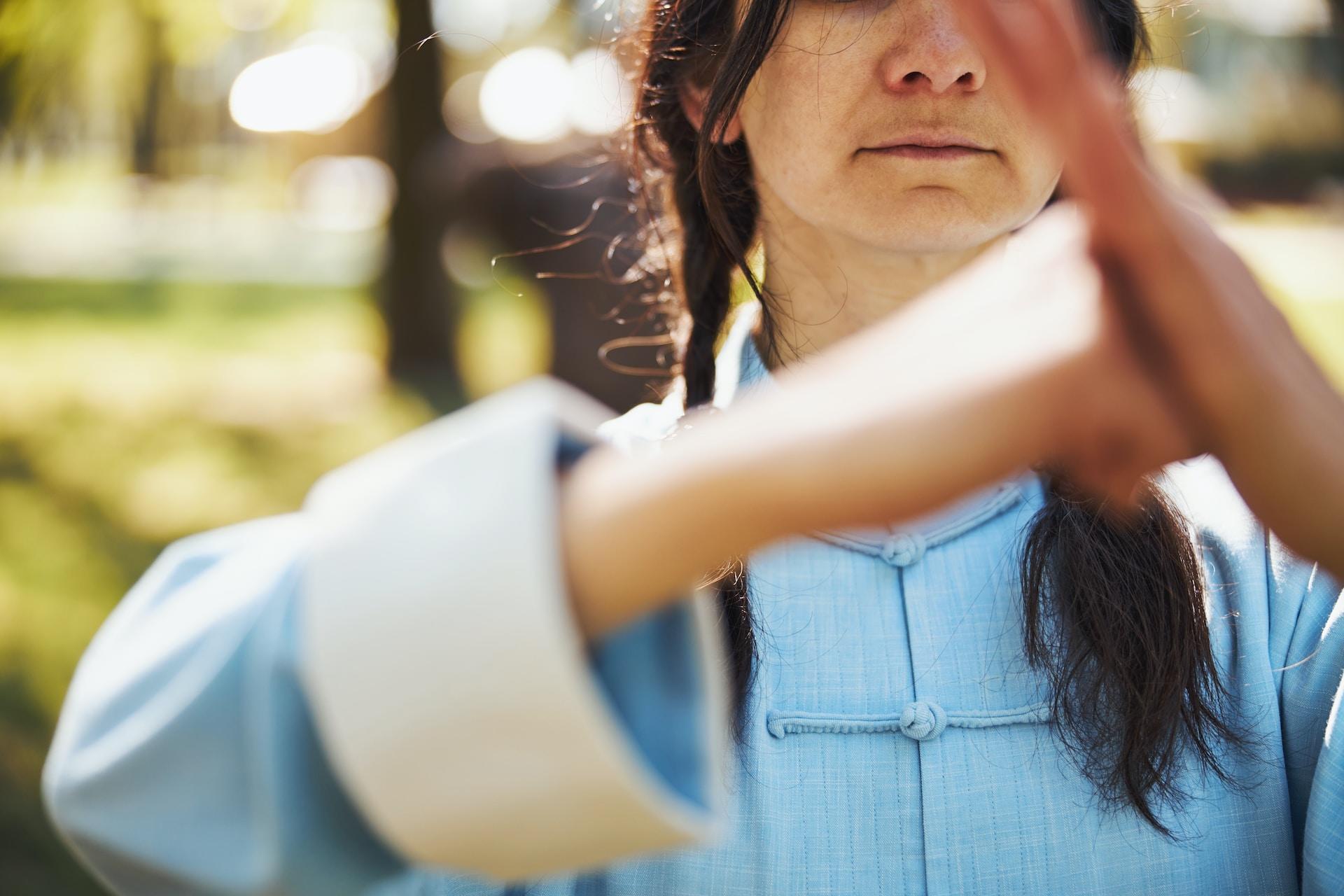
Also, try to make your 'thank you' to such a person as neutral (but sincere) as possible. The mild 感谢您, said with your right fist in your left palm should suffice in most cases. This formal 'thank you' demonstrates cultural competence; that hand gesture signals respect in Chinese culture.
Using the right 'Thank you' for the given situation is as exacting as using the right 'Hello'. But in either situation, things in China aren't so different than in our culture. You'll find a time and a place to lob a casual 'aight' and others when you must be more formal. Luckily, 'Thank you' norms run parallel with rules for ‘Hello’ so if you master the rules, you'll know the right words for every occasion.
Incorporating Gratitude in Daily Conversations
What do you say to your parent when they let you know they've done something for you? "I've left your tea on the stove." "Thanks, Mum/Dad!" The same for "I've done your washing", "I bought you something" and so on. It's like a reflex.
When a Chinese parent tells their child there are biscuits in the kitchen for an afternoon snack, the kid will likely say 好的 (hǎo de) - 'okay', instead of 'thank you'. This type of information sharing doesn't call for gratitude in China, only acknowledgement.
Remember that in China, 关系 (guānxì) is all-important. Building and maintaining relationships matter more than words of gratitude. You should strive to acknowledge people rather than their deeds. Particularly if those deeds are matter-of-course, such as a clerk ringing up your purchase.
Saying 'hello' and 'goodbye' every time you enter your neighbourhood shop builds 关系. Likewise, the shopkeeper might say 欢迎光临 (huānyíng guānglín) - literally 'welcome to visit' or simply 'welcome'. In all my years in China, I never heard any clerk thank me for my visit. And I never thanked anyone for their service.
However, I often heard (and said) 谢谢你来看我 (xièxiè nǐ lái kàn wǒ) - 'Thanks for coming to see me'. All those tasty meals at friends' homes invariably ended with 谢谢你请我们来吃饭 (xièxiè nǐ qǐng wǒmen lái chīfàn) - 'Thanks for inviting us to dinner'.
The rule is that if someone does something for you personally, that action merits thanks. Your depth of gratitude should reflect the deed and convey your sincerity. That's true even if you're speaking with your boss, teacher or someone older than you.
You might not think everyday exchanges are culturally significant but these conventions matter. You've no doubt internalised our society's norms and follow cultural rules without giving them any thought.
However, the minute you begin your Chinese Experience, you'll feel the cultural weight of Mandarin expressions. Learning the language and building cultural competence will let you bear it with ease.
Summarise with AI:
Did you like this article? Leave a rating!

 Loading...