

The news is momentous. A curriculum overhaul that keeps (and improves on) the best of the old learning system, while humanising the very human art of learning. Students, no longer 'empty vessels' needing to be filled with knowledge, will be encouraged to think and communicate. This is the first time since the 2014 curriculum reform that something this big happened in UK education, so we need to explore what it's all about.
| 🧓Old/current curriculum | 👶Proposed new curriculum |
|---|---|
| Essential life skills form no part of the curriculum. | Life skills learning is woven into the curriculum. |
| Focus on academics, revolves around core competencies. | Focus on skills, including digital literacy, financial literacy, media literacy, and citizenship. |
| Driven to testing outcomes | Designed to turn out skilled, informed future workers |
| Little room for art and physical education | Physical education mandated. Art and creative courses promoted. |
| STEM education optional/selective. | STEM education prioritised. |
| Little priority given to students' oral communication skills building. | Oracy is a targeted curriculum aspect. |
| Learning limited by year-on-year specifications. | Milestones are less important than continuity of learning. |
| Cycling through broad curriculum options, with core subjects prioritised. | Fewer subjects, but more targeted learning. |
| Vague curricular aims to guide content selection decisions; lack of curriculum coherence. | Concrete curricular aims form the foundation of content selection, leading to a unified curricular structure. |
| Stakeholder responses not valued. | Stakeholder responses requested, considered and implemented if they add value. |
| Exams test memory. | Exams test ability. |
| GCSE stakes maximised. | GCSE pressure minimised; vocational skills have equal weight. |
| Knowledge-based, test-driven educational model. | Skill-based learning that prioritises inclusivity and student wellbeing. |
| Independent schools and academies were free to choose/build their curriculum. | All schools, including independent and academic, will follow the curriculum. |


Why Curriculum Reform?
Since the beginning of compulsory education, school has been about meeting the needs of the workplace1.
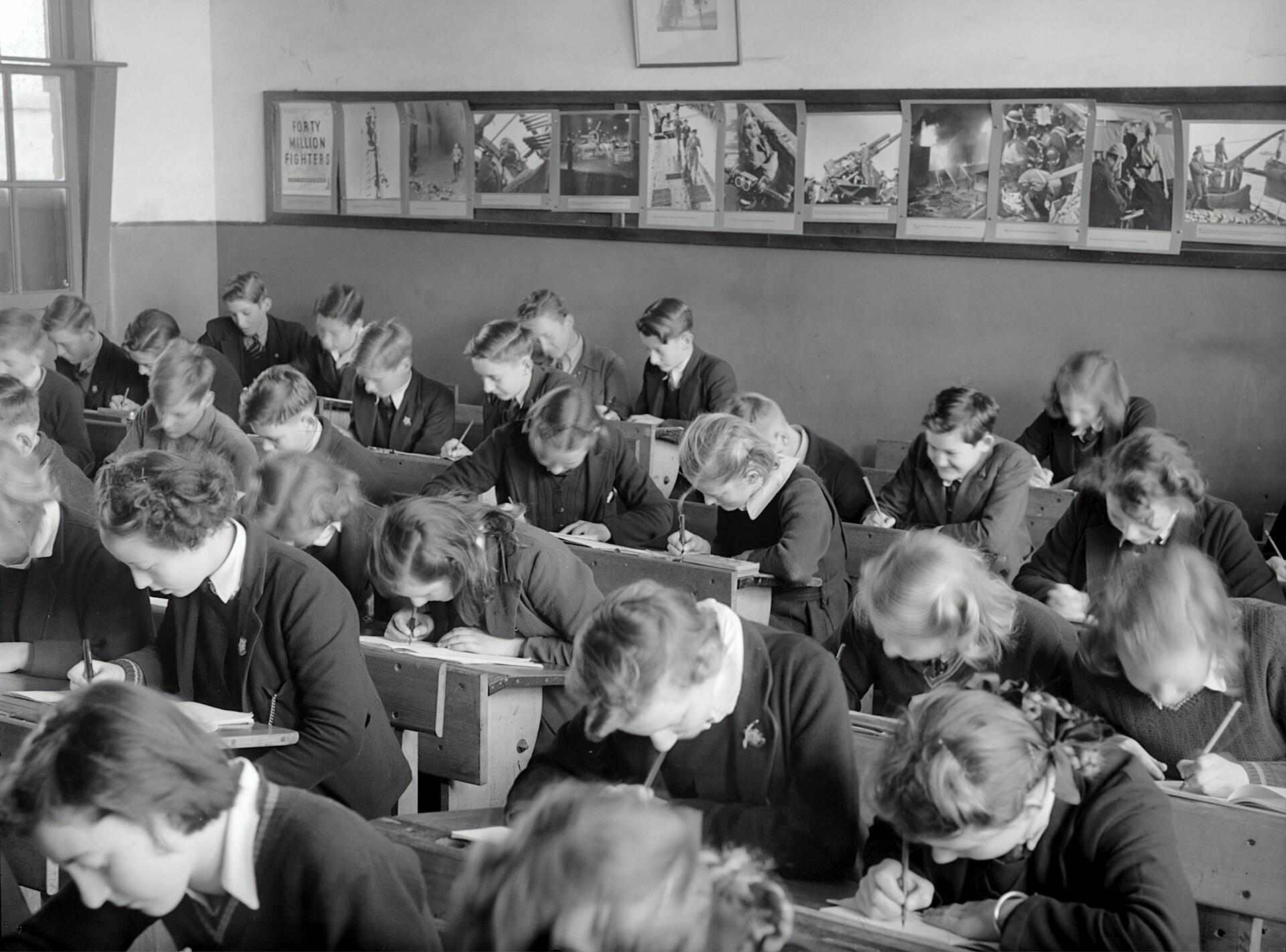
Pupils learned reading, writing and arithmetic, with a hefty dose of discipline and conditioning thrown in. Any skills needed beyond basic literacy were taught on the job. Except for professional fields such as medicine and law, of course.
The trouble is, the workplace has evolved but education hasn't changed very much over the last 150 years.
The focus is still heavy on academics and light on the skills the new work environment demands. That results in students leaving school, a fair number of them with a pricey university degree in hand, but unprepared for anything.
Santander UK conducted a study in 2025 that revealed only 26% of young adults had any financial education, leaving the bulk of youths with no money management skills4.
This is a glaring example of the unpreparedness graduating students face.
To be sure, the principle of compulsory education hasn't changed; it's still about training for the workplace. It's just that now, students must train for the workplace - and the world of the future. And the future of work promises to be more engaging and mentally stimulating than ever!
That's the reason for the 2026 UK education reform initiative. Well, the driving reason. We might argue these changes are long overdue. And marvel that they may rejuvenate the teaching profession and give students a reason to love going to school.
UK Labour Curriculum Reform Key Takeaways
- Until roughly 20 years ago, an academic background virtually guaranteed career stability.
- The jobs market has since shifted to creative, innovative, project-based initiatives.
- Schools must now prioritise teaching life and digital skills, as well as citizenship.
- Failing to adapt school learning to the job market and real-world needs promises our country will be left behind economically, technologically, and socially.
Curriculum Updates: A Pivot from Pure Academics
Formal education teaches how to stand, but to see the rainbow you must come out and walk many steps on your own.
Amit Ray, teacher and author
Nobody's blaming teachers for the ongoing education troubles. In fact, teachers want nothing more than for their students to see rainbows and walk on their own. Education professionals - those advising the government and staffing the Department for Education (DfE) are equally blameless.
Until now, education has been some version of 'It's always been that way', even if that mindset was unspoken. As our introduction's comparison chart shows, doing things the same way will soon no longer be a thing.
and description
In fact, it was more than 7,000 public responses that informed the curriculum review3. Considering public opinion is among the most dramatic shifts from 'the way it's always been'. Before, policymakers relied almost exclusively on expert opinions5. Experts aren't wrong or bad, but when it comes to our nation's children and future, everyone has a stake.
Listening to stakeholder voices is a profound shift in policymaking; a return to the pre-Thatcher era of top-down education decisions. So, what emerged from all that input?
What Does Curriculum Reform Mean for Assessments?
Word travels fast! Already, students demonstrate curiosity about novel Post-16 pathways, V-Levels, and other assessment changes. For now, the most anyone knows is that GCSEs will be less intensive and more accessible.
As things stand now, students are subject to testing: at Reception, in Year 1, Year 2, Year 4, and on and on.
For anyone, teacher or student, who hates exams, we have bad news: they're here to stay, including GCSEs and A-Levels, just not in their present form. But that's not the end of the story.
The review concluded that the current curriculum has a decent and workable primary and early secondary framework. It gets disorganised and convoluted from Key Stage 4 forward. Furthermore, there's no checkpoint to ensure students are ready to move into GCSE and higher-level learning.

To that end, the review recommends Year 8 exams in Maths and English. Once that checkpoint is cleared, students will have more structured learning opportunities and a greater selection of courses to reflect their personal interests3.
The review prioritises Science, Technology, Engineering, and Maths (STEM) education.
To that end, schools have a greater incentive to offer triple science GCSEs.
Perhaps the best news, where assessments are concerned, is the English Baccalaureate (EBacc) is on its way out. It wasn't a formal qualification; rather, it evaluated school performance. It gauged how well students performed in English, Maths, Science, Languages, and History/Geography.
As the EBacc emphasised academic achievement, it naturally narrowed the curriculum focus to just a handful of subjects. Long a topic of debate across the education spectrum, plenty are happy it's going the way of the dodo bird.
What Does Curriculum Reform Mean for SEND Education?
Special Educational Needs and Disability (SEND) learning has long posed specific challenges for mainstream education. The proposed curriculum addresses those challenges head-on.
"The review found that much of what's currently taught works well, but some areas could be better – especially for children from disadvantaged backgrounds or those with special educational needs and disabilities (SEND)."
Further into the report3, we read about inclusion and support. Namely, "to support teachers to adapt their teaching for children with SEND and other needs". All this is decidedly good news for SEND students, their parents and their teachers.
Teacher Workload Reform
In the course of the review, teachers were polled on a variety of subjects, such as citizenship teaching and computer learning2. Overall, the consensus was the lack of cohesion; teachers couldn't see how curriculum aspects connect and balance each other.

During these frank discussions, other issues teachers labour under came to the fore. Among them, lack of clarity and direction featured prominently.
So did the lack of time and latitude to choose topics and teach them in depth.
The plan, going forward, is to reduce teacher workload6.
Topping the list of recommendations is doing away with the performance-related pay structure. Self-reporting is a burdensome exercise that takes a lot of time. Outcomes are, at best, subjective, and they rely on factors outside the teacher's control.
The next step is to train and, more importantly, retain teachers. Reports are light on proposed initiatives, but they're spot-on in their assessment of how this will benefit teachers. For instance, more teachers means smaller class sizes, and possibly more classes per year group.
The current proposal emphasises more teachers in key subject areas, not across the board.
Continuing professional development (CPD) is another key area targeted for improvement. Too often, novice teachers feel like they're cast into their classrooms with little support and guidance. CPD initiatives prove the school's investment in their work, career, and well-being. In return, teachers would be keen to invest in their school, thus solving the retention problem.
We have to wonder if teachers are feeling relieved at no longer having to teach to the test. On the heels of that glee, they must be wondering exactly what their workload will be, going forward. For now, this is what we know.
Curriculum Updates' Impact on Teacher Workload
- Reducing teacher workload aims to reduce stress and burnout, and improve retention rates.
- Reducing or eliminating reporting requirements will lower teachers' administrative burdens.
- A more streamlined curriculum will give teachers the leeway to meet students' needs rather than curriculum mandates.
- Hiring more teachers and providing incentives for teachers to stay in the job will lessen teachers' workloads by reducing class sizes, among other means.
- Professional development initiatives will help teachers better steer their careers.
A Critical Look at Curriculum Updates
Don't let all this gushing fool you; these curriculum updates aren't flawless.
Granted, these reforms should help prepare students for a future that prizes innovation, creative thinking, and adaptability. Still, even those drafting these recommendations contend that education in the UK will have to be completely revamped in another 10 years.
In fact, they caution stakeholders not to look at these reforms as monumental5. They're not scheduled to fully roll out until 2028, and the new curriculum won't be published until spring 20277.

Teacher shortages and budget constraints are among the challenges these sweeping changes face. We've no clue how they will be addressed.
These curriculum updates may have their flaws, but they are certainly more than a few steps in the right direction. Implementation remains the crucial test, though. Will this new curriculum work as well in the classroom as it does on paper? Or, for that matter, in the real world?
UK Curriculum Reform 2025: Further Reading
- Fendora Mantadea. “Is the Current Education System Outdated?” Medium, 25 July 2023, naisha-r.medium.com/is-the-current-education-system-outdated-703e078f5b20. Accessed 12 Jan. 2026.
- Department for Education. “Curriculum and Assessment Review Final Report.” GOV.UK, 5 Nov. 2025, www.gov.uk/government/publications/curriculum-and-assessment-review-final-report. Accessed 12 Jan. 2026.
- mediaofficer. “What You Need to Know about the Changes to the National Curriculum – the Education Hub.” Blog.gov.uk, 5 Nov. 2025, educationhub.blog.gov.uk/2025/11/what-you-need-to-know-about-the-changes-to-the-national-curriculum/. Accessed 12 Jan. 2026.
- Santander. “Santander UK Finds That Millions of Young People Still Leave School without Financial Education.” Santander.com, Santander, 8 Jan. 2025, www.santander.com/en/press-room/press-releases/2025/01/santander-uk-finds-that-millions-of-young-people-still-leave-school-without-financial-education. Accessed 12 Jan. 2026.
- James, Mary. “National Curriculum in England: The First 30 Years, Part 1 | BERA.” Bera.ac.uk, 2 Oct. 2018, www.bera.ac.uk/blog/national-curriculum-in-england-the-first-30-years-part-1. Accessed 13 Jan. 2026.
- Hepplewhite, Kate. “How Is the Government Planning to Reduce Teacher Workload in 2025? - Vibbl.” Vibbl, 29 Jan. 2025, vibbl.com/how-is-the-government-planning-to-reduce-teacher-workload-in-2025/. Accessed 12 Jan. 2026.
- Whittaker, Freddie. “New Curriculum to Be Introduced in 2028 as Review Published.” Schools Week, 4 Nov. 2025, schoolsweek.co.uk/new-curriculum-to-be-introduced-in-2028-as-review-published/. Accessed 12 Jan. 2026.
Summarise with AI:
Did you like this article? Leave a rating!

 Loading...