Every year, students in the UK look to make their GCSE subject choices. They'll want to choose the least stressful, most manageable, and most beneficial subjects. The easiest GCSEs vary depending on your interests and strengths.
However, even subjects considered “easy” can be challenging if they don’t match your skills or interests. Ultimately, the easiest GCSEs are the ones that suit you best and that you’re motivated to study. While difficulty will depend on the individual student, we'll look at the easiest and hardest GCSEs based on content load, grading trends, and student feedback.
Key Takeaways
- Subjects like Drama, Media Studies, and Photography are often seen as easier because they involve practical work and creative projects rather than heavy exams.
- Subjects such as Religious Studies, Business Studies, and Health & Social Care tend to have straightforward content and coursework.
- Core subjects (Maths, English, Science) are mandatory and usually harder.
- The easiest GCSEs depend on personal interest and aptitude.





Why GCSE Choices Matter More than You Think
Students preparing to sit GCSEs this year most likely made their subject selections at least by the start of Key Stage 4, if not at the end of the third Key Stage.
One might argue that 14 is far too young to make decisions that will impact one’s whole life; indeed, such is the power of GCSE results that one may be denied work, the opportunity to buy a home or earn a more-than-decent wage throughout their life.
achieved at least a grade 4. The 2023 rate was 67.8%.
And, needless to say, a poor showing on GCSEs may bar one from higher education.
Employers and universities often use your GCSEs to filter candidates, especially in Maths and English. Poor results can limit your future options.
That is why, towards the end of every school year, The Student Room is flooded with threads relating to how many GCSEs would be considered acceptable to shepherd one through life, tips for getting the best GCSE results and which are the easiest GCSE subjects.
Today, your Superprof gets a jump on that discussion by detailing what subjects you must sit exams in (and pass), how many exams you should sit for a credible future and which subjects you may select as electives.
It’s among elective subjects that we might find the easiest exams.
The Subjects You Must Sit
There is no argument, debate or indecision about it: in England, you must sit GCSE Maths, GCSE English and a science component.
Whether you choose a combined science or just one branch – chemistry, biology, or physics may be up to you.
double science was the most popular GCSE taken.
Your school has a voice in deciding mandatory subjects and your optional subjects, but will offer advice for choosing your GCSE subjects if you need it.

You might, for instance, be required to sit English Literature as well as GCSE English. You may also have to sit a Combined Science GCSE rather than selecting an individual branch of science to test in.
If there is any confusion about what your school requires, you should talk with your teachers.
It is essential to know that these mandates go even further: you must also pass the Maths and English components. If you do not score satisfactorily on them, you will be compelled to retake them.
With that out of the way, we can now talk about the number of exams you should sit.
Three to five of your exams are required (in England); despite that, they count towards the optimal number of exams students should take.
Optimal number?
Sitting only a handful of exams, even if you earn top marks in each of them, is not seen as favourably as taking twice that number and earning above average or even average scores.
In general, students sit nine to ten GCSE exams in total, choosing additional subjects from a range of disciplines:
With such a wide array of subjects to choose from, it would be difficult not to find something that interests you, that you might want to pursue as a career.
Academic Subjects
- Maths
- Biology, Chemistry, Physics
- History
- Geography
- Computer Science
Creative Subjects
- Drama
- Art & Design
- Photography
- Media Studies
- Music
Practical Subjects
- Food Technology
- Design & Technology
- Business Studies
- PE
- Health & Social Care
Don’t just go by what sounds easiest. Go with what feels right for your brain and interests. A subject that suits your style will always be more manageable.
That being said, now, the other shoe drops. All of these subjects and more are available for testing but may not be offered at your school.
The reasons for such a lack of offerings vary between school budget constraints, no qualified teachers available to instruct in the subject and students’ own lack of interest.
If a subject you’re interested in is not offered at your school, you may visit other campuses to sit your desired exam.
Your input is needed: how do students who don’t know what they want to do after earning their Certificate of Secondary Education choose their GCSEs?
Searching for a superb tutor? Check Superprof now!

A Word on Exam Boards
When preparing for your GCSEs, it's important to understand the role of exam boards, also known as awarding bodies. Your school chooses which board to use, and this decision can affect the style, structure, and difficulty of your exams — even though all exam boards assess the same national curriculum content.

Do Exam Boards Affect Difficulty?
While all students are tested on the same subject material, how each exam board presents the content varies. This difference in format can impact how well students perform. For instance, some boards favour multiple-choice questions, while others focus more on long-answer or essay-style questions.
Past exam papers show that students actually do better with the essay question format than with multiple choice.
| Exam Board Feature | Example Boards | Description |
|---|---|---|
| Question Style | AQA, OCR, Edexcel | Some use multiple choice, others prefer essays or structured responses. |
| Accessibility of Past Papers | AQA (limited access), CIE (full access) | Affects how much support material you have for revision. |
| International Options | CIE (Cambridge IGCSE) | Offers international versions of GCSEs, sometimes viewed as more rigorous. |
| Tiering | All boards | Some subjects are tiered (Foundation vs Higher), but tiers vary by board. |
| Grading Approach | All boards | Must follow Ofqual guidelines, but the way marks are awarded may differ. |
While it is true that all of the exams – from GCSE Mathematics to GCSE Biology with a stop at Chemistry and Physics, must necessarily conform to Ofqual and the Department for Education guidelines, they all vary in how their exams are structured, tiered and even in their grading system.
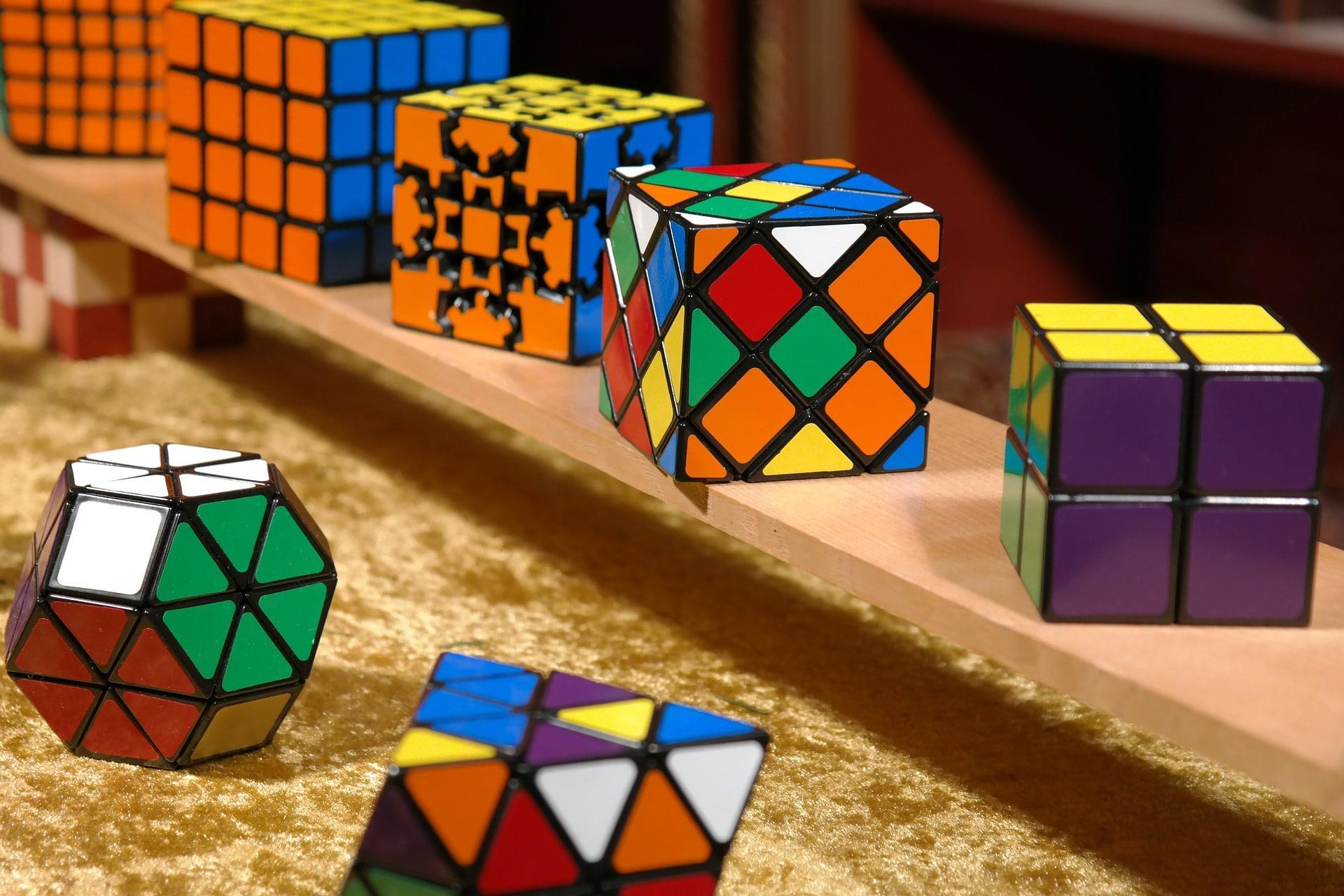
The Case of Easy Versus Difficult
From the hardest to easiest GCSE subjects, determining the ease of anything is entirely subjective: what might be easy for your mates might be very difficult for you and vice versa. Similarly, the easiest GCSEs aren't necessarily the best GCSEs to take.
of candidates earning a grade 7-9. Physics is close behind with 44.1%
To illustrate that point, we draw on foreign languages. Let’s say you grew up in a household that speaks more than one language; in effect, you grew up with constant exposure to a second language.
For you, learning another foreign language – especially one related to the language family you already speak, would be a piece of cake. Not so for your mates who do not have the linguistic advantages you had while growing up.
If you have a penchant for analysis, Business Studies and understanding scientific concepts would most likely come easier to you than to someone who is not so enraptured data and statistics.
The bottom line is: if you have a particular aptitude for a subject, it will be easier for you than subjects that you have no particular ability – or interest in.
Learn more about how your interests can drive how you choose your GCSE subjects.
The Easiest GCSE Subjects
To close out this topic, we focus on subjects that students thought would be an easy grade but turned out to be very labour-intensive and not that easy after all.
- Physical Education is often considered a slam-dunk qualification to attain but more than one dismayed student reported that there was so much practical work to do and so much uncertainty over what might be on the exam…
- Other students think that Arts and Humanities subjects might be pretty easy; photography is often cited, as are Music and Drama.
While online student applications such as The Student Room are a great way to get help from your peers, the bottom line is that the easiest GCSE subjects are the ones you pick for yourself based on your aptitude and interests.
Furthermore, every GCSE subject can be made at least bearable if you study effectively and, come exam day, are completely prepared to meet your challenge and succeed.
Effective study is the best way to make it easy.
But what if you choose your GCSE subjects based on the job you hope to have in the future?
Of course, if you want help with your GCSEs, just search for a tutor on Superprof!
Summarise with AI:
Enjoyed this article? Leave a rating!


 Loading...