
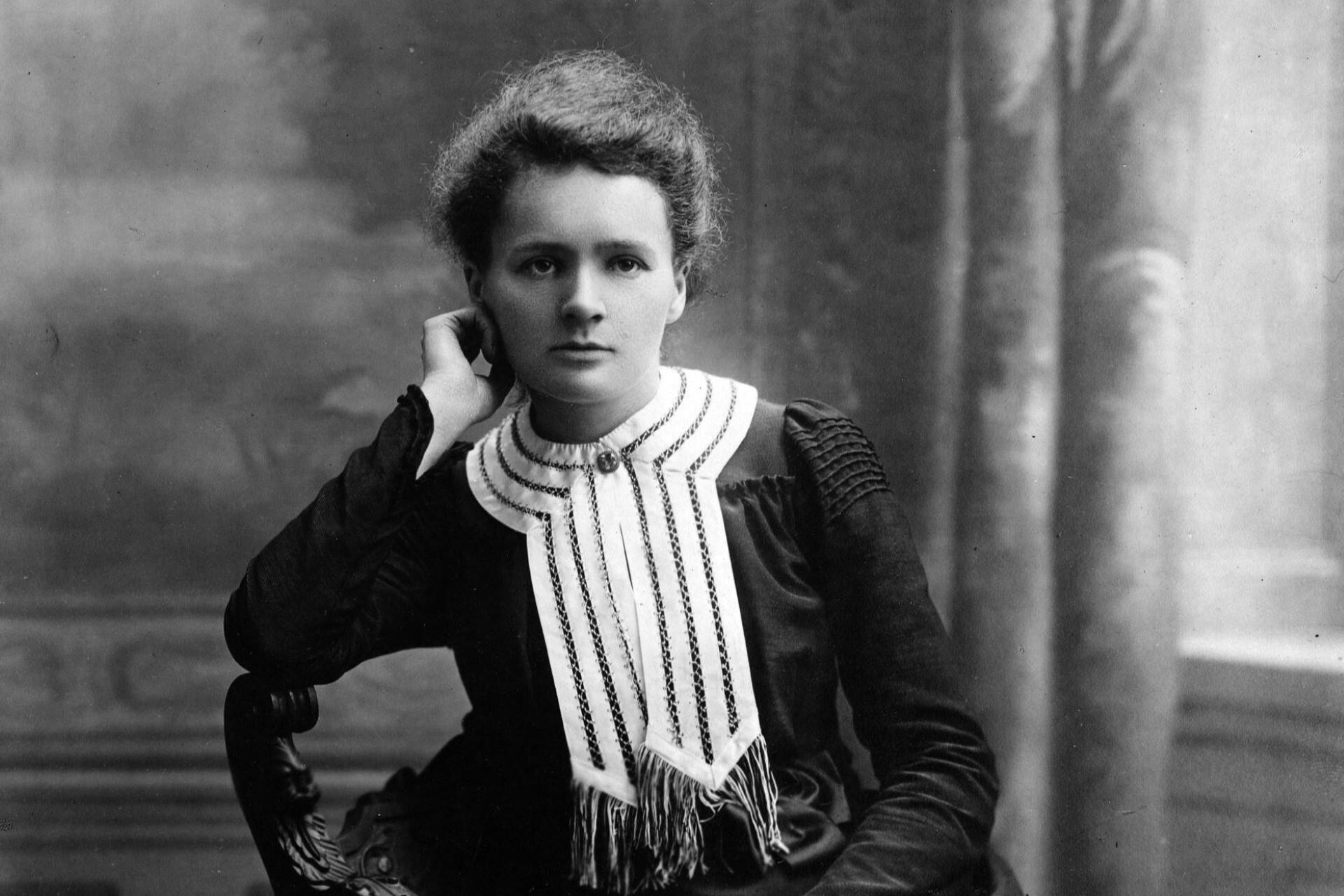

Women have played a crucial role in modern physics. However, only a small number have been recognised with a Nobel Prize. Let's find out more about the female laureates and why so few have been given physics' highest honour.
| Laureate | Year | Awarded For |
|---|---|---|
| Marie Curie | 1903 | Discovery of radioactivity and pioneering research on radiation |
| Maria Goeppert Mayer | 1963 | Development of the nuclear shell model |
| Donna Strickland | 2018 | Development of chirped pulse amplification (CPA) in lasers |
| Andrea Ghez | 2020 | Discovery of the supermassive black hole at the centre of the Milky Way |
| Anne L’Huillier | 2023 | Generating attosecond pulses to study electron dynamics |








List of Female Physics Nobel Laureates
Despite a century of Nobel history, only a small number of women have received the prize in physics. Each of these laureates has made discoveries that changed the field with work spanning radioactivity, nuclear structure, laser physics, astrophysics, and attosecond science. Women have shaped a wide range of areas of physics, and despite being woefully underrepresented here, that doesn't diminish the fantastic achievements of those who have been recognised.
As of 2025, only five women in history have received the Nobel Prize in Physics. Their achievements span radioactivity, nuclear structure, black holes, ultrafast laser science, and attosecond physics. Their work represents some of the most important breakthroughs in the entire discipline of physics.
Marie Curie (1903)
Mario Curie's achievements are even more impressive when you consider that they happened at a time when women were almost entirely excluded from scientific research. Her experiments uncovered the nature of radioactivity. Her work opened doors scientifically and socially.
Marie Curie was not only the first woman to win a Nobel Prize, but she was also the first person to win two Nobel Prizes in two different scientific fields. Her achievements transformed modern science and continue to inspire generations of researchers. Few scientists in history have left such a far-reaching legacy.
Maria Goeppert Mayer (1963)
Maria Goeppert Mayer spent most of her career in unpaid or under-recognised positions. Her nuclear shell model provided a precise explanation of atomic stability and aligned with experimental observations. Her achievements changed nuclear physics forever.
Donna Strickland (2018)
Donna Strickland's Nobel Prize was the first time there'd been a female laureate in five decades. Her development of chirped pulse amplification reshaped laser technology, revolutionising medical and industrial techniques. Her success also spurred new conversations about representation in experimental physics.
Donna Strickland became the first woman in 55 years to win the Nobel Prize in Physics, following Maria Goeppert Mayer in 1963. Her award marked a turning point in recognising women’s contributions in experimental physics. It also revived discussions about gender equality and representation in the sciences.
Andrea Ghez (2020)
Andrea Ghez captured the most precise measurements ever recorded at the centre of our galaxy. She proved that a supermassive black hole sits at the heart of the Milky Way. She transformed astronomy and validated decades of theoretical predictions. Her achievement also made her one of the leading voices for diversity in physics.
With being the fourth woman ever awarded in physics, there’s an opportunity there to be a more visible role model.
Andrea Ghez
Anne L'Huillier (2023)
Anne L'Huillier's discovery gave us a new way to study the fastest processes in nature: the motion of electrons. She allowed scientists to observe quantum behaviour in real time by producing attosecond pulses. Her work shapes how physicists explore ultrafast phenomena in chemistry, materials science, and quantum technology.
Challenges and Triumphs
Given that the Nobel Prize's history spans over a century, you may (or may not) find it surprising that so few women have been given the Nobel Prize in Physics. However, those who have been awarded the Nobel Prize in Physics have done so by overcoming barriers unique to them, not those encountered by their male counterparts. From limited access to academia to cultural expectations discouraging women from pursuing scientific careers, the progress in the sciences has lagged far behind the pace of scientific advancement. The success of each Nobel laureate has been a decisive step forward and a fine example of persistence, showing how visibility and support can change modern physics.
Historical Barriers in Physics
For most of scientific history, women were excluded from key academic spaces. Those who made it into the sciences were even credited less for their discoveries. Early female physicists had to navigate biased hiring systems, institutional gatekeeping, and a lack of support networks. These barriers shaped their careers and how their contributions were received by the scientific community at large.
The Importance of Visibility and Role Models
It's one thing for science to finally let women into spaces. Still, it's another thing to ensure that they're visible and recognised for their achievements. Visibility can drive change in physics (and other male-dominated fields). Andrea Ghez highlighted this when she won the Nobel Prize in Physics in 2020. She mentioned that she had an opportunity "to be a more visible role model". She put it upon herself to inspire younger scientists and challenge stereotypes about who's involved in physics.
Overcoming Bias and Cultural Expectations
While women faced obvious barriers to the sciences in the past, like being excluded from academia and sexist hiring policies, there are also the more nuanced and subtle barriers, like cultural expectations. There are incorrect assumptions about women's technical ability and suitability for the sciences. The very fact that, despite all these barriers, women are being awarded the Nobel Prize in Physics shows that they're more than capable of excelling when given the chance.
Modern Triumphs and Expanding Opportunities
Recent triumphs show that women can lead in physics, and hopefully, this will remain an ongoing trend. This isn't just important for the physics these women are advancing, but it's also essential culturally for the scientists dreaming of following in their footsteps. This year's laureates weren't women, but the trend is more positive than in recent years.
Which Female Nobel Laureate Do You Find the Most Inspiring?
References
- Nobel Prize Outreach AB. Marie Curie – Facts. https://www.nobelprize.org/prizes/physics/1903/marie-curie/facts/
- Nobel Prize Outreach AB. Maria Goeppert Mayer – Facts. https://www.nobelprize.org/prizes/physics/1963/mayer/facts/
- Nobel Prize Outreach AB. Donna Strickland – Facts. https://www.nobelprize.org/prizes/physics/2018/strickland/facts/
- Nobel Prize Outreach AB. Andrea Ghez – Facts and Interviews. https://www.nobelprize.org/prizes/physics/2020/ghez/facts/
- Nobel Prize Outreach AB. Anne L’Huillier – Popular Information. https://www.nobelprize.org/prizes/physics/2023/popular-information/
Summarise with AI:
Did you like this article? Leave a rating!

 Loading...
