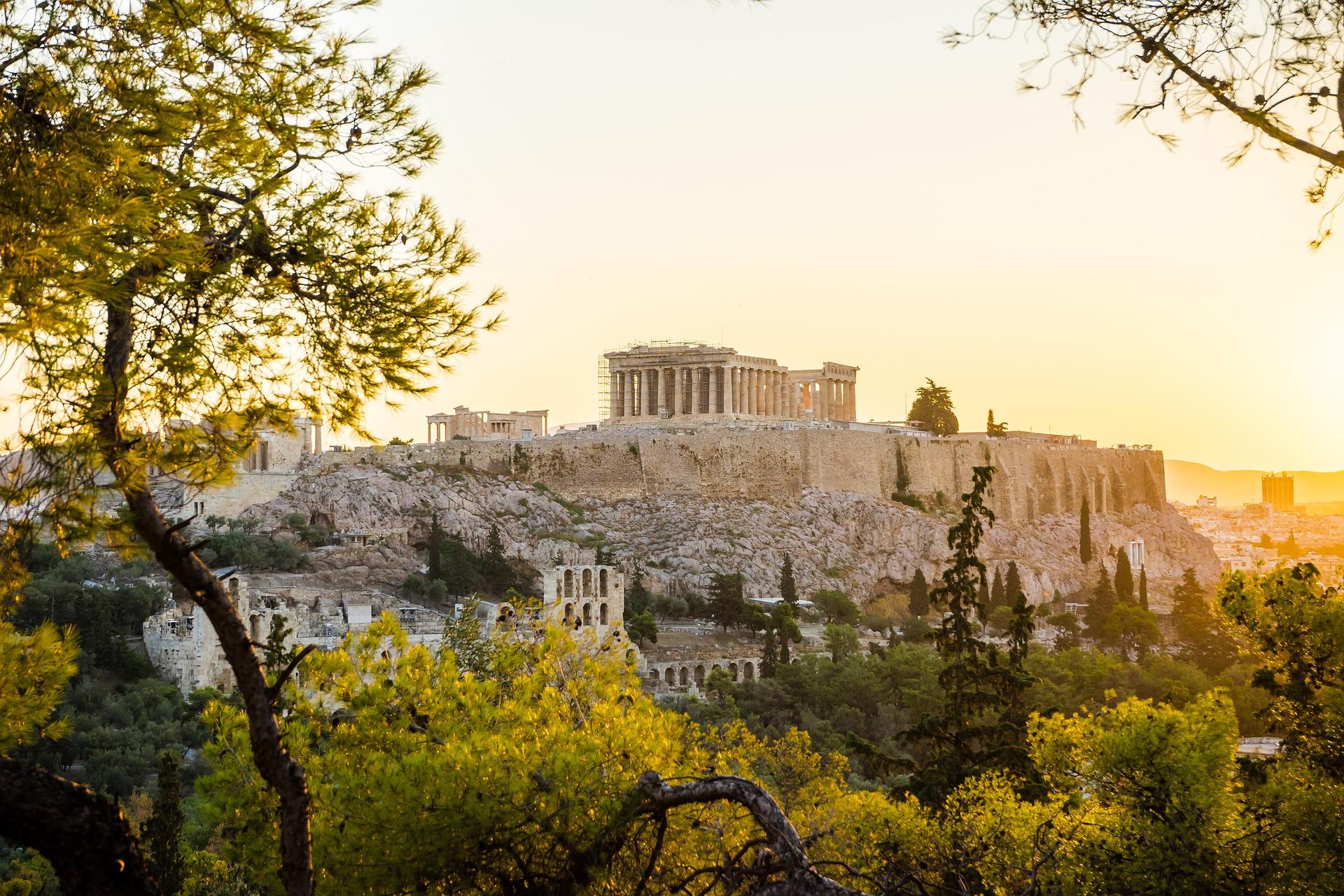

Greece is a country in Mediterranean Europe that harbours a large collection of Islands, which are strung out underneath the mainland that contains its capital, Athens. In this article, we’re going to take a look at facts about Greek culture and explore what makes Greece special and unique when compared to the other countries in Europe and the rest of the world.


What is Greece famous for?
Greece is well known around the world for a lot of things, especially in the so-called “Western world”, where a considerable amount of our tradition, values and ideals come from Greek antiquity. For example, modern mathematicians, engineers and scientists are all intimately familiar with the Greek alphabet, and you need to look no further than their equations to find out where a lot of it all started.
Much of our modern knowledge of geometry, astronomy, philosophy, politics, and even linguistics comes from Ancient Greece, whose thinkers such as Plato, Aristotle, Socrates, Diogenes etc, have become household names.
Leaving aside the intellectuals for a moment, Greece is also famous for its cuisine, which consists of delicious and often times healthy dishes depending on who you ask. Greek cuisine incorporates all kinds of meats but is perhaps best known for its pork and lamb dishes. Another animal produce that immediately evokes Greek cuisine is cheese, specifically that which comes from goats, feta probably being the most famous example. Often served alongside feta cheese are olives, which find themselves in many dishes too.
The best way to think about Greek cuisine if you’re unfamiliar is to imagine Western European food, i.e. France, Italy and Spain, combined with culinary expertise from the Balkans. This is why when dining Greek, we often see popular dishes shared by other cultures, sometimes under a different name. While we’re on the subject of Greek food, I’ll answer the question for those who might be wondering, “Gyro” is pronounced “yee-ro”.
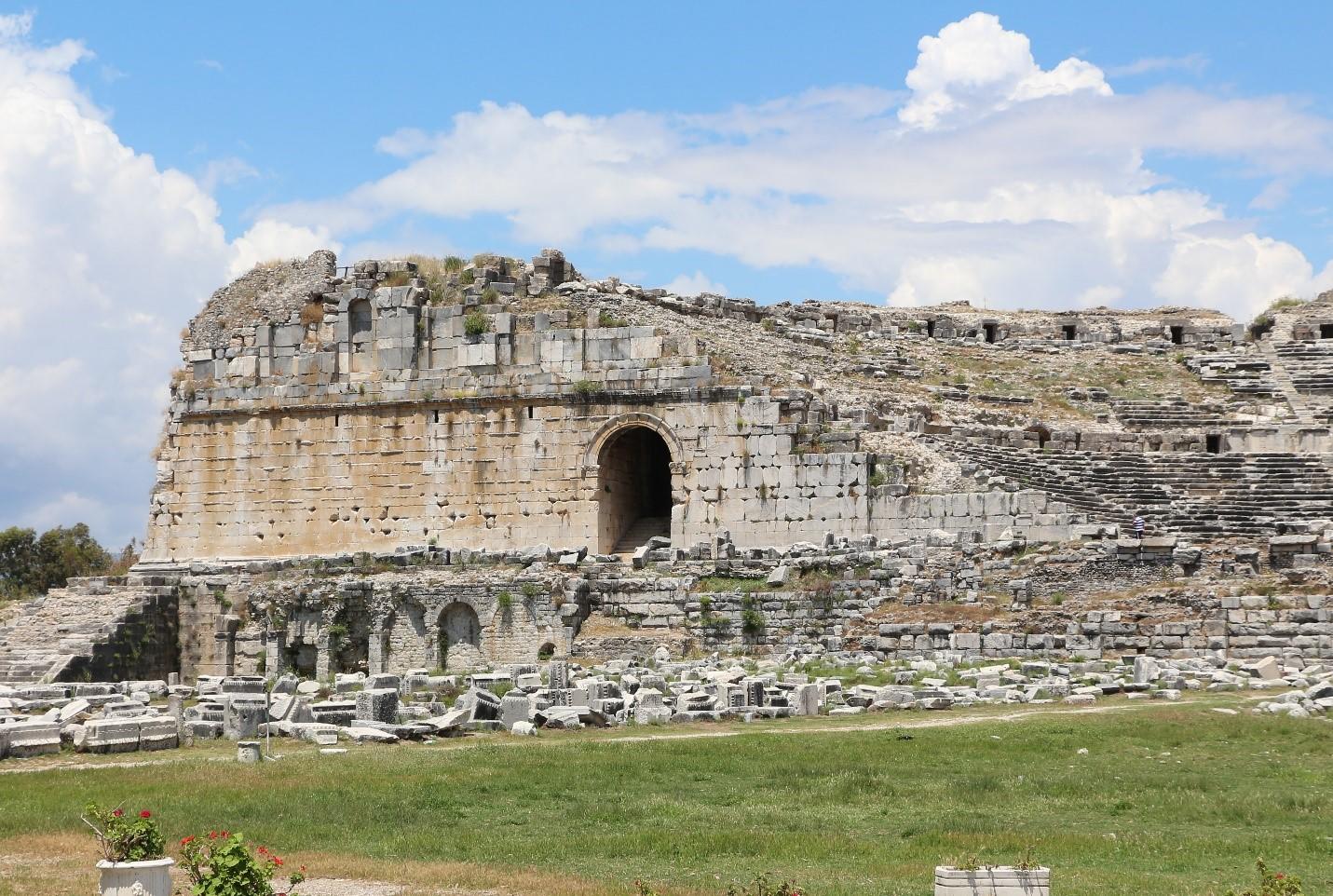
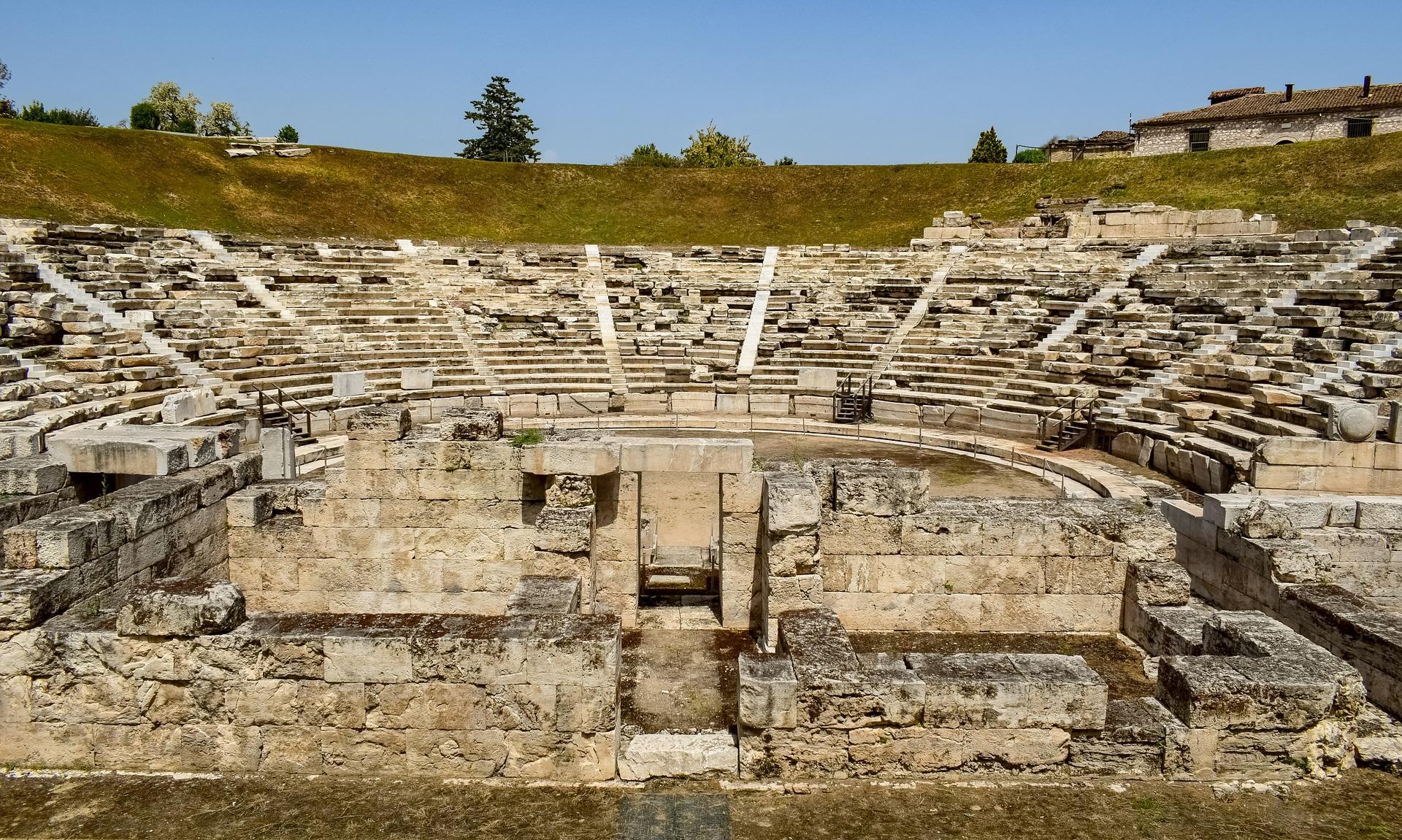
Greece also loves to put on a show, evidenced by their invention of two of the most popular forms of entertainment in the modern world. Believe it or not, Greeks were the inventors of theatre, at least in the classical way we know it in the West; the amphitheatres, the costumes, the comedy and or tragedy of a good play… That sort of thing. If you’re into classical literature or entertainment, you’ll know I couldn’t write a list of Greek plays here without missing a good one, so I won’t.
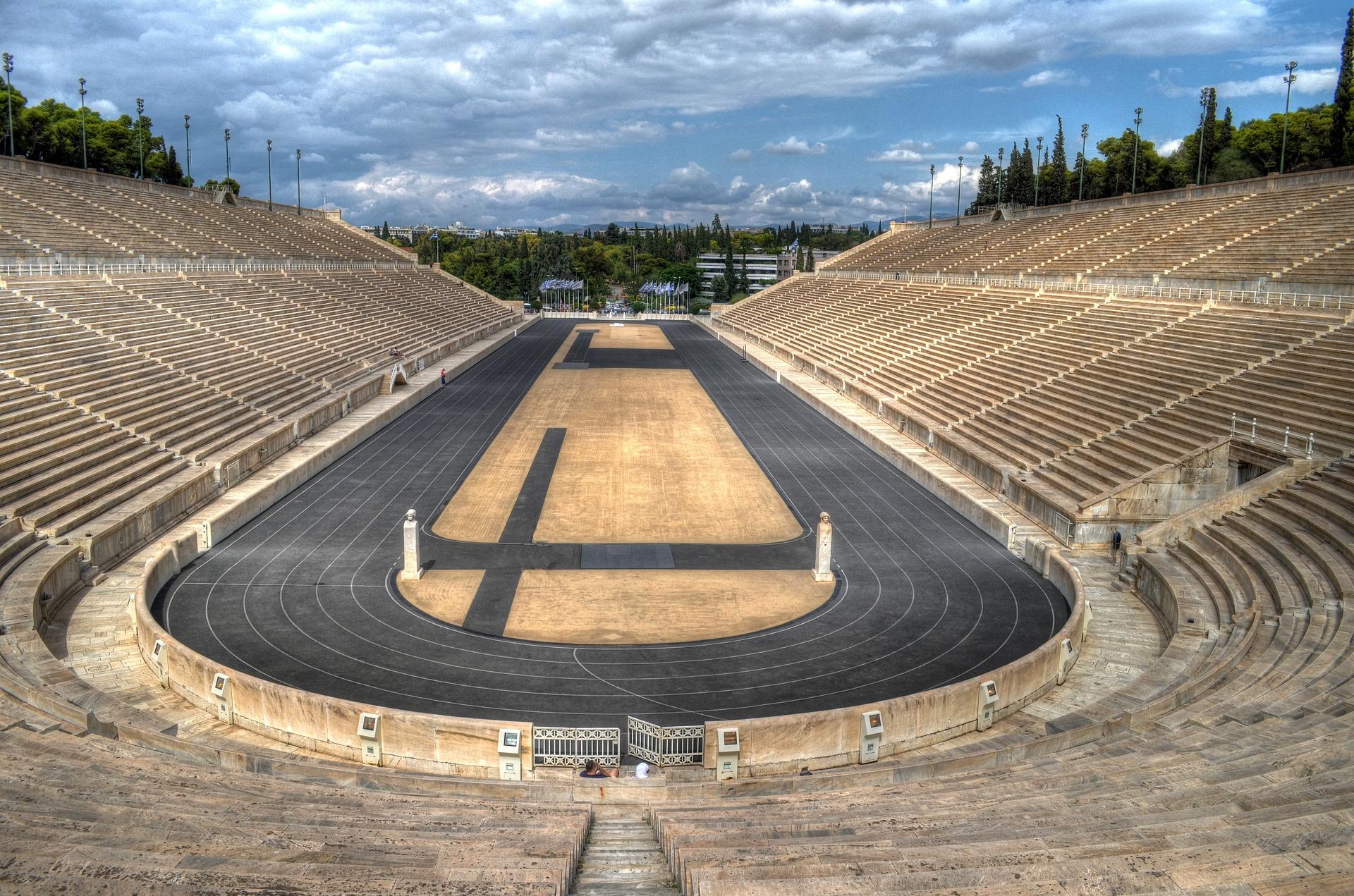
The other kind of “play” that the ancient Greeks gifted us with is the Olympics, an internationally known sporting event that takes place every 4 years since 776 BC! The Olympics were originally created as a way to honour the gods of Olympus from Greek mythology, but they have since evolved into a way of honouring the best athletes in the world by allowing them to show their prowess on the world stage, earning bronze, silver and best of all gold medals in the process.
Greek lifestyle
So what’s it like living in Greece? The climate in Greece and much of Southern Europe is very hot, especially and sometimes intolerably so in the Summer, thus Greek culture is interlinked with the sea and beach, where taking a dip in the water is one way of cooling off during a hot day. Avoiding the heat has also created another Greek cultural tradition, called ‘volta’.
Since the heat in the Summer can often keep the population hiding indoors, Volta refers to a traditional communal activity that occurs during the sunset, where friends, family, and neighbours gather together to take a stroll along the beach, or down the main street of the town/village. This tradition has been preserved since antiquity and serves as an important social mechanism between townsfolk who have had a long and arduous day stuck indoors at work or at home; it allows them to unwind and catch up with each other.
‘Catching up’ is also a much bigger thing in Greece than in some other parts of the world and consequently, Greece has more venues for doing so per capita. Cafés are everywhere, along with similar establishments, allowing the population to meet throughout their busy days and share a drink and a conversation together. I must emphasise again, that while this is not something unique to Greece, it is a very big part of the culture, certainly more so than other nations whose people might prefer to keep to themselves in their free time.
It is so popular in fact that it is not uncommon for members of political groups to gather at Coffee shops for meetings and discussions. In fact, this habit has contributed to a cultural effect that sees women avoiding certain cafés, since some people see them as the designated gathering grounds of men, even to this day.
Times are changing, and Greece is veering towards a more inclusive and unisex hangout culture, but this gendered seclusion still takes place, especially in smaller settlements.
Greek history
It would be improper to talk about Greece without discussing some of its history, and a little of its mythology, which of course contributes to how widely known the country is. First things first, it’s worth knowing what Greece in Greek is since the country has been through a lot of changes but kept a consistent name in each incarnation of its native language. Greece in Greek is ‘Hellas’, which is why you might have seen or heard of things relating to Greece and Greek culture as ‘Hellenic’.
Humans have lived in Greece almost as long as there have been humans, but the first period that people discuss as distinct from Greek history is the Bronze Age civilization. The Greek Bronze Age featured several periods unto itself but was characterised by the Cycladean, Minoan and Mycenaean Civilisations, which one after another built and maintained the first well-organised urban settlements of the region, and shaped the architectural and cultural image that we associate with Greece and especially Ancient Greece today. It was an ‘Ancient Greece’, before Ancient Greece, if you will. This period encompasses the years from 3200-1100 BC.
Following this period there was a widespread collapse of Bronze Age civilisation and a breakdown of the cultural homogeneity, science, and technology that characterises a unified society. At the onset of the Homeric period, also known as the Greek dark ages, historians begin to describe what we know as Ancient Greece. For centuries, Greece existed as a collection of city-states loosely related by language and cultural similarity.
These city-states often warred with each other and had political disagreements, but on numerous occasions came to fight together against larger threats, the most famous of which being the expansion of the Persian empire into Greece, where 300 Spartans, with the help of Thespian and Theban warriors, held off a vastly numerically superior army at Thermopylae.
The Classical Period is next, from which Western civilisation derived much of its philosophy, politics, arts and literature. This is the most studied period as well, especially by military historians because it was also the era in which Alexander the Great left his legacy.
During his command of the Greek army, he would lead a series of eastward conquests, eventually destabilising and conquering the Achaemenid Persian empire, which had been a historical oppressor of Greece. Ancient Greece can be said to have been in a golden age during this period, and the influence it had on our modern way of life and language certainly reflects it.
After the death of Alexander, the Great began the Hellenistic period, shortly after which Greece would become a vassal of the Roman Republic, which would then become the Roman Empire. Regionally, Greek culture and lifestyle had a large influence on its Roman occupiers. Many aspects such as religion, cuisine, philosophy, maths, and science were preserved and adapted by the Romans into their own pre-Christian cultural system that very much resembled Ancient Greek civilisation up until this point.
The Roman conquest of Greece marks the end of what we call Ancient Greece. The path to Greece’s present-day state was not a straight line, however. After the end of the Roman Empire, what remained of it became known as the Byzantine Empire, the capital of which was Constantinople, thus the seat of power shifted directly to the Greek mainland.
Byzantium would eventually fall to the Ottoman Empire, which took control of Greece as well and left behind its own influences in culture and cuisine, such as Greek coffee, which is certainly a derivative of Turkish coffee. The Ottoman rule would last for about 400 years before Greek revolutionaries revolted in 1821, gaining their independence and leading to the establishment of modern Greece, which has continued to the present day as an independent country.
If you want to learn more about Ancient Greece, be sure to check out the other articles from our series of articles on Greece, here on superprof! In any case, thank you for reading and I hope you managed to learn something about this captivating and enduring nation and culture. Until next time!
Summarise with AI:
Enjoyed this article? Leave a rating!

 Loading...