
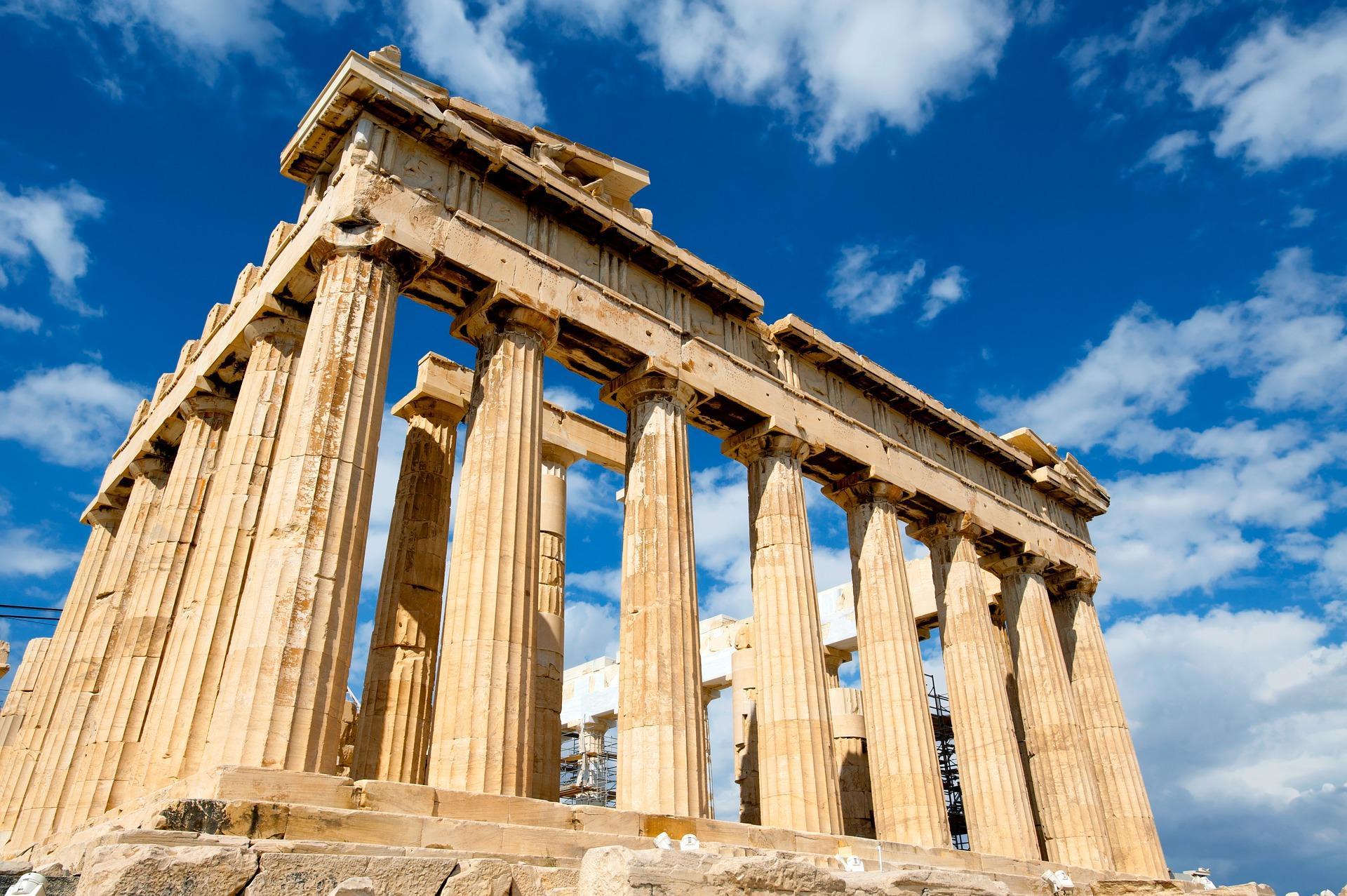

As one of the nations with the longest recorded histories worldwide, Greece is a fascinating country steeped in history and culture. Greece has produced some of the most famous and influential people in human history. From ancient philosophers and thinkers like Socrates and Plato to cultural icons like Homer and Alexander the Great, Greek thinkers and leaders shaped Western civilisation. In modern times, figures like author Nikos Kazantzakis and NBA star Giannis Antetokounmpo continue that legacy. This list celebrates the most notable Greek people—past and present—who have left a lasting impact on the world.
| Name | Field | Known For | Era |
|---|---|---|---|
| Socrates | Philosophy | Foundational figure in Western philosophy, Socratic method | Classical Greece |
| Plato | Philosophy | Founder of the Academy, student of Socrates, wrote The Republic | Classical Greece |
| Aristotle | Philosophy/Science | Founder of Western logic, works in biology, ethics, metaphysics | Classical Greece |
| Alexander the Great | Military/Politics | Conquered vast territories, creating one of the largest empires | Hellenistic Greece |
| Homer | Literature | Author of the Iliad and Odyssey | Ancient Greece |
| Euclid | Mathematics/Science | Father of geometry, author of Elements | Hellenistic Greece |
| Archimedes | Mathematics/Science | Contributions to geometry, calculus, and engineering | Classical Greece |
| Pythagoras | Mathematics/Philosophy | Pythagorean theorem, mystical teachings | Classical Greece |
| Pericles | Politics | Influential leader during Athens' Golden Age | Classical Greece |
| Sophocles | Literature/Drama | Playwright, author of Oedipus Rex and Antigone | Classical Greece |
| Hippocrates | Medicine | Known as the "Father of Medicine" | Classical Greece |
| Leonidas I | Military/Politics | King of Sparta, famous for his role in the Battle of Thermopylae | Classical Greece |
| Maria Callas | Music/Opera | Renowned opera singer, known for her dramatic interpretations | 20th century |
| Nikos Kazantzakis | Literature | Author of Zorba the Greek and The Last Temptation of Christ | 20th century |
| Mikis Theodorakis | Music | Composer of Zorba's Dance, political activist | 20th century |
| Mariza Koch | Music | Greek folk singer, represented Greece in Eurovision 1976 | 20th century |
| Dimitris Mitropanos | Music | Famous Greek singer of laïko music | 20th century |
| Giannis Antetokounmpo | Sports | NBA basketball star, two-time MVP | 21st century |
| Stéfanos Tsitsipás | Sports | Top-ranked professional tennis player | 21st century |
| Emmanuíl Karalís | Sports | Greek pole vaulter, European Championships medalist | 21st century |


Famous Greek Philosophers: Socrates, Plato and Aristotle
There are many famous Greek philosophers upon the shoulders of whom many of the great thinkers of history have built their works. Three of the greatest names in philosophy come from Ancient Greece: Socrates, Plato, and Aristotle.
These three lived in succession, with Socrates being Plato’s teacher and Plato then, in turn, being Aristotle’s teacher. As such, their thoughts and ideas all followed in some form from each other, with Socrates often being credited as the founding father of Western philosophy. Many theories, such as Plato’s cave theory of reality and the Socratic method, are still widely discussed today.
Socrates
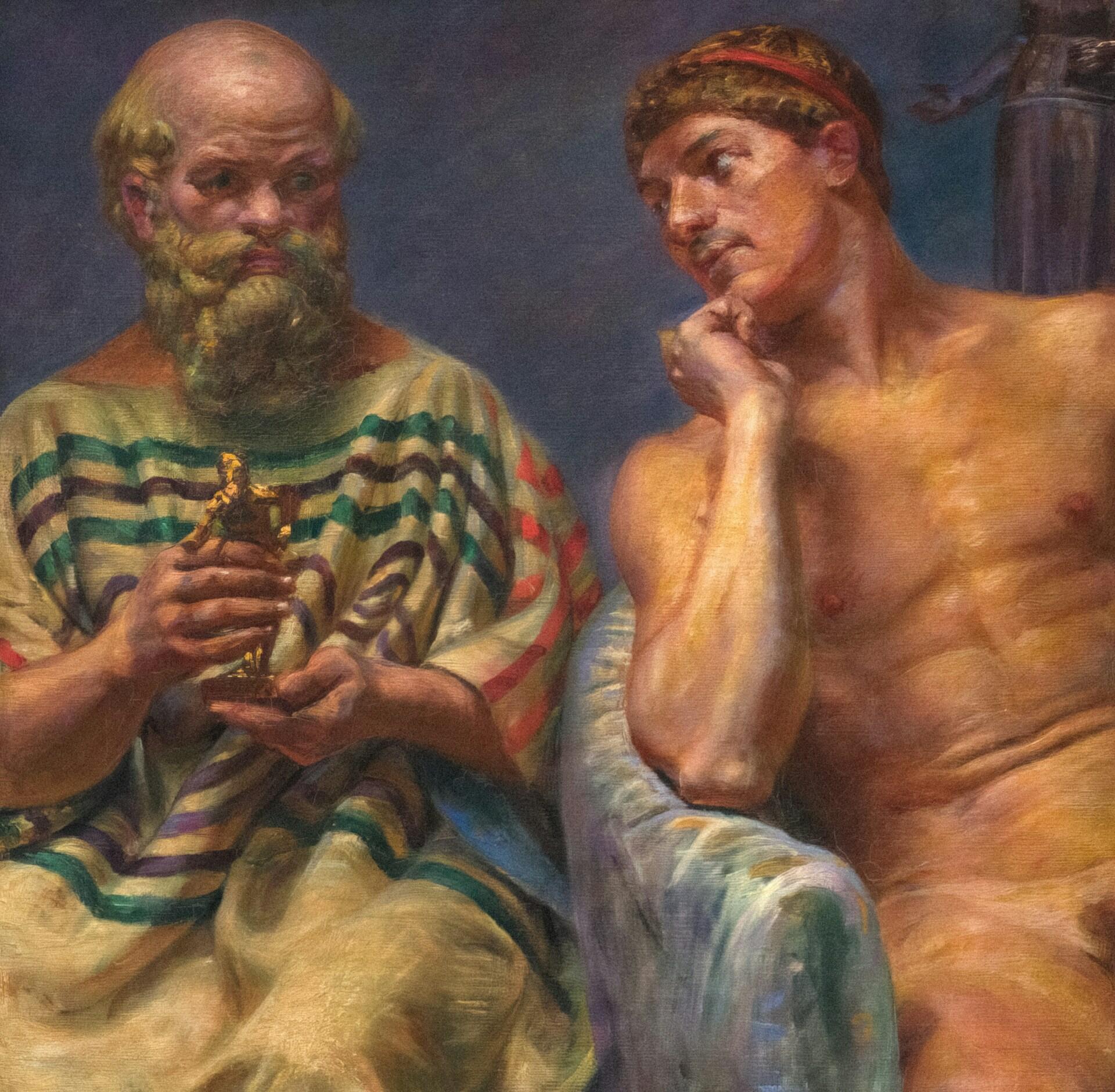
Socrates is one of the most transcendental thinkers of classical Greece; he revolutionised philosophy in the 5th century BC. His ideas and method of maieutics – based on dialogue, incisive questioning, and self-examination, which enabled us to "give birth" to knowledge – reached us primarily through his disciples, including, of course, Plato.
Socrates' work focused on political and moral issues, always encouraging his disciples to reason through dialogue. He also delved into the study and dissection of the human soul, questioning the divinities responsible for cosmic order or other beings such as animals: What purpose did all this have for humans? ...
His life ended tragically in 399 BC when he was accused of impiety and corrupting young people and was sentenced to death by drinking hemlock; he accepted in obedience to the laws of Athens.
Plato
Plato came from a noble family in Athens. His philosophy focused on the distinction between ideal forms and everyday experience, exploring how this duality manifested in individuals and societies. In his most famous work, The Republic, Plato envisioned a perfect civilisation governed by the pure wisdom of a "Philosopher King". He proposed a tripartite hierarchy of rulers, auxiliaries (soldiers), and producers to harmonise society's interests and achieve a just and flourishing unity.
Plato lived a long life, reaching 87, and the Academy, which he founded around 387 BC, is considered the model for what we know today as a university.
Plato also developed important moral and ethical concepts. As a reference, we can take the famous concept of the "World of Ideas", where he explains the existence of immaterial, absolute, immutable, and universal entities independent of the physical world but from which everything that exists in that physical plane is derived (for example, kindness, justice or virtue).
Equally relevant is the theory of the soul, which considers that the soul is divided into three parts, each inhabiting a different place in the body.
Aristotle
Plato's disciple (with whom he studied for decades) developed various remarkable theories and studies about our reality and the tangible world. Aristotle is also credited with being the first to contribute to exploring the psyche, perception, and memory, becoming a pillar and precursor of modern psychology. As an example of his philosophical ideology, we will consider the Theory of the Soul, where he conceives the existence of three types, each corresponding to a different living being:
Coming from a family of physicians, Aristotle had a powerful influence in biology – through his Hylomorphic Theory, empirical research, and pioneering the classification of living beings into 11 distinct groups.
Famous Greek Mathematicians and Scientists
Euclid
Considered the father of geometry, Euclid dedicated himself to compiling all the knowledge of his time in a book called Elements.
Divided into 13 volumes, it explains the fundamentals of geometry by reviewing the properties of figures and demonstrating their applications. In this book – which includes the Pythagorean theorem – he developed his concepts of Euclidean geometry (plane and solid), laying mathematical foundations still taught at the university level today.
Euclid lived as an educator in Egypt, in the renowned intellectual city of Alexandria. He also contributed to developing important concepts in trigonometry, algebraic reasoning, equations, fractions, division, logarithms, and other topics, without which we would not conceive of mathematics as we do today.
For example, his concept of Euclidean division is simply division, as explained in basic education (a dividend, a divisor, a quotient, and a remainder).
Archimedes
His father was an astronomer, so it was only natural that Archimedes would focus his attention on the study of science. Born in Syracuse, present-day Italy, this mathematician, who made equally meaningful contributions to engineering and physics, studied in Alexandria, surrounded by the best of his time. Here are some of his most noteworthy contributions:
Archimedes made an almost precise approximation of Pi, calculating its value (approximately 3.14159) using inscribed and circumscribed regular polygons, and establishing the relationship between the perimeter and diameter of a circle.
Pythagoras
Pythagoras (born at the end of the 6th century BCE) dedicated his life not only to mathematics, leaving us his celebrated Pythagorean Theorem, which explains a fundamental geometric relationship still taught in all schools today. How did he develop his many talents?
🥊 Disciple of Thales of Miletus, he was a mathematician but also talented in music and sports, even participating in the Olympic Games in boxing.
🧘🏻 His philosophical ideas on the relationship between the body and death are also well known, as he believed in the concept of the soul and its immortality.
🌿 Pythagoras travelled extensively in his youth, absorbing knowledge from Egyptian and Babylonian sciences.
Driven by his tenacity, he moved to Magna Graecia, where he finally founded the influential Pythagorean School, and along with his disciples, the "Pythagoreans", he would form a high-level teaching centre applying all sorts of exams and tests, meditations, vows of silence, and even trial periods to remain in that intellectual circle.
Hippocrates
Hippocrates of Cos was a Greek physician and teacher whose life and work were revolutionary for his time, as they separated medicine from religious explanations. At the same time, his views on the medical profession laid the foundations for the field of medicine's professional ethics. For this reason, amongst others, he is considered the 'Father of Medicine' in Western societies.
He defended and propagated the idea that diseases had natural causes linked to environmental factors and lifestyle habits. Promoting the body's natural healing powers instead of taking aggressive treatments (e.g., dietary care, rest, and the use of clean water), he specialised in the study of :
The process of identifying a disease or condition based on a patient’s symptoms and test results.
The services and attention given to a person to help treat or manage their health condition.
A prognosis is a prediction of how a disease will likely progress and the chances of recovery.
His ideas—such as the theory of the four humours/humoral theory, seen as a precursor to biochemical studies—remained enormously influential for centuries and were crucial to the development of a rigorous study of medicine.
It is important to note that many of the texts attributed to him, including the famous Hippocratic Oath, were probably compiled by several scholars but were later grouped under the name of Hippocrates.
Famous Greek politicians
Alexander the Great
Alexander the Great was one of the most brilliant military leaders in history, with an empire that spanned Greece, Egypt, Persia, and even parts of India. The son of King Philip II and Princess Olympias was born in the year 356 BC in Pella, in the Macedonian region of Greece, and his mentor was none other than Aristotle.
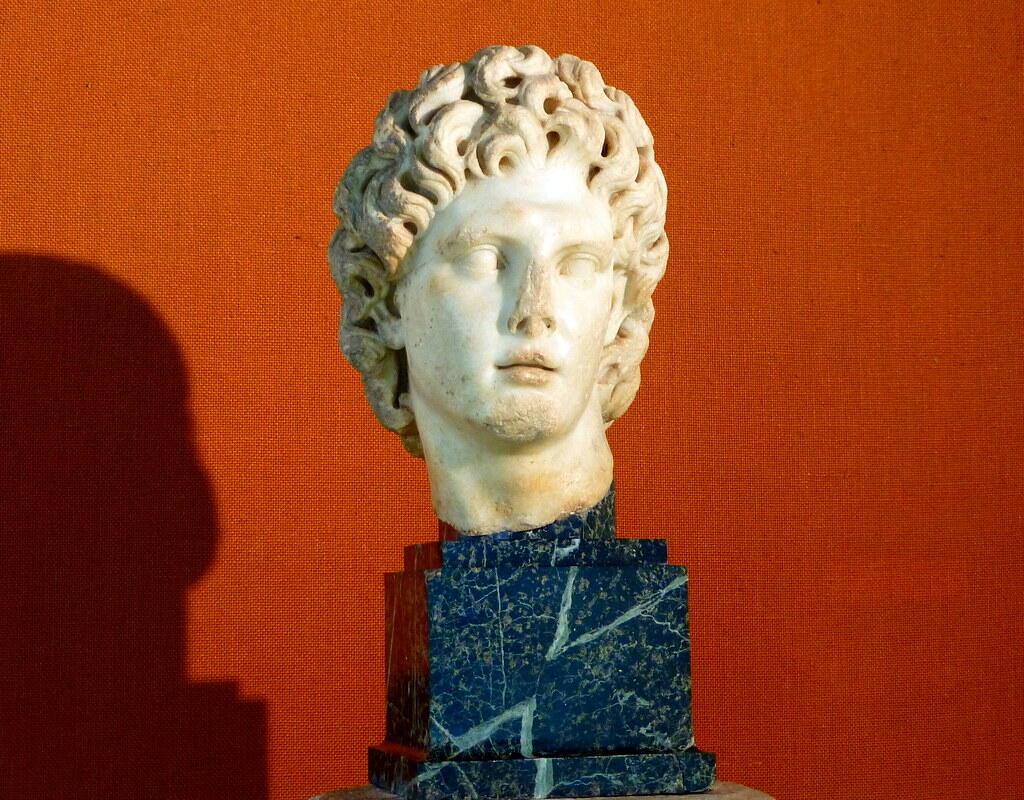
After ascending to the throne at the age of 20 following his father's assassination, Alexander III quickly consolidated his power in Greece and embarked on the ambitious mission to conquer the empires mentioned above.
In just over a decade, this famous Greek figure overthrew King Darius III (the last Persian king) and expanded his empire, founding Alexandria around 300 BC.
His strategic genius and ability to inspire his troops made him invincible on the battlefield. However, his premature death in Babylon at just 32 years of age (from a rumoured typhoid fever) left his immense empire without a clear successor, leading to its fragmentation and the beginning of the Hellenistic era, a period of vast diffusion of Greek culture and language in the Near East.
Pericles
A famous ancient Greek figure and a symbol of democracy since the 5th century BC (even called "The Century of Pericles"), this politician from a noble family was characterised by his leadership, but above all, by his legacy of opening the doors to citizen participation.
His mission was to consolidate Athens as a cultural and political beacon of the Greek world, and he far exceeded expectations.
Under Pericles' leadership, the city experienced an unprecedented cultural and artistic flourishing, becoming a symbol of Greek greatness with the construction of the Acropolis, including the Parthenon, the Propylaea, and the Erechtheion, in addition to the Long Walls (a famous military fortification).
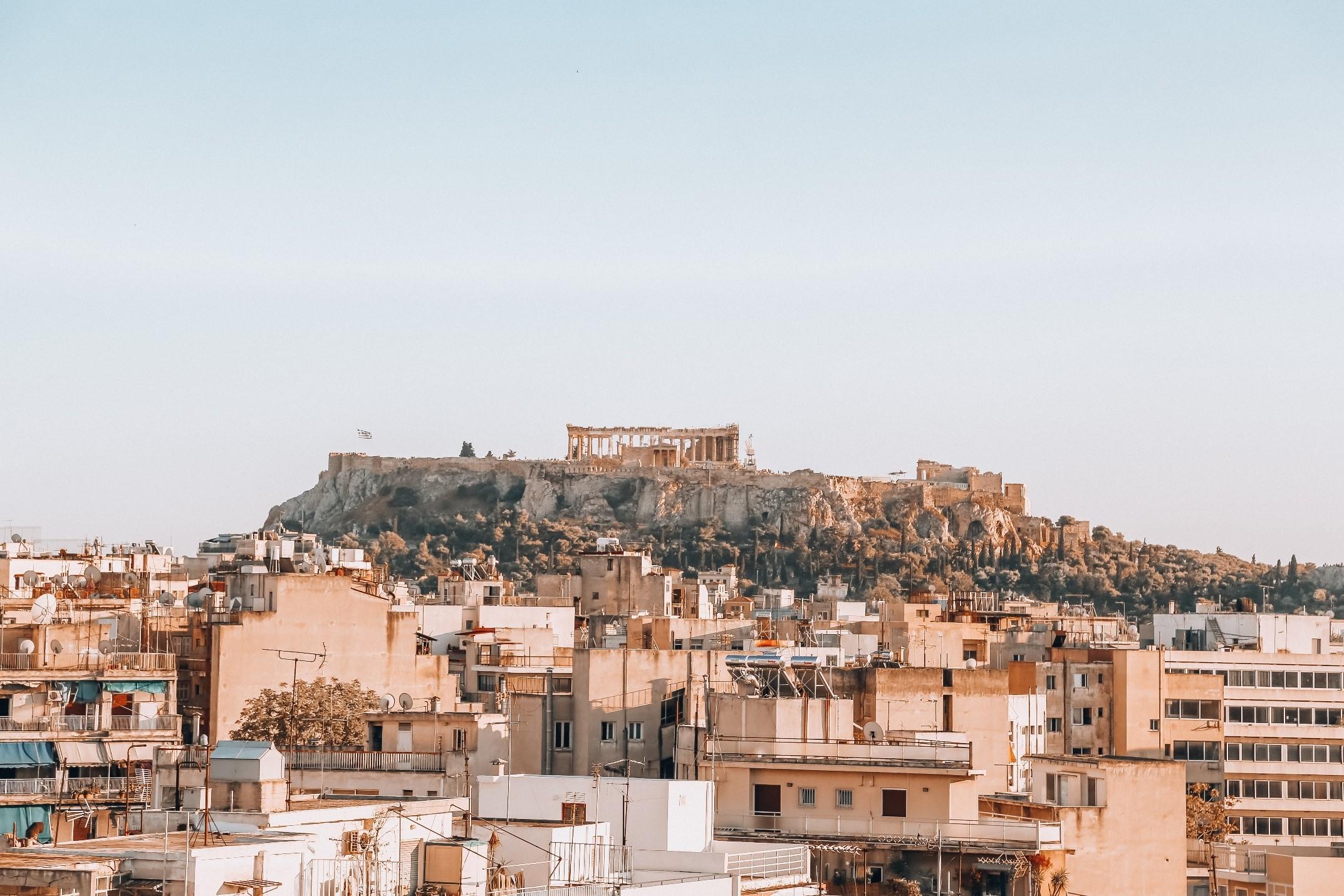
However, despite his constant reelection, Pericles' leadership was also marked by growing tension with Sparta, which eventually culminated in the Peloponnesian War, which, along with a devastating plague in Athens that claimed thousands of lives, ended Pericles' term and with his own life in 429 BC.
At that time, the aristocracy was the only one with access to public office, so Pericles laid the foundations for what we know today as direct democracy through the principle of majority as a rule, equality and respect for the rights of all citizens, and the assignment of positions based on individual abilities, not social status.
Leonidas I
Greek history and mythology are also full of great soldiers, one of the most famous from this long and storied history being King Leonidas I. Leonidas was the leader of the Spartan forces at their storied last stand at the Battle of Thermopylae, during which his deeds would see him go down in history as one of the most famous Greek names in the history books.
The battle of Thermopylae was a brutal three-day battle fought in the summer of the year 480 BC, during which the now legendary force of 300 Spartan soldiers mounted their defence against the 120,000-strong Persian army. This story of insurmountable odds has inspired popular culture ever since, with songs and movies being written of the Spartans’ deeds at Thermopylae.
Famous Greeks in the Arts, Literature and Sports
Homer
Ancient Greece produced a wide berth of other notable figures, such as their many great storytellers. The most famous Greek poems, The Iliad and The Odyssey, were epics (lengthy stories about superhuman deeds) written by the same man, one of the most famous ancient Greek people in modern retrospect, the poet Homer.
The Iliad tells of a feud between the supposed allies King Agamemnon and the superhuman warrior Achilles during the Trojan War. The Odyssey takes place after the end of the Trojan War and details the perilous and lengthy return home from the defeated city of Troy of Greek champion Odysseus.
Both are regarded as some of the greatest stories in human history, and they are known almost ubiquitously throughout the Western world.
Sophocles
Oedipus Rex, Electra, Antigone … do they sound familiar? Sophocles is one of the most famous Greek people in human history. Author and poet of more than 100 plays (although very few survive today), he lived through the splendour of 4th-century Athens, receiving an education focused on dance, music, and gymnastics.
In this stimulating environment, rubbing shoulders with figures such as Herodotus and Pericles himself, the dramatist developed his art in the theatre, specialising in tragedy and forever transforming it by introducing the scenography concept.
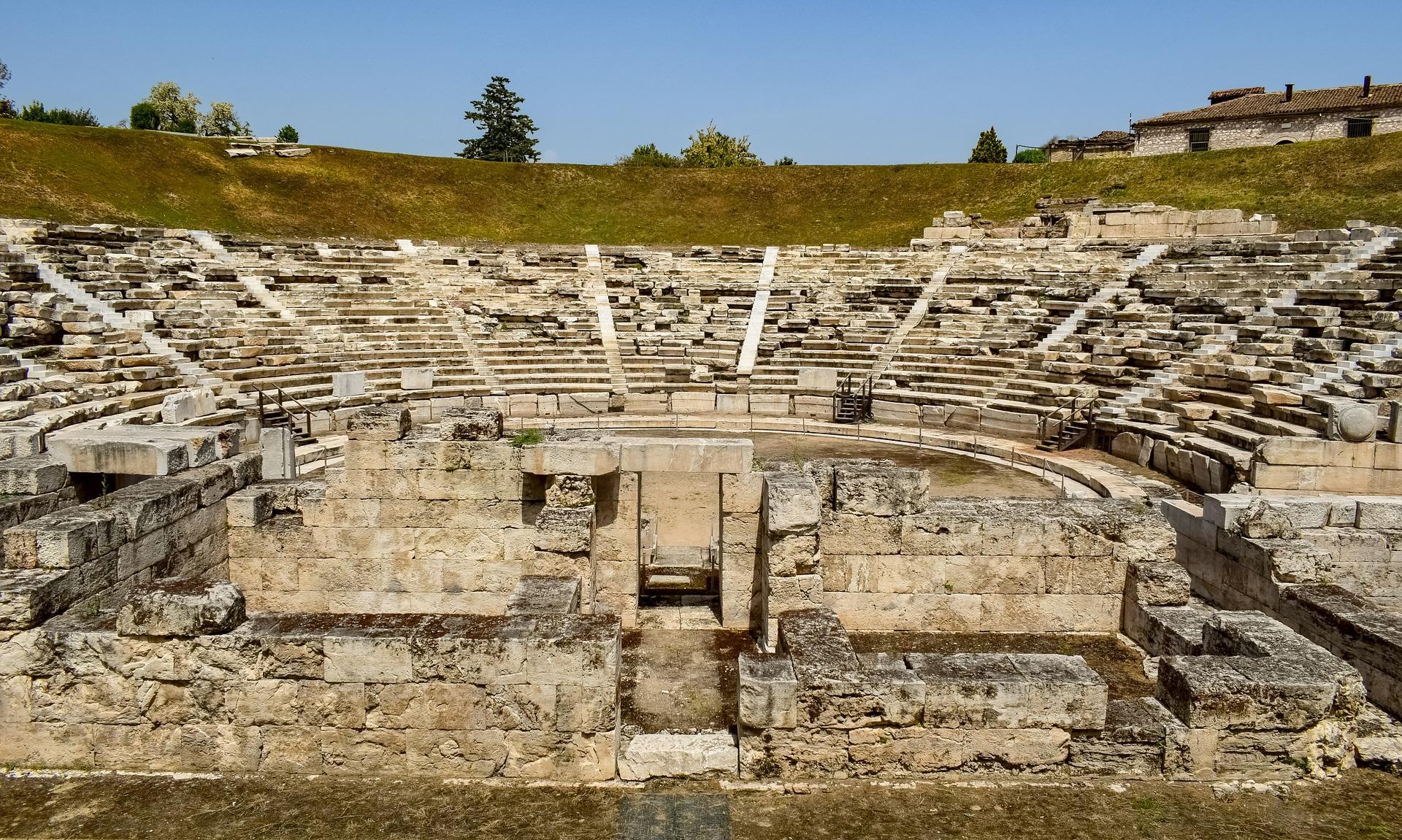
Sophocles' plays are characterised by their interweaving of human emotions (his works also explored loneliness, perseverance, pain, and faith) with the concept of destiny, managing to place the human being as the true protagonist beyond the influence of deities and myths, which governed every aspect of life in society at the time.
Maria Callas
The great Greek diva Maria Callas had a stellar career as a soprano but a complicated private life. Although she was born in New York in 1923, she moved to Greece at 14, where her parents were originally from. Fluent in French, Italian, Greek and, of course, English, she began her career in the Hellenic country during the height of World War II (when Greece was occupied), studying at the Athens Conservatory.
Maria, known for her talent, intellectual spark and elegance, found love in Italy, and it was here that her true rise in the opera world began. With a strong personality, Callas's voice catapulted her to global stardom, earning her the nickname "La Divina” or simply “La Callas”.
She collaborated with renowned figures such as Leonard Bernstein and Luchino Visconti and dazzled on iconic stages such as La Scala in Milan with works by Verdi and Puccini.
In the mid-1950s, she underwent a remarkable physical transformation, losing over 35 kilos. Due to her growing fame—and a highly publicised extramarital affair with magnate Aristotle Onassis—she also suffered drastic changes in her voice, which led to severe stress and anxiety.
The entire situation made her sacrifice her career, as her voice gradually deteriorated. She lived out her final days in Paris, and after a suicide attempt and a dependence on medication, Maria Callas died of a heart attack on September 16, 1977.
Nikos Kazantzakis
Kazantzakis is the emblem of modern Greek literature. He was a prolific Greek writer—who even dabbled in politics and whose literary works greatly transcended the world of cinema. Born in Iráklion, on the island of Crete, in 1883, during the uprising against the Ottoman Empire, his life and work were also influenced by the exile during his youth due to various regional conflicts.
His education, which included studies in Law at the University of Athens and philosophy in Paris, was complemented by a tireless travelling facet and a strong philosophical influence from thinkers such as Nietzsche and his mentor, Henri Bergson. Kazantzákis's vast literary work includes philosophical essays, travelogues, and tragedies, as well as notable translations of classics.
Kazantzakis is primarily known for his epic Odyssey, a sequel to Homer's Odyssey, and his widely translated novels, such as Zorba the Greek, Christ Recrucified and The Last Temptation of Christ, as well as his autobiographical novel, Informe al Greco, published posthumously. After his brief foray into Greek politics as a minister in 1945, he worked for UNESCO before settling in Antibes, France, where he died in 1957.
Mikis Theodorakis
Just as in ancient times, contemporary Greeks have also fought and shown bravery while fighting for justice and their rights, demonstrating their resilience through their artistic vein. Amongst many of these figures, is one of the most admired and recognised figures in Greek art and society, composer and activist Mikis Theodorakis.
This famous Greek was better known for his works in the éntekhno genre, which mixes orchestral music with traditional Greek folk music and is often used to lyrically tell the tales of famous Greek myths, such as the story of Prometheus and his theft of fire from the gods or of famous Greek gods such as Zeus and Poseidon and their respective rise to power in Greek mythology.
Formed in the Athens Conservatoire and Paris, Theodorakis explored his diverse Greek regional influences in his work, blending symphonic formats with popular Greek instruments and folk traditions.
Theodorakis acquired international fame by creating one of the most popular songs in history and a symbol that identifies the Greek culture anywhere in the world today: “Zorba’s Dance”. He composed this piece for the 1964 movie Zorba; the instrumental track ranks very highly among the most famous Greek songs globally, but despite being Theodorakis’ best-known work, it is actually rather unusual for his style.
He was exiled, persecuted and even tortured for his political beliefs, but has left a lasting mark through his invaluable musical legacy. He served as a member of the Greek parliament and minister, receiving numerous international accolades for his work and activism, including the UNESCO International Prize for Music in 2005.
Mariza Koch
In the 1970s, from the more modern musical ideas combined with traditional styles emerged a musical style called modern nisiótika, considered a renaissance of the traditional Greek folk. It was spearheaded by the famous figure of Marzia Koch, one of the more famous Greek women of the time, best known for competing in the 1976 Eurovision Song Contest.
Born in 1944 in Athens, Mariza was deeply influenced by Byzantine music and the island songs of the Cyclades. This famous Greek woman began her professional career in 1971 with the release of her album "Arabas”, a collection of traditional Greek folk songs infused with innovative electronic arrangements.
She quickly established her distinctive vocal style and became an ambassador for Greek music, touring extensively and performing in major theatres and festivals in every corner of the world (she was one of the first Western singers to perform in China in 1980).
Dimitris Mitropanos
This iconic and famous Greek singer maintained a strong connection with the Greek people throughout his life, not only through his music and powerful voice but also through his political awareness and participation. Born to a low-income family during the post-war period, he sought his fortune in Athens.
And he found it, as his prolific career allowed him to sing for over 45 years, mixing these traditional Greek genres:
He worked with equally celebrated contemporary Greek composers such as Mikis Theodorakis and Thanos Mikroutsikos. Mitropanos left behind iconic songs such as "Roza” (Rose), “Mia Por Zo” (One Life) and the ode to Thessaloniki, "S' anazito sti Saloniki” (“I am looking for you in Salonika”), which have been played millions of times, keeping the legacy of this Greek artist, who died in 2012, alive for generations to come.
Giannis Antetokounmpo
Giannis Antetokounmpo is a symbol of effort and pride for Greeks today. Known as "The Greek Phenomenon" or the "Greek Freak" of the Milwaukee Bucks, two-time NBA MVP (2019, 2020), Finals MVP (2021), Defensive Player of the Year (2020), and NBA Champion in 2021, he has become one of the most dominant forces in basketball.

Giannis grew up in Athens, and although at the beginning of his sports career, he wanted to be a football player, but with his 2.11 m, he began to shine in Greece with the Filathlitikos team in 2013 at only 19 years old. His transition from being a rookie with errors in his shots to the rapid rise he achieved has established him as a figure of drive and effort in this elite sport.
Stéfanos Tsitsipás
At only 26, with a firmly established place among the ATP elite, reaching two Grand Slam finals, Stéfanos Tsitsipas is one of the most famous Greek people today. His distinctive one-handed backhand and intense playing style propelled him into the world of tennis, a sport he started practising at 3 years old in his native Athens.

Since his professional career kicked off in 2016, Tsitsipas has been a recurrent name in major tournaments, reaching semi-finals on several occasions, amassing 12 singles titles on the ATP tour, and, of course, remembered for being the youngest player to have beaten Novak Djokovic, Roger Federer, and Rafael Nadal before turning 21.
Tsitsipás mother, Julia Salnikova, was a professional WTA tennis player, and his dad, Apostolos – his first coach - was an experienced trainer in the sport. Without leaving aside his maternal grandad, Sergei Salnikov, who won a gold medal at the Melbourne Olympic Games in 1956 as a footballer with the Soviet Union team.
Emmanuíl Karalís
Born in October 1999 and conquering global audiences last summer with his bronze medal at the Paris 2024 Olympic Games, Emmanuíl Karalís, “Manolo”, is the most successful Greek pole vaulter of the past decades, a high-level athlete in constant competition with Armand Duplantis or Menno Vloon, all three making history in this ancient sport.
The first Greek pole vaulter in history to clear the 6m barrier and now a double Olympic competitor (4th place in Tokyo 2020), Emmanuíl, has continuously broken national records, showcasing his ability to deliver in the biggest competitions. Beyond athletics, Karalis also serves in the Greek Navy, which accommodates his training as an athlete and is not an obstacle to winning, as attested in his latest gold medal at the 2025 European Athletics Championship.
Summarise with AI:
Did you like this article? Leave a rating!

 Loading...

Good job guys … but, you know , there is a Greek saying that ‘ the enemy of good is better ‘ My mind went to dozens of left outs. I could not help it. Mea culpa.
Thank you for your thoughtful comment! You’re absolutely right — no list can cover everything, and your point about “the enemy of good is better” is well taken. We’ll bear this in mind for the next update and would love to hear which figures you feel deserve a mention.