The Hindi language is a reflection of the rich cultural tapestry of India. To be sure, every language has distinct words for the names of fruits, expressions of gratitude, numbers and everyday words or expressions. However, this language also has many expressions that are exclusive to Hindi that can’t be expressed or spoken with a direct English equivalent. These are but a few of them.
| 📜Hindu word | 📢What it sounds like | 📖What it means/represents |
|---|---|---|
| Jootha झूटा | something that someone else has already touched. | |
| Dhaba ढाबा | A roadside food and rest spot. | |
| Kanyadaan कन्यादान | 'Giving away' the bride. | |
| Rakhi राखी | A sister's pledge to her brothers to always be there for them, in the shape of a bracelet. | |
| Jigyasa जिज्ञासा | The thirst for knowledge. | |
| Moksh मोक्ष | The higher existence plane one attains after release from the cycle of Samsara. | |
| Rimjhim रिमझिम | Officially: drizzle Culturally: used to describe a mood. | |
| Jijivisha जिजीविषा | Living your best life. | |
| Ghataa घाटा | Literally 'thick clouds', used to describe misery. | |
| Adda एक जोड़ें | An unspecified meeting place. | |
| Rasa रस | Literally 'juice' Informally, aesthetic or emotional experience. | |
| Jugaad जुगाड़ | A life hack | |
| Viraha विरह | A more poetic version of 'absence makes the heart grow fonder'. |


What Are Some Words in Hindi That Don't Exist in English?
Have you ever run across a Hindi word for which you could find no direct translation in your Hindi-English dictionary? It's not because you're failing to look properly, it's because many Hindi expressions and idioms that have literal translations make no sense in English.
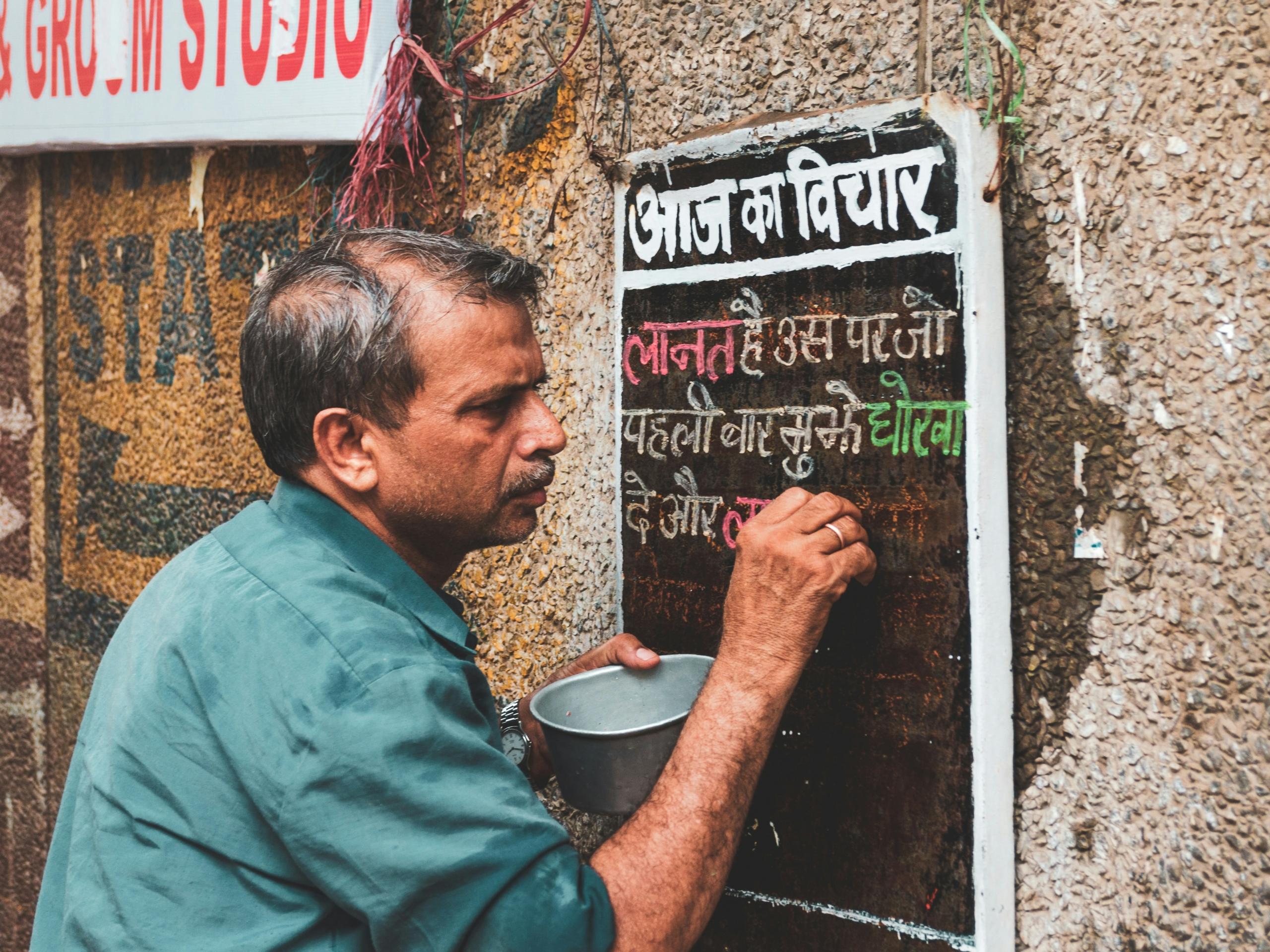
What Makes a Word Untranslatable?
Every culture has its own norms, values, and history. What is important to the Hindu culture matters little to English culture, and vice versa.
Naturally, to describe these cultural aspects, people develop words and phrases that only they can understand the full meaning of. For instance, this is a very British example of such:
Keep calm and carry on.
This iconic phrase represents the very essence of British stoicism. It says that, come what may, we will endure. However, when used outside of British cultural circles, this idiom has little meaning. We call phrases like these 'Little C' markers3.
Big C represents major cultural markers such as language, religion, dress styles, and art.
Little C comprises all the 'hidden' cultural markers of a society, including dialects and slang.
Hindi is a Big C marker; we all recognise it as the language of India. However, words that defy translation — words that express concepts that don't exist in other cultures, are Little C markers.
English speakers lack the insider knowledge, history, and structures that shape Indian culture. So, we have no words that uniquely describe Indian concepts. So, we have no choice but to use the native language terms to describe them.
Hindi Words That Don't Exist in English
From those with beautiful meanings to those with unusual origins, this list of Hindi words4 with English meaning gives us insight into this ancient culture.
Jootha - झूटा
First on our list is the word jootha, which has a meaning most similar to leftovers in English. However, it actually means something that someone else has already touched. The cultural nuance is deeply ingrained, and the word 'hai' is often used to emphasise the existence of this concept.
Usually, this will be some food or drink, so for example, if one person drinks from a cup and then another person drinks from that same cup, the second person is using the first person's “jootha”. As you might expect, it is generally frowned upon!
Dhaba - ढाबा
A dhaba is similar to the English speaking world's bed and breakfast. However, in true Hindu fashion, it goes far beyond that definition to become a hybrid between a hostel, a fast food place, and a roadside café.
These gas station food spots offer delicious meals and camp beds. Typically, those who spend long hours on the road rely on dhaba to make their journey more pleasant. Dhabas are open 24/7 for those travellers' convenience and safety.
Kanyadaan - कन्यादान
Kanyadaan is the ritual performed during Hindu weddings, whereby the father of the bride “gives away his daughter” to the groom. This might sound like quite an old-fashioned way of doing things, but it is well ingrained enough in the culture that it has been accepted as commonplace.
The ritual involves the bride’s father placing his hands on top of the bride and groom’s linked hands, and the bride’s mother pouring holy water over their hands.

Rakhi - राखी
A rakhi is another thing that doesn’t translate to English because it isn’t something that has traditionally existed in English-speaking cultures. A Rakhi is a bracelet that a sister will wrap around the wrist of her brother, symbolising her devotion to them, and their pledge to defend her no matter what.
The occasion when the rakhi is presented is an important part of familial relationships.
This tradition only exists in Hindi-speaking cultures!
Jigyasa - जिज्ञासा
Jigyasa can have a lot of different meanings, depending on context. The only commonality is that it means a general want for knowledge.
Depending on the context in which it is used, it can either mean a demand, an inquiry, a doubt, or just general inquisitiveness. It doesn’t have any sort of official translation despite all these different use cases, though.
Moksh - मोक्ष
This word originates from the so-called Eastern religions: Hinduism, Buddhism, Sikhism, and Jainism. It relates to the cycle of Samsara.
The cycle of death and rebirth that is central to Eastern religions.
Moksh is a reference to the higher-level existence one attains after breaking free from Samsara. It expresses the emancipation from suffering.
Rimjhim - रिमझिम
Its literal translation is 'drizzle' or 'light shower', but its Hindi-to-English translation better describes the joy that comes from rain and monsoons. Thus, rimjhim is more of a mood descriptor than a standard noun.
Jijivisha - जिजीविषा
Jijivisha is a conceptual word that we could probably all use a little more of in our lives! It describes a person who is living their best life. It expresses a desire to do so, either for yourself or the person you are talking about.
Ghataa - घाटा
Ghataa translates to 'thick clouds', but it's an idiom for general misery and anguish. Poets and lyricists use it a lot because it describes the heaviness of the heart and similar such torment.
Adda - एक जोड़ें
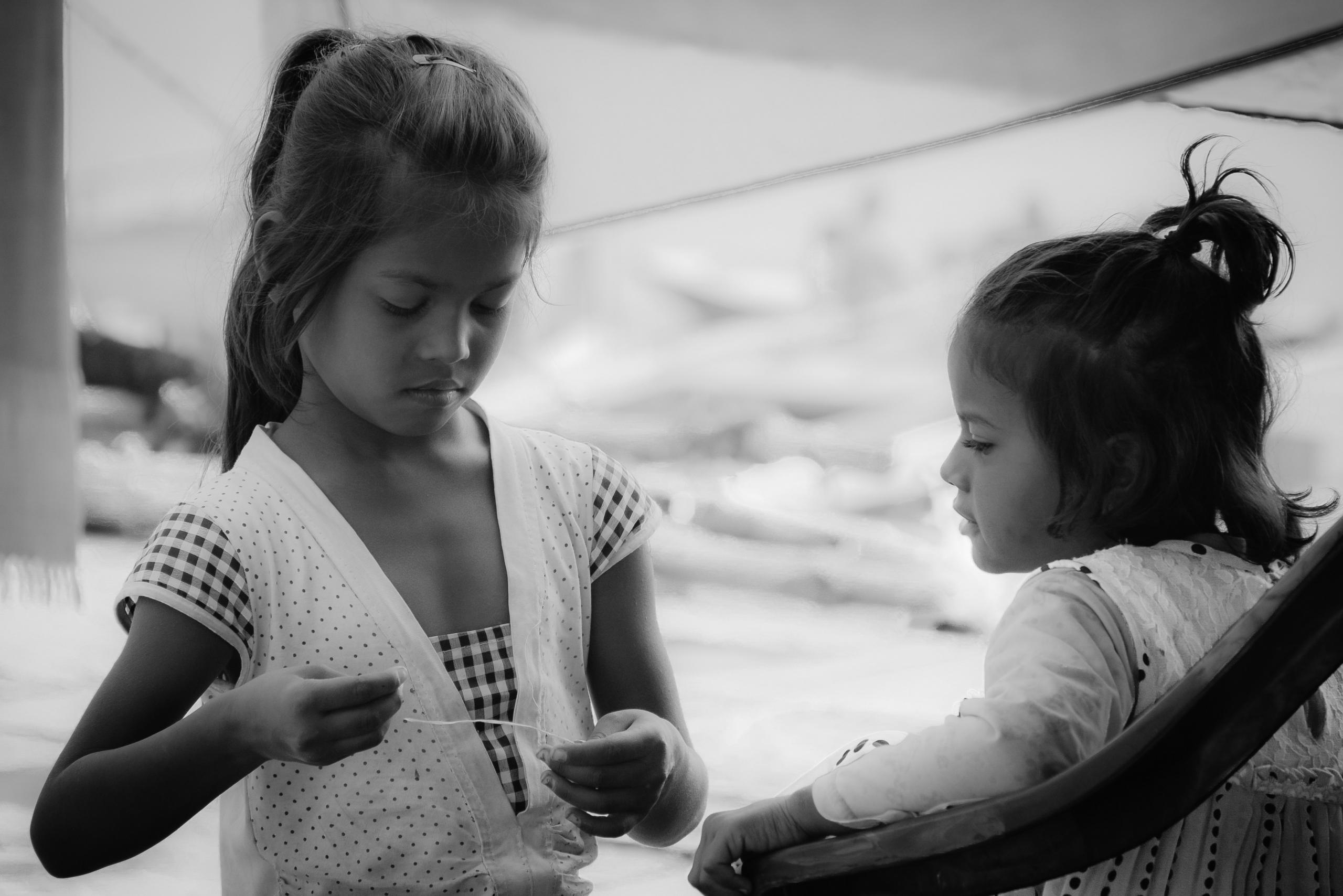
An adda is a gathering spot, with no specifics as to what that gathering spot actually is! An adda could be a restaurant, a café, a park, or even just a street corner. What makes an adda is the regularity with which it is used by friends to gather, regardless of any physical features.
Rasa - रस
Rasa is difficult to pin down. It is perhaps best described as using voice and movement to convey emotions and create a story for your audience. It typically relates to something artistic.
The words share a common root2.
Latin 'ras' means 'dew' or 'moisture'.
Hindi 'rasa' refers to 'juice', 'essence', or taste.
However, the Hindi definition has evolved to mean 'aesthetic or emotional experience'.
Rasa is very much an embodiment of the desire to share passion and emotion that is so fundamental to us as humans. Much more impactful than its literal translation of just “juice”, then!
Jugaad - जुगाड़
A colloquial Hindi term that has risen to prominent usage in recent years, a jugaad is basically a life hack. The cheapest or easiest solution to any given problem that still manages to get the job done.
It can be any sort of time or money-saving trick, although is normally used for methods that appear unconventional.
Viraha -विरह
Viraha is one of the most beautiful Hindu phrases on this list, and my personal favourite. It is a single word that says “absence makes the heart grow fonder”.
Viraha is literally the gap of time between stopping faith and resuming it, but is used in relation to more than just spiritual love. The idea that time without love can show you how much you value the love that is beautiful. Having a single word for that expression is elegant.
The Influence of Hindi on English
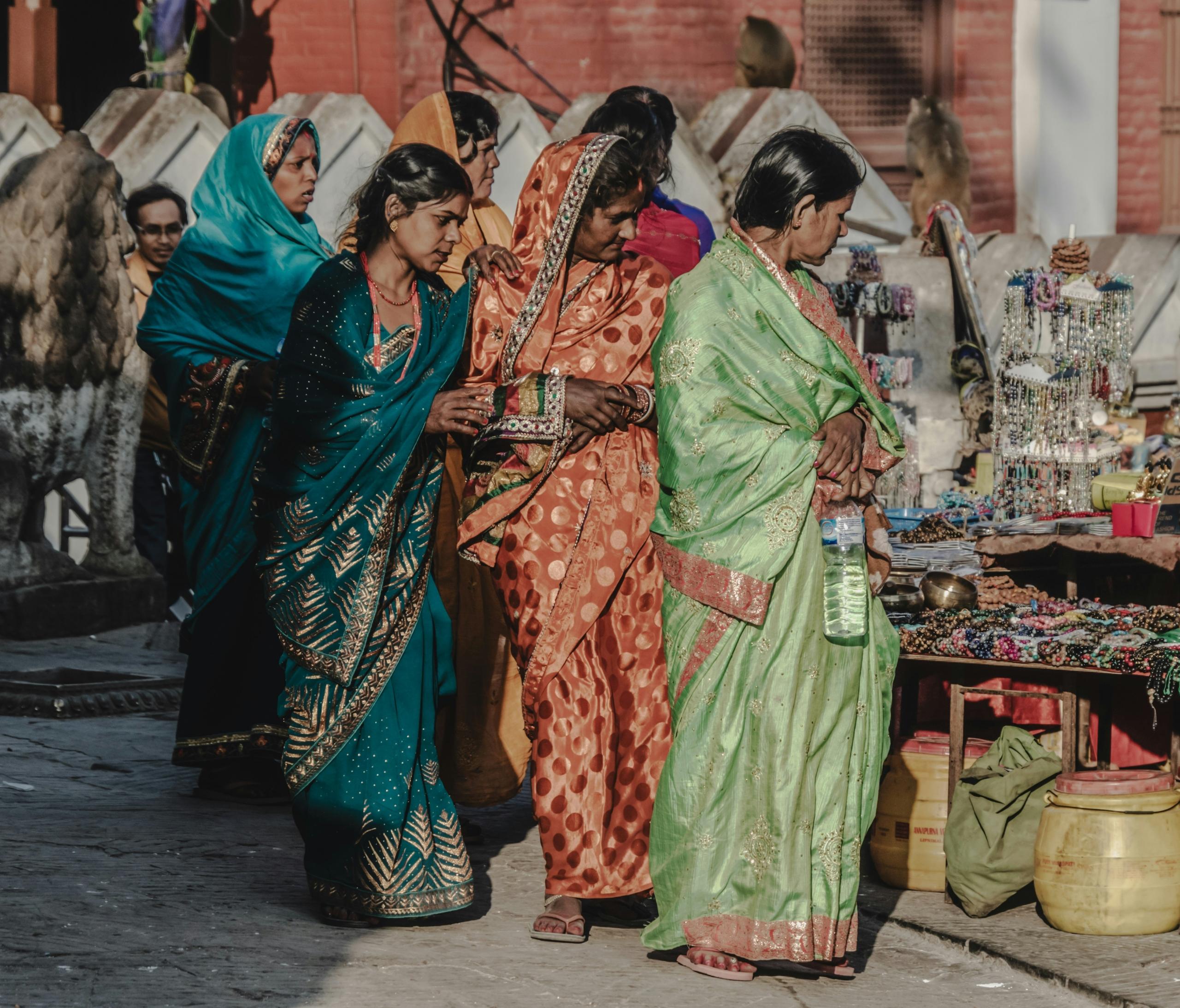
Do you wear pyjamas? Congratulations! You are wearing a Hindi garment. Pyjama literally translates to 'leg clothing' (pae = leg; jama = clothing). Besides providing a word to describe our comfortable home wear, Hindi has given us many other words we've folded seamlessly into the English language1.
Hindi is the third most spoken language in the world, behind only English and Mandarin. This tongue developed over centuries, with help from Sanskrit, Marathi, and other influences. That makes Hindi fascinating to study and a deep dive into human history. However, that doesn’t mean it is easy!
References
- Hughes, Anthony. “10 Hindi Words Used in English.” English4Today, 4 Feb. 2021, english4today.com/10-hindi-words-used-in-english/?v=288404204e3d. Accessed 2 Dec. 2025.
- www.wisdomlib.org. “Ras, Rās, Rash: 14 Definitions.” Wisdomlib.org, 13 May 2019, www.wisdomlib.org/definition/ras. Accessed 2 Dec. 2025.
- Alexandru Caldararu, et al. “What Is Culture and Intercultural Competence?” Openeducationalberta.ca, NorQuest College, 21 Dec. 2021, pressbooks.openeducationalberta.ca/settlement/chapter/introduction-4/. Accessed 2 Dec. 2025.
- Rout, Priyanka. “Hindi Words | Beautiful Words That Can Never Be Translated into English! -.” Study Abroad Blogs | All about Universities, Programs, Tests, & More!, 29 June 2022, ischoolconnect.com/blog/hindi-words-beautiful-words-that-can-never-be-translated-into-english/.
Summarise with AI:
Did you like this article? Leave a rating!

 Loading...