

You can't become a piano teacher overnight. Turning the piano into a career itself is a process that requires years of practice. If you want to get started or experience different teaching styles, consider local piano lessons.
History books talk about numerous piano virtuosos, who like Chopin, for example, was enrolled in piano lessons at the age of six by his mother, who was herself a pianist, and who'd noticed a particular if not precocious talent for the instrument.
To become a pianist, virtuoso, or piano teacher, it's better to have studied music for a very long time.
You're just beginning to learn how to play the piano, have acquired some skills, and already you're envisioning teaching others what you know? Do you want to be a piano teacher? We'll look at what level it's possible to start as a piano teacher in the UK.


Basic teaching experience for piano instructors
The private sector, through models like Superprof, offers more variety of training. Indeed, we have a vast number of professionals who can help you specialize in piano from a teaching perspective; it is one of the best foundations you can have to start or improve your career as a piano teacher.
To teach in a conservatoire or university, you need a postgraduate music qualification, a recognised profile as a performer, and teaching experience.
Depending on the level you want to teach, you will find all kinds of university music-related undergraduate and post-graduate degrees, high-level piano diplomas from examination boards, and private courses with pianists with professional performance experience ready to bring out the piano teacher in you.
Superprof suggests some training to become a proper piano teacher, so start asking yourself these questions:
- Do you know which might be the best option for you?
- Do you already play an instrument?
- Do you have a music degree but no teaching diploma?
- Do you need any kind of degree to give start piano tutoring jobs?
- What is the skill level you need to reach to teach this noble instrument?
- What type of training and how many years of practice are needed?
Keep reading to discover your options!
Become a Piano Teacher Through a Degree Program in the UK
Have you ever found yourself listening to Tom Odell's "Another Love" on repeat? Or been obsessed with Freya Ridings' "Lost Without You"? These two British artists have in common their specialization in piano via a Degree Program in a UK university, and most piano teachers begin with a degree in music.
The United Kingdom has had an impressive cultural legacy for centuries, thanks to its prestigious institutions that equip students with the tools to occupy unique roles in the music industry.
Aside from the eleven music conservatoires in the UK, there are more than 80 institutions offering degrees related to music studies, with the piano being the central instrument in a significant number of them.
These degrees typically last between 3 and 4 years. Here are some of the most common topics covered in a music degree in the UK:
- Performance
- Composition
- Popular music theory
- Music History
- Aural training
- Orchestration
- Ensemble work
Some of the most common degrees to obtain to become a piano teacher in the UK are:

The process of learning to play the piano is accompanied by technical exercises, cultural exchanges, competitions, lectures, and performances. If you’re certain that you want to become a piano teacher in the UK, and you already have some training and a deep interest in the instrument, take a look at the list of institutions where you can obtain your piano degree:
11 Universities Offering Bachelor's Degree in Piano Performance in the UK:
- Royal College of Music
- Royal Academy of Music
- Royal Northern College of Music
- Royal Birmingham Conservatoire
- University of West London
- Trinity Laban Conservatoire of Music and Dance
- Leeds Conservatoire
- Guildhall School of Music and Drama
- Royal Conservatoire of Scotland
- University of Chichester
- London College of Music
If you want to keep your options open and evaluate a wider approach to a degree in Music, you might want to start your research for the ideal degree using this information:
| Degree | University | General Information about the Syllabus | Duration |
|---|---|---|---|
| Bachelor of Music Performance (BMus Performance) | Royal College of Music | Focuses on solo performance, chamber music, music theory, and history with a wide range of elective modules in musicology, pedagogy, and composition. Includes one-to-one tuition and opportunities for public performances. | 4 years |
| Royal Northern College of Music | Combines practical piano training with academic studies in music history, theory, and composition. Offers masterclasses with renowned musicians and performance opportunities. | 4 years | |
| Royal Birmingham Conservatoire | Focuses on individual piano lessons, ensemble performance, and music theory, including optional studies in contemporary music, improvisation, and composition. | 4 years | |
| University of West London | Focuses on performance and recording techniques, music theory, and professional development modules to prepare students for the music industry. | 3 years | |
| King's College London | A mix of musicology, ethnomusicology, music theory, composition, and performance. Students receive one-to-one performance tuition, explore global music, and can opt for study abroad semesters. | 3 years | |
| Bachelor of Arts in Music (BA Music) | University of Oxford | Primarily academic, covering music history, theory, analysis, and composition, with optional performance components. Students can specialise in their third year with performance or further academic study. | 3 years |
| University of Cambridge | Combines music history, composition, and performance with advanced studies in analysis and cultural musicology. Opportunities for ensemble performance are available. | 3 years | |
| University of Edinburgh | Focuses on music theory, history, and performance, with an emphasis on both classical and contemporary music practices. Students can select elective modules in digital composition or ethnomusicology. | 4 years |

Regardless of the path you want to take after, as a piano or music teacher, soloist, or member of a band or an orchestra, most programmes require a performance audition or submission of a portfolio showcasing musical performance or compositions (based on their focus areas).
And as it’s naturally expected, English Proficiency is required to be admitted along with these general requirements:
Diplomas You Need To Teach Piano in the UK
In addition to qualifications such as a Postgraduate Diploma (PGDip), Master of Music (MMus), or Master of Performance (MPerf), to become a piano teacher it's not only needed to have excellent theoretical knowledge; making someone discover their talent or improving if he has been practising for years, transmitting knowledge without discouraging the student and knowing how to choose the best teaching method, are the basis to venture as a piano teacher.
Pedagogical skills are not acquired overnight, much less the skills to learn and transmit your knowledge and experience.
A good piano teacher, masters: Musical theory, synchronized two-handed performance,
nuances, solfeggio, rhythm and piano chords
Like the above, the piano teacher must master methods, patience, setting objectives, and knowing how to design an educational process that, like performance, can take several years to acquire.
To teach piano in an institution in the United Kingdom, there are a series of requirements and diplomas, depending on the level at which you want to teach. In the following list, you will notice that certain grades require special certificates.
- For conservatories and some universities (high-level piano diplomas from examination boards)
To become a piano teacher at this high level, also membership in professional bodies can enhance a candidate’s profile; being a member of music education organisations, such as the Incorporated Society of Musicians (ISM) or the European Piano Teachers Association (EPTA); these, provide professional development, networking, and accreditation to the potential teacher.
Looking to get a high-level diploma?
- For teaching at public schools (primary, secondary), apprenticeship level, you might also be asked for one of these certificates:
As you can notice, conservatories often prioritise performance and teaching ability over formal school teaching qualifications; on top of a postgraduate music qualification and a recognised profile as a performer, they demand extensive experience with students from beginner to advanced level from a school, masterclass, private teaching or music institution.
Become a Piano Teacher Through Cultural Institutions
For advanced pianists, this opens the door to a harmonious and creative professional life.
Faced with fewer options to learn piano within school walls, students wanting to learn how to play the piano, either for professional reasons (if they want a career in music production, for example, or a teacher) or pleasure, are increasingly turning to cultural institutions that offer an array of educational opportunities, including music, and especially the piano.
Cultural institutions with piano programs, usually have flexible schedules, and can be adapted to any level of commitment and time available. And because they're non-profit organizations that are funded by grants and donations, the costs are not as high as elsewhere.
Find out how much you should charge for your piano lessons...
There are also, of course, similar establishments in almost every decent sized city: music schools. They too offer courses that fit any schedule, any level, and can be done in your home. They also, generally, teach in more styles than just classical. If you're based in Wales, you can look for piano lessons in Cardiff to find suitable options.
These private lessons are, of course, more expensive, as these are businesses and not cultural institutions. They are trying to make money. Often times, however, they share teachers with the cultural institutions.
Become a Piano Teacher Through Private Lessons in Your Home
Private piano lessons are not entirely regulated in the UK. So anyone and everyone can call themselves a private teacher. But be careful, you need to be an old hand at the piano so you aren't weaker than your students!
Private piano lessons in your home are also a very effective way to learn and a very attractive option as jobs for ex teachers. The price, of course, will depend on the teacher giving the lessons.
And it will be entirely your responsibility to commit to a great deal of practice, which can be difficult with other responsibilities.
Generally, piano teachers have at least three years more experience than their students. This might seem low. Some first-year pianists are better than those who've been playing for three years, however.
The number of years is ultimately less important than the attitude the teacher takes with the piano.
It takes at least 6 years of playing the piano before you'll be able to begin teaching beginners.
The higher the level of instruction is, the higher the skill level the teacher will need to have.
So a student who already knows her way around the keyboard will need a more experienced teacher.
Someone with a degree in music, from a university or conservatory, will be, for them, a better bet.
To begin with, this is because they've been playing for more than a decade. Secondly, this is because they've received intensive training on the piano over the course of this decade.
But platforms like Superprof, which help you find private courses, can help level the playing field: we'll help you find the right piano lessons london for you.
And if you're already a piano instructor, create yourself a teacher's profile and start signing up you first students of the school year!
Also pick up on this guide to planning piano lessons...
Becoming a Piano Teacher: Knowing How to Put Yourself in Your Students' Shoes
Why do you want to become a piano teacher? The answer to this question might seem obvious: I want to become a piano teacher because I love this instrument.
Yes, but more than that. You must also know how to adapt to the levels of your students.
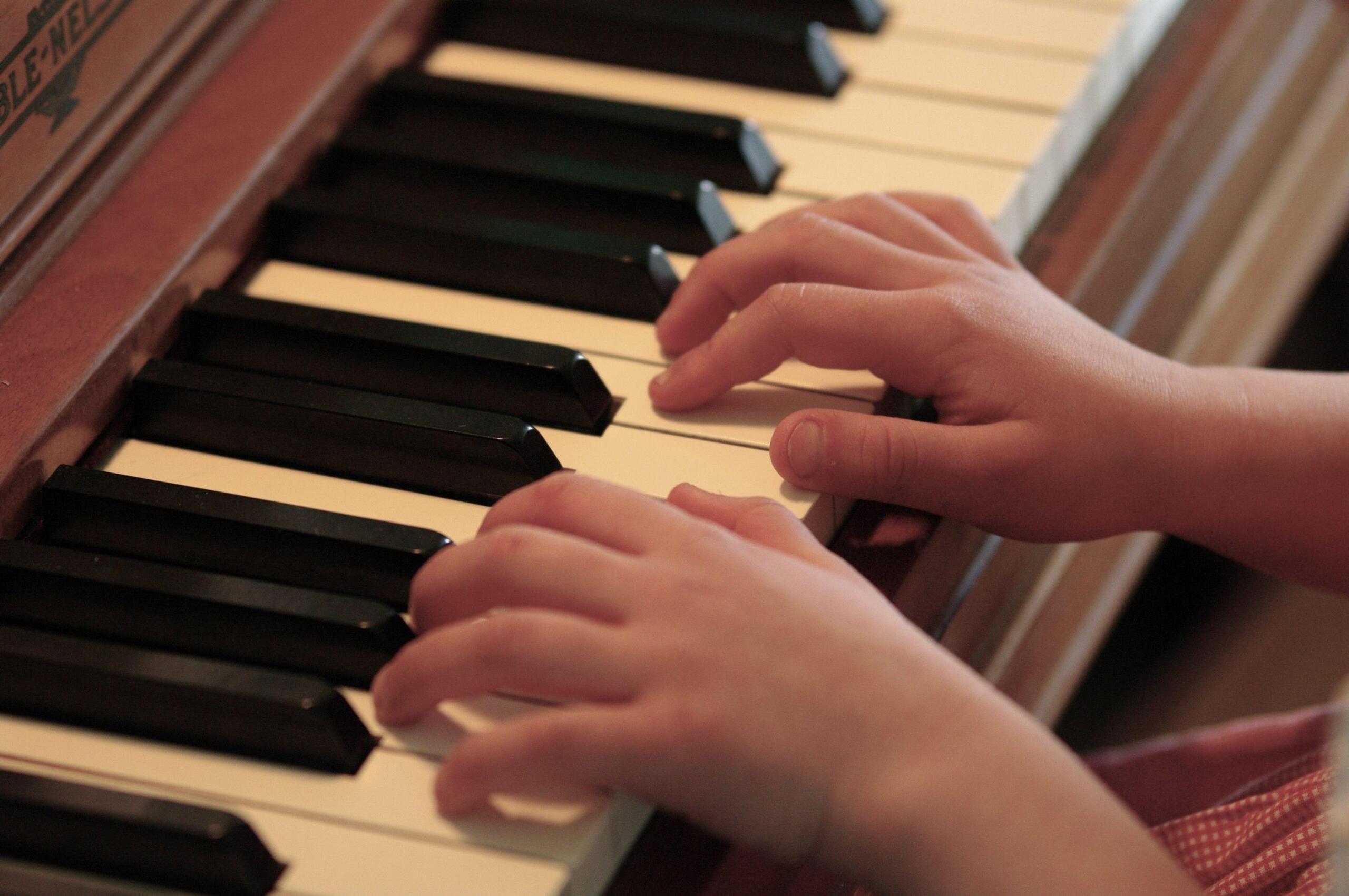
When you've been playing an instrument for several years, the primary goal driving you to teach might be a strong fondness for passing along your knowledge.
Teaching someone to play the piano, for beginners or even for other musicians coming to the piano, is a gratifying activity.
Find out the best ways of attracting students to your piano classes!
It challenges the educational skills of the teacher, which are put to the test: you'll often need to simplify a song to be able to explain it in a way that doesn't discourage the student.
This form of simplification can prove effective for a student wanting to learn the piano quickly and benefit from a proven method.
Just as with lessons in a language, the guitar, the drums, or the trumpet, the teacher's skill level needs to be high enough to be able to simplify the language.
With difficult songs, the instructor needs to be able to introduce simple arrangements to a beginner student.
The skill level needed to become a piano teacher is something that's set in stone, especially since there are no regulations governing the practice.
A teacher does, however, need to be able to establish a simple and accessible piano learning method for their students.
Learn all about how to give piano lessons!
A good teacher is someone who's mastered theory, the scales, rhythm, the chords, playing with both hands at the same time, and all of the various nuances of interpreting music.
But we aren't going to lie: someone who's able to play in a fluid manner, who can read music like one reads a book, and who can play sequences of chords without slip ups, is a pianist who's had several years of practice, perhaps ten or fifteen years.
Other good virtues to learn as you reach the level to become a teacher: are patience and listening.
A piano teacher needs to be patience because the lines of sheet music that students play over and over will appear simple, repetitive, burdensome, almost intolerable over time.
To be able to listen to others and develop the patience necessary to teach, you need to play the piano for many years: because a pianist who learns how to overcome his own challenges will understand those of others.
This is all well and good, but how can you reach the level you need to be at to be a piano teacher?
Summarise with AI:
Did you like this article? Leave a rating!

 Loading...
