
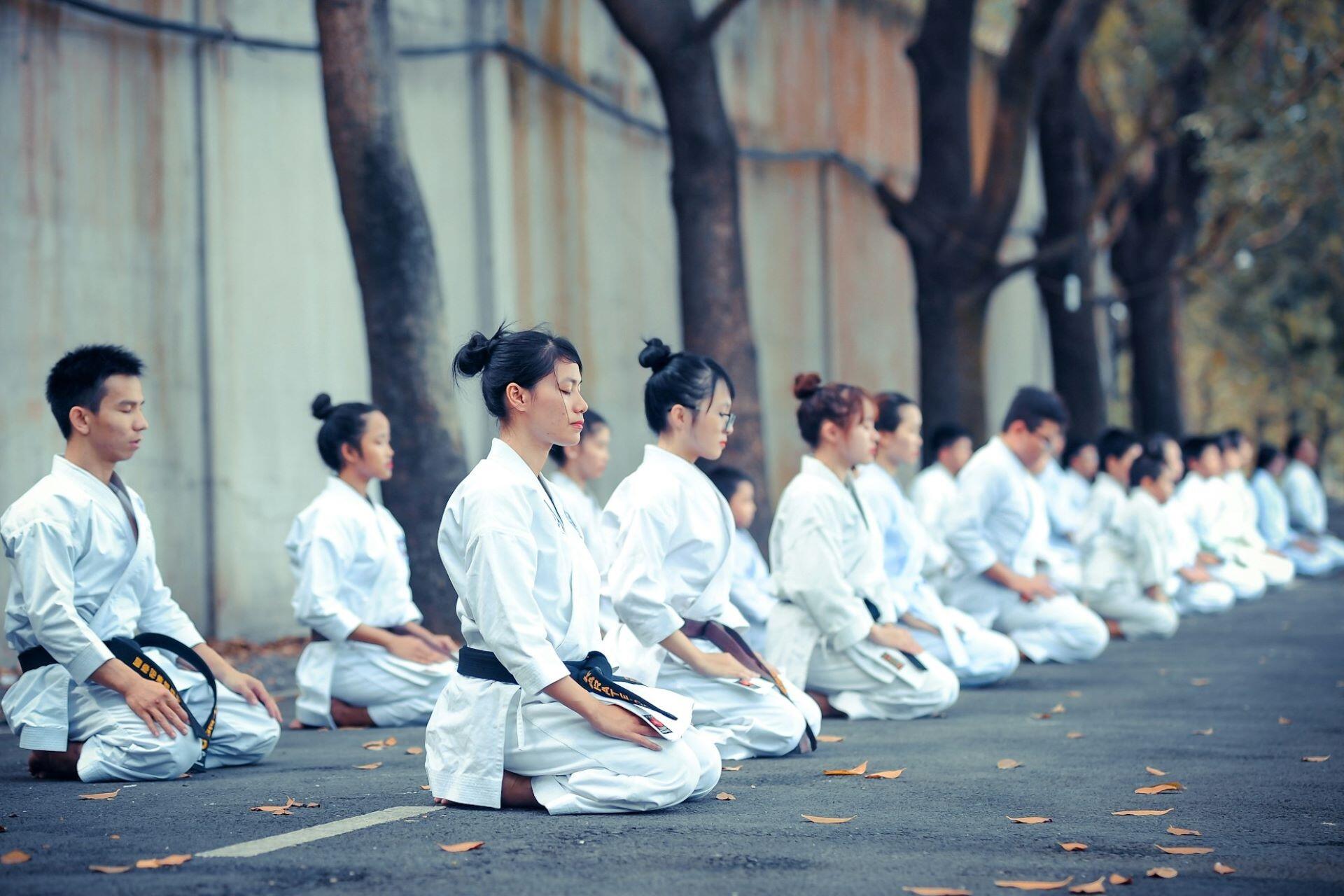

Martial arts are thousands of years old and present in almost every culture. From ancient combat systems to modern competitive sports, martial arts are diverse and cover many different values, philosophies, and needs according to the cultures that developed them. Here, we'll explore the different types of martial arts, from well-known systems like karate, judo, and boxing to the hybrid systems of MMA and historical and traditional systems.
| Martial Art | Origin | Type | Key Techniques |
|---|---|---|---|
| Boxing | Western (global) | Striking | Jabs, crosses, hooks, uppercuts |
| Muay Thai | Thailand | Striking | Elbows, knees, kicks, clinch control |
| Kickboxing | Japan / USA | Striking | Punches, kicks, combinations |
| Karate | Okinawa, Japan | Striking | Punches, kicks, kata, kumite |
| Taekwondo | Korea | Striking | High kicks, spinning kicks, speed |
| Brazilian Jiu-Jitsu | Brazil | Grappling | Guard control, chokes, submissions |
| Judo | Japan | Grappling | Throws, pins, groundwork |
| Wrestling | Global | Grappling | Takedowns, pins, body control |
| Sambo | Russia | Grappling/Hybrid | Throws, leg locks, submissions |
| MMA | Global | Hybrid | Striking, grappling, ground-and-pound |
| Jeet Kune Do | USA | Hybrid | Trapping, intercepting strikes, footwork |
| Sanda | China | Hybrid | Punches, kicks, throws, sweeps |
| Kendo | Japan | Weapons | Sword strikes with bamboo weapons |
| Eskrima / Arnis / Kali | Philippines | Weapons | Sticks, knives, improvised weapons |
| Ninjutsu | Japan | Weapons/Hybrid | Stealth, tools, unconventional tactics |



Striking Styles: Power, Speed, and Precision
Rather than pick the best 10 types of martial arts, we've tried to classify different martial arts styles by their most significant focus, starting with striking styles.
Striking styles focus on hitting your opponent using punches, kicks, elbows, or knees.
Grappling styles involve throws, holds, pins, and submissions to control or neutralise an opponent without striking.
These martial arts focus on throwing punches, kicks, elbows, or even knees. If the goal or primary focus is to hit your opponent or adversary rather than grab them or use a weapon against them, we've included them here.
Boxing
Boxing is the ultimate striking style. After all, it's one of the world's most recognised combat sports and is all about punching.
Of course, there's more to boxing than just punching your opponent, as you need to use footwork, head movement, and defence. However, the only way to attack your opponent in boxing is with different punches.
Key Techniques
- Jabs, crosses, hooks, uppercuts, slips, blocks
Best For
- Quick-start self-defence, fitness, striking fundamentals
Equipment Used
- Gloves, hand wraps, mouthguards, headgear
Muay Thai
Muay Thai, or the "Art of Eight Limbs," is a Thai martial art. In a sense, it is an expansion of boxing, where fighters are allowed to use other limbs (and joints) to strike their opponents.
Key Techniques
- Elbow strikes, knee strikes, roundhouse kicks, and clinch control
Best For
- Stand-up combat, full-contact fighters, conditioning
Equipment Used
- Gloves, shin guards, mouth guards
Kickboxing
Kickboxing sits halfway between karate and kickboxing, with adversaries allowed to strike one another using punches and kicks.
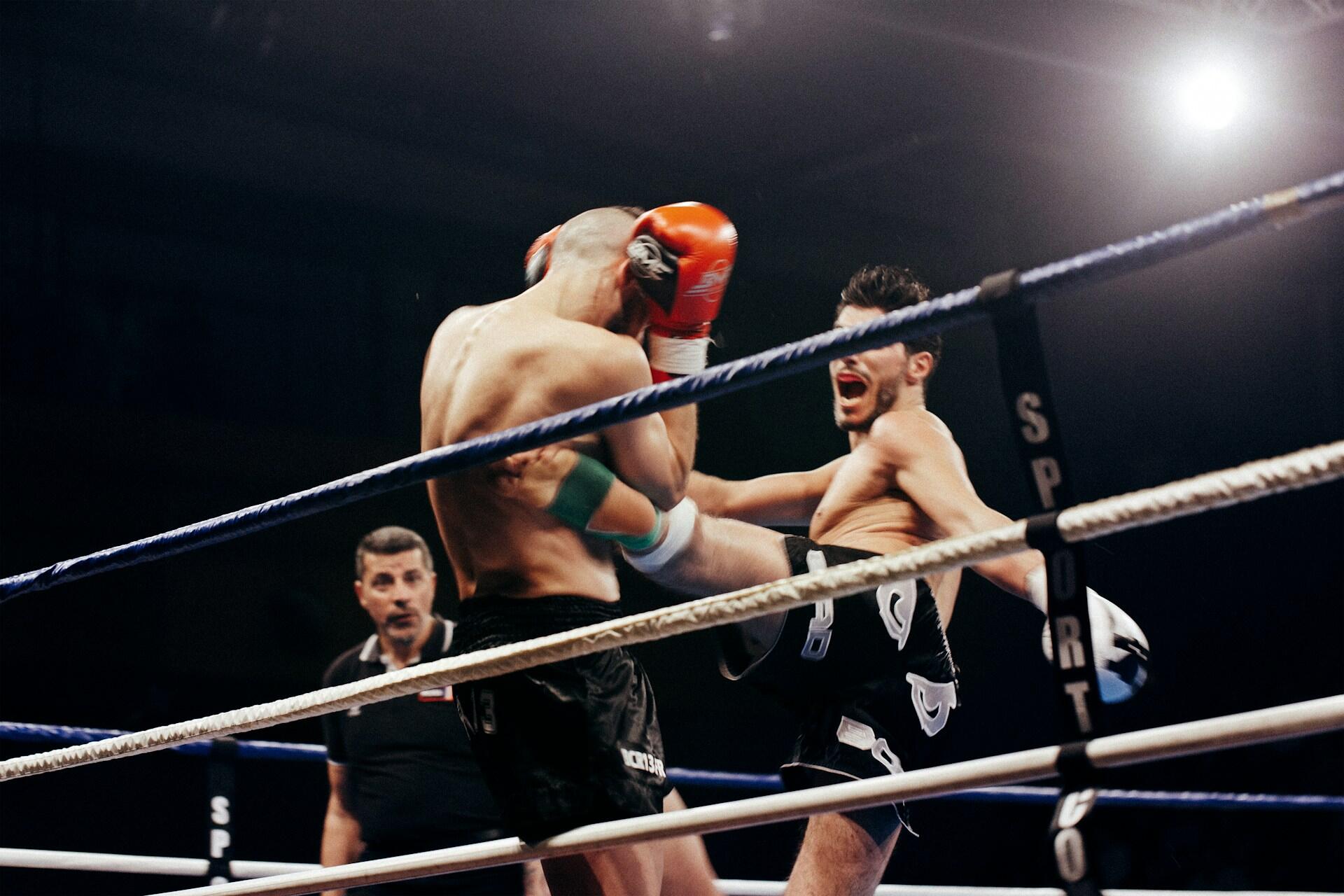
This style is particularly popular for fitness and MMA training.
Key Techniques
- Punches, front kicks, roundhouse kicks, combinations
Best For
- Cardio, sports competition, modern self-defence
Used In
- Fitness programs, combat training, striking drills
Karate
Karate is a Japanese martial art that focuses on discipline, form, and powerful strikes. It uses hand strikes and kicks in structured patterns and routines (known as kata) or sparring (known as kumite).
Key Techniques
- Straight punches, knife-hand strikes, front kicks, blocks
Best For
- Traditional training, personal discipline, beginner-friendly self-defence
Equipment
- Gi, belts, gloves, pads
Taekwondo
Taekwondo is a Korean martial art that includes flashy, high-level kicks. It's also an Olympic sport and it's structure makes it one of the best martial arts for children and beginners.
Key Techniques
- Spinning kicks, side kicks, jump kicks, back kicks
Best For
- Kids, agility, competitive sport, kicking power
Known For
- Dynamic kicking, strong scoring systems in sports matches
Taekwondo emphasises speed, flexibility, and precision as seen in this Olympic gold medal match.
Grappling Styles: Control, Throws, and Submissions
Not let's take a look at the popular grappling styles of martial arts.
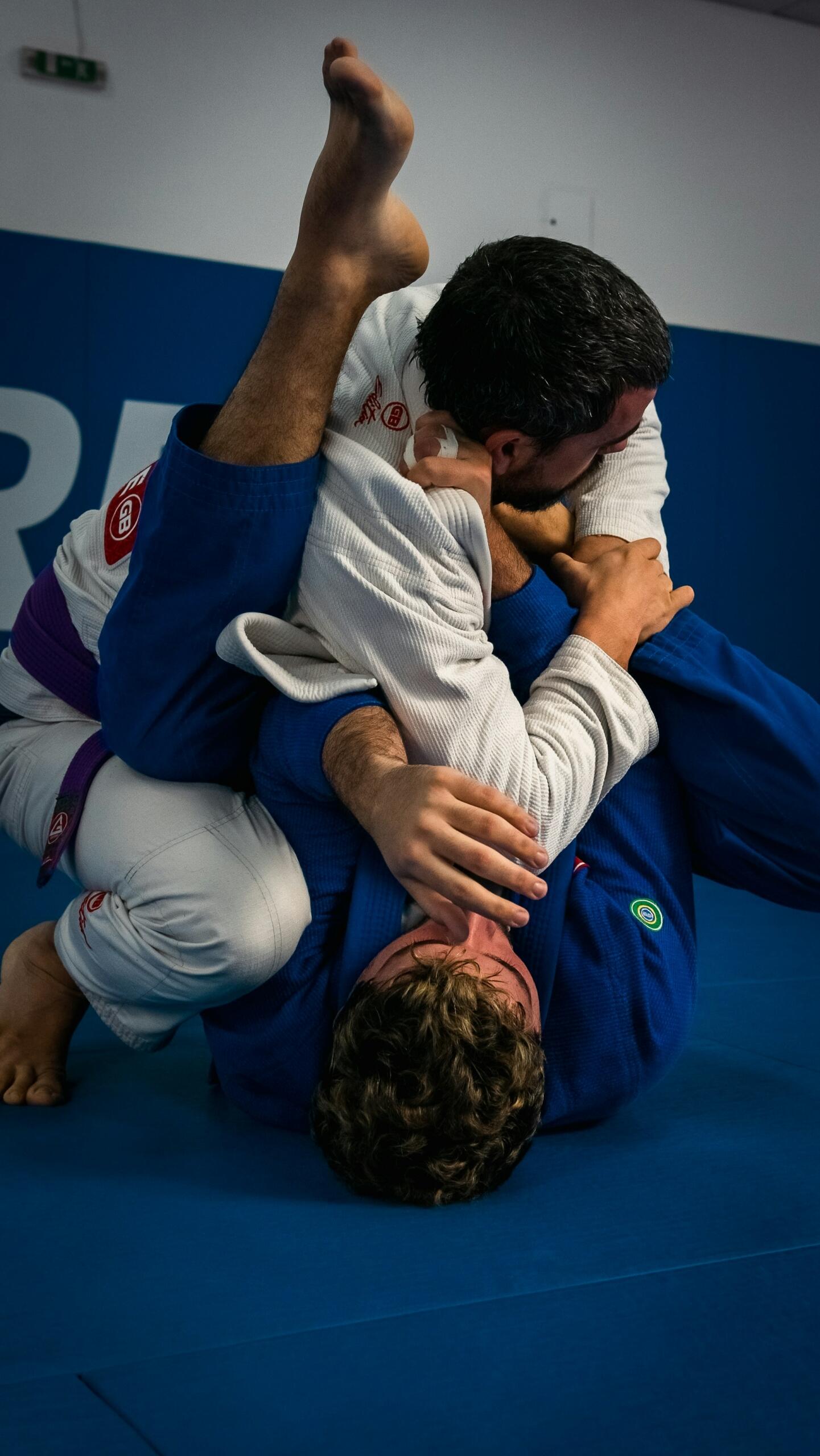
While the previous martial art styles focused on striking your opponent using different parts of your body, these styles are all about holding, throwing, or pinning your opponent.
Some styles even allow submissions, where your opponent taps out or indicates that they're not willing to continue.
These systems are typically suitable for self-defence as you usually look to neutralise threats rather than score points by hitting them.
These styles are useful in real-world self-defence situations since fights can often go to the ground, and strike-focused styles don't tend to cover this type of fighting.
Brazilian Jiu-Jitsu (BJJ)
Brazilian Jiu-Jitsu, or BJJ, is a ground-based combat style focusing on leverage, joint locks, and chokeholds to force opponents into submission. It's one of the foundational martial arts in MMA or mixed martial arts.
Key Techniques
- Guard control, chokes, armbars, sweeps
Best For
- Smaller fighters, ground defence, one-on-one self-defence
Equipment
- Gi or no-gi (rash guards, shorts), belts
Judo
Judo is a Japanese martial art with throws, pins, and submissions. It's also an Olympic sport and a great way to learn how to control or neutralise larger opponents with a greater focus on technique than out-and-out strength.
Key Techniques
- Hip throws, shoulder throws, sweeps, groundwork (newaza)
Best For
- Beginners, kids, non-striking control
Accessories
- Gi (judogi), belt system
Wrestling
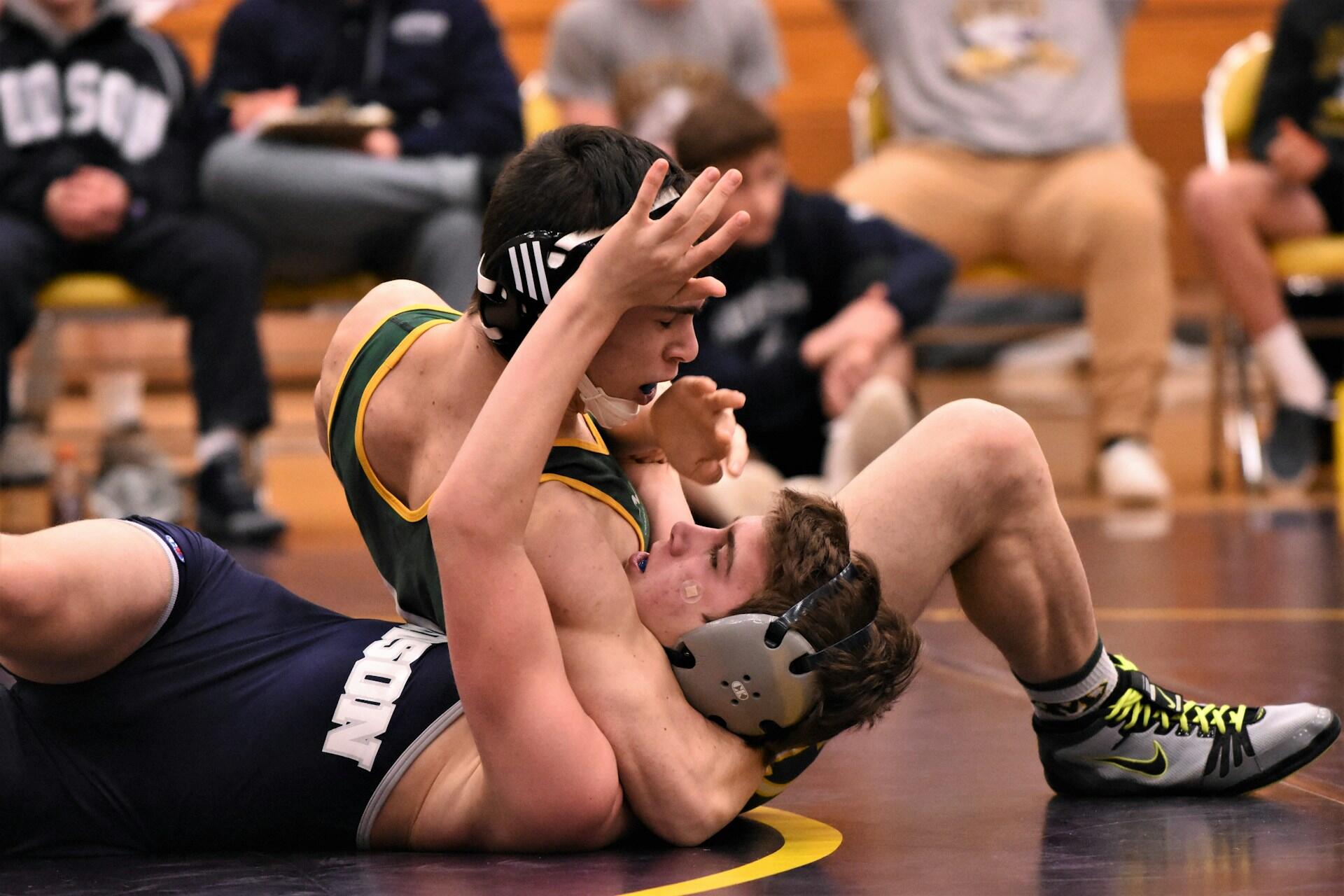
Wrestling is one of the oldest combat styles in the world. Its focus is on takedowns, body control, and pinning. It's a popular combat sport at professional and amateur levels.
Key Techniques
- Double-leg takedowns, clinch control, body locks, pins
Best For
- Athletic development, takedown defence, MMA base
Used In
- High school/collegiate sport, Olympic competition, UFC
Sambo
Sambo is a Russian martial art that combines judo and wrestling with submissions. There are two primary forms, one focusing more on grappling (sport sambo) and the other on strikes (combat sambo).
Key Techniques
- Throws, leg locks, ground control, takedowns
Best For
- Self-defence with hybrid techniques, MMA crossover
Equipment
- Jacket, shorts, wrestling shoes
Hybrid and Mixed Styles: Combining Disciplines
While most of the aforementioned styles include strikes and grapples to different degrees, some combine them almost equally, as well as their benefits, which we've classified as hybrid and mixed styles for simplicity.
Remember that martial arts do not have fixed categorisations. We've simply grouped them here to give novices or newcomers a better understanding of what they're likely to encounter.
Martial arts evolved across different cultures, environments, and combat needs. That’s why some focus on weapons, others on strikes, and some on philosophy.
Here are some of the most prominent hybrid styles of martial arts.
Mixed Martial Arts (MMA)
As the name suggests, MMA isn't really a traditional martial art. Instead, it's a full-contact combat sport that draws upon the techniques and teaching of many other styles.
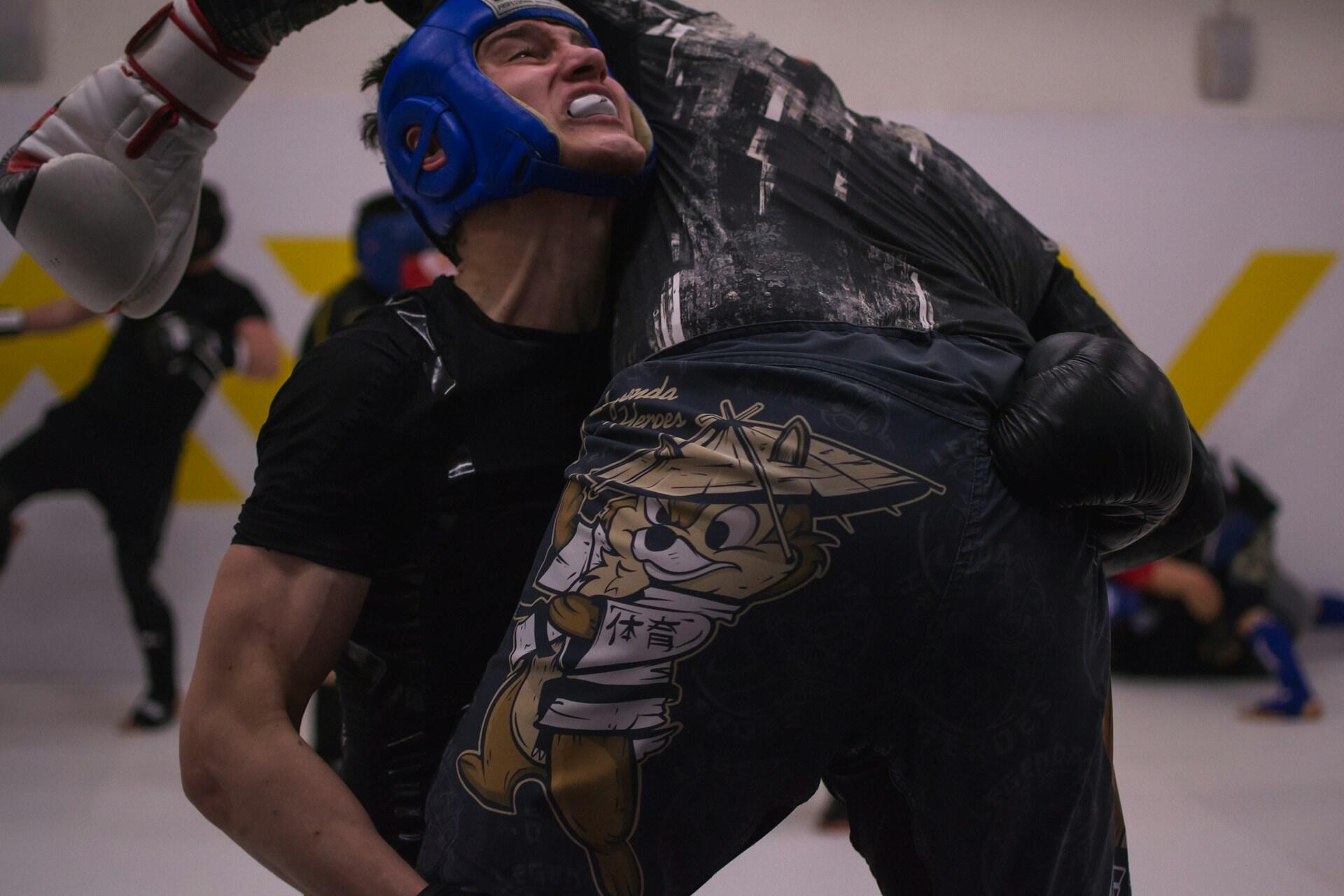
Some of the most common foundations include Muay Thai, Boxing, Brazilian Jiu-Jitsu, and Wrestling. Techniques are used in different degrees according to the fighter or their opponent. This style has been popularised through organisations like the UFC.
Key Techniques
- Striking, takedowns, submissions, ground-and-pound
Best For
- Well-rounded fighters, self-defence, and competitive combat
Used In
- Sport fighting, cross-training, and personal defence systems
Jeet Kune Do
Jeet Kune Do, founded by Bruce Lee, is a conceptual martial art that prioritises directness, efficiency, and personal expression rather than rigid techniques.
Key Techniques
- Intercepting strikes, footwork, trapping, low kicks
Best For
- Philosophical fighters, those seeking adaptability
Known For
- “Using no way as way”: blending what works from any style
Sanda (Sanshou)
Sanshou is a Chinese combat sport used for military training. It combines Kung Fu techniques with elements from kickboxing and wrestling to make it more applicable in real situations.
Key Techniques
- Punches, kicks, throws, sweeps, takedowns
Best For
- Strikers who want clinch and takedown skills
Used In
- Chinese military and sports competition
Weapon-Based Martial Arts
Most martial arts focus on unarmed combat, but some systems are designed to allow the expert use of certain weapons.
Typically, each style focuses on a specific weapon and is used for military training, self-defence, or even ceremonial applications.
Kendo
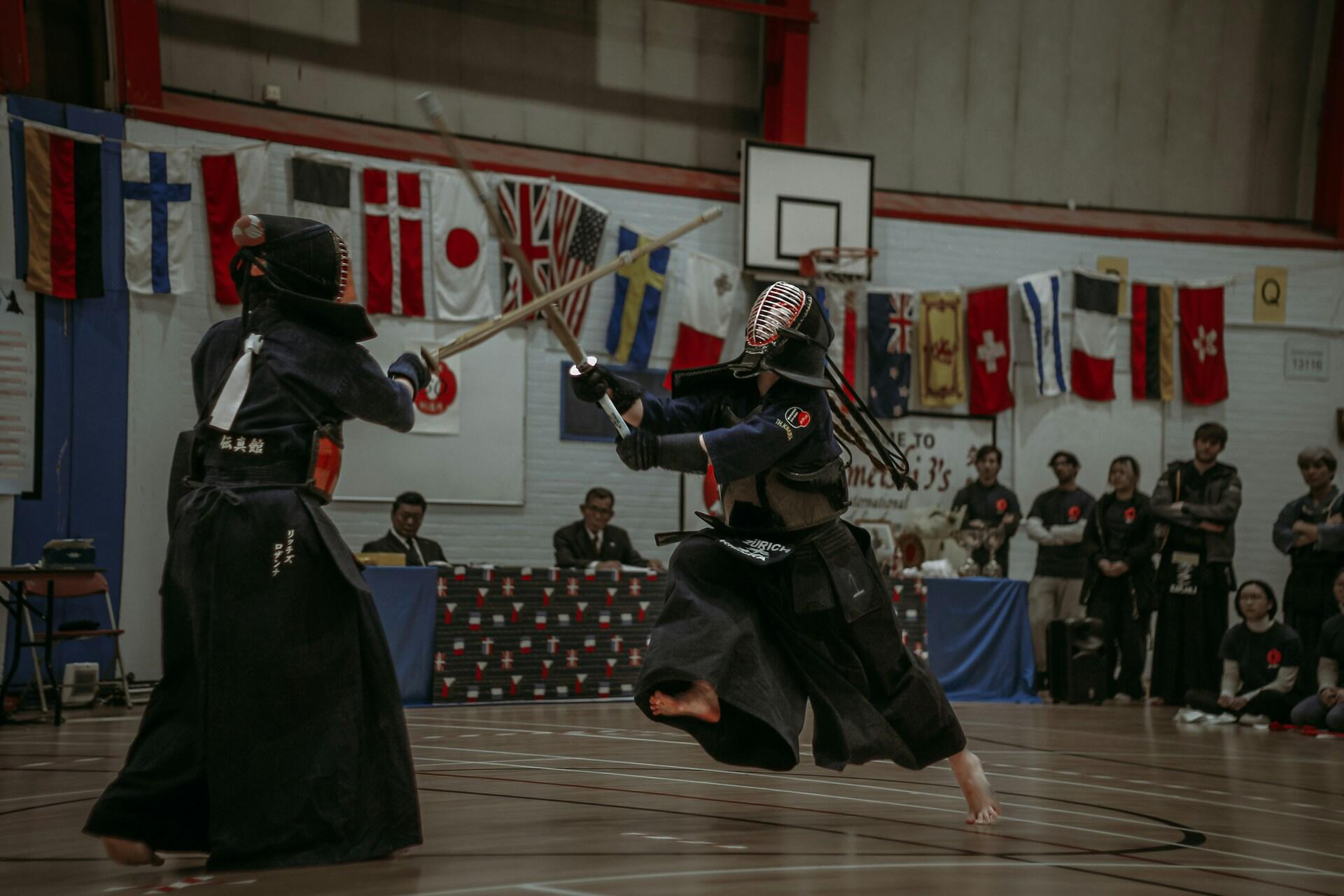
Kendo is a modern Japanese martial art that evolved from traditional samurai swordsmanship training. For obvious reasons, combatants use bamboo swords and full-body armour in Kendo, and they participate in high-speed, point-based sparring.
Key Weapons
- Shinai (bamboo sword), bokken (wooden sword)
Best For
- Discipline, reflexes, mental focus
Known For
- Loud kiai (shouts), fast striking, formal training style
Eskrima / Arnis / Kali
This Filipino martial art focuses on stick fighting, knife techniques, and empty-hand combat. It is typically fast, fluid, and effective.
Key Weapons
- Rattan sticks, knives, machetes, improvised weapons
Best For
- Real-world self-defence, weapon disarms, hand-eye coordination
Used In
- Military, law enforcement, and personal defence systems
Ninjutsu
This is the historical art of the ninja. Ninjutsi includes combat with weapons and stealth, strategy, and survival skills.
Nowadays, training is rare and somewhat controversial, but there are traditional dojos that teach it.
Key Weapons
- Throwing stars (shuriken), short swords, staffs, knives
Best For
- Historical study, unconventional tactics, stealth-based movement
Known For
- Blending hand-to-hand combat with tools and evasion
How Many Types of Martial Arts Are There?
We've only begun to scratch the surface here. Many other types of martial arts could have easily been included, but these are among the most common.
Choosing the right martial art depends on you, your fitness, your drive, your discipline, and why you want to learn it. Martial arts for fitness aren't always the same as self-defence, and there's also availability.
different styles of martial arts in the world.
After all, it's better to take up karate than nothing, especially if you can't find anywhere to learn Taekwondo in your town.
Summarise with AI:
Did you like this article? Leave a rating!

 Loading...
