


In music theory, notes can be explained in isolation or in terms of their relation to another note. These relationships are known as intervals, and they're integral to how Western music is put together. Let's explore them.
Key Takeaways
- Intervals are pitch distances between two notes.
- They explain melody and harmony, not rhythm or time.
- Intervals use number and quality (e.g. major third, perfect fifth).
- Perfect, major, and minor intervals form the core of Western music.
- Intervals build scales and chords, including triads and extensions.
- Ear training helps recognise intervals by sound and function.


What Are Intervals in Music?
Intervals are basically the distance between musical notes.¹ They're an essential concept in music theory because they don't just explain a difference in pitch, but they also explain how two notes relate to one another. With them, you can create melodies, chords, and scales.
An interval is the distance in pitch between two musical notes.¹ Intervals are named by counting the note letters from the starting note to the ending note and are further described by their quality, such as major, minor, or perfect. Intervals are the foundation of melodies, scales, and chords in Western music.
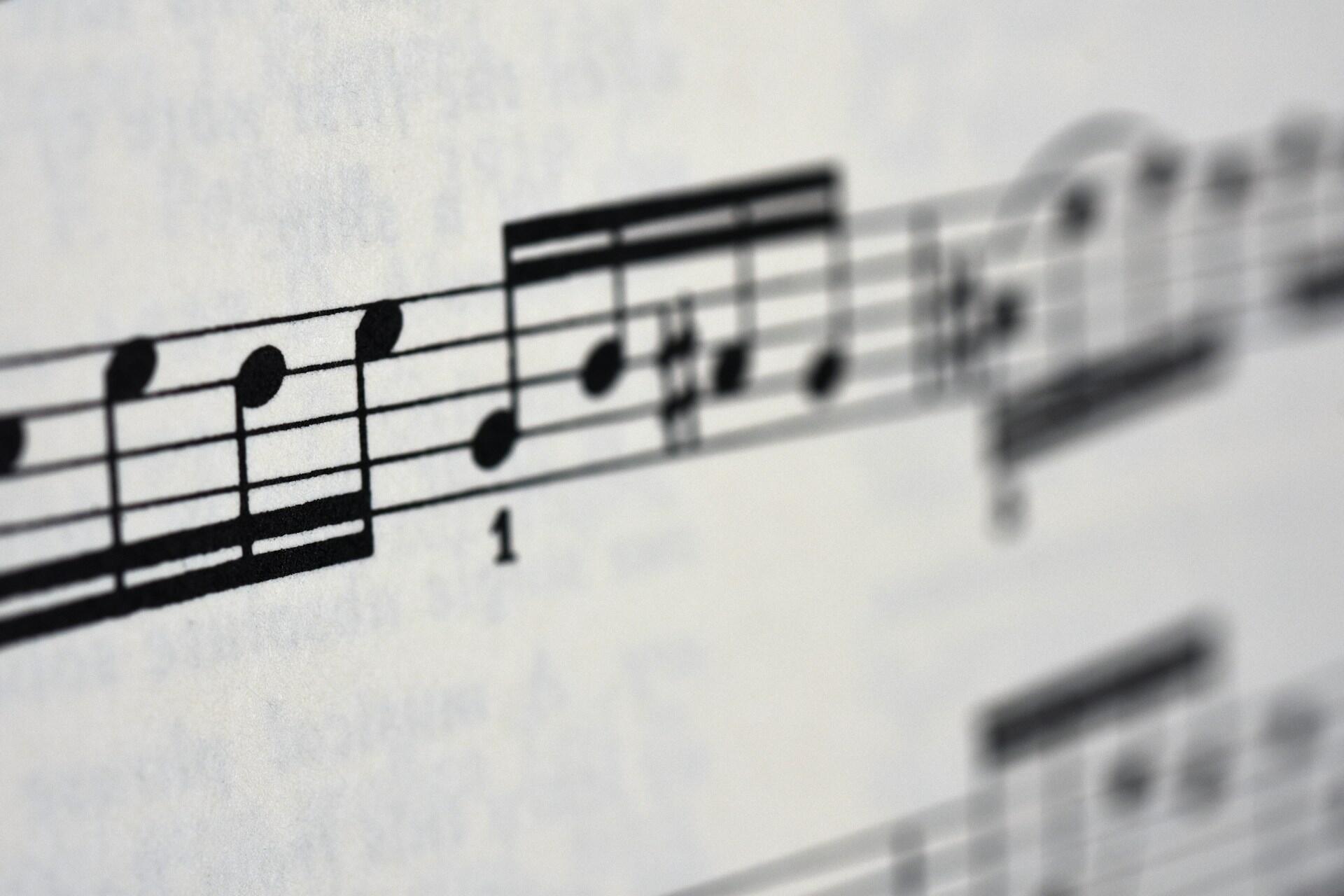
An interval is the distance in pitch between two musical notes.¹ Intervals are identified by counting note names from the starting note to the ending note. They describe how far apart notes sound.
Intervals explain how melodies and harmonies are built.² They help musicians understand why certain note combinations sound stable or tense. Intervals also form the basis of scales and chords.
How Musical Intervals Are Measured
Intervals are calculated using a consistent naming system.² The system uses numbers and qualities as descriptors. Every note can be defined as an interval of another note.

Interval numbers are determined by counting the note letters between two pitches, including both the starting and ending notes.³ This system explains why C to E is a third, not a second. The number describes size, not sound quality.
Interval quality describes the specific sound and tension of an interval.⁴ Perfect intervals are stable and balanced, while major and minor intervals differ by a single semitone and create contrasting emotional effects. Augmented intervals increase tension by widening the distance, and diminished intervals reduce distance, often sounding unstable. Quality works alongside an interval number to fully identify how an interval functions.
Interval quality describes the specific sound of an interval. The main interval qualities are perfect, major, minor, augmented, and diminished. Quality works alongside the interval to fully identify an interval, such as a major third or a perfect fifth.
Perfect, Major, and Minor Intervals Explained
Intervals are usually determined by their effects or behaviour. Certain intervals are considered stable while others are more flexible or expressive. Perfect, major, and minor intervals are the main types used in Western music, but there are plenty more.
| Interval Name | Interval Number | Interval Quality | Semitones | Example | Common Use |
|---|---|---|---|---|---|
| Unison | 1st | Perfect | 0 | C → C | Same pitch |
| Minor Second | 2nd | Minor | 1 | C → D♭ | Tension, dissonance |
| Major Second | 2nd | Major | 2 | C → D | Stepwise melody |
| Minor Third | 3rd | Minor | 3 | C → E♭ | Minor chords |
| Major Third | 3rd | Major | 4 | C → E | Major chords |
| Perfect Fourth | 4th | Perfect | 5 | C → F | Harmony, suspension |
| Tritone | 4th/5th | Augmented/Diminished | 6 | C → F♯ | Strong tension |
| Perfect Fifth | 5th | Perfect | 7 | C → G | Stability, power chords |
| Minor Sixth | 6th | Minor | 8 | C → A♭ | Expressive melodies |
| Major Sixth | 6th | Major | 9 | C → A | Bright melodic leaps |
| Minor Seventh | 7th | Minor | 10 | C → B♭ | Dominant harmony |
| Major Seventh | 7th | Major | 11 | C → B | Strong resolution pull |
| Octave | 8th | Perfect | 12 | C → C | Same note, higher pitch |
Perfect intervals include unisons, fourths, fifths, and octaves.¹ They are considered consonant because they have simple frequency relationships that sound stable to the ear. These intervals cannot be labelled major or minor. Perfect intervals form the structural backbone of harmony and tuning in Western music.
Major intervals sound bright, open, and resolved. They appear naturally in major scales and are common in melodies and chords that feel stable or uplifting. A major interval is one semitone larger than its minor equivalent.³ This small difference significantly changes how the interval is perceived.
Minor intervals tend to sound darker or more tense than major intervals. They are a defining feature of minor scales and minor chords. A minor interval is created by lowering a major interval by one semitone. This change gives music a more expressive or introspective character.
Simple and Compound Intervals
There's a distinction between intervals based on how far they extend across a musical range. Some intervals are within a single octave, while others go far beyond it. It's useful to know the difference.

Simple intervals span one octave or less.⁴ Most beginner examples, such as thirds, fourths, and fifths, fall into this category. Simple intervals are used to build basic scales and triads. They form the foundation of Western harmony and melody.
Compound intervals extend beyond a single octave. They are named by adding an octave to a simple interval, such as a ninth or eleventh. These intervals appear frequently in extended chords and advanced harmony. Understanding compound intervals helps musicians analyse larger pitch spans.
Melodic and Harmonic Intervals
Intervals are experienced differently based on whether they're simultaneous or sequential. For example, notes can be played together in harmony to create chords. Other times, notes are played at different times.
Melodic intervals occur when notes are played one after another.² They are most commonly heard in melodies and scale passages. Melodic intervals can move upward or downward. Recognising them helps with sight-singing and melodic transcription.
Harmonic intervals occur when notes are played at the same time. They form the basis of chords and harmonic texture. The sound of harmonic intervals is influenced by tuning and context. Training the ear to hear harmonic intervals improves chord recognition.
Enharmonic Intervals
What happens when intervals share the same pitch but different note names? In this case, we call them enharmonic intervals. Why is a note sometimes sharp and other times flat? This is why.
Enharmonic intervals sound the same but are written differently.⁴ This happens when notes share the same pitch but have different names, such as C♯ and D♭. Enharmonic spelling matters because it affects how music is read, analysed, and understood in context.
Enharmonic intervals sound identical on most instruments. Their spelling depends on musical context. This affects how music is interpreted.
Correct spelling clarifies harmonic function. It helps musicians understand key relationships. Enharmonics are especially important in written theory.
Intervals in Scales and Chords
Intervals don't usually exist in isolation. Intervals can form the foundation of chords and different scales. Put music theory into practice with them.
The major scale follows a fixed pattern of whole steps and half steps.³ This interval pattern creates the familiar bright and stable sound associated with major keys. Each note has a defined distance from the tonic, giving the scale its predictable structure. Understanding this pattern helps musicians identify keys and build melodies confidently.
Chords are formed by stacking intervals above a root note.⁴ The choice of intervals determines the chord's quality, such as major, minor, diminished, or augmented. For example, a major triad uses a major third and perfect fifth. Recognising these interval patterns makes chord building and analysis more intuitive.
Hearing and Identifying Intervals
You can recognise intervals by ear or by sight, depending on your level in music theory and your ear. Most music is a series of tense moments, releases, and resolutions. If you'd like to better understand intervals, consider practising intervals either on your own or with a private tutor.

Consonant intervals sound stable and resolved, while dissonant intervals create tension. Music often moves between these two states to create interest and emotional impact. Dissonant intervals usually resolve to consonant ones. Understanding this relationship helps musicians analyse musical tension and release.
Interval ear training develops the ability to recognise pitch distances by sound.³ This skill improves melodic accuracy, tuning, and harmonic awareness. Practising intervals regularly strengthens musical memory. Ear training connects theoretical knowledge to real listening.
Intervals connect written music to its sound. Whether it's sheet music, time signatures, building chords, or learning songs by ear, understanding intervals can change how you understand how notes work. You'll start recognising intervals instinctively. You can practise them in scales, chords, and melodies, and if you need more help, why not look for a private music theory teacher on Superprof? Most offer the first session for free, so you can try a few before finding your perfect tutor.
References
- Encyclopaedia Britannica. “Interval.” Encyclopaedia Britannica, https://www.britannica.com/art/interval-music.
- Music Theory for the 21st-Century Classroom. “Intervals.” University of Puget Sound, https://musictheory.pugetsound.edu/mt21c/Intervals.html.
- musictheory.net. "Intervals." https://www.musictheory.net/lessons/32.
- Open Music Theory. “Intervals.” VIVA Open Publishing, https://viva.pressbooks.pub/openmusictheory/chapter/intervals/.
Summarise with AI:
Did you like this article? Leave a rating!

 Loading...
