
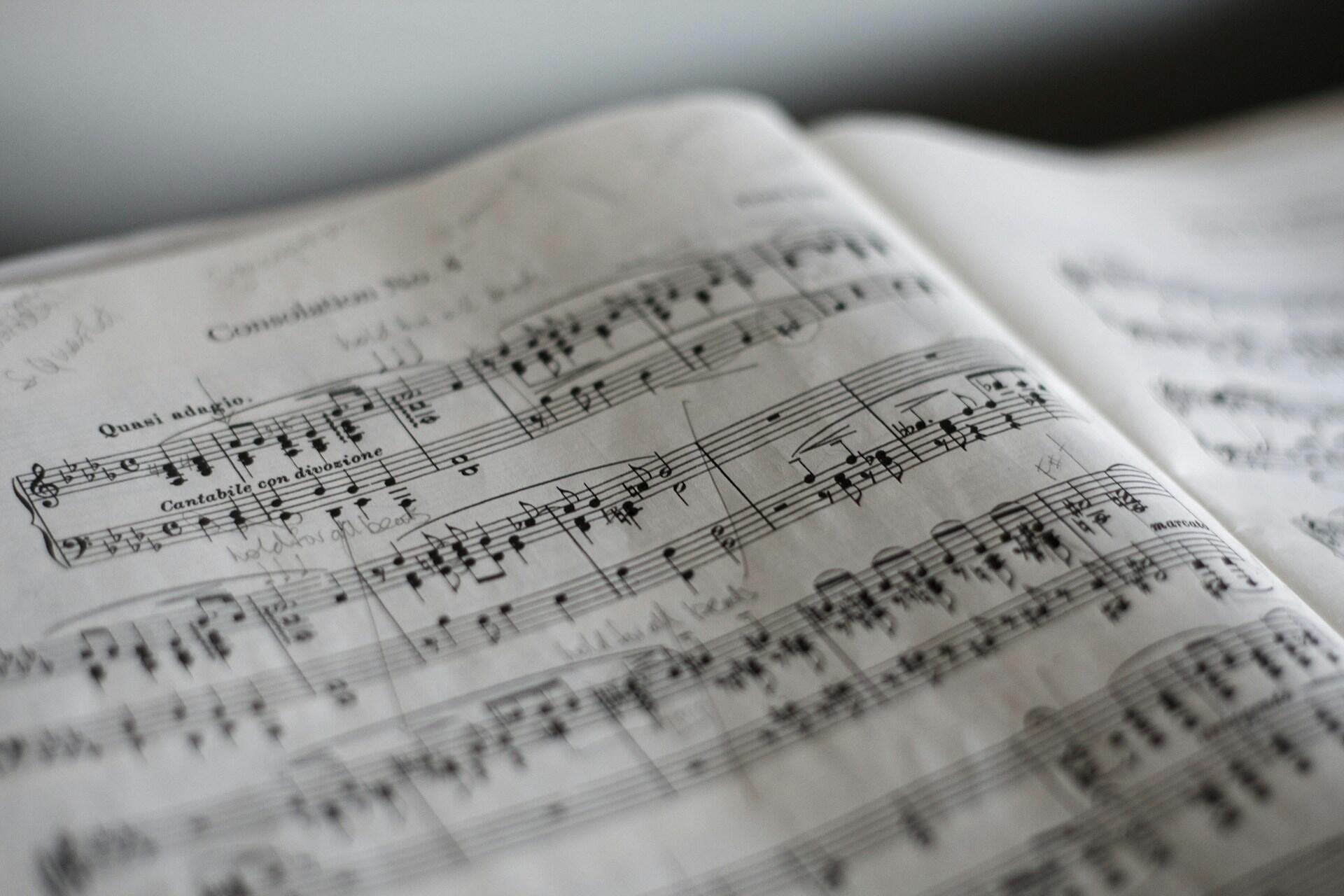

Music theory is the foundation of Western music. Some musicians swear by it, others say they don't use it. In reality, it's as much the written rules as the unwritten rules. For those interested, here's our beginner's guide.
Key Takeaways
- Music theory explains how music works, focusing on common patterns rather than strict rules.
- Staff, clefs, and notation allow musicians to read pitch, rhythm, and expression.
- Rhythm and meter organise musical time using note values and rests.
- Scales and key signatures define tonality and guide melodies and harmonies.
- Intervals and chords form harmony, with triads as the foundation.
- Theory improves with practice, combining reading, listening, and playing.
- Ear training links theory to sound, strengthening musical understanding and creativity.


Understanding the Basics of Music Theory
Music theory is the framework for organising music.² Learners can see how music notes, rhythm, and harmony work together. Here, we'll look at the core building blocks that are used for almost every piece of Western music.
Music theory is the study of how music works.⁵ It explains how notes, rhythms, scales, and chords are organised so musicians can read, write, and understand music. Rather than a set of rules, music theory describes patterns that appear across many musical styles, helping beginners make sense of what they hear and play.
The Musical Staff, Clefs, and Notation
Western music uses a visual system. Musicians can read sheet music and perform using it. The staff and clef define the pitch while the notation symbols indicate note length and expression. Many musicians learn this system and use it to know what to play on their chosen instrument.
The musical staff is a set of five horizontal lines and four spaces used to represent musical pitch.⁴ Notes placed higher on the staff sound higher, while notes placed lower sound lower. Each line and space corresponds to a specific note name.
A clef is a symbol placed at the beginning of the staff that determines how pitches are read.⁴ The clef tells the reader which note names belong to each line and space, meaning the same written note can represent different pitches depending on the clef used.
The treble clef is used for higher-pitched instruments and voices. Also known as the G clef, it circles the note G on the staff and is commonly used for right-hand piano, guitar, violin, flute, and most vocal music.
The bass clef is used for lower-pitched instruments and voices. Also known as the F clef, it has two dots around the note F on the staff and is commonly used for left-hand piano, bass guitar, cello, and bass voices.
Ledger lines are short horizontal lines added above or below the staff to extend its pitch range. They follow the same line-and-space pattern as the main staff and allow very high or very low notes to be written clearly.
Musical notation is the written system of symbols used to represent music. It shows which notes to play, how long to play them, and how they should sound, combining pitch, rhythm, dynamics, and articulation into a readable format.
Rhythm, Meter, and Note Values
Rhythm is how quickly or slowly music is played in time. Not to be confused with tempo, which is the speed at which time passes in a given piece of music. Here's how musical time is written and constructed.
Rhythm is the pattern of sounds and silences in music. It determines when notes are played and for how long, giving music its sense of movement and flow.
Meter is how beats are grouped into regular patterns. It organises rhythm into repeating units called bars or measures, helping musicians count and stay in time.
Note values show how long a note is held.⁴ Common values include whole notes, half notes, quarter notes, and eighth notes, each dividing time into equal parts.
Rests represent silence in music. Each rest has a duration that matches a note value, allowing rhythm to include pauses as well as sounds.

Scales and Key Signatures
Most music is organised around a group of notes. Scales and key signatures indicate which notes are likely to be used within a piece. These are the frameworks behind tonal melodies and harmonies.
A musical scale is a sequence of notes ordered by pitch.⁵ Scales provide the foundation for melodies and harmonies by defining which notes sound stable or tense within a piece of music. The most common types are major scales, which often sound bright, and minor scales, which tend to sound darker or more emotional.
A scale is an ordered sequence of notes used as the foundation for melodies and harmonies. Most music is based on either major or minor scales.
Major scales often sound bright and stable, while minor scales tend to sound darker or more emotional. The difference comes from the pattern of steps between notes.
A key signature appears at the beginning of a piece and shows which notes are sharpened or flattened throughout. It tells the musician which scale the music is based on.
The circle of fifths is a diagram that shows the relationship between keys.¹ It helps musicians understand key signatures, scale relationships, and common chord progressions.
Intervals and Basic Chords
Harmony is how two notes interact with one another. Music intervals describe the distances between notes, and chords are combinations of them. Here's how notes interact to form harmonies.
An interval is the distance between two musical notes.⁵ Intervals are measured by counting note names and the number of steps between them. They are the building blocks of melodies and chords, and understanding intervals helps musicians recognise patterns, tune notes accurately, and build harmony.
An interval is the distance between two notes. Intervals are the building blocks of melodies and determine how notes relate to each other.
A chord is formed when two or more notes are played together. Most basic chords are built by stacking intervals on top of a starting note.
A triad is a three-note chord made from a root note, a third, and a fifth.⁵ Triads are the most common chord type in Western music.
An inversion occurs when a chord note other than the root is the lowest note. Inversions change how a chord sounds and how smoothly it connects to other chords.
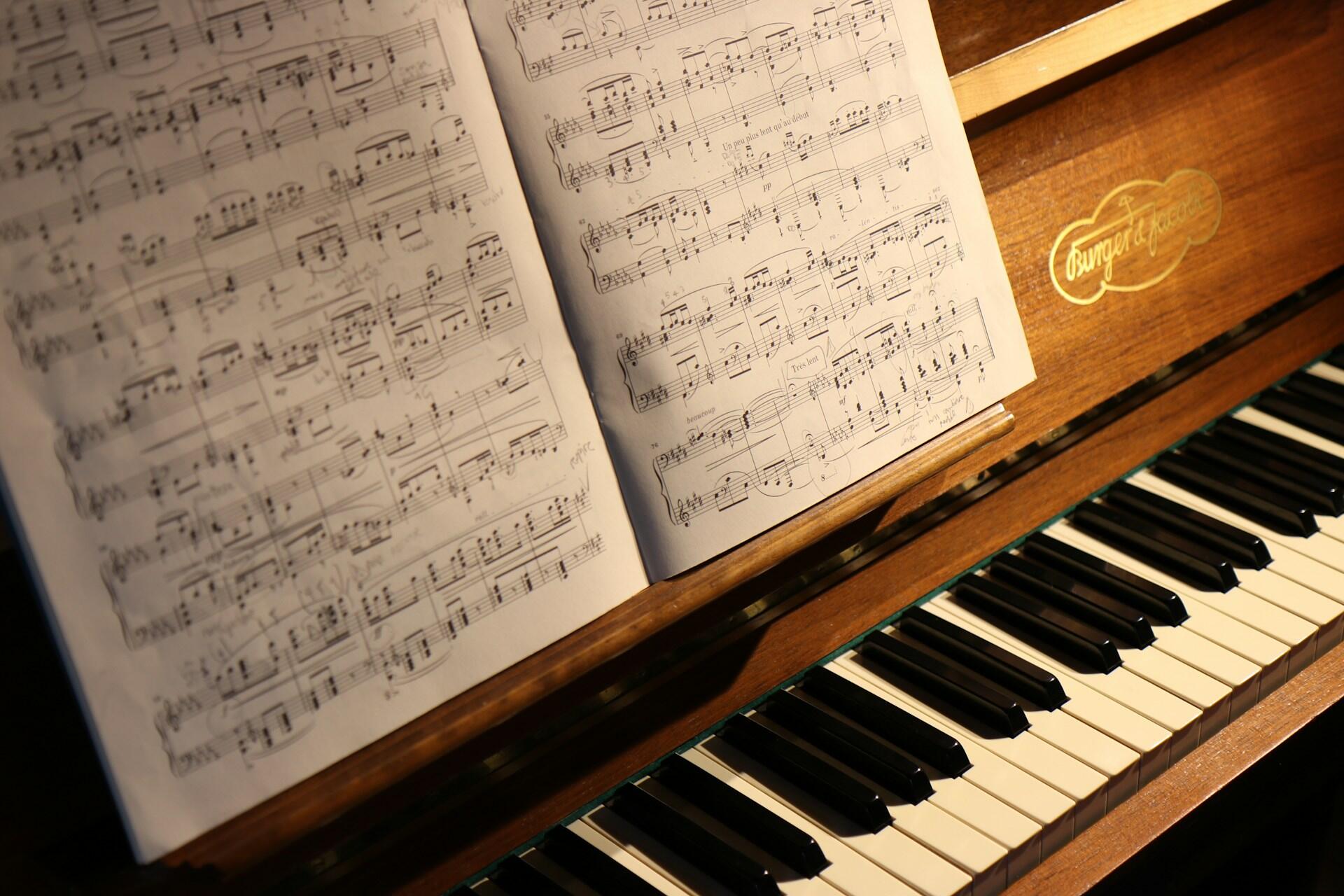
Applying Music Theory Concepts
Put music theory into practice to play or create wonderful music. Reading, listening, and playing will help any musician's theoretical understanding, even if they don't formally study music theory. You can turn knowledge into usable skills by studying music theory, though.
How to Read Sheet Music Step by Step
- Start with the clef (treble or bass) to identify your note names and pitch range.
- Check the key signature (sharps/flats at the start) to know which notes are altered throughout.
- Check the time signature to understand how many beats are in each bar and which note gets the beat.
- Scan for tempo and style markings (Allegro, Andante, etc.) and any dynamics (p, mf, f).
- Read the rhythm first by clapping or counting the note values across one bar at a time.
- Then add pitch: name the notes on the staff slowly, using line/space patterns and ledger lines as needed.
- Combine hands/parts gradually: one hand (or one voice) at a time, then merge once each part is steady.
- Work in small chunks (1–2 bars), loop them, then connect to the next chunk.
- Watch for repeats and navigation signs (repeat bars, D.C., D.S., coda) so you don’t get lost.
- Finish with a slow play-through with a metronome, then increase speed only when accuracy is consistent.

Ear Training and Aural Skills
While you can read music, you have to listen to it, too. Ear training can strengthen the connection between the sound you hear and the theory you know. Here are just a few of the skills you can work on to improve performance, improvisation, and composition skills.
Ear training develops the ability to recognise notes, intervals, and chords by sound.⁴ It connects theoretical knowledge to real music.
Learning to hear intervals helps musicians identify melodies and harmonies more quickly.
Recognising chord types by ear improves improvisation, transcription, and musical communication.
Resources for Learning Music Theory
Even if you're working with a private music theory tutor, it's worthwhile investing in quality resources you can use during your sessions and outside of them, from learning about chords to advanced music theory. Nowadays, you can find resources online as well as traditional resources like books and reference guides. Start your search with these.

Online Music Theory Lessons and Tools
Online tools allow students to practise reading, listening, and identifying musical elements in real time.
Digital lessons make it easy to revisit topics and learn at a comfortable pace.
Books and Reference Guides
Reference guides provide clear definitions and examples that help reinforce learning.
Books and academic resources help check details and expand beyond basic concepts.
Learning with a Music Community
Learning with others provides motivation and accountability.
Teachers and communities help correct mistakes and guide progress more effectively than studying alone.
References
- Berklee Online. Circle of Fifths: The Key to Unlocking Harmonic Understanding. Berklee College of Music. https://online.berklee.edu/takenote/circle-of-fifths-the-key-to-unlocking-harmonic-understanding/.
- Encyclopaedia Britannica. Music Theory. Encyclopaedia Britannica. https://www.britannica.com/art/music-theory.
- Music & Arts. How Beginners Can Learn to Read Sheet Music Effectively. The Vault at Music & Arts. https://thevault.musicarts.com/how-beginners-can-learn-to-read-sheet-music-effectively/.
- musictheory.net. Lessons. https://www.musictheory.net/lessons.
- Open Music Theory. Fundamentals of Music Theory. VIVA Open Publishing. https://viva.pressbooks.pub/openmusictheory/part/fundamentals/.
Summarise with AI:
Did you like this article? Leave a rating!

 Loading...
