The United Kingdom's political system comprises multiple parties, with the Labour Party currently forming the majority government and the Conservative Party as the main opposition¹. Other significant parties include the Liberal Democrats, Scottish National Party (SNP), and Reform UK. In recent years, the UK has entered what commentators describe as a "five-party era," with Reform UK, Labour, the Conservatives, the Greens, and the Liberal Democrats all polling in double digits — reflecting a deep fragmentation of the country's traditional political alignments.
| 🅿Party name | 🎤Platform | 🎩Leader(s) |
|---|---|---|
| Labour Party | Social democracy | Keir Starmer |
| Conservative and Unionist Party | British unionism, Conservatism, Economic liberalism | Kemi Badenoch |
| Liberal Democrats | Liberalism, social liberalism | Ed Davey |
| Reform UK | Euroscepticism, populism | Nigel Farage |
| Co-operative Party Limited | British Unionism, Social democracy, co-operation | Jim McMahon |
| Scottish National Party | Social democracy, Scottish nationalism, Scottish independence | John Swinney |
| Sinn Féin | Left-wing nationalism, democratic socialism, Irish republicanism | Michelle O'Neill |
| Plaid Cymru | Social democracy, democratic socialism, Welch independence, Welch nationalism | Rhun ap Iorwerth |
| Democratic Unionist Party | Unionist, loyalist national conservative | Gavin Robinson |
| Green Party of England and Wales | Green agenda, eco-populism | Carla Denyer, Adrian Ramsay |
| Your Party | Socialism, wealth redistribution | Zarah Sultana (declared MP); collective leadership |
| Social Democratic and Labour Party | Irish reunification | Claire Hanna |


Major Political Parties in the UK
These are the political parties in the UK that have seats in parliament. The political system is largely shaped by several major political parties holding representation in the House of Commons. These are the parties that influence national legislation, government policy, and political debate across Britain.
Labour Party
Of all the political parties in the House of Commons, Labour claims the most seats. Indeed, the Labour Party has a strong presence at all levels of government. Those include:
- The London Assembly: 11 of 25 seats
- Welsh Parliament: 30 of 60 seats
- Scottish Parliament: 20 out of 129
- Local governments: 6,426 of 19,103 seats.
The Labour Party grew out of the 19th-century trade union movement.³ Founded in 1900, it took two decades to gain any political traction. In the early 1920s, the Labour Party outpaced the dominant opposition party, the Conservative Party, to become its main political opponent. That's the state of things today, with Tories and Labour swapping places to lead the government. That opposition lies specifically in those parties' ideology.
Keynesian economics, government intervention, and redistribution of wealth.
Labour's connection to trade unions has long been the party's defining characteristic. However, that relationship is increasingly under strain because of the party's turn towards Tory policies. Union leaders resent the Labour Party's drive towards privatisation, cuts to public spending, and especially, its anti-union laws.
Recently, Labour has focused on strengthening public services like the National Health Service and education while promoting economic growth, industrial investment, infrastructure development, and job creation. The party has also prioritised climate and energy transition policies. Since winning the 2024 general election, Labour has concentrated on stabilising the economy, addressing cost-of-living pressures, and public sector reform.
However, Labour's position has come under significant pressure since taking office. The party won 411 seats at the 2024 general election, but this has since fallen to 404 following several resignations and defections. Keir Starmer's leadership has faced criticism from multiple directions: the party's polling has dropped sharply — recording the worst slump for a new government in modern British history — amid controversies over the abolition of Winter Fuel Payments, alleged trading of gifts for political influence, and continued government support for Israel in the Gaza conflict. Economic optimism among voters has fallen to its lowest level since 1978, and the party faces growing challenges from Reform UK on the right and the Greens on the left.
Conservative Party
This party's current platform grew out of a scattering of political ideas and activists. They formed their loose federation in 1834 and gained political traction almost immediately. The rising Labour Party threatened their dominance. So, they joined with the Liberal Unionist Party in 1912 to offer union workers a conservative platform.
The Tories were a political affiliation in the mid-19th century. They united under the Conservative banner, and today, use this name to honour their political roots.
Some might call that strategy splitting the vote, or even dirty pool. Regardless, making your voter base as broad as possible is smart politics, even if it doesn't always serve the political system well. To this day, the Labour and Tory parties fight for working people's votes.
The Conservatives have focused on rebuilding support after their historic defeat in the 2024 general election, where they lost over 240 seats — the worst result in the party's history. Under new leader Kemi Badenoch, elected in November 2024 as the first Black British person to lead the party, the Conservatives still prioritise economic liberalism, lower taxation, and reduced government regulation.
However, the party has struggled to recover ground, with polling projections in early 2026 suggesting further potential losses at the next election. The party faces internal challenges, with some members defecting to Reform UK, and must navigate a difficult path between its traditional voter base and a rapidly shifting political landscape in which smaller parties are gaining ground.
Liberal Democrats
Jumping back in Britain's political timeline, we find the Whig Party, a liberal group that opposed the Tories. The Whig ideology carried down through the years, as solid political ideas are wont to do. In 1988, the Whigs' ideological descendants joined with the Social Democratic Party (SDP).⁵ They named themselves the Social and Liberal Democrats, but dropped the 'social' part just a year later.
In 2010, the Liberal Democrat Party joined forces with David Cameron's government.
The coalition cost the Liberal Democrats most of their Parliament seats.
This party has since returned to its roots, supporting social-liberal causes. At the 2024 general election, the Liberal Democrats made significant gains, reaching their highest number of seats since (as their predecessor Liberal Party) the 1920s. Of course, being the party opposing Brexit did quite a bit to restore voters' faith.
The Liberal Democrats continue to promote centrist policies focused on civil liberties, electoral reform, environmental protection, and increased investment in public services. The party is positioned as a moderate alternative to both Labour and the Conservatives, with a particular focus on constitutional reform and proportional representation. Ed Davey has hinted that electoral reform could be the price of a future coalition deal with Labour.
The Liberal Democrats play an influential role in parliamentary debates and local government, frequently acting as the balancing voice on issues like education funding, healthcare investment, and local community governance. The party has also invested heavily in climate action policies, including a rapid rollout of electric vehicle charging infrastructure and proposals to tax companies that fail to meet carbon-reduction targets.
Scottish National Party (SNP)
So far, all the parties we discussed have their historical roots in England. Venturing outside that country introduces new political conditions to consider. For one, the Scottish National Party (SNP) represents constituents in both the Scottish Parliament and the UK Parliament.
Scottish Parliament
- Number of seats: 60 out of 129
- Local counsellors: 453 (out of 1,227)
The devolved Scottish Parliament was established in 1999, which placed the SNP as the second-largest Scottish political party. It stands on a platform of civic nationalism, Scottish independence, and membership in the European Union.
The Scottish National Party continues to prioritise Scottish independence as its central objective. It argues for greater autonomy and a future referendum on Scotland's constitutional status. The party focuses on regional governance issues such as public healthcare delivery, education policy, energy development in Scotland, and economic growth within the devolved powers.
The SNP suffered significant losses at the 2024 general election, losing around three-quarters of its Westminster seats. Under John Swinney's leadership — he took over as leader and First Minister in May 2024 after Humza Yousaf's resignation — the party has sought to stabilise and move away from some of the more controversial policies of the Sturgeon era. The SNP is now preparing for the 2026 Scottish Parliament election, with current polls suggesting Swinney has rebuilt a substantial lead over Scottish Labour.
Reform UK
This party came together in 2018, on a right-wing platform of populism and Euroscepticism. Its current leader, Nigel Farage, has stirred controversy throughout his political career.
Still, he maintains a strong following, which has led to a sharp increase in party support since the 2024 election. Reform UK won five seats at the general election and has since gained an additional seat through the Runcorn and Helsby by-election in May 2025, overturning Labour's majority of nearly 15,000 votes. The party now holds eight seats in the House of Commons.
Reform UK has experienced a dramatic surge in support, becoming the second-largest party by membership with approximately 250,000 members by late 2025. The party appeals to voters dissatisfied with traditional political parties, especially on the issues of immigration control, government spending, and national sovereignty. Reform advocates reduced taxation, public-sector reform, and stricter border policies, including proposals for the mass deportation of illegal migrants.
It continues to emphasise post-Brexit independence from European Union regulation. Polling projections in early 2026 have shown Reform potentially winning a parliamentary majority at the next general election — a remarkable trajectory for a party that entered the House of Commons for the first time only in 2024. The party's growth represents one of the most significant shifts in the UK political landscape in decades
Other Notable Political Parties
As noted in this article's introduction, political parties abound in the UK. Among the parties represented in the House of Commons, those discussed so far hold most of the seats. Still, we have seven parties, each with at least one seat.
Green Party of England and Wales (GPEW)
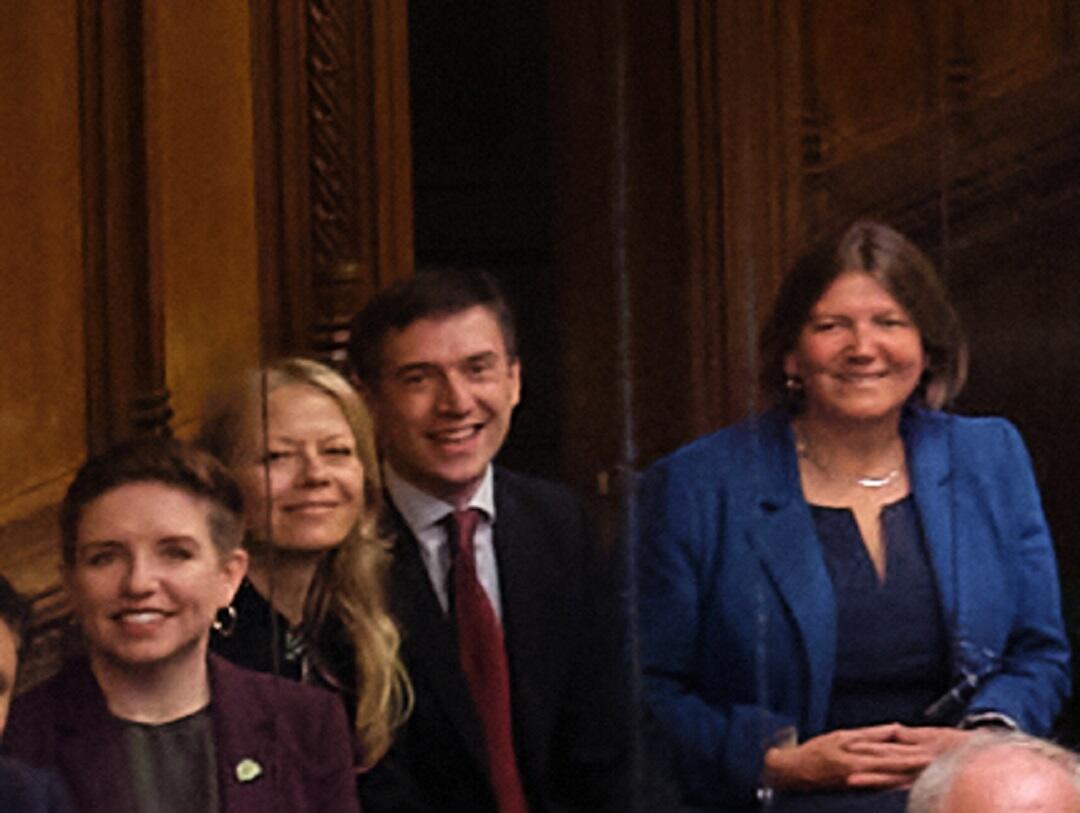
The GPEW is a left-leaning party that stands on a green agenda. The party came together in 1990 as an offshoot of the former Green Party.
It went through growing pains for around 20 years. By 2010, the party had won its first Parliamentary seat; today, it has four.² The GPEW focuses on environmental sustainability, climate change mitigation, and the expansion of renewable energy as its central political priorities. The party advocates stronger environmental regulation, investment in green infrastructure, and policies to reduce carbon emissions and protect biodiversity.
In September 2025, the party underwent a significant leadership change when Zack Polanski was elected leader in a landslide, receiving 85% of the vote share and succeeding the previous co-leaders Carla Denyer and Adrian Ramsay.
Under Polanski's leadership, the Greens have adopted a more explicitly left-wing and "eco-populist" direction. His platform focuses on ending what he calls "rip-off Britain" through a wealth tax on the wealthiest 1%, radical housing policies including proposals to restrict private landlordism, and making proportional representation a non-negotiable condition in any future coalition.
The party's membership has surged dramatically, more than doubling from around 70,000 to over 140,000, overtaking both the Liberal Democrats and the Conservatives to become the fourth-largest party in the UK by membership. This growth positions the Greens for a direct ideological confrontation with Labour, aiming to capture voters frustrated by the government's perceived lack of radicalism.
Democratic Unionist Party (DUP)
The DUP holds five seats in the House of Commons. This Northern Irish party's platform embraces unionist, national conservative, and loyalist views.
It is the Northern Ireland Assembly's second-largest party. The party has been led by Gavin Robinson since March 2024, when he replaced Jeffrey Donaldson following Donaldson's suspension after being charged with serious criminal offences.

The Democratic Unionist Party supports Northern Ireland's status within the United Kingdom and opposes Irish reunification. The party's political platform focuses on unionist constitutional policies, national conservatism, and strengthening Northern Ireland's economic and political ties with the rest of the UK. The DUP also prioritises economic development, public service investment, and policies that reflect its socially conservative values within Northern Ireland's devolved government system.
Plaid Cymru
Officially called the Party of Wales, the political group we call Plaid stands for Welsh independence and nationalism. Though it was formed nearly 100 years ago (August 1925), Plaid only gained status in 1999, the year of the first devolved Welsh Assembly election.
4 out of 32 in the UK Parliament
12 out of 60 in Senedd
202 out of 1 231 of principal local authority councils
Plaid mostly stood in opposition to the dominant Senedd, but the tide is turning on that position. Between 2007 and 2011, Plaid formed coalitions with other Welsh political parties, most notably with Welsh Labour. That cooperation ended in 2023, under a scandal. In 2024, the UK's voting systems for general elections saw Plaid win both of Wales' parliamentary seats.
Plaid Cymru continues to support greater Welsh self-government and long-term independence from the United Kingdom. In addition to constitutional reform, the party focuses on regional priorities like economic development in Wales, the protection of the Welsh language and cultural identity, and increased investment in public services through devolved powers.
Looking ahead, 2026 is shaping up to be a pivotal year for the party. The Senedd election on 7 May 2026 will be held under a new electoral system — closed-list proportional representation — with the Senedd expanding from 60 to 96 members. Current polls suggest Plaid Cymru could overturn Labour's century-long dominance of Welsh politics to become the largest party in the Senedd for the first time. Rhun ap Iorwerth has described the election as a "two-horse race" between Plaid Cymru and Reform UK, and has focused the party's messaging on everyday concerns — NHS waiting times, childcare, and cost-of-living pressures — rather than constitutional change, signalling a strategic effort to broaden the party's appeal.
Sinn Féin
Sinn Fein, meaning We, Ourselves, was first formed in 1905 as a revolutionary party. They were a militant group that fractured just before the Irish Civil War and was further splintered immediately afterwards. Those breaks gave rise to Northern Ireland's two dominant political parties.
Fine Gael and Fianna Fáil left no room for Sinn Féin's brand of politics in the Irish Parliament.
The Troubles provoked yet another split in Sinn Fein, which led to the political party we know today. It dominates the Northern Ireland Assembly, winning its first majority only in 2022. The party has long abandoned its revolutionary bent and has even given up its refusal to vote on Parliamentary matters — though it maintains its abstentionist position in the UK Parliament, meaning its seven elected MPs do not take their seats in Westminster.
Sinn Fein campaigns for Irish reunification and greater political cooperation between Northern Ireland and the Republic of Ireland. Focusing on social equality policies, public service investment, and economic development across Ireland, it plays a key role in devolved governance and cross-border political initiatives. Note: Sinn Fein is an all-Ireland political party; Mary Lou McDonald leads the party overall (and is a TD in the Republic of Ireland), while Michelle O'Neill leads Sinn Fein in Northern Ireland and serves as First Minister.
Social Democratic and Labour Party (SDLP)
The centre-left SDLP came together in 1970, on a platform of Irish reunification. This party's popularity grew during the Troubles, but it lost ground as Sinn Féin gained traction.
In addition to Irish reunification, the SDLP aims for further devolution of power. This party has two seats in Parliament.¹
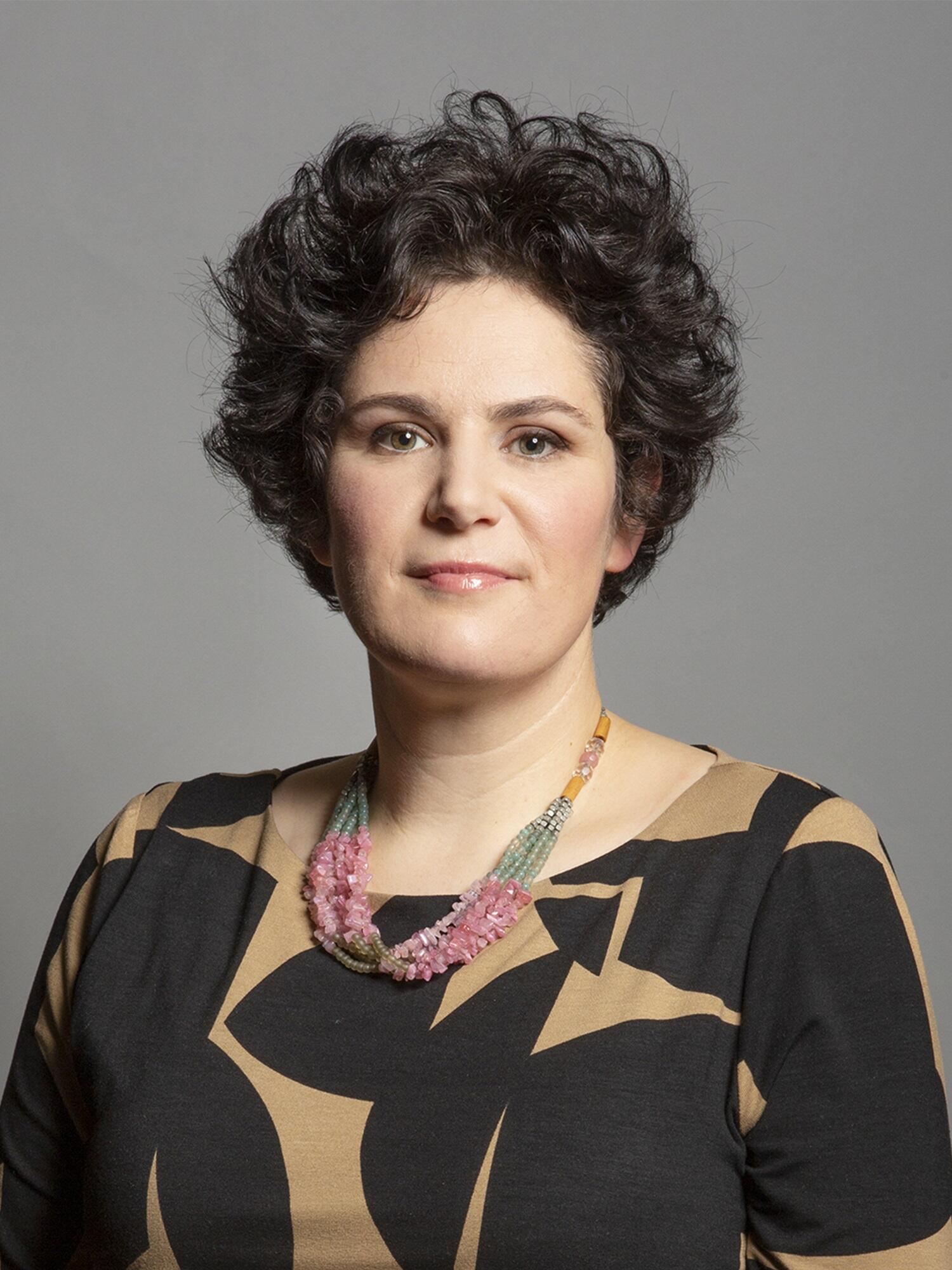
The Alliance Party of Northern Ireland, the Ulster Unionist Party, and the Traditional Unionist Voice each have one parliamentary seat.¹ They round out the UK political parties with parliamentary representation. The Social Democratic and Labour Party promotes policies centred on equality, public service investment, and community development across Northern Ireland. The party supports Irish reunification through peaceful and democratic means, advocating cooperation between communities and political institutions. The party focuses on cross-community engagement, economic development, and strengthenign devlolved overnance.
Ulster Unionist Party (UUP)
The Ulster Unionist Party supports Northern Ireland remaining part of the United Kingdom. It promotes moderate unionist policies that focus on political stability, economic growth, and strengthening relations between Northern Ireland and Great Britain. The party supports constitutional unionism and social and economic reform. In Northern Irish politics, the UUP plays a role in unionist representation and in discussions of devolved government policies.
Alliance Party of Northern Ireland
The Alliance Party of Northern Ireland promotes liberal, non-sectarian policies. It aims to reduce political disunity based on unionist and nationalist identities. The party supports constitutional stability, social equality, and cross-community cooperation, with policies focused on education, economic development, and public service reform. By positioning itself as a centrist alternative and encouraging collaboration, the Alliance Party has gained support across different political and cultural communities.
Your Party
Your Party is a new addition to the UK political landscape, announced in July 2025 by former Labour leader Jeremy Corbyn and former Labour MP Zarah Sultana. The party was registered with the Electoral Commission on 30 September 2025 and held its founding conference in November 2025, where members voted for it to describe itself as a "member-led socialist party" and adopted a collective leadership model.
Your Party has one declared MP in the House of Commons — Zarah Sultana — while three other MPs (including Corbyn) are members of the party but sit in parliament as part of the Independent Alliance. By December 2025, the party had built a membership of 55,000. Its policy platform centres on wealth redistribution, nationalisation of key industries, investing in social housing, and opposing the privatisation of the National Health Service. The party's stated goal is to offer a left-wing alternative to Labour and to challenge the rise of Reform UK.
Your Party Scotland has voted to stand candidates in the 2026 Scottish Parliament election and has adopted policy positions supporting Scottish independence. The party represents a notable development in UK politics — a formal left-wing breakaway from Labour for the first time in decades.
Co-operative Party Limited
This cooperative group of politically-minded fellows came together during a time of great political change in Great Britain. Recall that the Tories had just formed their party in opposition to Labour. Also, voting rights and systems were expanding. The Co-operatives sensed the need for greater teamwork at the legislative level.
Unlike other political parties, this co-operative party does not have a leader. It has a chairperson.
This group came together to support existing political parties and those seeking to establish themselves. As of this writing, they support and assist the Labour Party in Parliament, despite being a separate political entity.
Political Parties in Devolved Legislatures
The United Kingdom has a devolved political system. These allow Scotland, Wales, and Northern Ireland the power to govern certain domestic policy areas independently of Westminster. These also have their own elected representatives and political party representation. These can govern regional laws and governance protocols.
The next Scottish Parliament election is expected in 2026, with the SNP under John Swinney seeking to retain power. The Scottish Greens, now led by co-leaders Ross Greer and Gillian Mackay (elected in August 2025 following the departure of Patrick Harvie and Lorna Slater), will also be contesting the election with a renewed platform.
A major change is coming in 2026: the Senedd Cymru (Members and Elections) Act 2024 will expand the Senedd from 60 to 96 members and change the electoral system from the Additional Member System to closed-list proportional representation, with 16 constituencies each electing six members. The Senedd election on 7 May 2026 is expected to be highly competitive, with polls suggesting Plaid Cymru could become the largest party for the first time, ahead of Reform UK and Labour.
Historical Overview of UK Political Parties
The modern UK political system developed through centuries of political reform, party mergers, and constitutional change. A lot of the current British political parties evolved from earlier movements through industrialisation, social reform, and regional identity. Today, our political landscape reflects both long-established national parties and regionally focused parties.
1834
Conservative Party foundations
The modern Conservative Party develops from earlier Tory political groups, establishing itself as one of the UK’s dominant political forces.
1900
Labour Party founded
The Labour Party is created from trade union and socialist movements to represent working-class political interests.
1905
Sinn Féin founded
Established as an Irish republican political movement advocating Irish independence.
1917
Co-operative Party founded
Created to represent cooperative economic principles and later forms an electoral alliance with Labour.
1925
Plaid Cymru founded
Formed to promote Welsh cultural identity and political self-government.
1934
Scottish National Party (SNP) founded
Created to campaign for Scottish self-government and eventual independence.
1970
Social Democratic and Labour Party (SDLP) founded
Established in Northern Ireland promoting social democracy and Irish nationalism.
1972
Ulster Unionist Party (modern restructuring period)
The UUP evolves as a major unionist political force representing Northern Ireland’s continued membership of the United Kingdom.
1988
Liberal Democrats founded
Formed through a merger between the Liberal Party and the Social Democratic Party, creating a centrist political alternative.
1990
Green Party of England and Wales established
Developed from the earlier UK Green movement to promote environmental and sustainability-focused policies.
1998
Northern Ireland Assembly established
The Good Friday Agreement strengthens political representation for parties including DUP, Sinn Féin, UUP, SDLP, and Alliance Party.
1999
Devolved Scottish Parliament and Welsh Assembly created
Strengthens regional political influence and boosts representation for SNP, Plaid Cymru, and regional party branches.
2018
Reform UK founded (originally the Brexit Party)
Established to campaign for UK withdrawal from the European Union before rebranding as Reform UK in 2021.
2025
Your Party founded
Announced in July 2025 by Jeremy Corbyn and Zarah Sultana as a socialist alternative to Labour, registered with the Electoral Commission in September 2025.
In the UK, participation in democracy means being politically aware. That includes knowing who the parties are that make decisions on our behalf and deciding on the direction our country should take.
References
- UK Parliament. “State of the parties (House of Commons).” Members of Parliament, https://members.parliament.uk/parties/commons. Accessed 13 Feb. 2026.
- Electoral Commission. “Political party registration.” The Electoral Commission, https://www.electoralcommission.org.uk/political-registration-and-regulation/political-party-registration. Accessed 13 Feb. 2026.
- The Labour Party. “The Labour Party (official website).” Labour.org.uk, https://labour.org.uk/. Accessed 13 Feb. 2026.
- The Conservative Party. “Conservatives (official website).” Conservatives.com, https://www.conservatives.com/. Accessed 13 Feb. 2026.
- Liberal Democrats. “Liberal Democrats (official website).” Libdems.org.uk, https://www.libdems.org.uk/. Accessed 13 Feb. 2026.
- Scottish National Party. “SNP (official website).” SNP.org, https://www.snp.org/. Accessed 13 Feb. 2026.
- Reform UK. “Reform UK (official website).” Reformparty.uk, https://www.reformparty.uk/. Accessed 13 Feb. 2026.
- Scottish Parliament. “Current party balance.” Parliament.scot, https://www.parliament.scot/msps/current-party-balance. Accessed 13 Feb. 2026.
- Greater London Authority (City Hall). “London Assembly Members.” London.gov.uk, https://www.london.gov.uk/who-we-are/what-london-assembly-does/london-assembly-members. Accessed 13 Feb. 2026.
- Co-operative Party. “Our partnership with the co-operative movement.” Party.coop, https://party.coop/labmembers. Accessed 13 Feb. 2026.
Summarise with AI:
Did you like this article? Leave a rating!

 Loading...