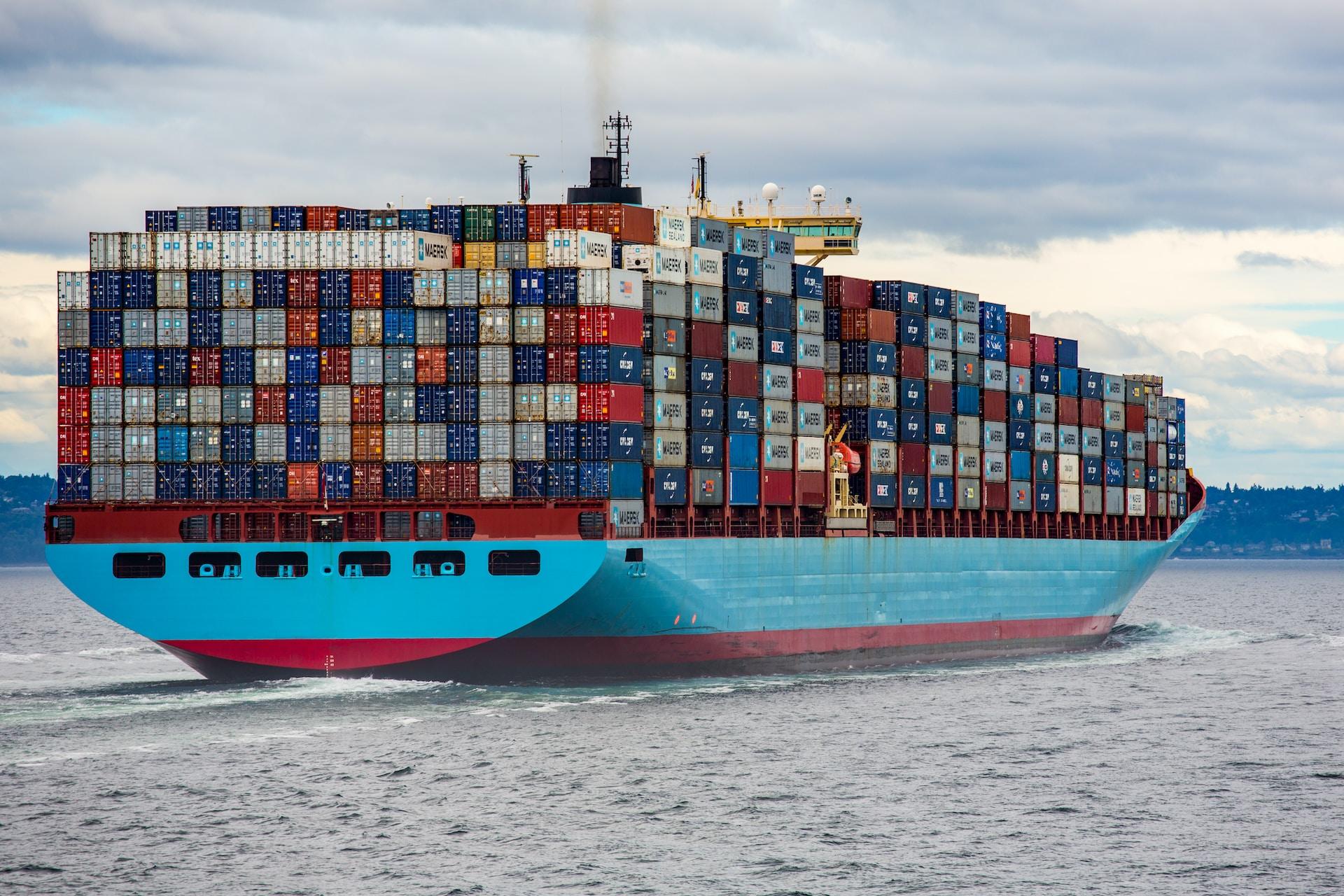

A lot happened in 2015. Terror attacks in France and all of Europe dealt with waves of immigrants hoping to make a better life for themselves. A Germanwings flight crashed, killing everyone on board. In the US, mass shootings and police shootings escalated. And everyone became obsessed with whatever the US presidential nominee had to say.
Indeed, 2015 was a busy year so we could be forgiven for not noticing a minute economic shift. You see, after Russia annexed Crimea the year before, the US imposed punishing sanctions. They meant to undercut Russian oil sales but, somehow, the sanctions hardly made a dent in Russia's economy. That's because Russia started selling its oil on the Chinese Cross-Border Interbank Payment System (CIPS).
CIPS rivals the dominant Society for Worldwide Interbank Financial Telecommunication (S.W.I.F.T SC) system, otherwise known as Swift. Both systems serve the same purpose; to execute financial transactions and settle payments between banks around the world. Swift has been around since 1973 and CIPS came online in 2015, apparently just in time for Russia to continue selling its oil.
The CIPS debut, that year's quietest financial move, is now set to revolutionise the global economy. But will it be a good revolution or a bad one? Those are the types of questions this article aims to answer. We'll look at
- how Swift and CIPS got started and how they differ
- the rise of the petroyuan
- CIPS and the petroyuan's impacts on geopolitics
- what CIPS and the petroyuan mean for the global economy



Global Payment Systems: CIPS and Swift
Before explaining these payment systems, we have to pinpoint how today's economic structures got their start. In 1944, delegates from 44 allied countries met in the United States to plan the global economy's future. The Bretton Woods Conference established the World Bank and the International Monetary Fund (IMF), among other institutions. It also established the US dollar as the world's reserve currency.
You'll find more details about Bretton Woods in our companion article. For now, we only need to know that countries started stockpiling US dollars so they could trade with other nations. Global banks handled these international financial transactions via Telex, essentially a telegraph system that could print messages. Telex was a public network and wasn't very fast but Swift's creation came about because of a different level of concern.

Initiating Swift
At the Bretton Woods Conference, the US guaranteed that its currency would have stable value because it was backed by gold. Theoretically, every nation holding dollars could convert their dollars into gold at $35/ounce. But in 1971, the US unilaterally ended the US dollar's convertibility. This decision turned every currency that had pegged itself to the dollar - and the dollar itself into a fiat currency.
In Belgium, A Swedish bank vice president worried that a US-based private financial entity would dominate international finance systems. Already, the US held dominant positions in the World Bank and IMF. The US president decided to discard a globally-agreed-to standard without consulting other parties involved. And now, First National City Bank of New York hinted that they would soon lead the world in financial technology.
Carl Reuterskiöld rushed to establish a "messaging system that could replace the public providers and speed up the payment process". He worked with multinational information technology (IT) firms to build a worldwide data processing network. Soon, Swift developed common standards for finance and rules for liability. By 1977, the system was fully operational; it's been the standard for financial transactions ever since.
If Swift, Why CIPS?
The Swift system labours under a lot of criticism. It's slow, inefficient and costly, despite recent innovations. Also, Swift system upgrades required banks to upgrade their computer systems, which banks in poorer countries didn't have the funds for. But having only one global financial transaction system has more ominous overtones.
After the attacks on the Twin Towers in New York City, the US developed a terrorist finance tracking program. Their investigations compromised Swift banks' financial activity and clients' data security. And then, after Russia annexed Crimea in 2014, the UK wanted to block Russia from the Swift system. Swift leaders refused the request because weaponising economic systems is a slippery-slope proposition that raises ethical questions.
And besides, it was long past time for more diversity in international trade. This idea led other countries to build their own financial transaction networks. India launched the Structured Financial Messaging System (SFMS) in 2001. Russia established the 'System for Transfer of Financial Messages' (SPFS) in 2014 in response to sanctions.
Of the four alternatives to Swift, China's CIPS causes the greatest waves. That's because the Chinese economy is powerful enough to rival standing trade and economic conventions. Nearly 1300 banks in 103 countries are now connected to CIPS. And Chinese President Xi Jinping brokering an oil deal with Saudi Arabia establishes the petroyuan as a contender in the international monetary system.
Chinese Currency and Oil Trade
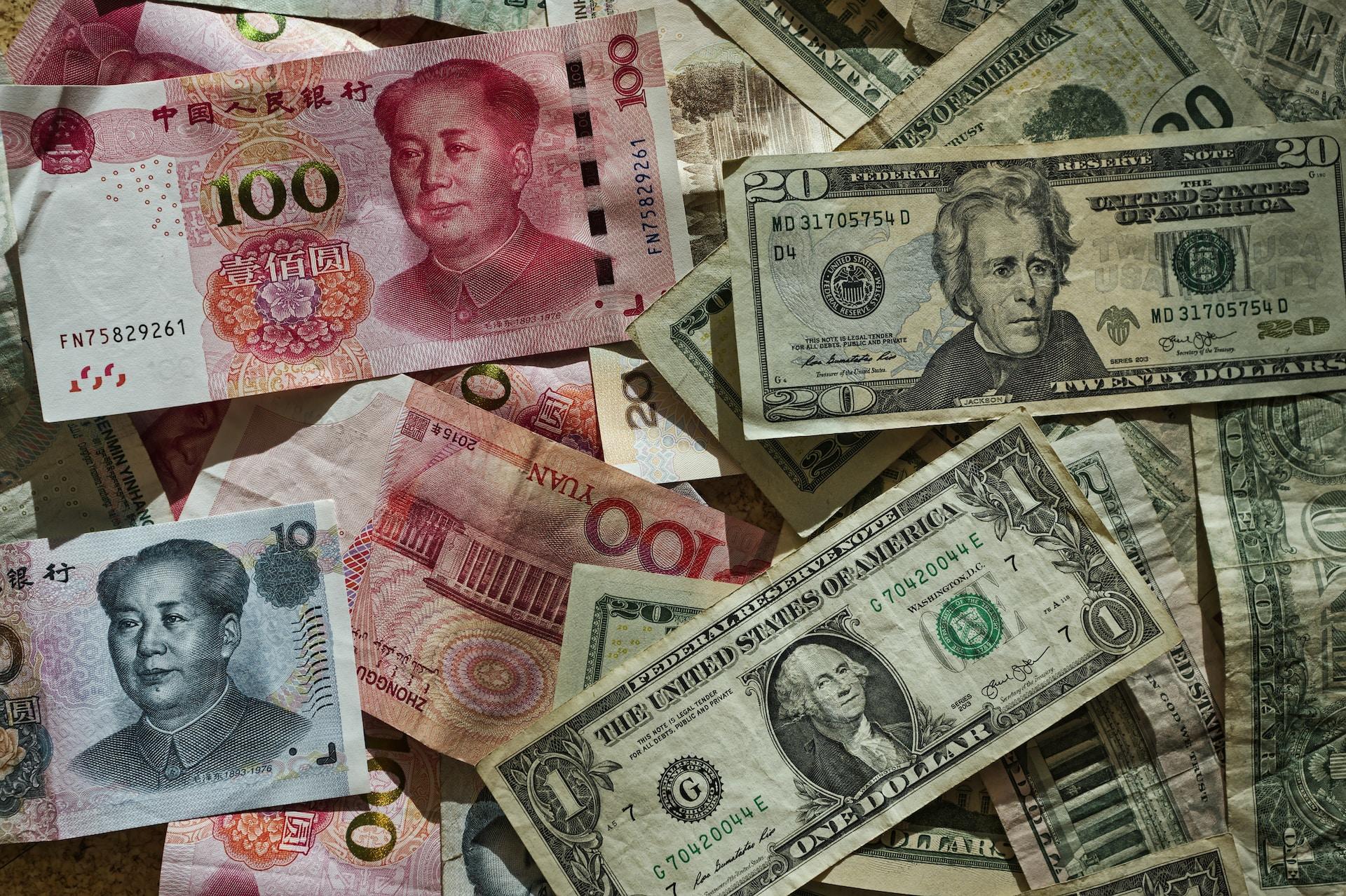
Besides that deal, President Xi also negotiated a peace treaty between Saudi Arabia and Iran, two of the world's largest oil exporters. In doing so, he's assured China's access to all the oil it needs. This deal is remarkable because Saudi crown prince Mohammed bin Salman agreed to yuan-denominated oil transactions.
Until now, the US dollar has reigned supreme in international trade of any type. This step away from longstanding trading practices signals a new era in energy markets and distribution. It's not the first of its kind; Russia and China engaged in oil trade in 2014, after Russia's first round of economic sanctions. But it is, by far, the most significant.
Starting around 2003, China started buying large stocks of gold. At the time, nobody said much about it. Today, the renminbi, another name for the Chinese yuan, is now where the US dollar was at during the 1940s and 50s. Gold-backed and economically powerful, Chinese currency increasingly represents stability.
Right now, the yuan doesn't enjoy the wide circulation that the US dollar does. Major markets don't trust the yuan or Chinese banks. But all across the global south, more nations, including in the Middle East, benefit from keeping renminbi reserves. And oil markets are ready to trade in different currencies.
Does this mean that the petrodollar and the petroyuan will both serve the oil trade? For now, that seems to be the case. But as countries forge more bilateral trade agreements, they will use the trade currencies that suit them the best. Not just in the oil market but for commodities and futures of all types.

CIPS, the Petroyuan and the Global Economy
Global powers may not trust China but they're growing wary of the US, as well. Over the last 25 years, that country's leaders have made questionable policy and economic moves. The 2008 global financial meltdown is a prime example of such. But until recently, there hasn't been anything else - no currency and no system that could present another option.
In 2013, China kicked off its Belt and Road Initiative (BRI). Since then, that country has funded and/or built infrastructure throughout the Pacific, Asia and the African continent. We see the aforementioned mistrust in accusations of debt-trap diplomacy those initiatives provoked but nobody seems to have any evidence of such. And so, project by project and trade deal by deal, China is building a reputation as an honest broker and reliable economic partner.
The BRI's infrastructure projects help undeveloped and developing countries gain access to global markets. With such a gateway, these nations can now engage in global trade. Thus, the World Bank estimates that BRI initiatives could boost trade by more than four per cent over time. The Centre for Economics and Business Research in London further projects that the BRI could bring a seven trillion dollar rise to the global gross domestic product (GDP).
Establishing a financial transaction system is a natural outgrowth of BRI projects. China has Swift access and dollar reserves but many BRI recipient countries have long been disadvantaged in those aspects. Thanks to those initiatives, many now have access to such a system and the ability to build currency reserves.
Neither the BRI, CIPS nor the petroyuan developments intend to unseat existing systems. Chinese President Xi Jinping made his intentions clear in his Global Civilization Initiative speech. Mutual cooperation, dialogue and inclusiveness underpin Chinese initiatives. Despite alarmist headlines, all available evidence points in that direction.
It's unreasonable to expect something as vital as economic security to be an either-or proposition. Global economic frameworks have room for Swift, CIPS and other transaction systems. The US dollar became the default currency by fluke, simply because there was no other that was powerful enough at the time. Nobody ever said that there must only be one currency for use in the oil markets.
Technological advances raise the possibility of central banks abandoning currency reserves altogether. The most innovative countries are already at work devising digital currencies; China is currently testing the digital yuan. Blockchain technology could keep nations' financial details confidential. With such a decentralised system, perhaps even CIPS and Swift will become redundant.
Summarise with AI:
Did you like this article? Leave a rating!

 Loading...