
Prepositions of place tell us where things are at, either as single objects or in relation to other things. English students master the place prepositions 'in', 'at', and 'on' pretty early in their learning, but they often get confused over how and when to use them. In part, that's because those are also prepositions used for time descriptions. But that's not the only reason why these prepositions, and others on this list, are misused.
| Preposition | What it describes | Examples in a sentence |
|---|---|---|
| in | enclosed spaces cities countries | My cat loves hiding in boxes. How long have you lived in Paris? Paris is in France. |
| on | surfaces streets devices transportation | Put your bag on the table. I live on Main Street. I saw it on television. I'm on the bus right now. |
| at | specific locations addresses events landmarks | I'm at the shopping centre. She lives at 325 Elm Street. I'll be at the concert on Friday. We were at the waterfall. |
| near close to | Not far from something | I live near the bank. She lives close to the school. |
| opposite across from | On the other side of something. | My friend lives opposite me. My friend lives across from me. |
| between among | In the middle of two or more things | I sit between Mary and John in class. (between = 2 things) I love being among friends! (among = 3 or more things) |
| above over | Higher than something | My cousin lives above me. The bird flew over my house. |
| below beneath under | Lower than or covered by something | Airplanes store cargo below the seating area. I keep my backpack beneath my desk. My cat crawled under the couch. |
| beside next to by | Being adjacent to something. | We had a picnic beside the lake. The library is next to the school. I love cycling by the river! |
| in front of behind | Ahead of or behind something. | Michael sits in front of me in class. I parked my car behind the building. |
| inside outside | Within or beyond an enclosure. | My phone is inside my bag. I left my shoes outside the room. |
| beyond | Further away than something else. | The hiking trail goes beyond those hills. |


Prepositions of Place: 'In', 'On', 'At' Usage
Did you notice that these three prepositions of place have many different uses? Unlike the prepositions describing the manner in which we do things, place preposition usage is broader. But that doesn't mean it's more complex. In fact, once you master these rules, using them is quite simple.
As an English learner, you will learn these prepositions first, and you'll use them often. So, you must work extra hard to master their proper usage, but that's not always an easy job.
These prepositions of place have many uses in this language, not just to describe locations. That makes these three little words extra confusing.
Preposition of Place: Basic Information
Where you are is who you are.
Frances Mayes, author of Under The Tuscan Sun
In general, the purpose of prepositions is to answer a fundamental question. For instance, the prepositions of manner mentioned above answer the "How are things done?" question. Prepositions of place answer the "Where are things at?" query.
Beyond the three main prepositions of place listed above, we have 19 more words to describe locations. These prepositions are more specific because they give us more information about the topic being discussed. These prepositions describe a location in relation to something.
- I am near the restaurant; I will be there in a minute. (I'm very close.)
- The new shopping centre is just beyond the city limits. (It's just past the edge of the city)
- My cat is hiding beneath a pile of sweaters. (somewhere under the sweaters)
- She stood so close beside me, I could smell her perfume. (She was very close.)
- He held his book bag above his head to avoid the rain. (a bit higher than his head)
- I found my place among a group of students. (many students all around me)
In all of these sentences, the subject finds its position in relation to the object, thanks to the preposition of place. Note that 'in', 'at', and 'on' do not present a relationship between subject and object. The rules for using them depend on the type of place they describe. They are all different categories of place prepositions.
'In', 'at', and 'on' describe specific places. All the other prepositions of place establish a relationship between the subject and object.
Prepositions of Place Categories
Every preposition of place falls into one of five categories, and a couple of them fall into more than one category. Here's how that list breaks down.
These categories help us understand what the preposition tells us. For instance, if a sentence includes 'beneath' or 'under', we know that the object is in a certain position, not in a direction.
On the other hand, prepositions like 'in' and 'on' need more clarification because they can be location, position, or space prepositions. So, we must add more information - give more context, to make our meaning clear.
Of all the types of prepositions in the English language, prepositions of place are one of the only types to make such fine distinctions. If you're just at the beginning of your English studies, you might not need this information yet. Still, it's good to keep this in mind as you advance to the next stage of your learning.
Prepositions of Place Versus Adverbs of Place
In English, many words describe location, either by themselves or in relation to other things. However, not all of them are prepositions.
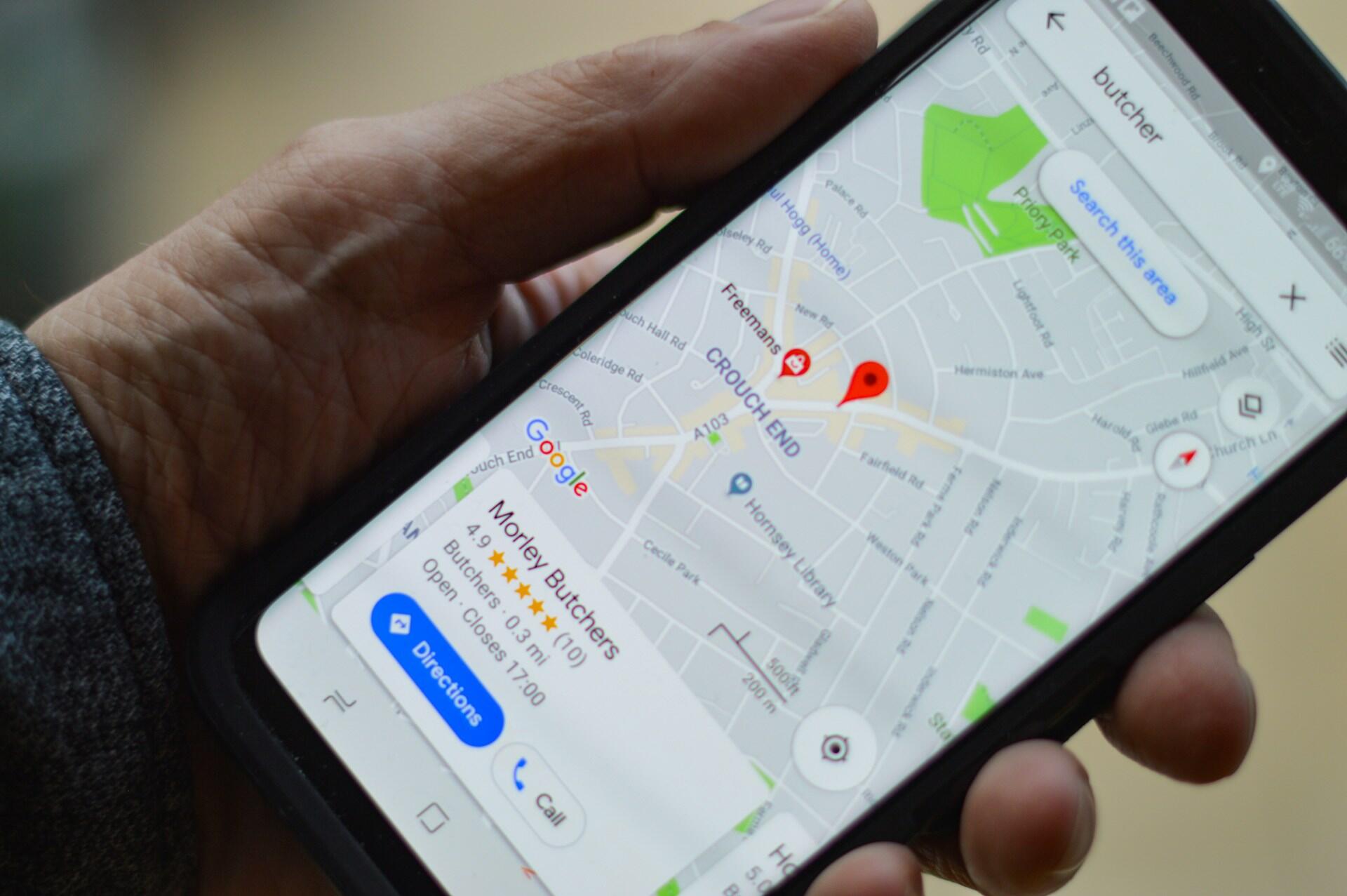
Like the prepositions this article explores, adverbs of place answer the 'Where are things at?' question, but they do it with no specific object2. Like other adverbs, they modify verbs (and sometimes adjectives) to give sentences more depth and meaning.
These adverbs typically feature in simple sentences; usually, they're the last word. You can always recognise sentences with adverbs of place because they do not have a noun or pronoun after them.
My dad went inside.
My dad is in the store.
Both of these sentences describe where the dad is. But the sentence with the preposition needed an object to give it clarity - to say what the dad is inside of. From that, we can understand that adverbs of place are for general locations, not exact ones.
- Let's play outside.
- My room is upstairs.
- I don't want to go there.
- There's a hospital nearby.
- I don't want to go anywhere.
- I'll wait for you here.
All of these sentences end with an adverb of place. They present complete ideas; we don't need any more clarification to understand their meaning. So, you can use these and other adverbs of place when describing general directions, locations, and distances.
Did you also notice that 'inside' and 'outside' are on the list of prepositions in this article's introduction? That is one of the most confusing aspects of these prepositions. They can be either prepositions or adverbs, depending on how they're used in a sentence4. How can you tell them apart?
Like prepositions of place, adverbs of place signal location, direction, and distance.
Unlike the prepositions, they do not address an object.
They are suitable to give a general idea of where something is.
Avoid Mistakes Using Prepositions of Place
Did you know that you can be on a train, on a bus or on a plane, but you can only be in a car? Please, never say you are riding on a car! It means you are outside the car, sitting on the bonnet or roof, as it goes down the road - very unsafe!
This mistake is easy to understand because we use 'on' for all other types of transportation, even motorcycles and skateboards. Often, preposition errors students make result from translating prepositions from their native language into English. These are the mistakes I hear the most from my students.
Mistakes we make
- I am already in the plane.
- She's hiding between the trees.
- I saw it in the internet.
- I'm talking by phone.
- I wait for you at the car.
- They live in the Walnut Street.
- They live in the apartment under me.
- Don't stand so close next to me!
Say it correctly
- I am already on the plane.
- She's hiding among the trees.
- I saw it on the internet.
- I'm talking on the phone.
- I wait for you by (next to) the car.
- They live on Walnut Street.
- They live in the apartment beneath (or below) me.
- Don't stand next to me! (or Don't stand so close!)
Translation mistakes take a bit more work and time to correct. English learners must apply English grammar rules for proper preposition usage in this language. But don't worry too much; even native English speakers use the wrong prepositions!
Prepositions of Place Examples in Action
Practice makes perfect.
English idiom
As an English learner, you've likely heard that phrase many times. Did you know it comes from the Latin phrase, which translates to "Usage makes perfect"? The Latin version is closer to the truth of the matter, when you think about it. The more you use a skill - your English skills, in this case, the better and more quickly they develop.
Now that you've been through the entire preposition of place lesson3, it's time to put your knowledge to work. This flashcard deck challenges you to use the correct prepositions. When you finish these, you should try your skills with prepositions that describe movement.
All About Prepositions of Place: Resources and Further Reading
- Langeek. ““Prepositions of Place” in English Grammar.” Langeek, langeek.co/en/grammar/course/69/prepositions-of-place. Accessed 22 Feb. 2026.
- Grammarly. “What Are Adverbs of Place? | Grammarly.” What Are Adverbs of Place? | Grammarly, Grammarly Blog, 20 Mar. 2025, www.grammarly.com/blog/frequently-asked-questions/adverbs-of-place/. Accessed 22 Feb. 2026.
- Routh, Nicole. “Prepositions of Place | List, Examples & Exercises.” Quillbot Blog, 26 Mar. 2025, quillbot.com/blog/sentence-and-word-structure/prepositions-of-place/. Accessed 23 Feb. 2026.
- Place. “Adverb of Place | Overview & Examples - Lesson | Study.com.” Study.com, 2023, study.com/academy/lesson/what-is-an-adverb-of-place-definition-examples.html. Accessed 23 Feb. 2026.
Summarise with AI:
Did you like this article? Leave a rating!

 Loading...