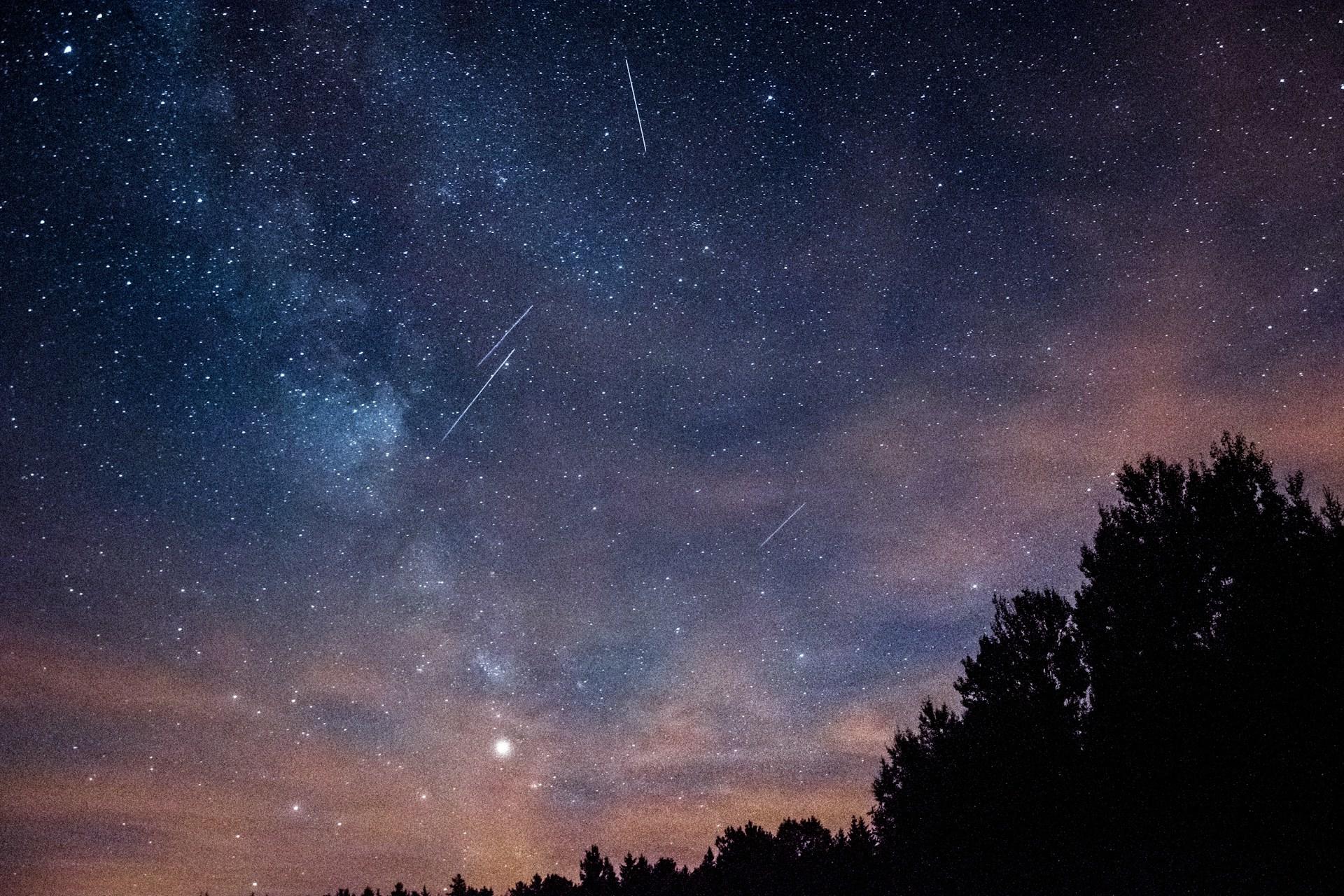

Before you start the astronomy quiz, it's worth taking a quick look up—literally 👀✨.
Since the dawn of humanity, the starry sky has fascinated people: as a guide, a source of myths, a scientific mystery, and an inexhaustible space for imagination.
But don't worry: you don't need a degree in astrophysics to take part. Our astronomy quiz is aimed at curious minds, stargazers, and those thirsty for knowledge alike. Whether you've already studied planets, galaxies, and black holes in depth or just want to know why the sky is dark at night, this quiz will meet you right where you are.
Quiz
Quiz :








What Exactly Is Astronomy?
Astronomy is one of the oldest sciences known to humankind. Thousands of years ago, people observed the sky to determine the seasons, facilitate navigation, and plan religious rituals.
These early observations led to the development of the first calendars, the mapping of constellations, and fundamental ideas about the structure of the cosmos. Astronomy thus combines scientific thinking with practical applications and cultural significance.
Light from the sun takes 8 minutes and 20 seconds to reach Earth. It travels a distance of around 93 million miles.
More Than Just Counting Stars
Modern astronomy goes far beyond simply counting stars. It investigates the physical processes that form stars, planets, and galaxies and deals with the biggest questions in physics. These include, among others:
- The origin of the universe: The Big Bang theory describes how the universe originated from an extremely dense and hot state about 13.8 billion years ago 💥. Astronomers study cosmic microwave background radiation and galaxy distribution to better understand the evolution of the universe.
- Planets and exoplanets: The discovery of planets outside our solar system has revolutionised our understanding of planetary systems 🪐. Through transit methods and radial velocity measurements, astronomers can determine the mass, size, and orbits of these exoplanets.
- Stars, supernovae, and black holes: Stars go through complex life cycles, from star formation in dense clouds of gas to explosion as a supernova. Black holes originate from particularly massive stars and significantly influence space, time, and matter in their vicinity.
- Galaxies, Dark Matter, and Dark Energy: Galaxies consist of billions of stars, gas, and dust. Observations show that most of the matter in the universe is "invisible"—the so-called dark matter—and that a mysterious dark energy is accelerating the expansion of the universe.
Tools of Modern Astronomy
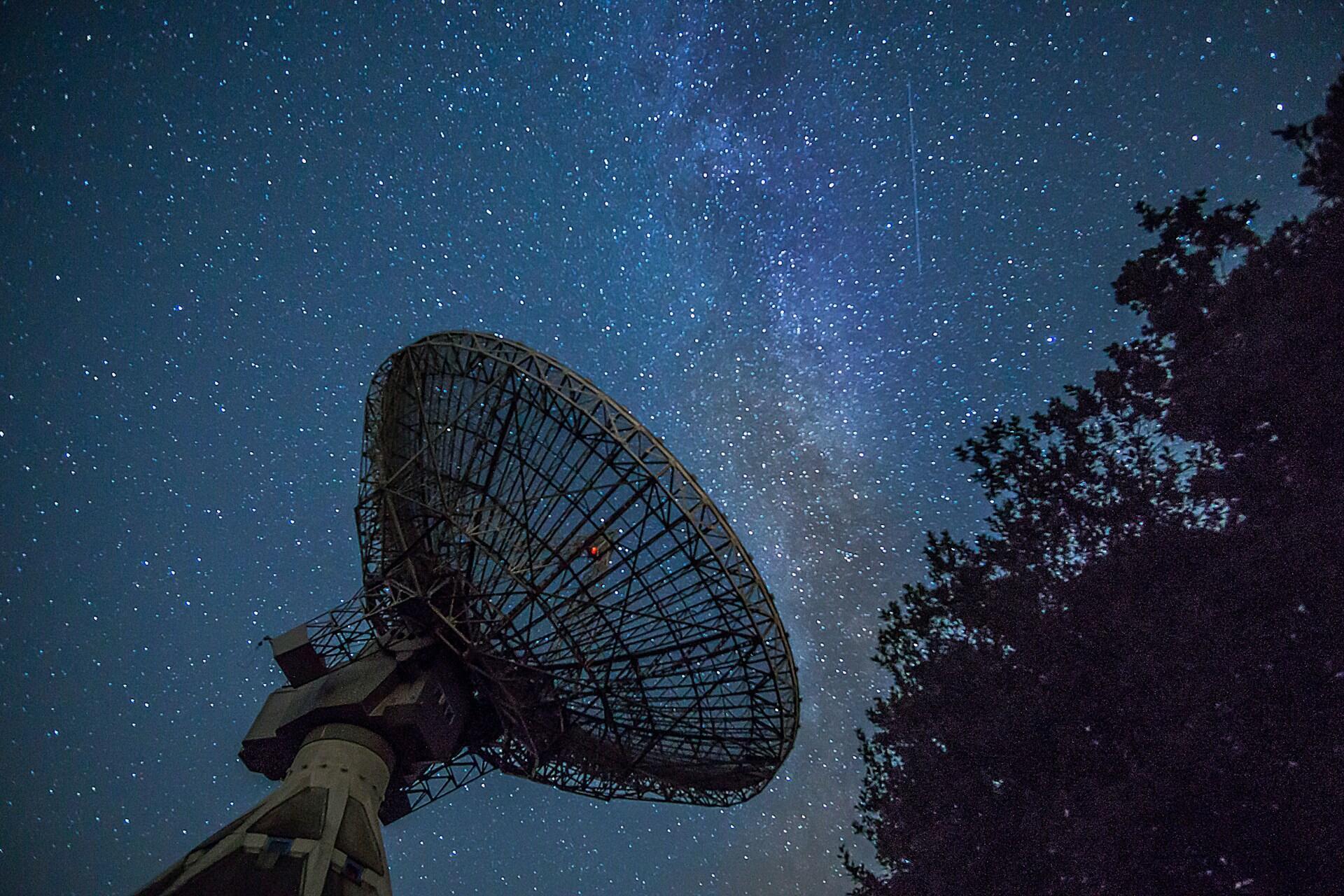
To study these phenomena, astronomers rely on sophisticated observation methods and technology. Optical telescopes allow light to be collected over great distances, radio telescopes detect radio waves from distant galaxies, and space telescopes such as Hubble or James Webb enable observations beyond the Earth's atmosphere.
Supercomputers and simulations help to model the dynamics of star clusters, galaxies, and even cosmic structures on a large scale. Modern astronomy is therefore a combination of observation, theory, and high-tech analysis.
Our Place in the Universe
Earth is our home planet, but on the scale of the universe, it is just a tiny dot. It orbits the sun, which in turn is part of a solar system located in a galaxy containing hundreds of billions of stars—and this galaxy is just one of an estimated two trillion galaxies in the observable universe.
From the Solar System to the Galaxy
Our solar system consists of eight planets, numerous moons, asteroids, comets, and the interplanetary medium. Each planet has unique characteristics, from the dense atmosphere of Venus to the rings of Saturn.
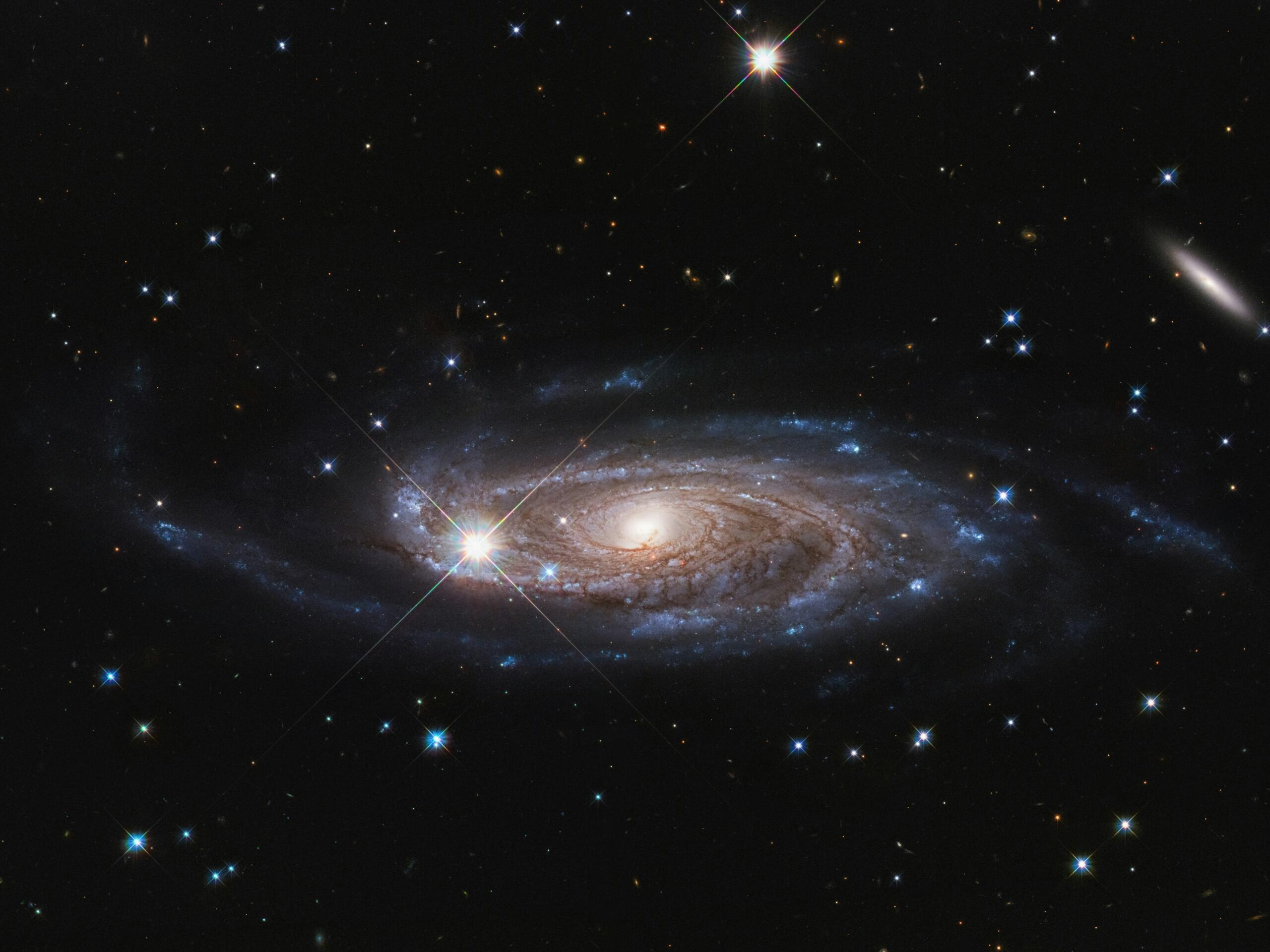
The Milky Way is a spiral galaxy with a diameter of about 100,000 light-years, held together by gravity.
Galaxies interact with each other, merge, or are deformed by gravitational forces, leading to the formation of star-forming regions and cosmic structures.
Discoveries in the Universe
Astronomers can now observe the universe in near real time with the help of satellites, space probes, and telescopes. Missions such as Voyager, Cassini, and New Horizons have revolutionised our understanding of the planets and their moons.
By observing gravitational waves, pulsars, and cosmic background radiation, scientists are gaining deep insights into processes that date back billions of years. These advances make it possible to precisely trace the formation of stars and galaxies and develop complex physical models.
Astronomy Through the Ages
Our understanding of the universe has fundamentally changed over the course of history. In the past, stars were considered gods or signs of divine powers, and the geocentric worldview placed the Earth at the centre of the cosmos. With the Renaissance and the work of Copernicus, Galileo, and Kepler, the heliocentric worldview was established, placing the Sun at the centre.
From Myths to Modern Science
Astronomy has evolved from mystical interpretations to an exact science. The development of telescopes, spectroscopy, and modern computing methods has enabled detailed observations of light, matter, and gravity.
Discoveries about the expansion of the universe, black holes, dark matter, and the search for exoplanets have continually expanded our understanding of the cosmos. Today, astronomy works closely with physics, mathematics, and computer science to accurately describe the structure and evolution of the universe.
Milestones in Research
Some key discoveries that have shaped our view of the world are:
16th Century
The formulation of the heliocentric model by Copernicus
1609
The discovery of Jupiter's moons by Galileo
1609-1619
Johannes Kepler's description of the laws of planetary motion
1920
Edwin Hubble's observation of the expansion of the universe
20-21st Century
The discovery of cosmic background radiation and gravitational waves
These developments show that astronomy is a dynamic science that constantly raises new questions and continually expands our understanding of space and time.
Summarise with AI:
Did you like this article? Leave a rating!

 Loading...