
“Supertutor” Mark Maclaine is Superprof's Co-founder and Director of Learning. Mark is currently working on his new book, which is based on a series of real-life clients and the experiences he has gained over his many years of tutoring. This series looks at ‘Maintaining your memory banks’ and the first chapter looks at how the brain thinks and how tutors can help certain tasks to become automatic.
Want to give private lessons?
Join the Superprof community and share your knowledge with interested and motivated students.
What is thinking?
For humans, thinking is often an unconscious, voluntary or involuntary process which we do every day of our lives. It can be roughly defined as generating ideas in response to certain stimuli, be they from any of the senses, auditory, visual etc… Sometimes a thought can even be in response to another thought. Another more crude way of defining thinking is basically anything that we don’t say out loud, that goes on in our heads.
Why then do we have thoughts? The answer to this can be steeped in nihilism or optimism, but regardless, it’s best to look to evolution for the answers to this age-old question. Organisms, lifeforms, animals, whatever you want to call them change and evolve with each generation to become better adapted to survive their environment; some of these changes are anatomical, longer legs, thicker skin, and sharper teeth, but for humans, one thing has helped us survive and thrive in our landscape more than anything else and it’s our ability to think, and we’re pretty damn good at it, being able to visualise, plan, improvise etc. The bottom line is, we developed to be thinkers because it helped our species to survive its harsh origins, and now we continue to think because evolution is ever pushing us towards expansion and progress.
It’s worth noting that there’s a difference between thoughts and instincts, which is something that both animals and humans rely on, like thinking, to navigate the world. Instincts are a more emotional and primal response to information, they are behaviours that are built into our genetics. Knowing this helps us define thought even better since it’s rather the processing of information with logic, reasoning and experience that can provide us with both the short-term solutions of instinct and long-term solutions to our problems, a bit like a spider building a web for example, hunger is the instinct, but the rest is up to thought. I use this analogy to make another point, that thinking itself can be instinctive for us too.

How do thoughts work?
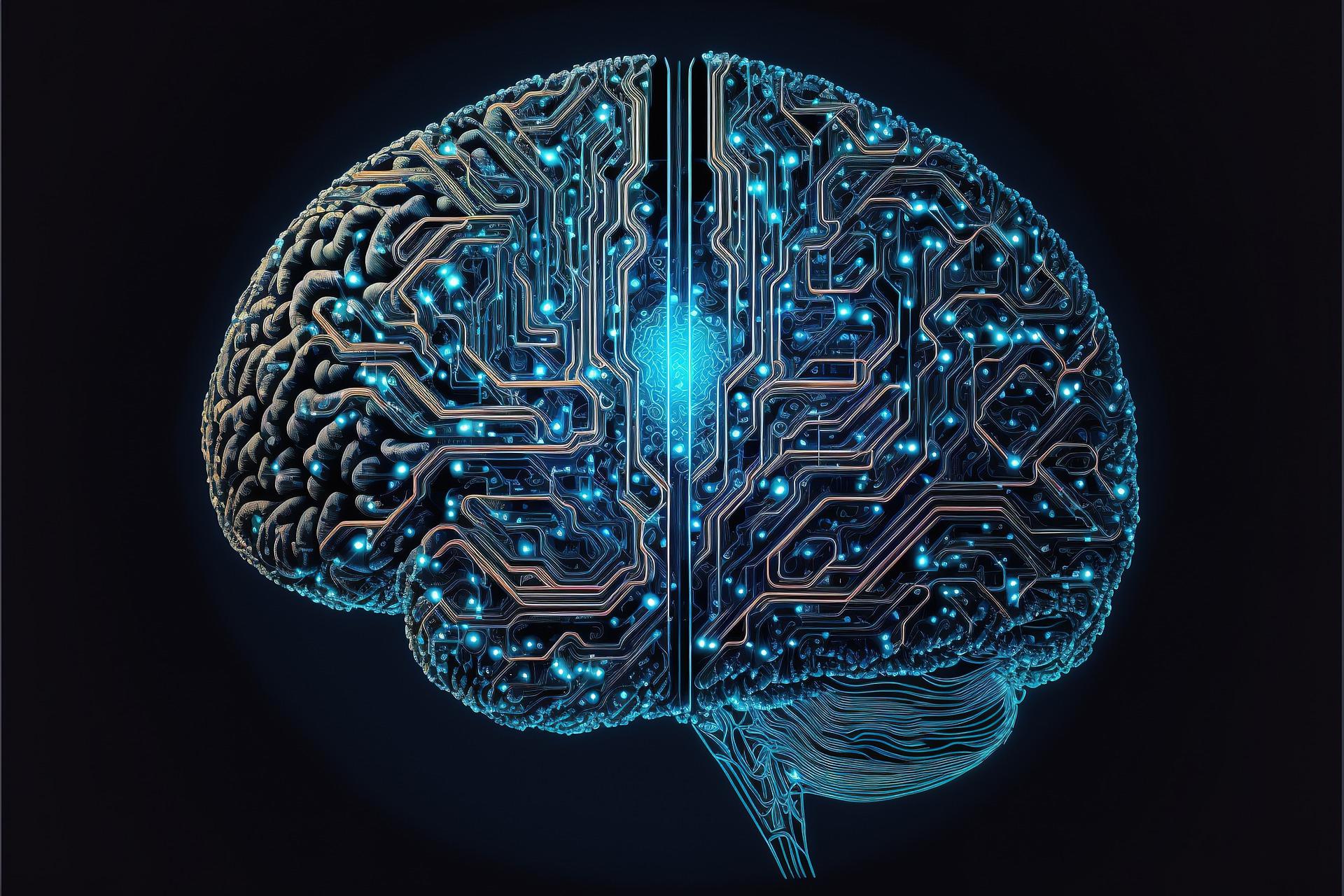
So what actually happens when we think? And what part of the brain thinks? Thinking is a process that occurs in the frontal lobe of the cerebrum (the largest part of the brain), which uses information as fuel, which we can get from both internal and external input. When we solve a problem, for example, we are using something called our working memory, combined with both internal and external stimuli to find a solution. Working memory can be thought of as a sort of thinking space, our mental equivalent of a workshop table, where we can lay out all the tools and pieces and assemble the product. The external stimuli are the information we can gather at the moment with our senses, so as we’re thinking, we are taking in information constantly from our surroundings; in a maths problem, this would be the question's wording and the numbers provided in the question. The internal stimuli are the stuff we already know, such as equations we’ve learned, and procedures we’ve memorised, one of the first examples of internal stimuli we all have in common is the alphabet. These internal stimuli are stored in the long-term memory, different from the working memory. If we wanted to get even more specific, we could say that this internal stimulus, in our long-term memory, is stored in connections called neural pathways, connections between cells called neurons. When we want to retrieve information from our memory, electrical impulses travel down these neural pathways, and we remember the stimulus, almost as when we first experienced it. As an educator, knowing these simple things can help us understand where a student might be struggling; perhaps they are lacking the “know-how” to answer a question, or maybe we haven’t given them enough external stimuli to answer it with their own skills, even if we might be able to ourselves. Teaching is a very empathetic practice, so understanding our students' thought processes is a great way of connecting with them and guiding them to the advice they need the most.
On another note, not all neural pathways exist in the brain. You might remember how we talked about instincts and actions we don’t have to think about; well these actions have their own neural pathways, called reflex arcs, which are responsible for our reflexes. In learning and teaching, we often talk about making something reflexive, meaning you shouldn’t have to think about it in order to do it. Although difficult, it is possible to acquire new reflexes and this can be a goal in learning, especially in sport or other physical activities. I can’t speak for everyone, but I’ve noticed that although as a child my thinking might have been literally faster, as with most children, however, my ability to catch falling objects has actually improved with age, this is an example of an acquired reflex. You might have seen the very same phenomenon described as “dad-reflexes”, well documented by video compilations online, of dads employing almost superhuman reflexes and awareness for the specific task of saving their children from danger. Their brain might have slowed down in learning, but they’ve acquired reflexes elsewhere.
The effect of our environment on how we think
As a tutor, teacher or educator, it’s important to understand the circumstances that might positively or negatively affect thinking, so that we can create the best possible environment for both ourselves and our students to learn in. So to begin with, what are some of the things that might influence a learner's thinking about a topic they’re learning? It can start with the ambience, if we’re distracted by environmental factors such as a room being too hot or cold, then we might not be able to concentrate on our thinking. As a tutor, you should do everything you reasonably can to make the environment as comfortable as you can to allow for maximum concentration; if you’re hosting your student in person, keeping a tidy and well-climatised room will help, but even if you’re conducting a lesson online, using high-quality audio equipment and making sure there is a good connection and no background noise are all steps you can take to make way for the important thinking that will give way to learning. Something perhaps less obvious that might influence thinking is the learners' investment in the material they are studying. This has a flip side too, comfort itself can be distracting, which is why we need to take care not to make an environment that’s too comfortable. I’m sure we’d all love to be able to work from the comfort of our beds with our eyes closed and a fire warming us, but if we’re being honest, most of us would probably doze off to sleep.
If students don’t care about what they are learning, then their thoughts about the subject are likely to be haphazard and inattentive. “How can we remedy this?”, you might be wondering. Firstly, we need to find or create a personal relevance of the subject for the student, which really can be anything, as long as it provides a reason for the student to learn the skill or information. An example might be as simple as “I need to learn this subject to pass my course”, which might seem drab, but it's already better than having a student with no interest. The key to this idea of personal relevance is belief, as long as the student believes that the subject is truly relevant to them, then their thinking will be positively influenced and more engaged. We can further build on this by introducing the idea of escalating commitments. Ideally, we want our students to be gradually more invested and committed to learning, and therefore thinking about their learning, as time goes on. To do this we need to start with easy and interesting things, and gradually up the ante to harder and more complicated things, that will make the students' progress obvious to them and make them feel more committed than each of their previous lessons. Learning can be like climbing a mountain in this regard, and thinking is the tool we use to do it.

What next?
Now that we know a bit more about thinking and how it works, why not find out more about how it applies to another process our brain goes through learning? You can check out the article “how the brain learns” and more in our “advice for tutors” series of articles here on Superprof. If that’s not to your fancy, but you’ve still got some appetite for reading, Superprof offers a multitude of articles on just about anything relating to tuition and learning, so be sure to check back for more.
Want to give private lessons?
Join the Superprof community and share your knowledge with interested and motivated students.
Summarise with AI:
Did you like this article? Leave a rating!

 Loading...