

Revision is a good impulse to have.
Rigoberto Gonzalez
If you’re gunning for a top grade in the A-level chemistry exam, then there’s no room for error. More and more students in the UK are opting to study the science subject, and with the A Level average point score rising by the year, there’s stiff competition when it comes to securing an A*. This means that you’ll need to leave no stone unturned when it comes to your revision and exam preparation to ensure that you stay ahead of the competition.
How to use chemistry past papers to improve your grades:
- To make the most out of your AQA A-level chemistry past papers, you’ll need to familiarise yourself with the sort of questions that actually appear in exam papers
- Begin timing yourself working through the exam papers in their entirety, allowing you to practice working through the paper under exam conditions
- Begin timing yourself working through the exam papers in their entirety, allowing you to practice working through the paper under exam conditions
- Use your past papers to identify topics you struggle with and that are most likely to appear in your exam so that you can prioritise your revision








Advantages of Using Past Papers for A-Level Chemistry
🧐 Find Knowledge Gaps
🤩 Confidence Boost
✍️ Learn Exam Structure
Suppose you haven't yet been introduced by your educator to past papers. In that case, you might be sceptical about their widespread use and whether they make review sessions more successful when studying a complex topic such as chemistry. However, it's worth mentioning that past papers are an essential chemistry revision tool.
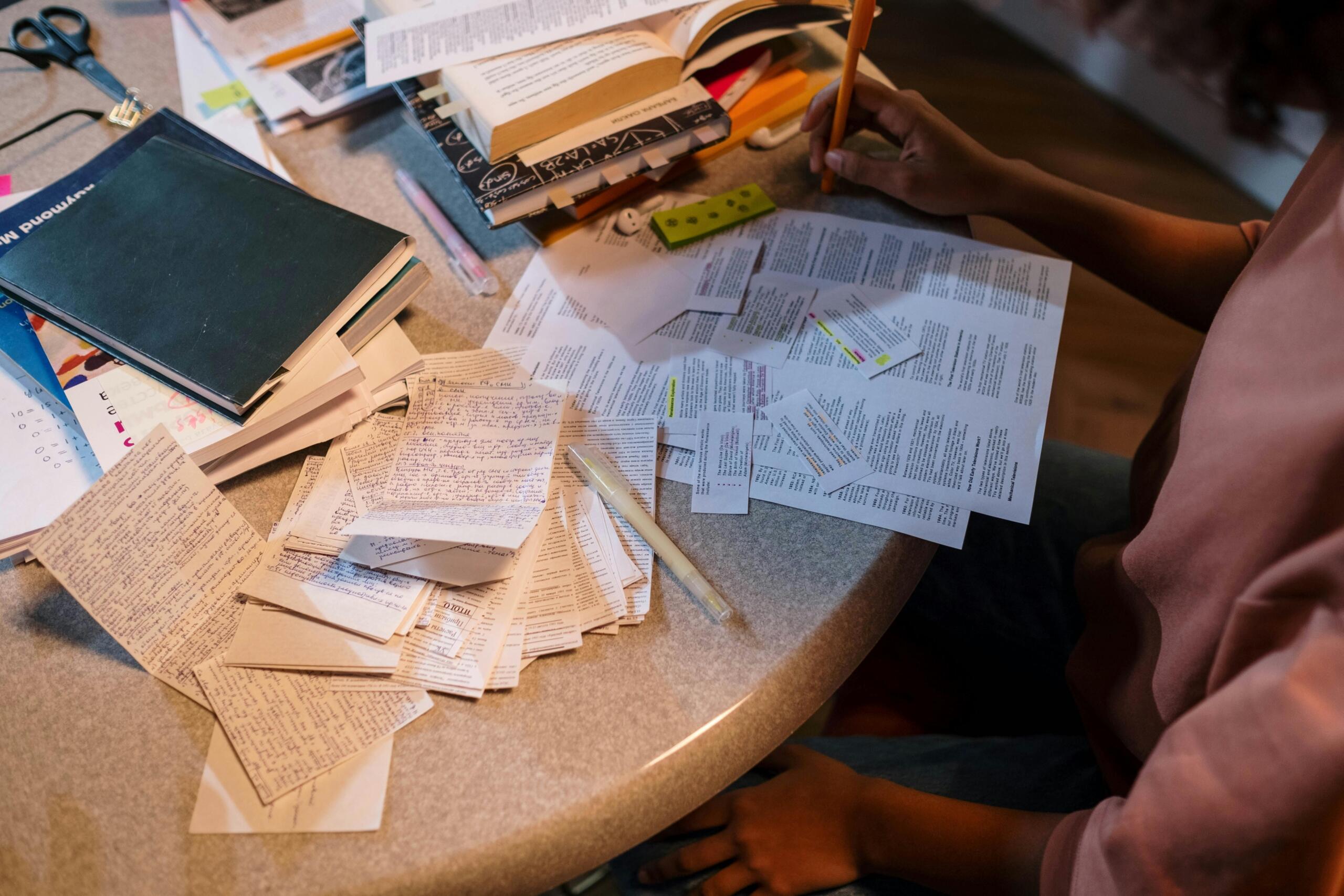
The following are a few of the most commonly observed benefits of using past papers for A-Level chemistry review sessions:
Whether you’ve just started your course or your exams are fast approaching, past papers are helpful to everyone studying A level chemistry.
Try to get your hands on every past paper you can, and it doesn't matter if you practice the same one again and again, since practice makes perfect! While simply going through past papers and answering the questions is helpful, you can get so much more out of them to improve your chemistry grades.
Using the Right AQA A Level Chemistry Past Papers
It’s easy to work yourself up into a ball of stress when you begin thinking about all of the topics that need to be covered in advance of setting foot inside that exam hall. However, if you approach things step-by-step, the mountain of work that lies ahead of you begins to seem achievable. First things first, you’re going to need to grab yourself a set of AQA A Level Chemistry past papers.
You’ll need to make sure that you are using the right set by making sure that you’ve got the right examination board and specification codes before downloading any past papers. AQA (Assessment and Qualifications Alliance) is going to be your best bet for this, as it’s England's most popular general qualifications exam board. If you've spent any time revising alongside an online Chemistry tutor, they'll likely have advised you to go AQA.
In order to save you from a common trial-and-error process that first-timers typically encounter, make sure that you go straight for the AQA A Level Chemistry (7405) and AS Level Chemistry (7404) resources. It’s not at all uncommon for chemistry students to confuse the papers with other exam boards like OCR or Edexcel, and by the time they realise, they’ve already eaten up a good chunk of time in their study block.
You’ll be glad to learn that tracking them down is relatively straightforward, as all you’ll need to do to get them onto the screen of your computer or mobile device is visit the official AQA website.
From here, you’ll be able to access past papers and their accompanying marking schemes with ease.
Not only will working through your exam papers help you refine your answers, but it will also give you some of your most valuable notes.
Organising your notes by topic or year will allow you to easily flick right to the sample answers or solutions you need. This will be a lifesaver as the date begins to approach, believe us! Having the marking scheme by your side as you amend or work through the papers will also make sure that the answers you learn from are worthy of top marks and will give you a sense of what examiners are looking for when correcting your papers.
Practice Under Real Exam Conditions
It’s important that you keep the end goal in mind throughout your preparation for the exams. Given that your grade is going to be determined by how you answer a set of questions across a series of papers in a confined period of time, you’ll need to ready yourself for this sort of assessment. How you performed in your weekly quizzes along the way won’t hold any merit when you step inside the exam hall.
From the moment they instruct you to turn over your paper and begin the exam, you’ll want to be following an informed strategy.
Getting an A* in AQA A Level Chemistry requires more than just completing past papers; you'll also need to be comfortable under real exam conditions.
With this strategy in your arsenal, you'll be turning your revision into powerful preparation that builds both knowledge and exam confidence.

This involves everything from knowing what order you’re going to work through the sections of the paper, what options you’re going to take and how you’re going to allocate your time in advance of the big day. You’ll want to time yourself working through various sections of the paper, and working on improving your time until you are comfortable producing an A* level answer under exam conditions.
The time spent on each section should match its mark allocation. To name just one example, a section worth 20% of total marks needs roughly 24 minutes of your two-hour practice.
By allocating your time inside the exam hall according to the number of marks that are up for grabs for the respective question, you’ll not only ensure that you finish on time, but you’ll also ensure that your time is yielding the optimal return. After all, there’s no point killing yourself trying to perfect a single question for half the exam when it's only worth five marks, especially when there’s plenty of other marks up for grabs elsewhere on the paper.
Review and Analyse Your Mistakes Carefully
You can work through endless years of past chemistry exam papers, and you will improve quite a bit. However, you will be capping yourself if you aren’t reviewing and analysing your work. Think of it like playing a game of chess, you can play hundreds of games, win some, lose some, and never understand the reasoning. However, by analysing your games, you’re able to understand exactly what worked and why, and be able to implement the strategy again in future games.
So, when you’re working through past chemistry exam papers, you’ll need to review your answers and amend them so that they are in line with the responses that constitute top marks in the accompanying marking scheme. If you repeat this process enough times, you’ll eventually hear the voice of an examiner screaming inside your head on what details an A* calibre answer needs, so that you can refine your answers accordingly.
It’s definitely great practice to keep a detailed list of questions you got wrong after each practice paper, so that you don’t end up making the same mistakes twice. Of course, all of this will become a lot clearer with a few reps or if you were to prepare alongside good chemistry tutors.
Understanding Marking Schemes
The importance of marking schemes on your journey to achieving the grade you deserve in the A-level chemistry exam cannot be understated. When we say that AQA A Level Chemistry Past Papers are an essential resource for excelling in your exam, this includes the accompanying marking scheme.

This resource will not only show you what the different levels of marks are awarded for answers, but it will also tell you why they deserve these grades.
So, why not try looking at mark schemes without seeing their questions and figure out what was asked based on the expected answers?
This helps you understand exactly what examiners want in top-scoring responses.
Self-marking your past papers against the marking scheme from past papers will help you spot areas where you have gaps in your knowledge, and this can help you focus your chemistry revision efforts on what matters.
Succeeding in AQA A Level Chemistry
As you’ll have learned by now, getting that A* in AQA A Level Chemistry is most certainly an attainable goal, but it will take more than just knowing complex concepts. You’ll need strategic prep and to refine your exam technique with time. Some partition advice that we can leave you with to help bring you close to your goals in the subject is to not rush through questions without understanding what they ask. It always helps to look out for trigger words and clues in the question itself so that you can plan your answer and make sure you are doing exactly what’s being instructed.
Leaving a small bank of time at the end of your exam to review your paper will help you address any simple mistakes that you might have made while working through the paper. Fixing these up will likely yield a greater return on your time than spending an extra 5 minutes answering a long question.
Lastly, you may have heard it a hundred times, but show your calculations clearly, so that the examiner can give you the marks you’ve worked for. With an understanding of how to use AQA A Level Chemistry past papers as a study resource, you’ll be well on your way to that A*! If you're looking to stack the odds in your favour, you can also find a quality A level chemistry tutor to prepare alongside using Superprof.
Summarise with AI:
Did you like this article? Leave a rating!

 Loading...
