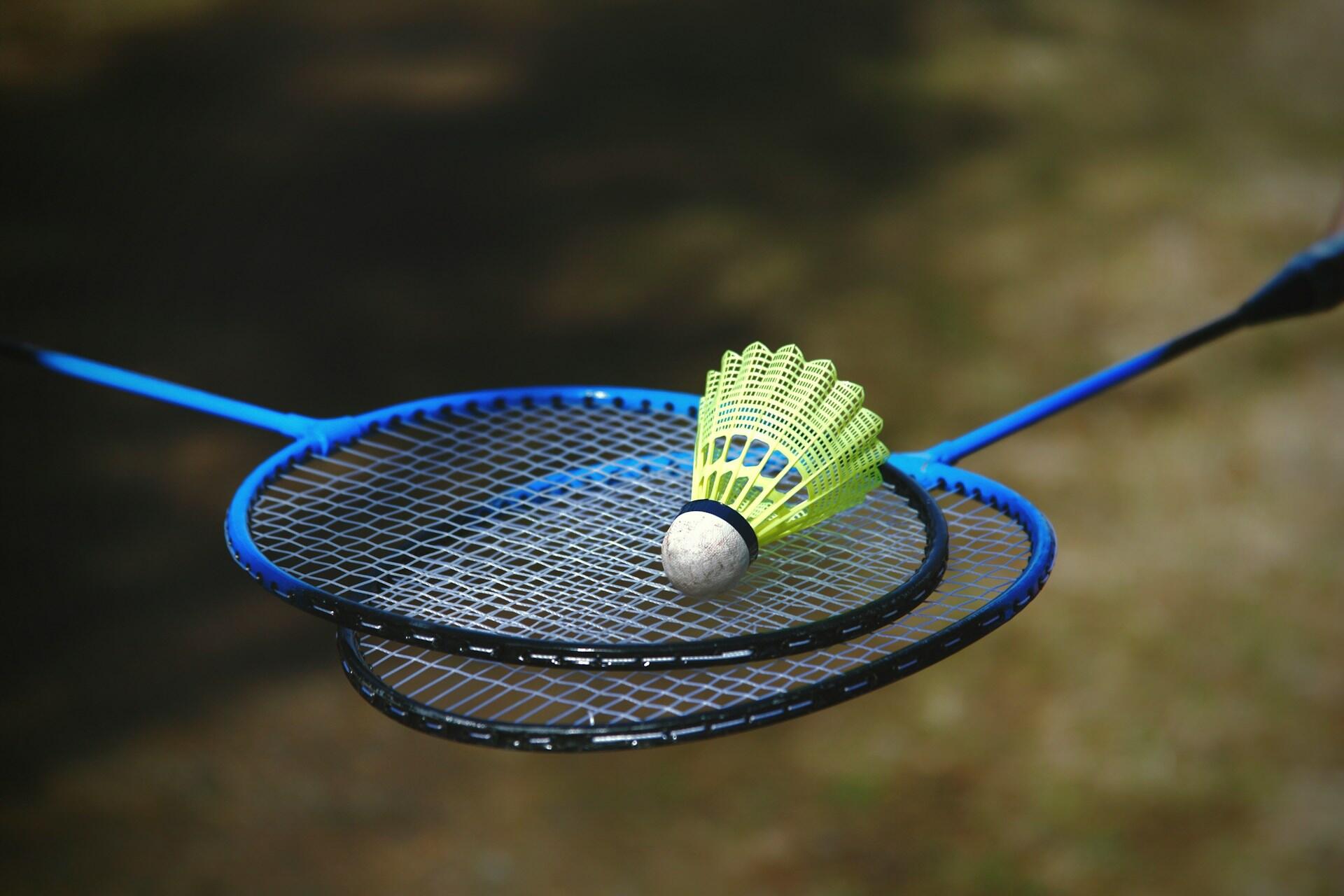

Around the world, people of all ages enjoy playing badminton, whether in their yard after tea or in a sports club. It's one of the most popular sports in the UK precisely because it's so easy and accessible, even for beginners. To start playing badminton, you only need a racket, a shuttlecock, and comfortable, supportive shoes. Here, we cover all the badminton tips you need to start playing.
| 🏸Badminton aspect | 📍Most important points |
|---|---|
| Equipment | Racket shuttlecocks shoes towel sweatbands racket covers grip tape a sports bag |
| Skills to master | Serving The 4 grips Types of shots Footwork Playing strategy |
| Badminton rules | Court dimensions Net height Rules for singles play Rules for doubles play Rules for serving What is a let |
| Finding badminton coaches | At the gym At the sports club At your community centre Online |




Why Play Badminton?
Currently, the UK sits at a confluence of crises. Alarming mental health statistics combine with frightening obesity data and abysmal mental health indicators. On top of that, by all accounts, our country is awash in a loneliness epidemic. Clearly, something must be done.

In a world where even the simplest pleasures are getting more expensive by the day, finding something fun and healthy to do that won't break the bank is the Holy Grail. For beginner badminton players, a cash outlay of roughly £100 will see them ready for the badminton courts.
This initial investment covers months of badminton expenses (not including sports club membership and coaching fees). These price averages prove that point:
- beginner badminton racket: £20 - £40
- supply of shuttlecocks: £6 - £10 (12 shuttles per tube)
- badminton shoes for beginners: £40 - £50
- sweatbands, racket cases and other accessories: £10 - £20 and up, depending on selection.
Badminton and the Loneliness Epidemic
It is only when you reach out and talk about it that you can understand ...
Stuart Andrew, UK Minister of Loneliness
Statistically, loneliness is so prevalent across the UK that our government now needs a minister to address it. Repeated surveys show our young people feel isolated, and more than half of our adult population report feelings of loneliness.
The lack of social engagement in modern life likely has a lot to do with this crisis. We live side by side, but not in a community. Nobody's saying learning how to play badminton will magically reverse our current state of social erosion. However, coming together to play badminton can help break self-imposed isolation and renew community ties.
Badminton Activities for Beginners: The Health Benefits
Best of all, this sport is so easy and accessible, anyone can play. Everyone, including obese persons, reasonably fit seniors and even the wheelchair-bound, can volley the shuttle back and forth. In fact, doing so would do wonders for our health, both mental and physical.
Badminton's physical benefits
- improved balance and coordination
- faster reflexes
- a boost for cardiovascular fitness
- helps build joint and bone strength
- builds muscle and endurance
- great for toning up and losing weight
Badminton's mental benefits
- improved cognition
- increased spatial awareness
- faster strategic thinking
- helps build hand-eye coordination
- opportunities to socialise
- boosts feel-good endorphin production
Best of all, it doesn't cost a lot to play badminton (see breakdown above). Ordering online, one can buy a badminton racket suitable for beginners for under £20.
Price tags are another stress point for many of us, so it's nice to know badminton activities for beginners won't blow your budget. Badminton players have many clubs, gyms and other venues to play. And, if all else fails, take your racket set to the park and enjoy a game or two.
Badminton for Beginners: Equipment You Need
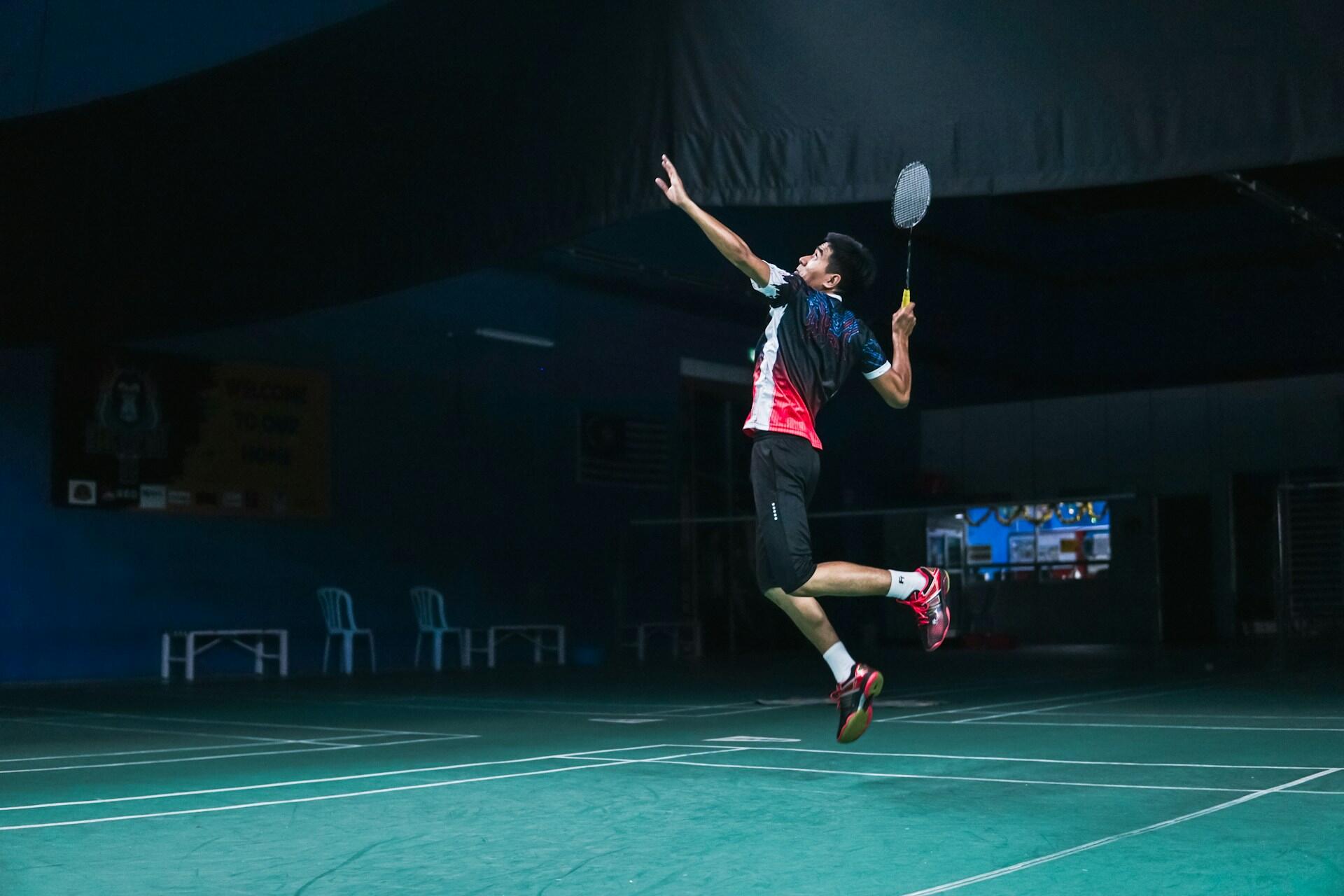
Of course, as a beginner, you won't be as dynamic as the players in the clip above. Nor do you need to buy top-of-the-line badminton equipment when you start playing badminton.
Above, you learnt about rackets, shuttles and shoes, the basic equipment you need to play. Those are sound badminton tips, but they're just general advice. Many beginners have questions about the type of shoes they should have, the clothing to wear, and whatever other accessories they need.
Let's start with the shoes. Where they're concerned, your decision lies in how and where you will play badminton. If playing in the park or on a concrete court outdoors, you can take part in your first few badminton lessons wearing your ordinary trainers. That is, provided they give you the support and comfort needed.
Playing in your trainers gives you the chance to experience the game.
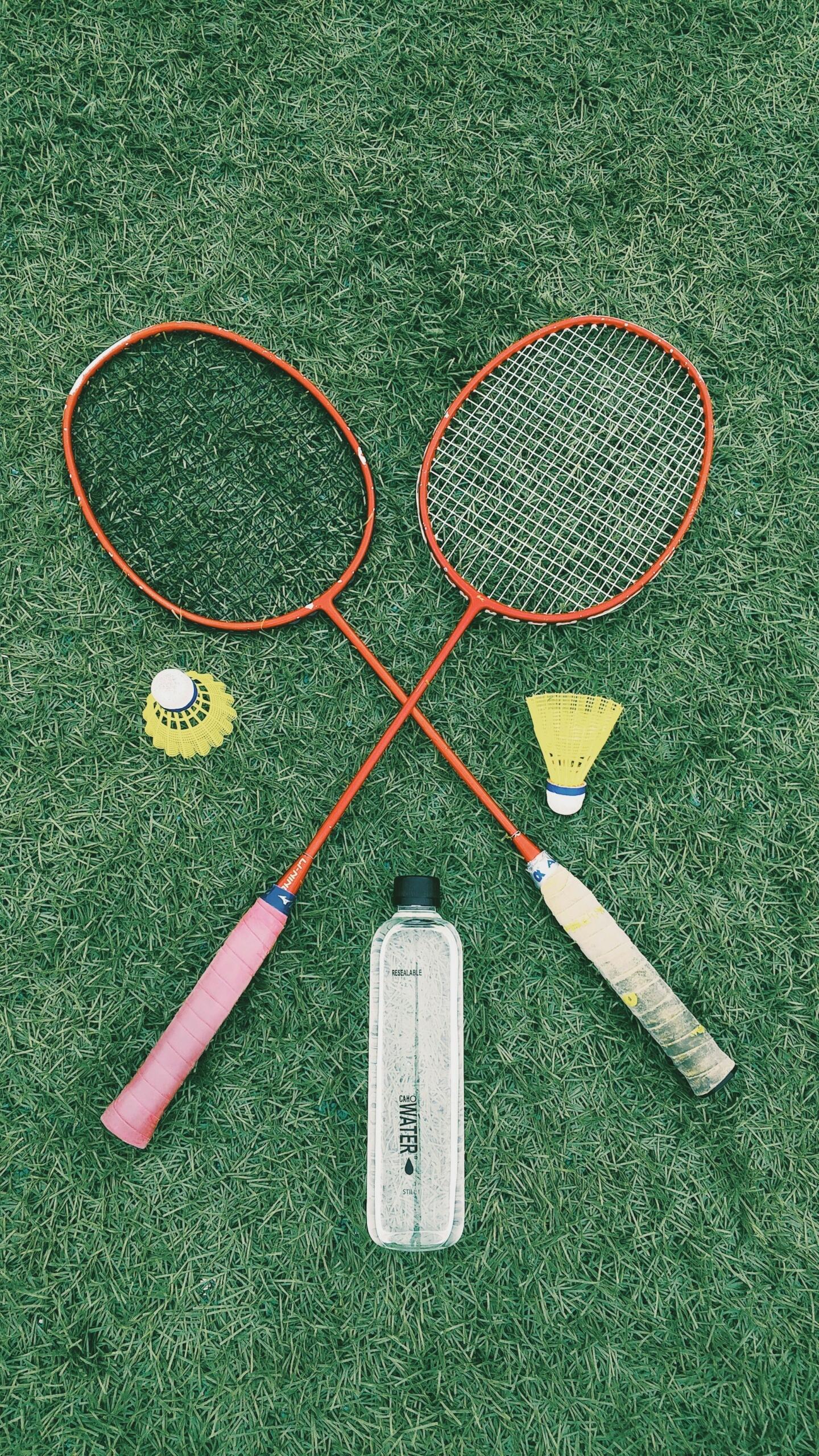
Then, you can decide whether you truly want to invest in more badminton equipment. When you answer "Yes!" to that question, shoes should be at the top of your essential badminton equipment shopping list.
Indoor badminton facilities typically require shoes with non-marking soles to play on their courts.
As for what you wear to play badminton, the rule of thumb is: loose, light-fitting, breathable clothes. You don't necessarily need competition-worthy jerseys and shorts/skirts, just articles that don't restrict your movement. Also, keep temperature in mind. Even badminton activities for beginners will raise your core body temperature. Avoid overheating by wearing light, perhaps moisture-wicking fabrics.
Badminton coaches and professional players recommend keeping a sports bottle courtside.
What else could a beginner badminton player need besides these essentials? This list presents accessories and why you should consider having them on hand.
| 🛒Accessory | 🏸Why you need it |
|---|---|
| extra shuttles | In case the one you're using gets lost or damaged. |
| Towel | To wipe sweat off your hands and face |
| Sweatbands (for your head and wrists) | Keep the sweat out of your eyes and to keep your hands dry. |
| Racket head covers | To protect your racket and strings |
| grip tape also called overgrip | To rewrap your racket's grip, if needed. |
| protective eyewear | To keep your eyes safe. |
| Sports bag | To keep and transport your equipment. |
| Water bottle | To stay hydrated! |
How to Play Badminton by the Rules
As badminton is an Olympic sport, it comes with a set of rules that help determine who wins the medals. If you're just thwacking a few birdies around for fun and fitness, you needn't mind those guidelines too much.
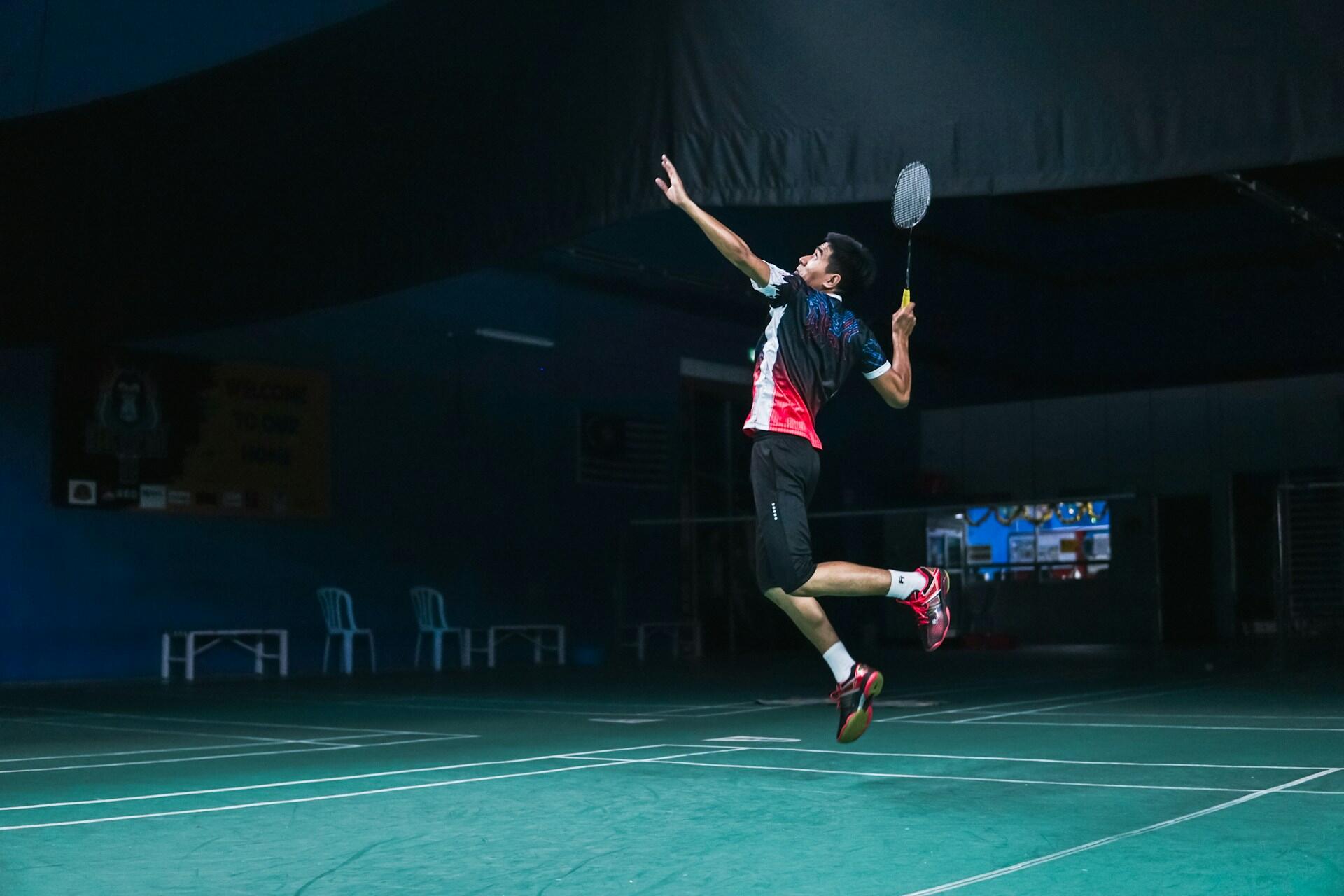
However, if you're playing tournament-level events, you need to know how to play badminton according to those rules. Even if you're playing badminton at your local club with no intention of ever competing. As a beginner player, serving and scoring are your greatest focus on the rules.
Other badminton regulations cover court dimensions and net height, and many concern playing doubles.
A let is when something disturbs the current play, such as something landing on the court or a receiving player not being ready for the serve. In such cases, no points are earned and the serve does not change sides.
The most important rules to remember include where to stand when serving and when to pass the serve to your opponent. You need to know this sport's rules before you challenge other players at your local gym or club.
How Do You Play Badminton: Grips, Shots and Other Techniques
Playing casual badminton in the park or at home is one of the quickest ways to pick up bad habits. Still, such badminton activities for beginners are what get people interested in committing to this sport.
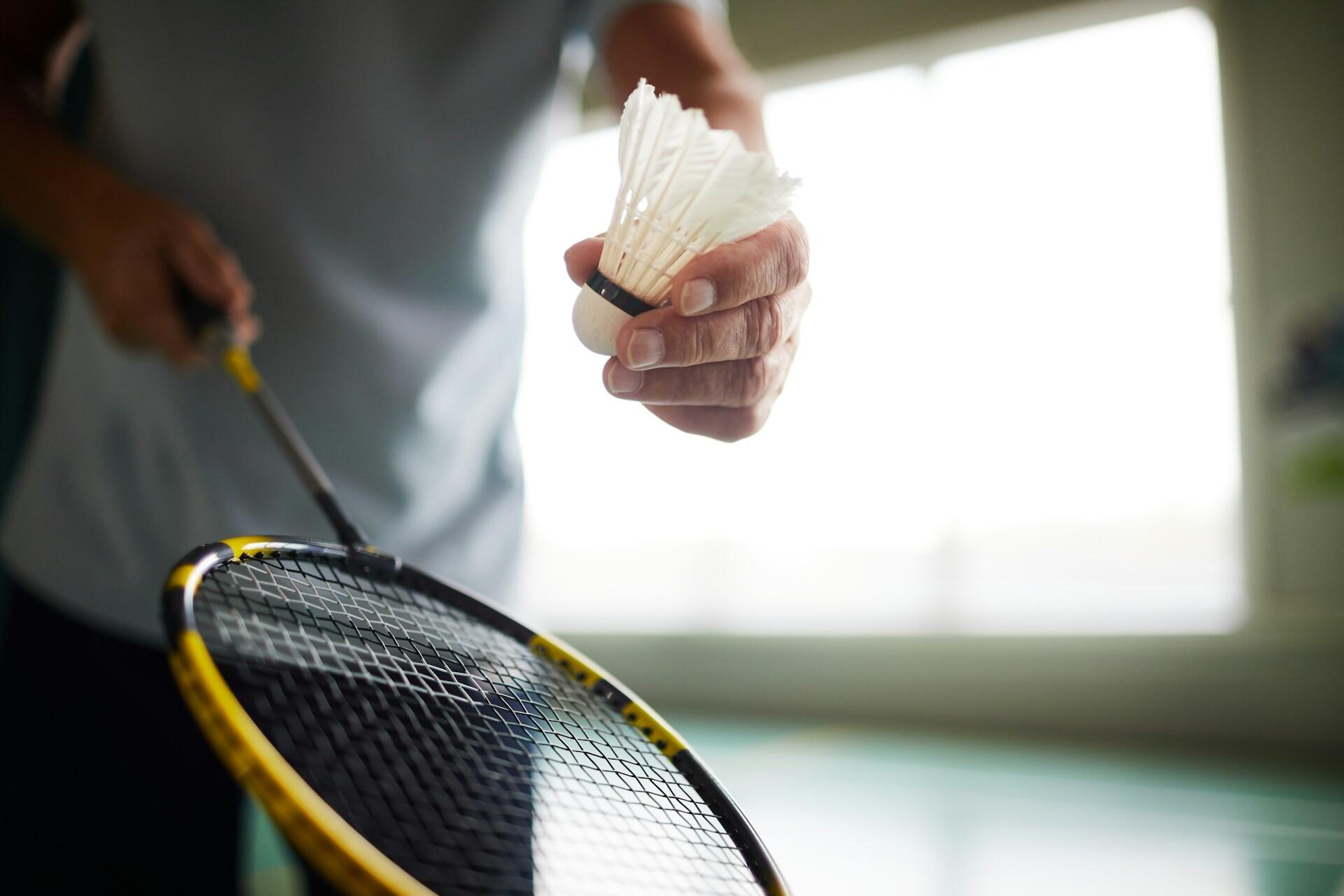
Badminton coaches all agree that correcting or unlearning bad playing habits fills beginners' first few sessions. So, even as a casual player, the trick is to learn how to handle your racket right. That starts with mastering badminton gripping techniques.
Practically anyone can guess what 'forehand' and 'backhand' mean: the palm either faces or reverses against the direction of racket travel. That doesn't explain how one's hand should wrap around the racket's grip, though.
Forehand: hold your hand like shaking someone's hand; racket head perpendicular
Backhand: like the forehand grip, except the racket head is parallel to the court
Bevel grip: the thumb is on the grip's bevel, and the racket head is diagonal.
Panhandle: wrist and palm are up, racket head is parallel to the court.
Badminton Footwork
Learning how to move your lower half while playing is not instinctive. That is, you may move instinctively, but without knowing how you're moving or the steps you're executing. Explaining footwork is a bit more intricate. This table gives you a clear badminton footwork breakdown.
| 👣step type | ⏳When to use it | 🔎How to execute it |
|---|---|---|
| Lunge | When you need to extend your racket's reach. | Step forward with your racket foot. Keep your knee over your ankle. Use your back foot as an anchor. |
| Chasse Also called sidestep | When you need to scoot to the court's corners or up to the net. | Take a small side step in the direction you need to travel. Bring your lagging foot to your leading foot. Repeat as often as needed. |
| Running step | When you need to reach a smash shot on the other side of your playing area. | Same as running, but more controlled. Important: mastering the stop so you can position yourself for the return. |
| Split step | When you need to adjust your position to return the birdie. | Make a slight hop in the direction you need to travel, pushing off with your rear foot. |
| Recovery step | To recover your base position after your swing. | Step or hop out of your extended position, such that your feet are in the neutral position. |
| Crossover step | When you need to cover a medium distance quickly. | Lead with your racket foot. Cross your rear foot behind your racket foot. Adjust your racket foot to restore balance. |
Badminton Tips to Make the Best Shots
Tempting as it might be to smash every return across the net, doing so isn't advised. The best badminton players have a game strategy to maximise play while giving themselves the advantage.
Sometimes, a net shot is more effective than a smash but you have to know when and how to execute those shots. Here, we lay out every attacking and defensive shot.
| 🏸Type of shot | ⏳When to use | 🔎How to execute it |
|---|---|---|
| Clear | When you need time to get back to your bases. | Played from the back court. Forehand or backhand, such that the shuttle flies in a high, long arc. Best with a bevel grip. |
| Drop | When the opponent is in the back court. | From the back court, hit downwards. Make sure the birdie has enough lift to clear the net. |
| Drive | Rob your opponent of reaction time and room to react. | Play from mid-court. Aim the birdie at your opponent, keeping the shot level. Don't swing your racket to widely. |
| Smash | To give your opponent less time to counter | Play from back-court or mid-court. Leap up to smash the birdie downward with an overhand stroke. |
| Net lift | To send your opponent to the back of the court. | Play close to the net. Use the panhandle grip to drive the birdie up in a high arc. |
| Net kill | To end the volley | Play close to the net. Use an overhead forehand shot to send the birdie downwards, just over the net. |
Badminton Tips: Where to Play and Train
Casual badminton players can get their sport on anywhere. However, playing badminton for sport and fitness demands a few considerations.

To learn how to play badminton, you should budget for a few sessions with a badminton coach. You can find such a pro at your local gym, fitness club or community centre. If you live in a bigger city, you may even have facilities dedicated to badminton. These badminton halls also offer lessons in proper racket technique and footwork.
You might also find a badminton coach online. Many gyms and fitness centres offer personal coaching for many sports, including badminton. Those coaches' online training sessions are just as effective as in-person sessions, especially for learning rules, grips and footwork.
If you live in a remote area with few resources, learning from such a coach could be enough for you to start a badminton club in your area.
and description
On the Superprof platform, you'll find more than 100 badminton coaches. Some offer lessons in person and online, while others dedicate themselves to online lessons. Many are qualified through the Badminton England organisation. That means they have both the badminton skills and the teaching know-how to help you master all the skills you need to teach badminton for beginners.
Summarise with AI:
Enjoyed this article? Leave a rating!

 Loading...