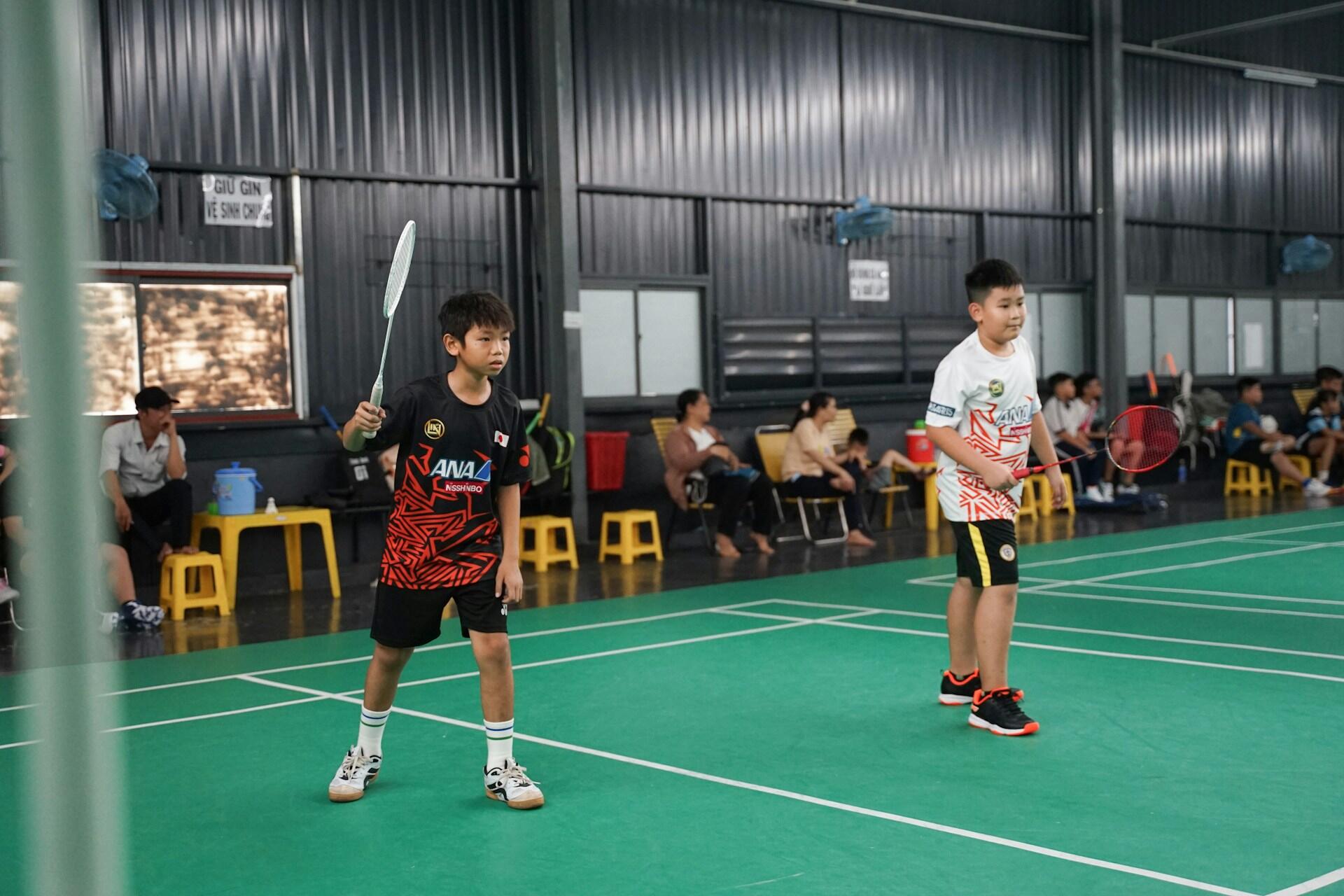

Beginner badminton players should focus on learning the correct racket grips. They should master basic shots like the clear, drop, and smash, and how to use footwork techniques like lunges and split steps. Mastering these fundamental badminton techniques early can make a difference to players' performance and progression. This article introduces beginner-friendly grips, key strokes, and proper footwork for movement and balance.
| 🔎Technique | 🔢Types |
|---|---|
| racket techniques | Forehand grip Backhand grip Bevel grip Panhandle grip |
| footwork techniques | Lunge Chasse Running step Split step Recovery step Crossover step |
| types of shot | Clear Drop Drive Smash Net lift Net kill |
| serve techniques | Basic serve High serve Low serve Flick serve Drive serve |




Racket Techniques in Badminton
Like any activity, how one handles their tools and equipment matters. Should a chef not grip their knives properly, they risk everything from injury to blood flowing. Fortunately, gripping a badminton racket isn't nearly that dangerous.
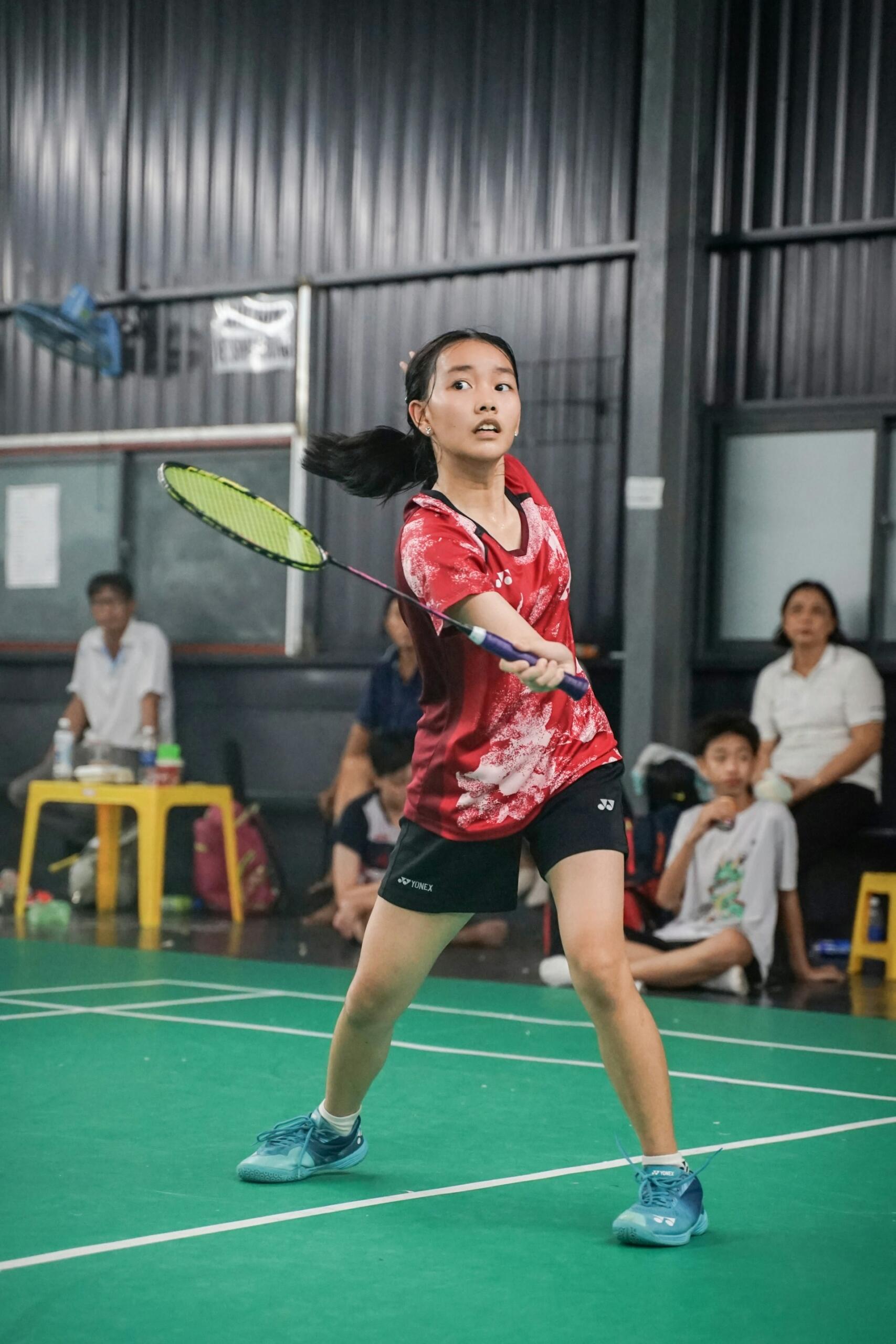
Still, to make every shot count, players must know and use each of the four possible grips.
Bad grip technique is one of the first problems badminton coaches must correct. Though beginner players aren't at risk of bleeding out from holding their rackets wrong, they may strain or injure their wrists.
Using the right grip at the right time increases players' power and control over their shots. In time, switching between them during play as needed will be automatic.
However, as a beginner, you must first learn what they are and how best to use them. In all, you must master four grips.
Beginner players will spend their first few lessons learning them, such that they become ingrained in their playing techniques.
Forehand: the palm of the hand faces the direction of travel
Backhand: the back of the hand faces the direction of travel
Bevel: the thumb is on the grip's bevel
Panhandle: wrist and palm point upwards, as does the racket's head.
It's easy to recognise the first two grips' purpose, but you might struggle to identify the other ones. Here, we lay out each of their properties.
Forehand grip
- hand position: like shaking someone's hand
- racket head: perpendicular to the floor
- used for drives, lifts and net shots
- best for forehand clears drops and smashes
Backhand grip
- hand position: same as forehand
- racket head: parallel with the floor
- used for backhand drives, lifts and net shots
- best for backhand serves and doubles defence
Bevel grip
- hand position: thumb on the grip's bevel
- racket head: diagonal
- used for: backhand rear-court shots, some net shots, some defence shots
- typically for attacking
Panhandle grip
- hand position: palm up, thumb on grip's side
- racket head: parallel to the floor
- used for: backhand rear-court shots and some drives
- often wrongly used to hit overhead shots
In our next section, we explain all the types of shots described here. You'll note that some of these descriptions include using racket grip features as markers (the bevel grip, for example). So, it's important to buy a badminton racket suitable for beginners. Finally, we recognise that using words to describe these grips might not be enough to learn them, so this clip explains them in greater detail.
As a beginner player, you should practise these grips even if you're not on the court. Don't just practise them during your training sessions! You can practise switching between them at home, with your racket in your hand or while out and about, without your racket. After all, the racket is an extension of your hand position; you can build that muscle memory without gripping anything.
Master the art of the light but firm grip on your racket.
Too tight a grip makes it difficult to switch from one grip to the other during play.
Gripping your racket too tightly also presents a greater chance of injury.
Types of Shots in Badminton
As your playing hand practises its grips, you can begin studying badminton shots. Those are when your racket makes contact with the shuttlecock, the other essential piece of badminton equipment.
Casual badminton fun, such as volleying the shuttlecock (also called shuttle or birdie) doesn't call for any elaborate technique. Playing an actual match or tournament is a different proposition. Game strategy involves sending the shuttle to various points across the court. This challenges opponents to return your hits.
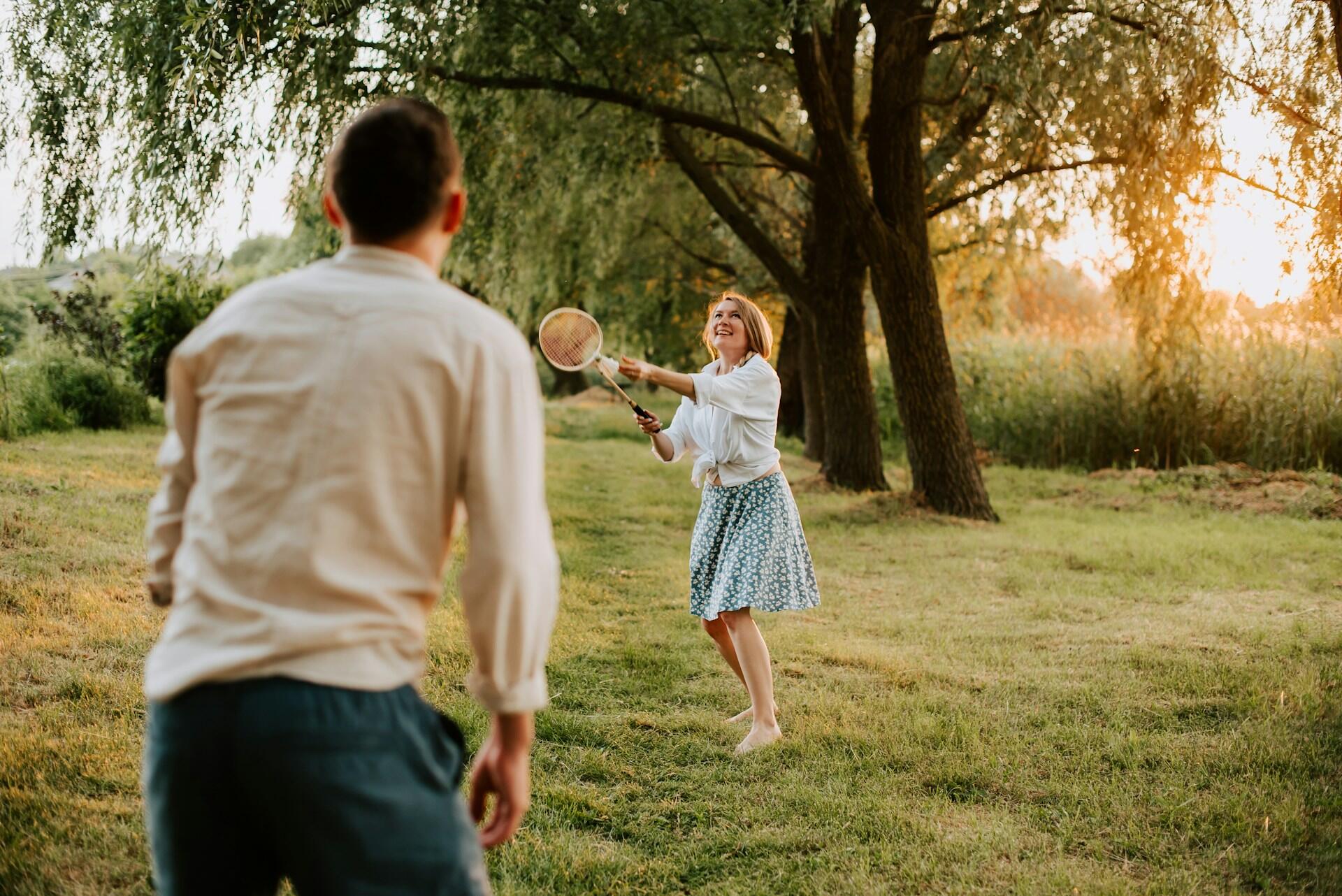
That suggests that, first, you must know what those hits are and, second, how to deliver them.
Clear: the shuttle flies high to land behind the opponent.
Drop: a stroke from the back court to clear the net and drop.
Drive: a flat shot that just clears the net.
Smash: a drive angled downwards from the mid- or back-court.
Net lift: a shot made close to the net to arc the shuttle high in the air.
Net kill: a shot made close to the net that 'spikes' the shuttle into the opponent's side.
As impressive as these sound - especially those smashes and kill shots, players can't execute them all the time. Each has its place and purpose, which this table outlines.
| 🏸Type of shot | ⏳When to use | 🔎How to execute it |
|---|---|---|
| Clear | When you need time to get back to your bases. | Played from the back court. Forehand or backhand, such that the shuttle flies in a high, long arc. Best with a bevel grip. |
| Drop | When the opponent is in the back court. | From the back court, hit downwards. Make sure the birdie has enough lift to clear the net. |
| Drive | Rob your opponent of reaction time and room to react. | Play from mid-court. Aim the birdie at your opponent, keeping the shot level. Don't swing your racket to widely. |
| Smash | To give your opponent less time to counter | Play from back-court or mid-court. Leap up to smash the birdie downward with an overhand stroke. |
| Net lift | To send your opponent to the back of the court. | Play close to the net. Use the panhandle grip to drive the birdie up in a high arc. |
| Net kill | To end the volley | Play close to the net. Use an overhead forehand shot to send the birdie downwards, just over the net. |
Badminton Tips for Net Shots and Serves
The basic techniques for controlled play described above are a good guide for playing badminton at the beginner level. Still, some of those shots merit a closer look and a more detailed explanation.
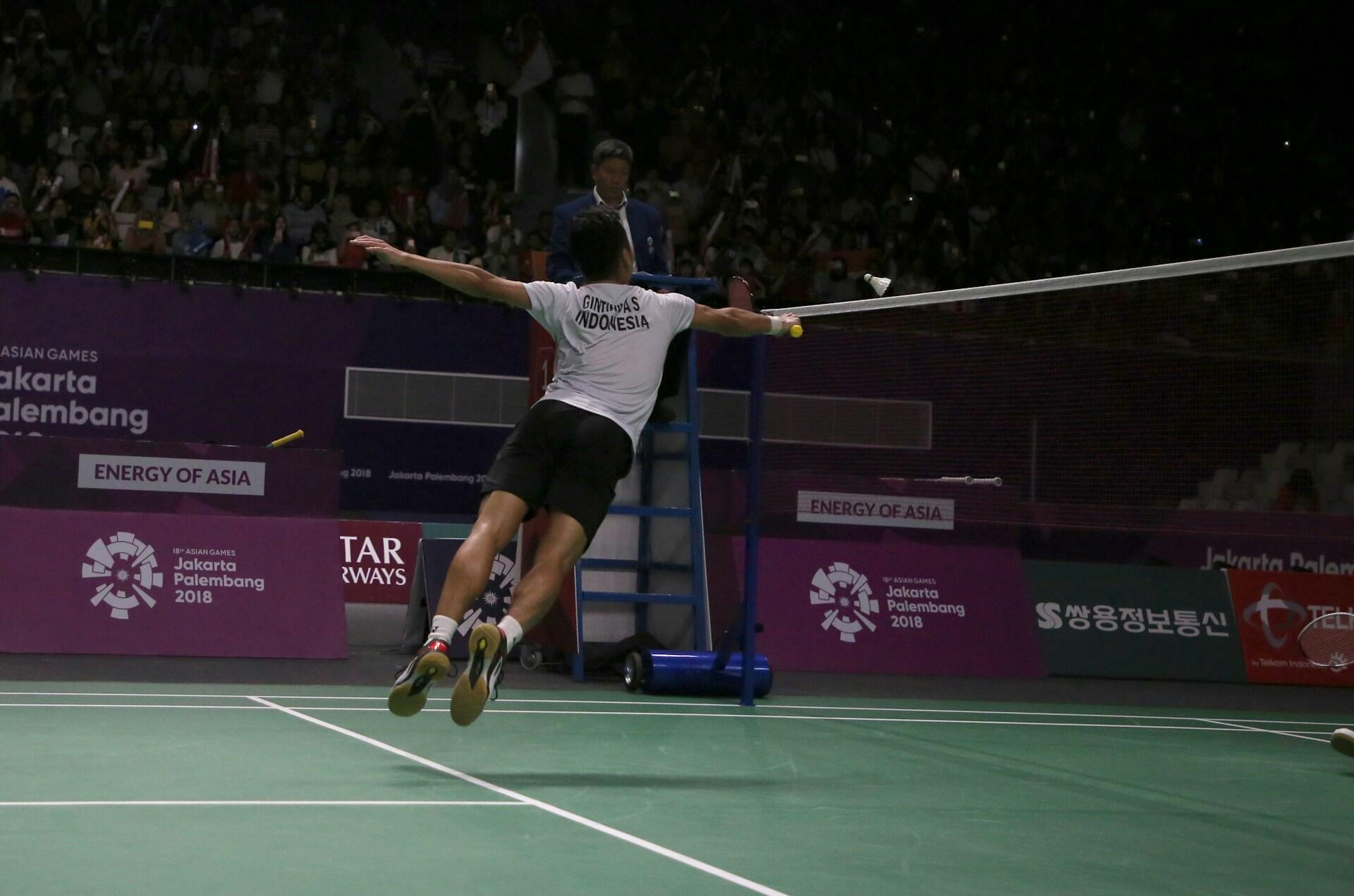
Watching badminton competitions, the net shots are the ones that get the most spectator reaction. They tend to end volleys; the players that execute them typically score points when they do. Experienced players use them strategically. Beginner players must master them.
They must also develop their timing to use them properly. You can make net shots with a forehand or backhand stroke, but you must consider the shuttle's position before deciding which one to use. As a beginner, you'll likely play singles - you against an opponent. That makes it easier to decide which stroke would serve the best in that instance.
Use net shots to force your opponent to counter with a lift shot.
This sets you up for a smash or drop shot.
Once you gain a bit of experience, you'll begin to play doubles, which means you will also have to consider your partner's position before taking the net shot. Before then, you must become old hat at making net shots. These steps outline the proper way to execute them.
Badminton Serves
The serve is arguably the most important badminton skill to master. Many beginners assume they will smash the birdie across the net - perhaps with a grunt, like tennis players do. That's precisely the wrong serving technique because shuttles don't act like tennis balls.
Instead, think of a badminton serve as a set-up for your opponent to blunder into. If you're playing on a court, stand as close as possible to the service line. This will give your opponent less time to react, and rob them of the ability to predict your serve.
While serving, your footwork matters less than how you handle your racket. This tutorial shows you all the steps you need to master a flawless serving technique.
Footwork Techniques in Badminton
Hapless people tripping over their own feet has long been a comedy staple, but that's not the look you're going for on the badminton court.
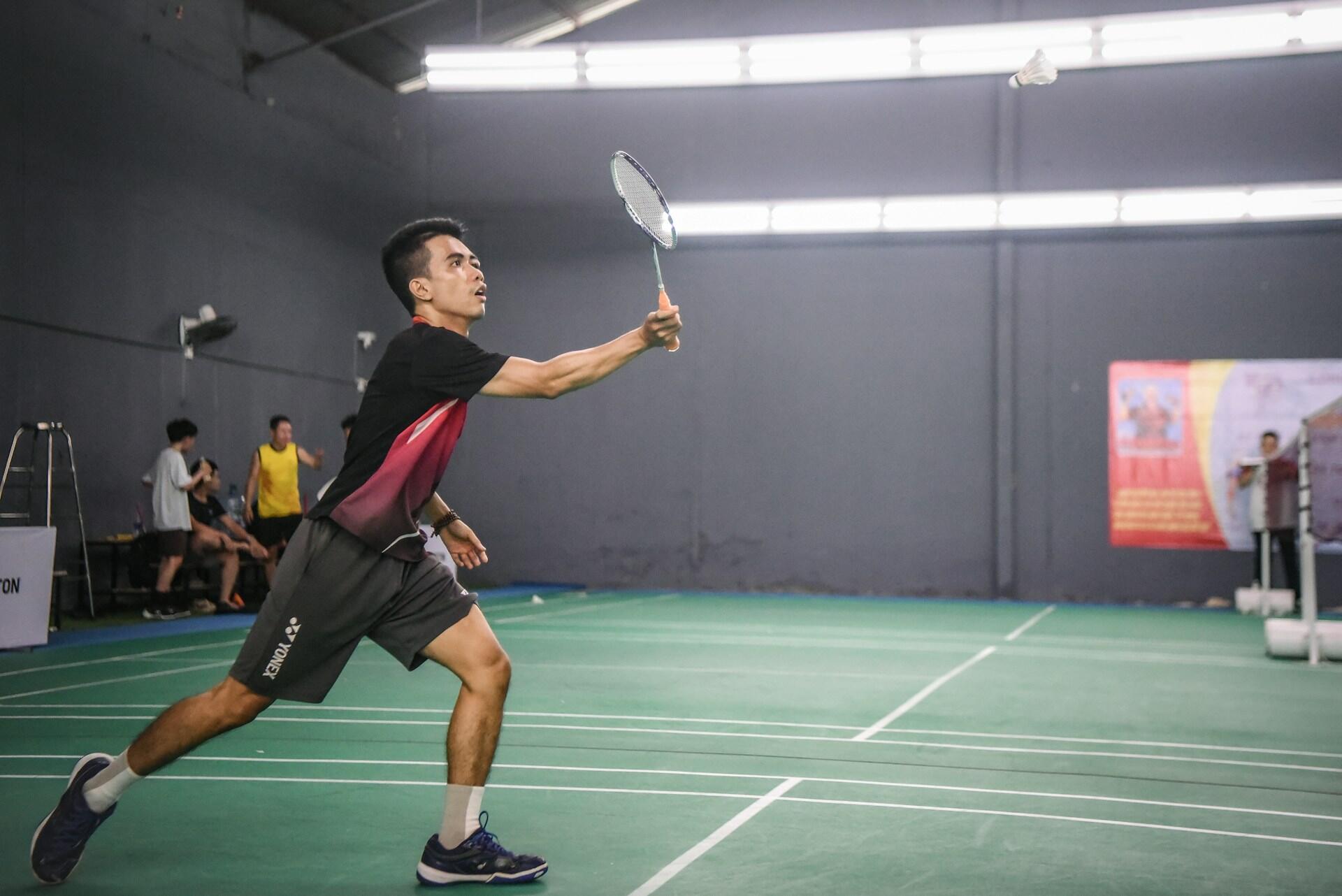
You want your feet to complement or, better yet, boost your upper body's actions. So, developing a solid footwork technique is as vital as mastering serves and strokes. For that, you have six fundamental techniques to learn. Like your racket technique, footwork serves a specific purpose.
Your step may signal an attack or hint at defence; it may also proclaim which shot you plan to take. This chart lays out what each step does and how to use it.
| 👣step type | ⏳When to use it | 🔎How to execute it |
|---|---|---|
| Lunge | When you need to extend your racket's reach. | Step forward with your racket foot. Keep your knee over your ankle. Use your back foot as an anchor. |
| Chasse Also called sidestep | When you need to scoot to the court's corners or up to the net. | Take a small side step in the direction you need to travel. Bring your lagging foot to your leading foot. Repeat as often as needed. |
| Running step | When you need to reach a smash shot on the other side of your playing area. | Same as running, but more controlled. Important: mastering the stop so you can position yourself for the return. |
| Split step | When you need to adjust your position to return the birdie. | Make a slight hop in the direction you need to travel, pushing off with your rear foot. |
| Recovery step | To recover your base position after your swing. | Step or hop out of your extended position, such that your feet are in the neutral position. |
| Crossover step | When you need to cover a medium distance quickly. | Lead with your racket foot. Cross your rear foot behind your racket foot. Adjust your racket foot to restore balance. |
What about shoes? You might have seen people playing badminton barefoot in the park, or wearing sandals or sand shoes. Those are fine for casual games, but if you're exploring badminton as a serious sport, you'll eventually need to get serious about shoes.
As a beginner, a well-made pair of trainers should be enough to support your foot action. Later, you may invest in badminton shoes.
As dramatic as competitive badminton looks, the sport's footwork is rather tame. The trick to it is using it strategically and, of course, learning how to interpret your opponents' footwork.
How to Get Better at Badminton
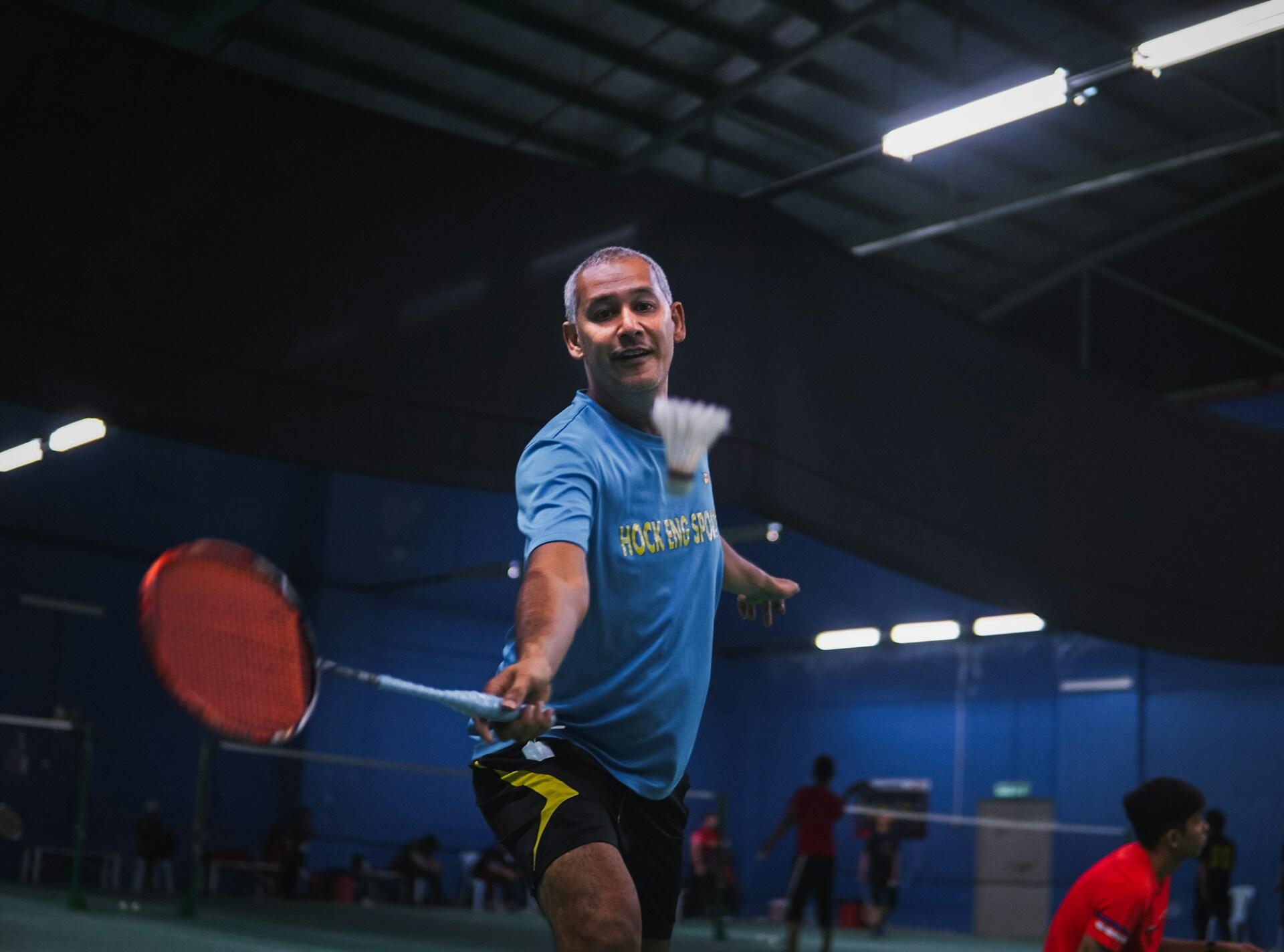
As is ever the case, practice is the best way to get better. Your time on the badminton court may be limited, but you can work on your grip and footwork practically anywhere. You might, for instance, practise pivoting while swinging your racket hand in your kitchen or garden.
However, the best and fastest way to get better at badminton is to play. Any of these occasions can serve as a practice session:
- casual volleying with friends and/or family members
- a game at the park or community centre
- court time at the gym
- joining a badminton club
As often as possible, put to work all the skills your badminton coach taught you, exercising them in full compliance with badminton rules. As a beginner, joining a club might seem intimidating, but those badminton enthusiasts are the most likely to share their tips and tricks for playing. It's also a great chance to make new friends.
Summarise with AI:
Enjoyed this article? Leave a rating!


 Loading...