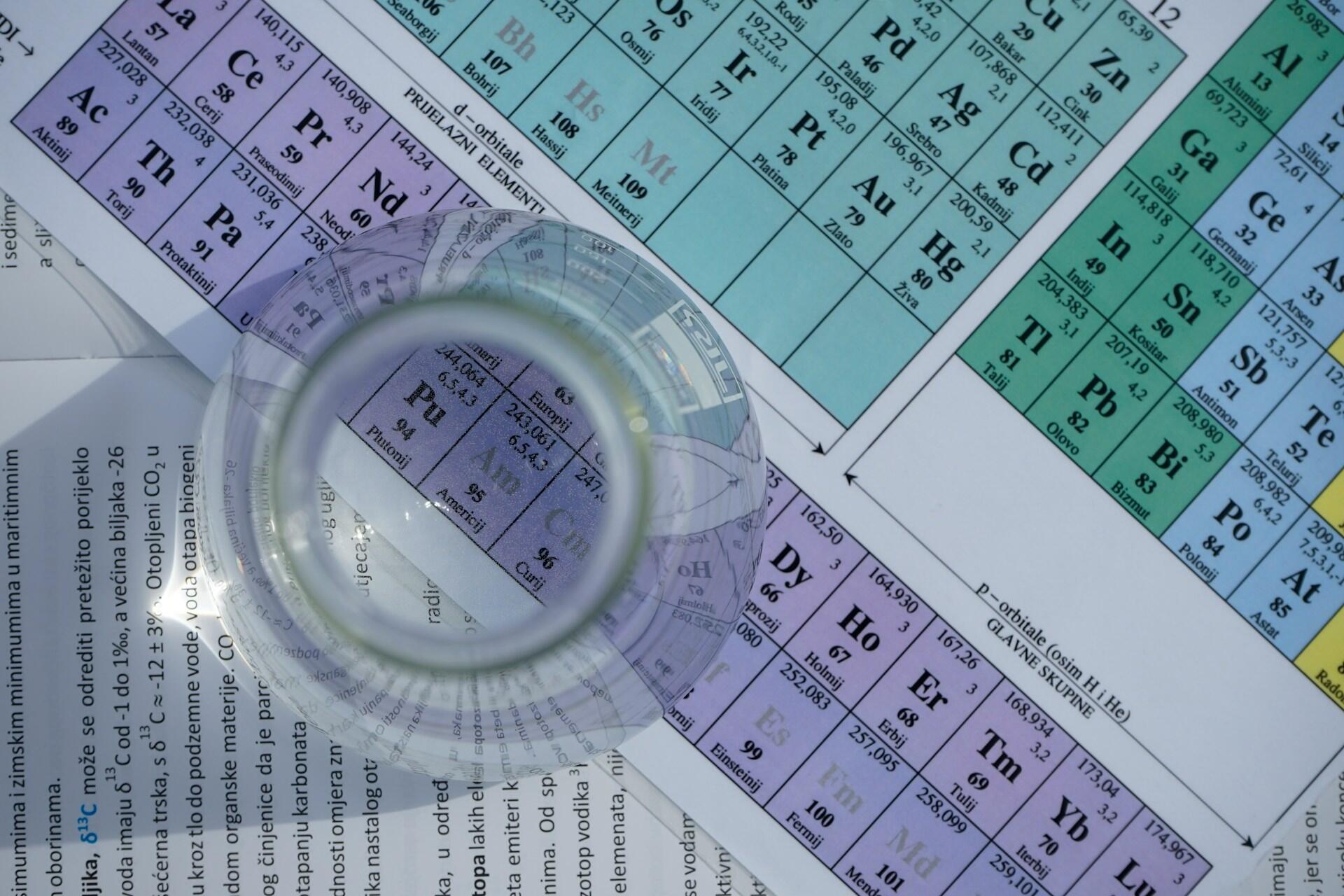
Chemistry is considered by many as the most difficult A-level subject, requiring not only a deep understanding of complex chemistry concepts but also high-level analytical and problem-solving skills. From atomic structure and bonding to organic chemistry and thermodynamics, you'll encounter a variety of questions that will help you to determine your readiness for the A Level chemistry exam.
Whether you're preparing for exams or simply looking to gauge your progress in the A Level Chemistry curriculum, this quiz offers a great opportunity to reinforce your learning of the basics and identify areas for improvement. So, get ready to dive into the fascinating world of chemistry and see how well you can apply what you've learned. Good luck!
Quiz
Quiz :








🧪 A Level Chemistry Topics
While the chemistry A level will cover a wide range of topics, here's an overview of some of the most important topics that you'll need to master for the exam:
- Organic chemistry: In A-Level Chemistry, organic chemistry focuses on the study of carbon-containing compounds, particularly hydrocarbons and their derivatives. You'll learn about various functional groups (such as alcohols, aldehydes, ketones, and carboxylic acids), reaction mechanisms (including nucleophilic substitution and electrophilic addition), and the synthesis and properties of organic molecules.
- Atomic structure: In A-level chemistry, atomic structure involves understanding the arrangement and behaviour of subatomic particles within an atom. You'll study electron configurations, energy levels, and orbitals, as well as concepts like ionization energy and atomic spectra.
- Energetics: Energetics, in the context of A-Level Chemistry, covers the study of energy changes during chemical reactions, focusing on enthalpy changes (ΔH).
- Bonding: At A-Level, the study of bonding delves into the different types of chemical bonds that hold atoms together in compounds. You'll examine covalent, ionic, and metallic bonds, as well as intermolecular forces like hydrogen bonding, Van der Waals forces, and dipole-dipole interactions.
📝 5 Top Tips for Acing A-Level Chemistry
- Understand the Basics:
- Ensure you have a solid grasp of basic concepts such as atomic structure, bonding, and stoichiometry. These foundations are crucial for tackling more complex topics.
- Use Multiple Resources:
- Utilize textbooks, online resources, videos, and study guides to get different perspectives and explanations. Sometimes, a different resource can make a difficult concept click.
- Create a Study Schedule:
- Plan your study time effectively. Break down the syllabus into manageable chunks and allocate specific times to focus on each area. Regular, scheduled study sessions are more effective than cramming.
- Focus on Problem Areas:
- Identify topics you find challenging and spend extra time on them. Don’t avoid difficult areas; facing them head-on will improve your overall understanding.
- Make Summary Notes:
- Condense your notes into key points, equations, and definitions. Use diagrams and charts where possible to visualize information. This will make revision quicker and more efficient.
Summarise with AI:
Did you like this article? Leave a rating!

 Loading...