
It's amazing how effortless fashion looks. From flowing coats to relaxed-fit trousers, sweet sling-back pumps to chunky trainers... These days, the whole fashion vibe screams 'Relax!', 'Be free!' and 'Express yourself!'.
Behind all of that studied casualness, though, it a fury of detail, imagination and work. Those, powered by no small degree of talent is what gives us the joy and beauty of fashion. But is talent and hard work enough to make a name for yourself as a fashion designer?
Besides a passion for apparel, fashion designers need a diverse skill set to bring their creations to life.
| Skills all fashion designers need: |
|---|
| Visualisation skills: the ability to 'see' what a garment or accessory will look like. |
| Artistic ability: the ability to translate what's in the mind's eye to a drawing everyone can see. |
| Sewing skills are necessary to execute designs. |
| Communication skills to receive input from the design team as well as convey ideas and expectations. |
| Computer skills: computer aided drawing adds colour and dimension to designs. |
These are just a few of the targeted skills no fashion designer could succeed without. There is a raft of practical and personal skills they must also acquire and cultivate. As a fashion design hopeful, the more skills in your toolbox, the better you will adapt to the ultra-competitive world of fashion design. Thus, this article is for you.
Conversely, if you already work as a fashion designer, you could tell us about the skills that helped you the most.




Skills Targeted to Fashion Design
What do auto mechanics, neurosurgeons and fashion designers have in common? Specific skills required to do their jobs.
Especially these days, when cars have onboard computers and a growing number of them are fully electric, few would venture under their car's bonnet to undertake repairs. Indeed, doing so might void their car's warranty. Likewise, not many people would have the audacity to poke around in anyone's brain or spinal cord unless they've undergone rigorous training and are up to date on all the latest surgical techniques.
Granted, fashion design is far from a life-threatening affair, even if we're talking about a killer spring line or a drop-dead dress. But that doesn't mean that fashion designers don't cultivate essential skills needed to do their job.
Just think of the many different types of textiles and fabrics that designers have to know:
- Brocade
- Chambray
- Chiffon
- Cotton
- Denim
- Damask
- Flannel
- Gingham
- Jersey
- Knits - anything from fleece and terry to cable-knits.
- Linen
- Silk
It's not enough to know these fabrics and how to work with them; designers have to know which fabrics pair well, which ones will give their design its intended flow and texture and how to work with the fabrics and textiles they choose, as well as how easy their pieces will be to care for.
Designers have to know all about bias and grainline, the warp and the weft and how to use those qualities to add new dimensions to their design.
A good designer will know their stitches, too: running and basting, the slip stitch and the catch stitch... and which ones can be used on which fabrics or at which stage of piece creation. They will also know which threads are best suited to which type of stitch and fabrics.
Finally, just like any specialist in any other field, they will know all about the tools of their trade: slopers and dummies and, if they design footwear, they will know how to use a last - the foot's equivalent to the dressmaker form.
Beyond their artistic abilities and visualisation skills, fashion designers need a slew of targeted skills. That's why, if you're aiming for a career in fashion design, it's best for you to take a fashion designer course - or an entire programme in fashion design from a top university.
Find sewing classes here on Superprof.
Practical Skills Every Designer Needs
Very few trades are limited to the skills needed to execute them. A salesperson must know all about their inventory and how to size a buyer just by looking at them, but they also have to know how to settle financial transactions and create an atmosphere that encourages their clients to shop again.
Fashion designers also need a broad range of skills beyond identifying stitches and choosing fabrics.
They have to be proficient with computers; specifically graphic design applications. It's not uncommon for a designer to quickly sketch out an idea that flew into their heads over dinner but, more and more, designers will redraw these rough sketches into their favourite computer-aided drawing (CAD) application and then, play with it: changing colours and sleeve lengths, adding pockets or other accents, just to see what it will look like.
They also have to know everything about current fashion trends, as well as public sentiment.
Think about the current Dryrobe craze; particularly the camo outer/hot pink inner model that seems to be the overwhelming fav. It was meant to create a private space to change clothes at the beach - hence its overly generous proportions but people have taken to wearing them to Sainsbury or anytime they head out.
What does this trend say about public sentiment?
People want comfort and, perhaps, a bit of insulation after having been locked down for so long. They're into clashing colours - hot pink and camo? And they don't mind treating themselves a bit, either. The camo model retails for £160.
Not surprisingly, clashing colours, oversized or bulk-lending garments and exclusivity are cornerstones of this year's fashion trends.
Besides computer skills and having a strong sense of style and the ability to forecast public sentiment, fashion designers have to stay atop of what's going on in the world today and figure out how that will translate into wearable personal statements.
You might be able to pick up the necessary computer skills if you learned fashion designing at home but learning how to put your finger on the pulse of the nation and incorporate those trends into your designs will take a lot of practice and experience.
Find sewing classes near me here on Superprof.
Business Skills for Fashion Design
Lost of artists, fashion designers included, hire managers to handle the business side of things so they can focus on the artistic/creative aspects of designing, but that doesn't absolve them of the need for certain skills so prevalent in the business world today.
Communication skills are a fine case in point. How could a designer make clear what they have in mind for their upcoming collection if they can't communicate their vision? And, besides, shouldn't they listen to their design team when those contributors make suggestions?
Teamwork is another vital skill designers should cultivate.
We like to think of fashion designers as the sole creative force behind spring and fall collections but, for every Wang and Louboutin, it takes a team of talented people to brainstorm a new line into existence.
However, as it's their name on the label, designers make the final decisions for what goes and what won't fly, which means they must have strong decision-making skills.
Today more than ever, designers must be vigilant that their fabrics and textiles are ethically sourced and that their garments are produced by suitably compensated workers in a safe environment, lest their entire brand suffers.
You might think that leaving ethics, sourcing and other business details - staying on budget and marketing their products to the business manager would be a fair division of labour at any fashion house. But it's the designer's name on the label, not the business manager's.
Guess whose reputation will suffer if there's a financial scandal or it turns out that the clothes were manufactured in a sweatshop?
Before you start studying fashion, you need to take these business aspects into consideration.
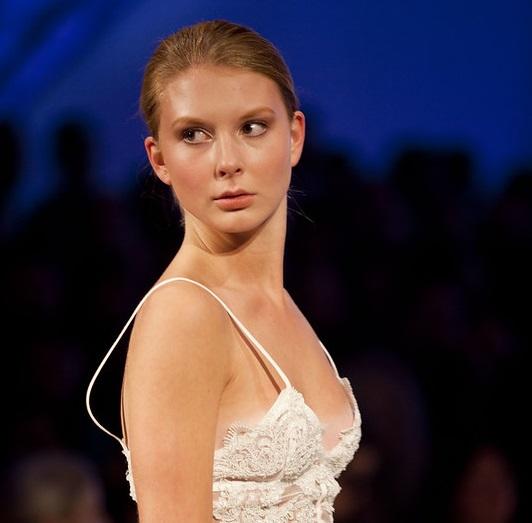
Personal Skills to Succeed in Fashion Design
Have you ever wondered how some people make it big while the vast majority... doesn't? Not just in fashion, either. Think about all of those contestants on The X Factor and Britain's Got Talent who, despite singing their hearts out, never land a record deal. The same is true for any venture, from athletics to artistic, including fashion design.
We don't want to focus on the negative, though. Let's look at the personal qualities and skills designers need to find success.
First and foremost, they have to be visionary. They have to catch some subtle public yearning or find something that people never knew they were looking for and incorporate that into their designs.
They also have to be competitive because other successful designers seize upon those ideas, too.
As the saying goes, the devil is in the details and, more often than not, it is the attention to detail - how a fabric flows and the all-important pattern placement that could make or break a collection. We've all seen the memes of unfortunately placed flowers and poor colour choices that make for a good laugh but very poor sales, haven't we?
Designers must be detail-oriented in the extreme to avoid, say, creating a shirt with a nifty slogan that, when worn under an open hoodie, would say something quite different; maybe even offensive.
Finally, designers must be hard-working.
In the run-up to a major fashion event, designers work insane hours to make sure every garment is runway-ready and they don't get a pass the rest of the year, either. Their creative drive just won't let them be.
Now, discover all you need to know about London Fashion Week 2022.
Summarise with AI:
Did you like this article? Leave a rating!


 Loading...