
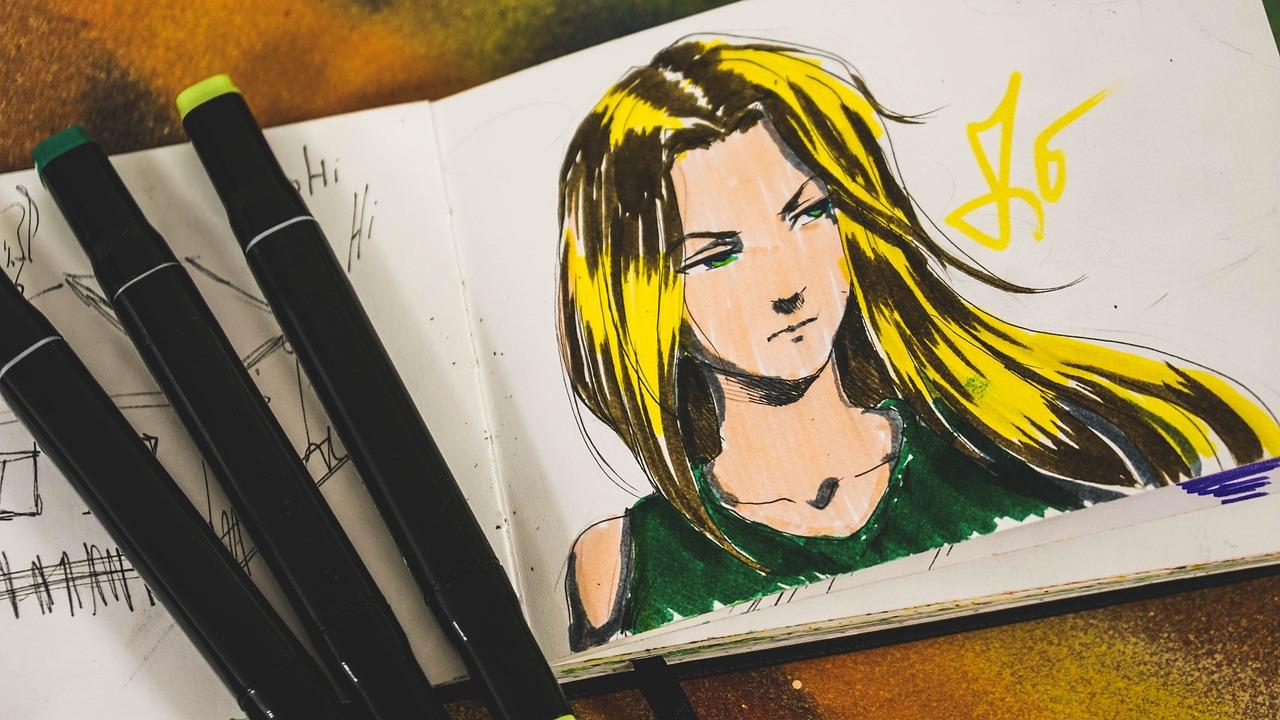

So, you are one of the millions of anime fans around the world. You’ve seen the classics like Neon Genesis Evangelion and Cowboy Bebop. You’ve been inspired by the manga of Fullmetal Alchemist, Attack on Titan, and Dragon Ball. And you love the work of Studio Ghibli, Toei Animation, and Kyoto Animation.
Yet, you feel as though your love for anime and manga needs to find a new outlet. You’ve exhausted nearly everything that Crunchyroll or Funimation has to offer, and your parents have told you off for watching too much Cartoon Network and Adult Swim. You want to get a bit more creative, but your anime sketch could do with some pointers to seem more authentic.
That’s easy enough.
Japanese animation, the thing we know as anime, is one of the most distinctive styles on the planet, recognisable at all times. So recognisable, in fact, that we see an anime trace in many western studios these days.
To replicate this style, and to add elements of your own creativity, is merely a case of breaking down its elements. And, ultimately, practising hard.
If you can imagine yourself as a character designer for Gainax, creating some of the most popular anime characters of the future, or producing a new anime series all by yourself, stick around till the end of this article for the most relevant advice:
You’re not going to get anywhere without putting a lot of time and effort into it.
If you’re not that serious, then you have it easier. If you have just watched Death Note, Code Geass, and Mobile Suit Gundam and want to try to replicate these images yourself, then let’s get going.
You’ll be making cute, easy anime drawings step by step in no time.
Let’s see how to begin to draw like a Japanese anime master. But before we get started, did you know? You can read all about anime here, or about our favourite characters in anime!
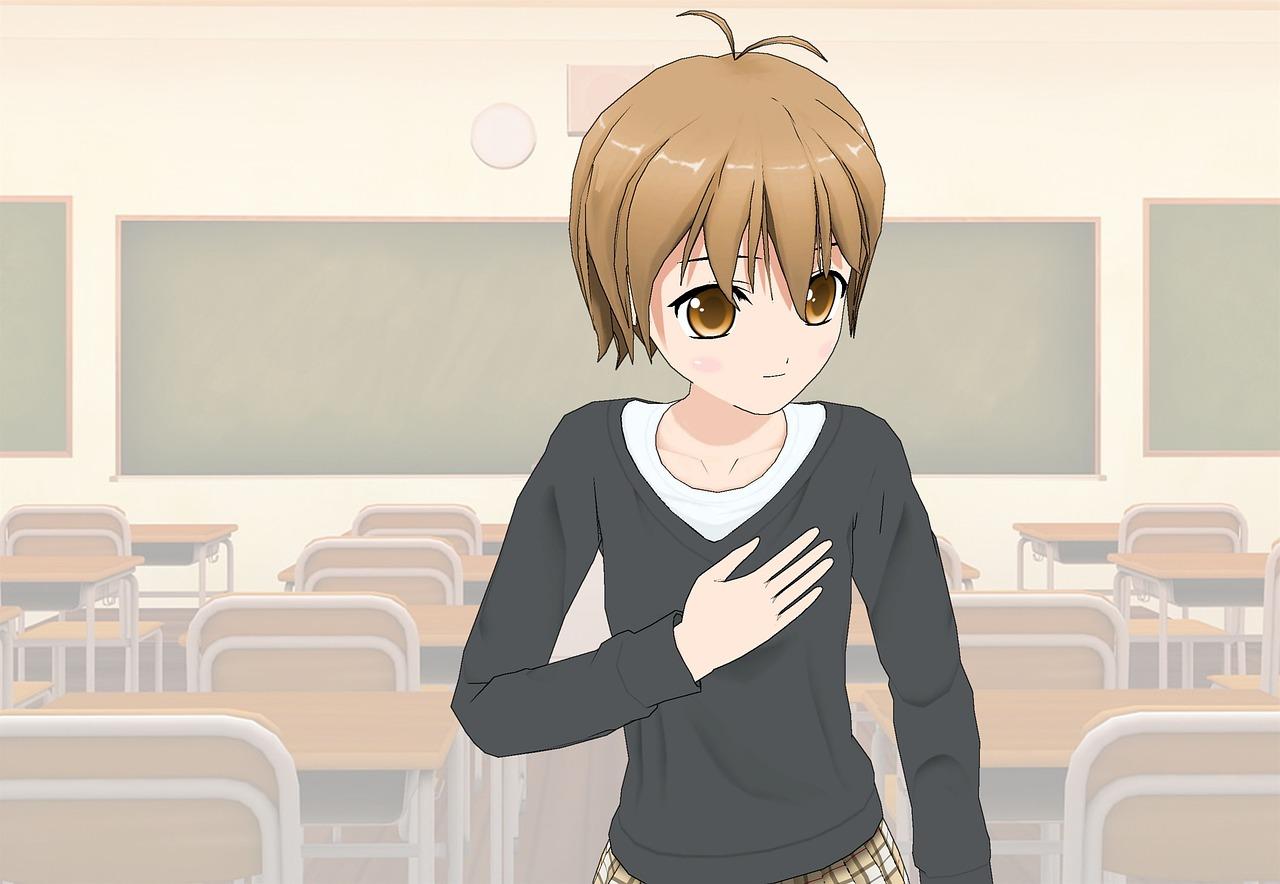


The Anime Art Style: How to Draw Anime for Beginners
We’ve said that Japanese anime have one of the most distinctive styles in global pop culture. You’d know almost immediately that any of the characters from a manga series or any anime shows are from this particular style.
This applies across the board, from Hayao Miyazaki to Osamu Tezuka, from Yoshiyuki Tomino to Akira Toriyama. Whilst all of these artists have very different styles, many of the features of their work are similar. It is these features that you’ll need to get to grips with if you are going to be an anime or manga artist yourself.
We’d love to just explain “anime drawing step by step”, But first we have to learn what defines these artworks. Let’s have a look.
Find out about some of the most popular anime series!
The Big Hair
Now, you’ll find very few anime characters that do not have incredible hair. This will usually be big, unconventionally coloured (especially for main characters), and will change quite dramatically from scene to scene.
Apparently, the ‘wow’ factor of anime hair comes from the importance of the cover illustration in marketing manga books to kids. The most eye-catching, intriguing, and dramatic were the comics most likely to sell.
As a result, the whole anime industry started competing in terms of hairstyle, just for the sake of making a striking cover.
The Important Features
That’s all well and good, but the thing you’re asking is: “How to best render this myself in my own drawing?”
In short, you’re aiming for spikes and unusual or unique angles, primarily, and you’re aiming for any style that will make your oc anime character drawing look cool, interesting, or exciting.
Then you have to think about how this hair is going to move from frame to frame. Because anime hair moves a lot, and it expresses a lot through its movements.
Finally, you need to consider the colour that you are giving to your character’s hair. Different colours have different symbolic meanings related to the nature of the character.
In this way, blue is the colour of peace and calm, or of coldness. Red is the colour of passion and aggression. So, think about this before you give your character’s hair a colour. It’s far from random!
Anime Outline
Before designing cool anime characters to draw, it’s worth considering that outlines are a much larger part of the manga art experience than most other mediums.
Every design decision, colour choice and use of texture, depth and special effects must be done with careful consideration that the outline of the drawing will be a permanent visual feature.
An anime drawing outline is recognisable in and of itself. To prove this, try typing in the name of your favourite character, followed by the word ‘outline’. You’ll recognise them from their silhouette alone!
The Large Eyes
Perhaps the major characteristic of Japanese manga and anime is in the eyes. You’ll have noticed this yourself if you’re an enthusiast.
Even the most simple anime drawing starts with the eyes. To make your anime drawing easy… Let’s analyse this cornerstone of the medium.
In anime, a lot of character expression takes place in the eyes, which are usually oversized (although not so much with Miyazaki). They are given an emotional range and depth that is quite striking for a single aspect of a cartoon face.
The history of anime owes this particular characteristic to Osamu Tezuka, often referred to as the ‘god’ of anime. His series back in the sixties, most famously Astro Boy, shaped the way that artists have drawn their characters ever since.
This is consequently where you will need to pay most attention when you are drawing your own anime characters.
As a complete beginner, eyes are some of the hardest things to get to grips with. To get around this issue, you could try using some anime templates for drawing. We also recommend picking less difficult anime people to draw.
When using an anime eye template, don’t fall into the trap of repetition, try to mix it up as soon as you get comfortable copying so that you can develop your drawing skill, rather than the copying skill.
Read about the Japanese culture of anime whilst you are here!
Gender
When it comes to how to draw a character, gender plays an important part, anime or not…
Most important to note here is that female characters often have different shaped eyes to the male ones. Compare Sakura, from Cardcaptor Sakura, to Goku from Dragon Ball.
Whilst the anime girl base appearance usually has wide, round eyes, anime guys get something of a more rugged, sharper look through the use of straight lines. These convey something of determination, focus, and aggression.
This straight line trend is not just present in the eyes, mind you, but nearly every aspect of the more masculine characters.
However, in moments of confusion, naivety, or surprise, regardless of the gender, the characters' eyes open wide.
Did you know that another trick mangakas use, is creating bizarrely tall anime characters, which further helps define the difference between their characters' genders?
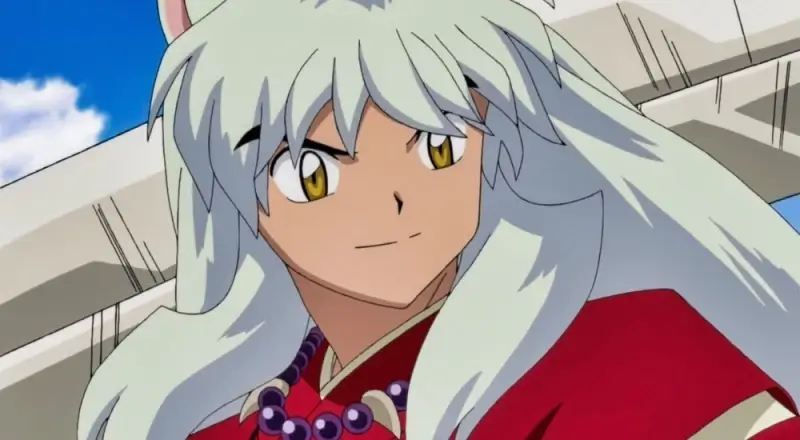
Some characters can be attributed to an artist or franchise by the shape of their eyes alone! Do you recognise which anime the character below is from?
Emotion
The animators of the best anime series pay a lot of attention to the emotional range and depth with which they endow their characters. Anime characters should not just be empty shells that speak. Rather, they should have a realistic and engaging development, as well as an incredibly likeable side.
When drawing your anime characters, you need to be able to give them a range of different emotions. And you’re going to be doing this through the eyes, through the movements of the hair, and through a series of recognisable tropes from which you will be borrowing.
The eyes, as we have said, are the important bit. Some psychologists have argued that this is because the eyes are the window to the soul, the centre of emotional expression. Across the range of emotion, you’ll need to create a different eye for each situation.
Emotional Tropes
The eyes work in tandem with the wide range of tropes used through anime to express different emotions. There is one for pretty much everything, from embarrassment to arousal, from intensity to confusion.
In panic, characters often lift off the floor and their facial features disappear. When angry, the characters are drawn surrounded by black lines. And when in pain, parts of a character’s body will swell or will have a crossed plaster.
For more of these tropes, check out Morisaki Norimi’s ‘How to Draw Manga’ series.
You’ll have to get used to these. But, ultimately, you will be able to use them with surprising and hilarious effects.
Moe
There’s one final thing to consider in relation to the emotional capacity of the character. That’s moe, a Japanese slang term referring to the feeling of affection, or attraction, to a particular character.
It’s one of the characteristics drawing in many of the fans to this subgenre of art.
You’ll have noticed that many of the characters from anime, particularly the ‘magical girl’ category of character, are unbelievably cute. This is deliberate, and this is what is known in Japan as moe.
It’s deliberate because it is a useful tool in making anime popular. Cuteness sells. Think of Pikachu’s shape and smile; this is moe. Just like the large eyes of many female anime characters.
One of your characters from your own anime will benefit from sharing some of these features. Moe is an important part of your “how to draw an anime girl” toolkit.
Note: You can learn Japanese London on Superprof.
Animating Your Anime Character
We’ve covered how to draw an anime character… All of the above holds true for manga characters. But whilst manga is the still, page-based version of this most famous of Japanese artistic styles, anime requires some movement. It is animated after all.
For any of you that have tried to produce animations yourself in the past, this complicates things a little. Obviously.
Yet, you’ve chosen a great style with which to practise your animation. Because anime uses one of the simplest styles of animation around.
Back in the day, in the earliest moments of anime, animators such as Tezuka were looking for cheap and quick ways to animate their characters. This, apparently, was due to his working with a group of inexperienced staff on a tight schedule.
However, the animation technique stuck. And this, again, has become one of the most characteristic features of anime.
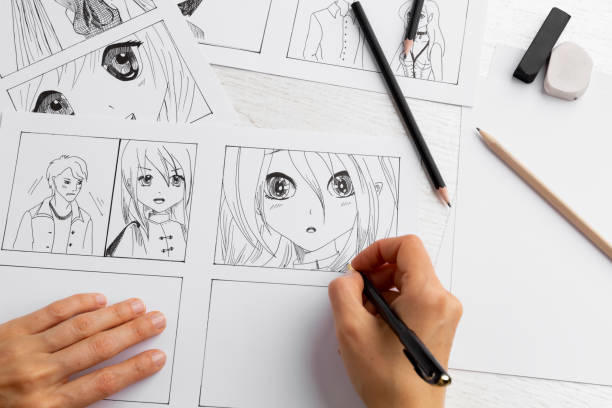
‘Limited Animation’
In comparison to Disney’s ‘full animation’ techniques, anime has traditionally done something a bit different. And this is all down to the things called ‘cels’.
Cels, used up until the beginning of this century, are transparent sheets, or celluloids, upon which a frame of the animation is drawn. These need to be pretty much unique, as they are things that tell the story.
Whilst ‘full animation’ would use something like eighteen different cells a second in their animations, limited animation used much fewer, say eight, or even less.
Whilst the animations themselves were consequently not as fluid, this didn’t really matter. Because, the idea went, if you suggest that movement is happening, the audience will receive that impression. And more cells just means more work.
Consequently, Japanese animation was much more cost-effective. Because whilst Disney would produce, say, twenty thousand cells per half an hour episode, limited animation cut that to about two thousand.
This means that for anime characters, drawing is both the easiest and the hardest part… So, sit yourself down. Just another 1999 frames to draw!
What next?
The next step on your artistic journey is to find some anime things to draw, assuming you don’t already have something in mind.
Whether it’s making your own character from scratch, drawing fan-art of your favourite character, or even using a character drawing template to refine those basic skills, there are plenty of resources available online for you to choose from.
If you’re a newcomer to art in general, we highly recommend looking up “easy anime drawings for beginners” on Youtube and having someone guide you through the process to start with.
Typing in “anime character base” also yields useful results in both the image tab of your search engine and the webpage tab. You will find helpful pictures that show what an anime character looks like when stripped of their unique features, as well as databases of images of anime characters that you can use for inspiration and reference.
If you are a pencil based creator, throwing in the search term ‘drawing’ will help you find exactly what you’re looking for. Just compare the difference in what comes up when you type “anime art” and “anime art drawings” for example!
Summarise with AI:
Did you like this article? Leave a rating!


 Loading...
