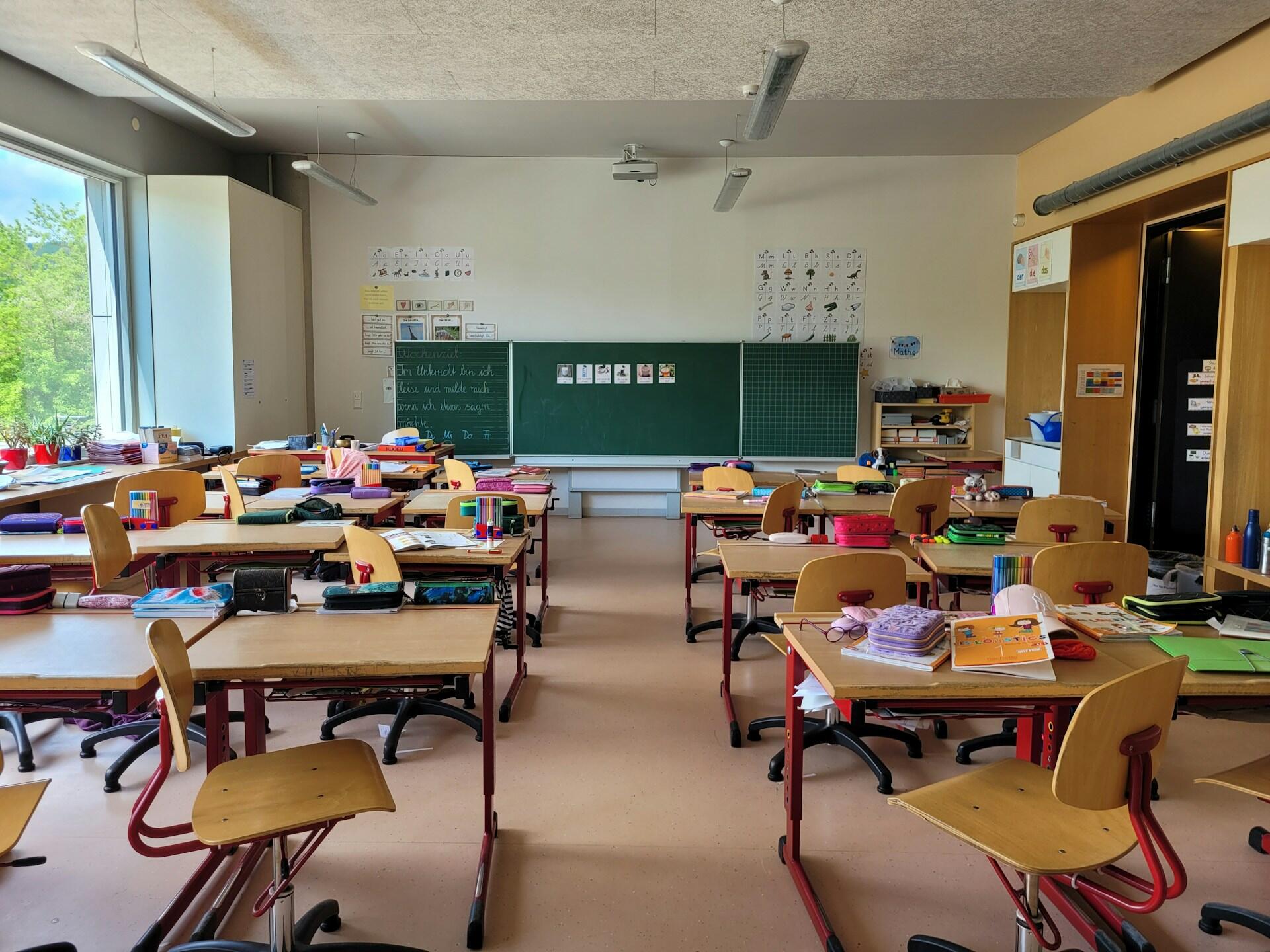

What does the classroom of the future look like? Pretty much like the classrooms today, only they will likely feature far more computers, so that students and teachers may make use of AI during lessons. Before that evolution in education becomes a fait accompli, teachers have a lot of learning and adjusting to do. Our Department for Education (DfE) has laid out a comprehensive AI education policy1, aspects of which we explore here.
Want to give private lessons?
Join the Superprof community and share your knowledge with interested and motivated students.
AI in Teaching: How it Began and How Far it Goes
Key Points About AI for Teaching
- AI is not to replace teachers; AI for teaching is a support utility.
- AI offers educators substantial benefits, but these platforms have limitations, as well as risks.
- Educators at every level must confront and manage the challenges AI in the classroom poses.
- The DfE is taking the lead in continuing development initiatives, offering training for classroom AI tools.
As big a deal as we're making over AI tools for teachers, educators have had some access to automated teaching assistants since the 1950s.
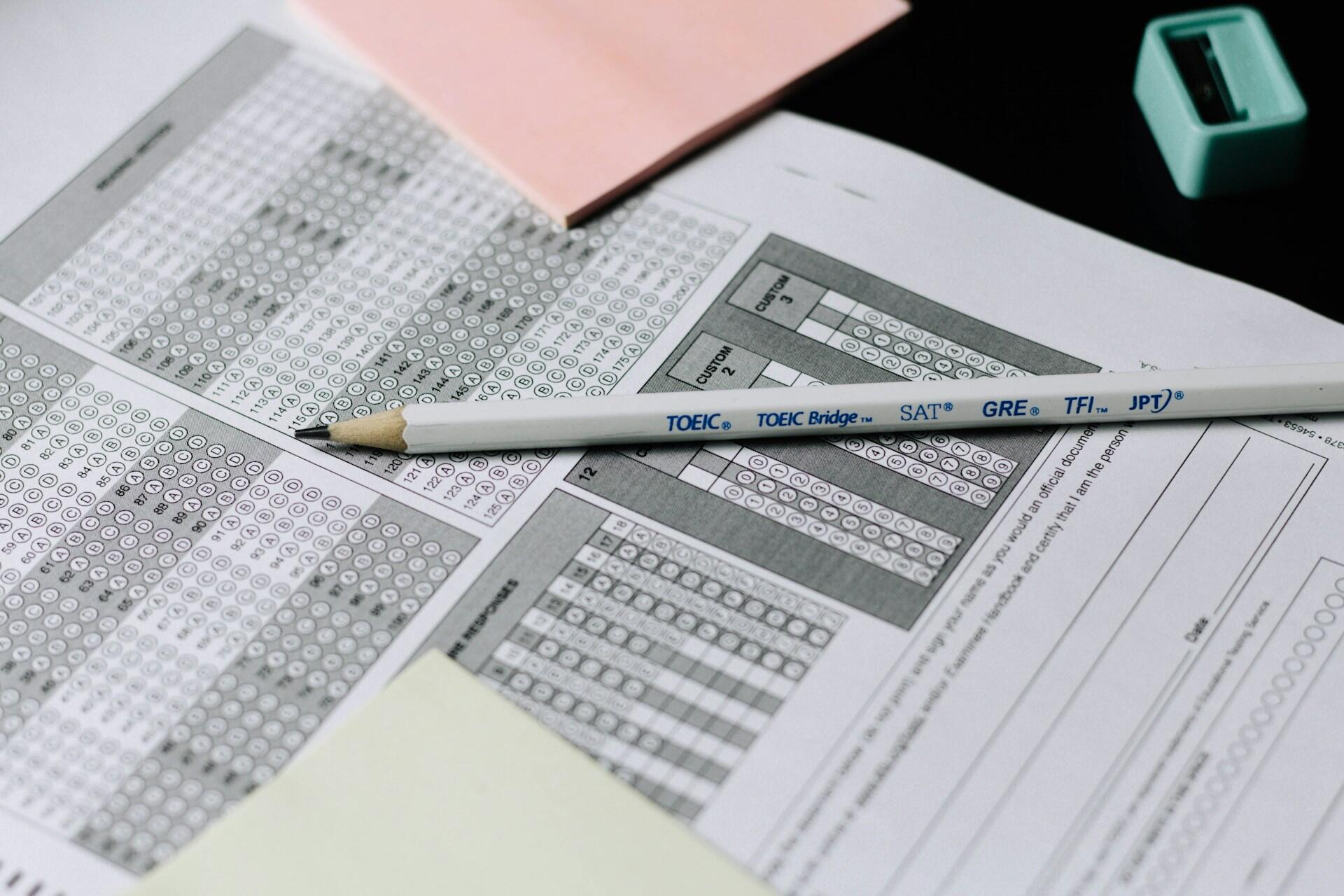
Optical marking recognition machines (OMRs) could detect darkened marks, which allowed them to 'see' the selected answers.
To this day, schools around the world use bubble test sheets, such as the one pictured here, that these machines read to mark multiple-choice exams.
In the 1990s, around the time the personal computer went mainstream, the race was on to create platforms for use in education. By the early 2000s, learning management systems like Blackboard and Moodle provided teachers with digital gradebooks and school calendars.
Large language models (LLMs) debuted in 2017 but didn't come into their own until around 2022. By the time ChatGPT reached its fourth iteration in early 2023, it had developed enough functionality for deployment into UK schools. To this day, educators view this platform sceptically, but there's no denying that it has found its place in our schools2.
Nobody is tracking how many AI platforms are at work in UK schools. However, the DfE anticipates full deployment of AI learning tools by 20273.
AI in Education: Proposed Scope
Note that the DfE policies do not extend to the AI platforms students choose for themselves, only the AI tools educators and school administrators will use. Broadly speaking, three AI functions dominate AI in teaching.
Generative AI
- to create study materials
- to formulate quizzes
- to produce differentiated worksheets
Adaptive AI
'Adapts' to students' performance to create personalised learning pathways
Automated AI
- ideal for routine tasks
- suitable for attendance taking
- lesson planning
- paper marking
Of these three, generative AI holds the most promise. Teachers may get as creative and engaging as they like, prompting their platform to create slideshows, videos, and animations to bring their lessons to life. Already, UK schools using AI for these purposes are realising the benefits these systems can deliver.
Where AI in Education Is Most Useful
As John Dalton asserts in the clip above, AI isn't going away, and the risk of getting left behind due to AI denial is very real. With that said, though, not all AI functions and utilities will serve well, or fit into, the UK's AI education policy. However, in these areas, AI has the potential to enhance learning.
At no point in any of these aspects is the teacher taken out of the loop. In fact, teachers are central to all of these features. Woe betide the educator who accepts AI assessment and marking decisions without reviewing them for accuracy and fairness!
Want to give private lessons?
Join the Superprof community and share your knowledge with interested and motivated students.
AI for Educators: The Ethics and Challenges
A.I. will force us humans to double down on those talents and skills that only humans possess.
Stephen Goforth, Professor of Integrated Media
As emphasised in this article's introduction, AI won't replace teachers, precisely for the reasons our quoted instructor states.
Far from the malicious claims of teachers wishing to push their work onto the machines, most teachers simply want to teach. As most see it, their job is not to write reports; even lesson planning and attendance taking are a step or two outside their scope of work.
Fundamentally, teachers want to connect with their students and give them the tools they need to define success on their terms.
That's what they got into teaching for, right?

Still, the danger exists that teachers will become overly reliant on the technology and outsource marking and learning decisions. Guarding against that is one of the top challenges teachers face.
AI in Education: The Learning Curve
That percentage is more than mildly alarming. Before one can become overly reliant on something, one must first learn all of its ins and outs. For UK teachers, the AI learning curve promises to be steep. The DfE aim is to have AI in schools by 2027; that's a tall ask for the practically 80% of teachers who have no AI skills3.
Data Protection and Security
Data breaches happen all the time5, across all sectors and impacting every level of society. That's why safeguarding students' data is among the DfE's most emphatic rules for AI in teaching.
From that perspective, pairing teachers not yet trained in AI systems with that high data breach ratio sounds like a recipe for disaster. Even a fundamental teaching function, such as creating lessons plans using AI, can lead to potential student data breaches.
1. Avoid entering personal or sensitive student data into open AI systems.
2. In cases of legitimate interest, schools must conduct a Data Protection Impact Assessment.
3. Whenever possible, pseudonymise or anonymise student data.
4. Inform parents and students when their data will be used and to what extent.
Bias and Fairness
As mentioned above, AI excels in spotting and using patterns to make its decisions. It doesn't matter whether you intentionally created the pattern or it formed organically. The 2020 Ofqual grading scandal taught us a bruising lesson in algorithmic pattern detection. What happened in 2020?
Private school students received much higher marks, while those in state schools and poorer districts received lower marks, whether earned or not. And that's despite the AI being coded to focus on marks, not external factors.
This is the type of bias inherent in data-driven systems that present teachers and administrators with a nearly insurmountable challenge.
Incidentally, it also speaks to the need of keeping students' personal and other identifying data out of school AI systems. Teachers must review every AI-decided marking outcome, always on guard for potential bias. This is an AI skill educators must cultivate through their professional development courses.
AI in Teaching Worldwide: Discover Educational AI in Action
Since 2023, China has led the world in the number of STEM graduates7. Furthermore, according to the Australian Strategic Policy Institute, China leads the world in 57 of the 64 declared critical technologies8.
All geopolitical considerations aside, that country is clearly on the right track, embracing tomorrow's technologies. Not just embracing the tech, but shaping it and directing its future. In China, all that starts by teaching AI in their schools' earliest grades.
Kids who start young will develop intuitive fluency ...
Weipeng Yang, researcher in AI and early childhood education
Countries around the world fall along the spectrum between China's high-end AI incorporation and developed countries' more tentative steps. Of course, the Middle Kingdom has the advantage in that it develops its AI in education policies and initiatives based on the AI systems they themselves developed.
Here, in the UK, we're largely reliant on AI platforms developed elsewhere that we then tailor to our needs and uses. This fact alone underscores the urgency for the UK to develop its own AI platforms and, broadly speaking, its tech sector. Thus, it's commendable that the DfE is working double-time to provide teachers with enhanced AI skills to meet that demand.
AI for Educators: Further Resources
- Department for Education. The Safe and Effective Use of AI in Education Leadership Toolkit Video Transcripts. https://assets.publishing.service.gov.uk/media/6842e04ee5a089417c8060c5/Leadership_Toolkit_-_Transcript.pdf 2025. Accessed 13-3-2026
- University of Cambridge. “Chat GPT. We Need to Talk.” Www.educ.cam.ac.uk, 2026, news.educ.cam.ac.uk/230403-chat-gpt-education. Accessed 13 Mar. 2026.
- GoStudentUK. “60+ Startling AI in Education Statistics.” Gostudent.org, 2022, www.gostudent.org/en-gb/blog/ai-in-education-statistics. Accessed 13 Mar. 2026.
- Peckover, Lee. “Classroom Secrets | Primary Teaching Resources and Worksheets.” Classroom Secrets | Primary Teaching Resources and Worksheets, 16 June 2025, classroomsecrets.co.uk/blogs/what-schools-need-to-know-about-the-dfes-new-guidance-on-ai. Accessed 14 Mar. 2026.
- Saxena, Ayush. “150+ Data Breach Statistics in 2023.” Sprinto, 22 Sept. 2023, sprinto.com/blog/data-breach-statistics/. Accessed 14 Mar. 2026.
- Craig, Ben. “Guidance on the Use of Generative AI in MATs and Schools - SchoolPro TLC.” SchoolPro TLC, 18 July 2025, schoolpro.uk/2025/07/guidance-on-the-use-of-generative-ai-in-mats-and-schools/. Accessed 14 Mar. 2026.
- Oliss, Brendan, et al. “The Global Distribution of STEM Graduates: Which Countries Lead the Way?” Center for Security and Emerging Technology, 27 Nov. 2023, cset.georgetown.edu/article/the-global-distribution-of-stem-graduates-which-countries-lead-the-way/. Accessed 14 Mar. 2026.
- marko. “ASPI’s Two-Decade Critical Technology Tracker: The Rewards of Long-Term Research Investment - ASPI.” ASPI, 28 Aug. 2024, www.aspi.org.au/report/aspis-two-decade-critical-technology-tracker/. Accessed 14 Mar. 2026.
Want to give private lessons?
Join the Superprof community and share your knowledge with interested and motivated students.
Summarise with AI:
Did you like this article? Leave a rating!

 Loading...