Improving the Education Experience with Activities
Teachers often ask themselves, how can I make education better for students? The answer is simple: by adapting to their needs. In 2023, that means more games.
Whether you're fighting for a cause or not, being independent is something that we all strive for. All types of humans, young and old, thrive when they have someone who believes in them and wants them to work independently. For instance, play, or any self-directed activities, can have a valuable impact on their education whatever age they are. Alternative types of education using technology are engaging to students of all ages and allow them to "play" and use their imagination more freely. Also, self-directed activities are perfect opportunities to enable young, and slightly older, students to express themselves and to make tutoring more tailormade to their needs. Self-directed exploration and discovery can be equally useful as a learning approach; are you listening, tutors? Learning new concepts needs to remain playful and independent for pupils to take an active interest. The attention span of students nowadays isn't what it used to be compared to past generations. Therefore, tutors need to have a variety of activities and experiences available at their disposal to enhance their educational progress including self-directed projects. Also, it's worth stating that while you might hear the words "play", self-directed activities that are viewed as games are not just for children; the smartest and most mature minds like to keep things fresh! So, without further ado, in today's article, we'll analyse so modern developments that make learning seem like playtime, and we'll review a few educational games and activities that students can review on their own time. Let's get started!
Cognitive Learning tries to make learning a more attainable and interesting experience for each student. (Source: Unsplash) Before we get started on the different methods of Cognitive Learning that are available in the academic classroom, it's important to focus on the definition. So, what is cognitive learning? Known as CL, cognitive learning involves using computer systems to encourage students to solve real-life problems, instead of using theoretical aspects. CL uses artificial intelligence systems to personalise learning, identifying weak spots in students’ knowledge, matching activities with their interests and linking theory to practical aspects of their daily lives. Cognitive Learning attempts to make the process of acquiring new information attainable and engaging for students. For instance, CL is part of the ‘flipped learning’ method, made famous by the great Khan Academy. Using CL, The Khan Academy offers over 100,000 problems and activities for students to complete ranging in a variety of subjects such as history, maths, medicine, chemistry, biology, and microeconomics. Flipped learning is greatly welcomed by modern students since it makes studying more engaging and allows for further independence. CL programmes not only make learning playful and practical but also cater to students’ interests. Pupils can select an area of interest that they have an affinity for such as music, cooking, shopping, mechanics, etc. and enjoy questions that are based on the specific field of expertise that they excel at. Because of this, learning is better for all parties involved since pupils of all ages see topics as relevant for them and their future endeavours. Tutors should try their best to at least have a superficial knowledge of Cognitive Learning so that they can be better equipped to assist their students. Before concluding this section, it's worth stating that the future of Cognitive Learning is quite exciting. Why's that? Educators are seeing the benefits in their students and are encouraging people with deep pockets to invest in the cause. There will only continue to be more options available in Cognitive Learning!
Augmented Reality: A Glance into the Future of Education
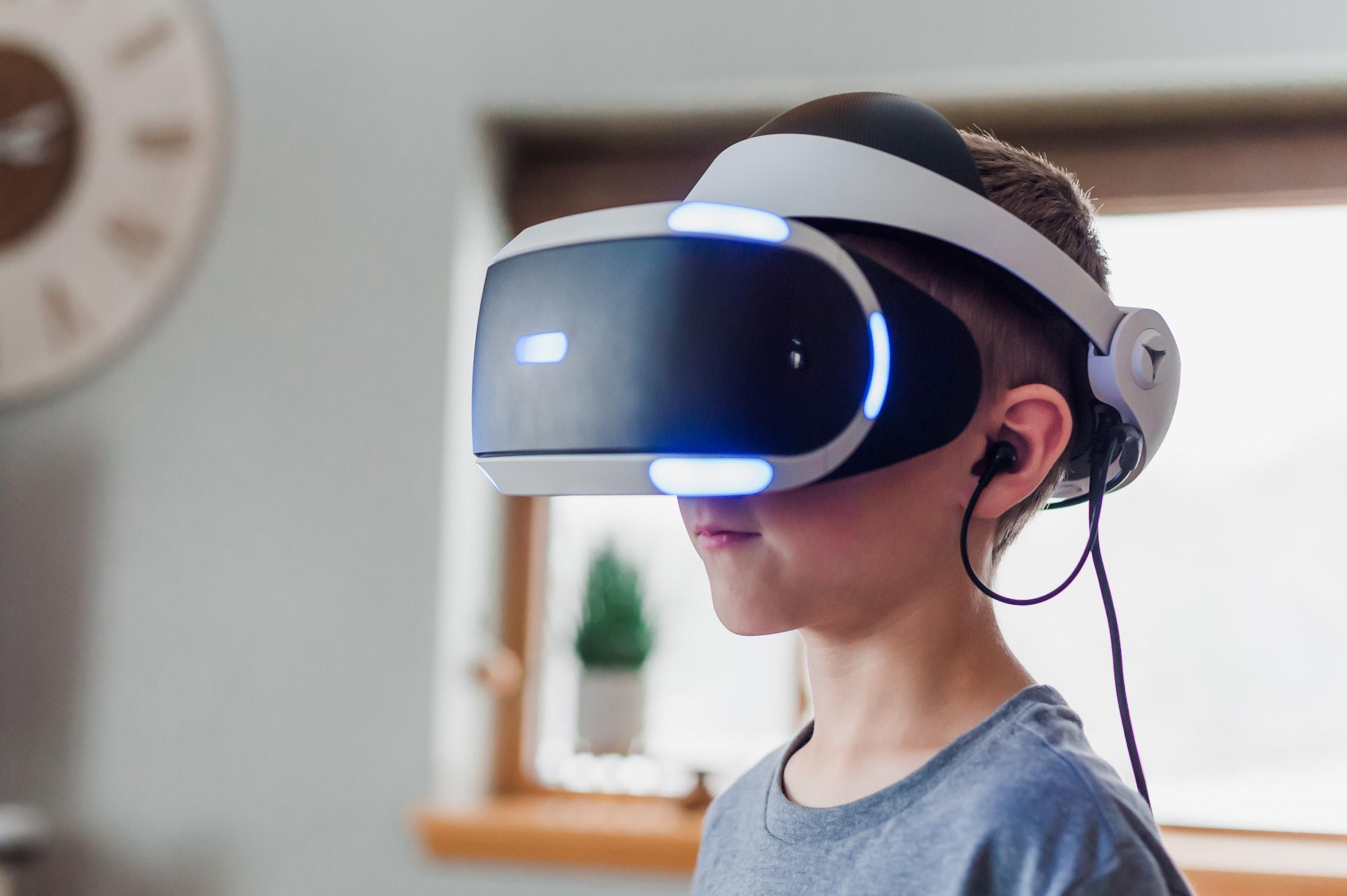
Hopefully, AR goggles will become more affordable so that they can be used in classrooms across the UK. (Source: Unsplash) To make things feel more fresh and relevant in this day and age, tutors must quickly adapt to the times including important aspects of developing technology in the classroom and during private courses with their pupils. One of the most significant technological advances is that of Augmented Reality (AR).Augmented Reality is referred to as AR and is defined as the process in which layers of digital information – comprising photographs, videos and sounds – are superimposed over the ‘real world’ around them. But, what is AR like and how is it used with students to make learning more playful? To understand how Augmented Reality makes the learning experience better, it's worth consulting the following three resources:
LearnAR: offering various resources for topics such as Chemistry Physics, Maths, and even foreign languages. Augmented Reality from LearnAR leaves indelible images and sounds in the minds of young learners. For example, their technology allows teachers to superimpose the intestines, lungs and liver, over an actual student’s body, letting students see where these vital organs are located in their bodies.
GoogleSketchUp: allowing students to study and analyse the 3D models they have created in the physical space, GoogleSketchUp uses a webcam, a personal computer and a printed code attached to the required software. Loads of fun!
While there are other intriguing resources to use, we recommend starting with the two previously mentioned ones to give AR a chance. But, is Augmented Reality just another phase? Not necessarily. Statistics from extensive research studies have found that consumers value AR products 33% higher than non-augmented reality products. Also, AR apps for mobile phones will continue to make tons of money in the future. Augmented Reality is used across various domains; however, it will be especially beneficial for students in years to come since it can allow them to acquire key concepts in a visually stunning way in the comfort of their own homes. But, what is the future of Augmented Reality? As is the case with most new technology systems that are just starting, AR is still in the growing stages and has yet to be perfected. Nevertheless, it's important to mention that AR goggles will greatly help the technology to improve and progress more rapidly. Hopefully, AR goggles will become more affordable so that schools can purchase them to display 3D images. Augmented Reality is something that is being used and will continue to be used for educational purposes. We look forward to the advancements in the future that will progressively make teaching concepts easier for tutors and teachers.
Top Ten: Educational Game Websites For Students and Teachers
There are plenty of websites that feature interactive games for students and teachers. (Source: Unsplash) There's been a lot of debate in recent years as to whether or not games and activities should be prioritised in the learning classroom. To help educators make a calculated decision that they feel comfortable with, we've measured both the pros and the cons.
The Disadvantages
If you're a teacher who's still on the fence about choosing educational games in the classroom, you might want to know some of the cons:
If your games aren't well-organized, they might be more distracting than helpful.
When too many games are played, students might not be learning all they have to learn.
And, the pros? Continue reading to find out more!
The Advantages
Since we're a gang of optimists at Superprof, we prefer to focus on the positive and, thankfully, there are many advantages to introducing education games in the classroom or with a tutor:
Games motivate learners to continue learning.
The interaction and teamwork involved in playing games strengthen the bonds between classmates.
The best activities and games keep the classroom fun and positive memories of learning are created; this is especially true for young learners!
And, we could go on and on! Truthfully, the benefits of educational games and activities from trusted websites are much more noteworthy than any of their drawbacks. So, that's why we've compiled the following list of the top ten best educational game websites for both students and teachers:
Bitesize/BBC Schools,
AGAME.com (Music Games),
The Jason Project,
Cut the Knot,
NASA Quest Challenges,
Teachable,
Creative Chemistry,
Adventure Academy,
Mangahigh,
PBS Kids Games.
We strongly recommend visiting any of the previously mentioned since they are trustworthy sites that are equally educational and interactive. In conclusion, by revising the different types of technology and the plethora of online games available, private tutors can do a much better job with their students to encourage them to like learning and make it playful and independent. Happy studying!
Effective Tutoring Techniques: Top Tips On How to Tutor Private tutoring has become an increasingly important part of modern-day education. In busy classrooms where teachers are expected to balance the needs of multiple students at once, it's easy for certain individuals to fall behind their peers. Fortunately, private tutoring can help students fill in those […]
What Educators Need to Know About AI for Teaching What does the classroom of the future look like? Pretty much like the classrooms today, only they will likely feature far more computers, so that students and teachers may make use of AI during lessons. Before that evolution in education becomes a fait accompli, teachers have […]
Fun Easter Activities And Crafts for Kids Easter is one of the most anticipated celebrations in the United Kingdom, not just as a spring bank holiday but also a symbolic and meaningful commemoration of the resurrection of Jesus Christ. In this article, we’ll explore a range of exciting and hands-on Easter activities designed to make […]
How To Tutor and Start Your Home Tutoring Business They say that if you do what you love, you’ll never work a day in your life. So, if you have a passion for teaching and helping others, then you’re more than likely wondering how you can become a tutor. If you want to get started […]
Leaving Teaching: Preparing for a Smooth Transition Leaving the classroom for good is rarely a decision people make lightly. For a lot of people, the thought of stepping away from teaching begins as a quiet question at the back of their mind before growing into something harder to ignore. If you're wondering how to get […]
Best Jobs For Ex-teachers: Which Careers After Teaching? Are you a teacher who is feeling the itch for a new and exciting career change? If so, you're definitely not alone; many teachers find themselves at a crossroads at some point in their career. A recent study in England showed that record numbers of teachers in […]
The Teacher Pay Scale 2024-25 In these shaky economic times, potential earnings are everyone's top concern, not just teachers. Still, for educators wrapping up the current academic year, and those just starting their careers, the money question is paramount. Years of low pay don't balance against increased workloads and dwindling support. This table shows whether […]
Christmas Classroom Ideas: Key Facts, Context and Insights Teaching Christmas in primary schools can be a joyful and inclusive experience filled with fun activities. With a well-planned approach, teachers can integrate Christmas themes across subjects, helping children build skills while celebrating the season. This guide covers essential elements of teaching Christmas in primary school and […]
Anti-Bullying Week Ideas and Resources For the Classroom Anti-Bullying Week is an event in schools across the UK that has been widely-recognised and used by schools all over the country as a chance to educate and prevent bullying from becoming a big problem in their school environment. Organised by the Anti-Bullying Alliance, it helps raise […]
23 October 2024 ∙ 7 minutes to read
Summarise with AI:
Frequently asked questions
What are self-guided activities?
Cognitive learning and augmented reality are self-guided games or activities that keep things fresh in the education world.
Are games a good idea in the traditional classroom?
Regardless of age, well-chosen games are fantastic for the growth and progress of students since it keeps learning fun.






 Loading...