

Live events take immense pre-planning to successfully execute. Event producers deal with the atmospheric elements of an event and overall mood using lights, sounds, and other elements. Find out what event production is all about, and what you need to know to enter the field.


What Is Event Production?
Event production is an advanced layer of detail tied to event planning and event management. It’s the technical and creative aspects behind live events. Event producers turn ideas and concepts into fully realised experiences with sound, lighting, staging, video, and on-site crew.
A corporate event may prioritize business goals and team engagement... Social events, on the other hand, focus on connections and memorable moments...
Eventbrite.com
Some aspects from planning, production, and management may overlap, but the main parts of each process are typically executed by separate teams. Event producers may collaborate with music producers for concerts and music events, or for making music for clients’ events.
Events that often use production services include:
- Concerts and music festivals
- Theatre productions
- High-budget weddings and other parties
- Conferences, expos, and seminars
- Galas and charity fundraising events
- Live sports events
- Corporate events
- Private parties
Event planning focuses on deciding major elements like the budget, venue, catering, the guestlist, guest speakers, events, decorations, and other needed items (like tables or booths, for example). Management oversees the procurement, payment, scheduling, coordination, and day-of procedures to ensure they go according to plan. Production has a hand in pre-planning and day-of activities; it involves using advanced techniques like AV elements, atmosphere beyond basic decor, and other immersive elements.
The Key Components of Event Production
Event production covers more technical and immersive aspects than average event planning and management. Not every event requires production, but large ones, especially those with audio and visual (AV) components, typically require a professional event production company. Here’s what event production can offer:
- Audio: PA systems, mixing consoles, microphones, monitors, amplifiers, in-ear systems for performers, recording
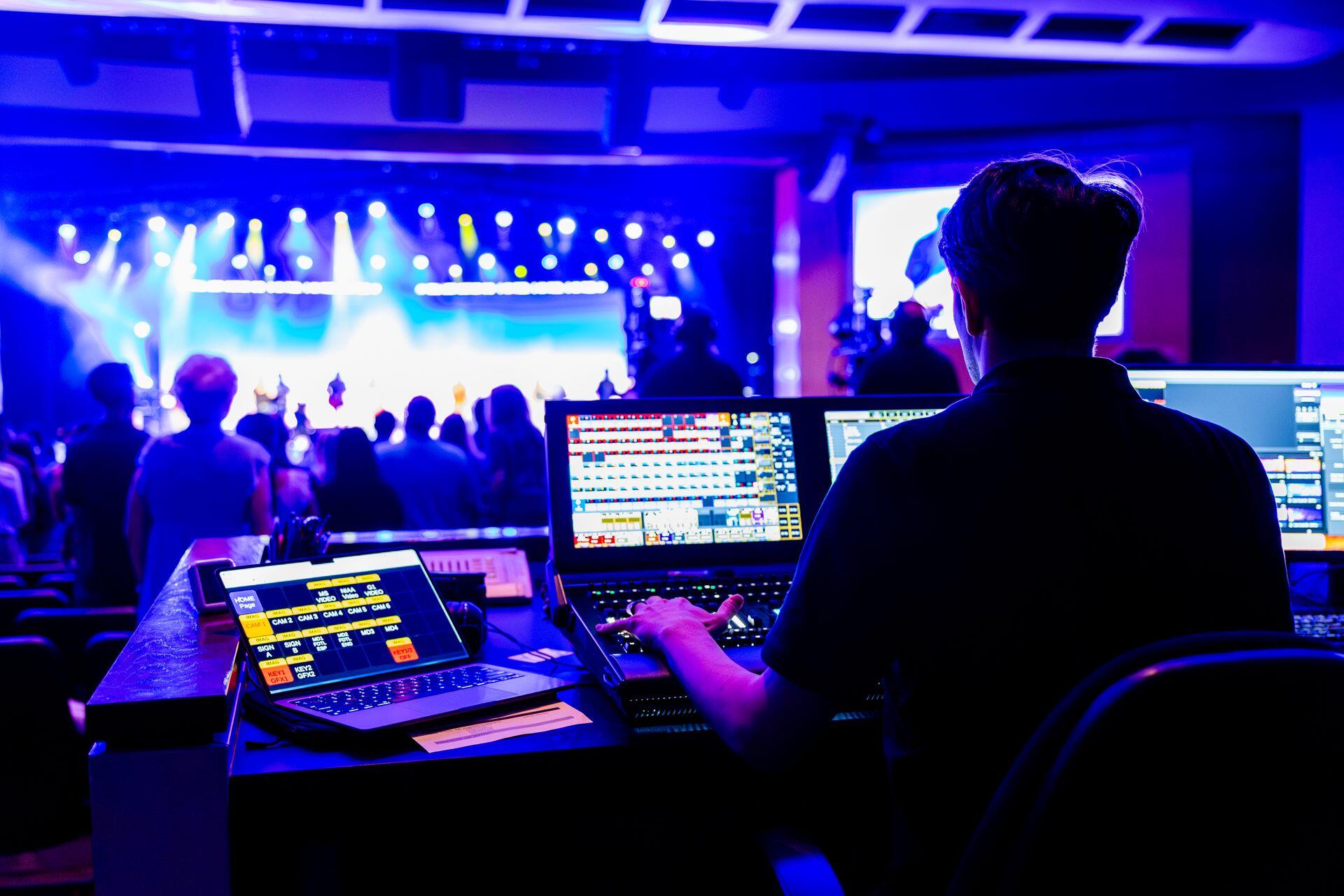
- Lighting: Moving heads, washes, spotlights, control desks, rigging to create mood and focus
- Visual: LED walls, projections, screens, content playback, live switching for broadcasts and hybrid streams
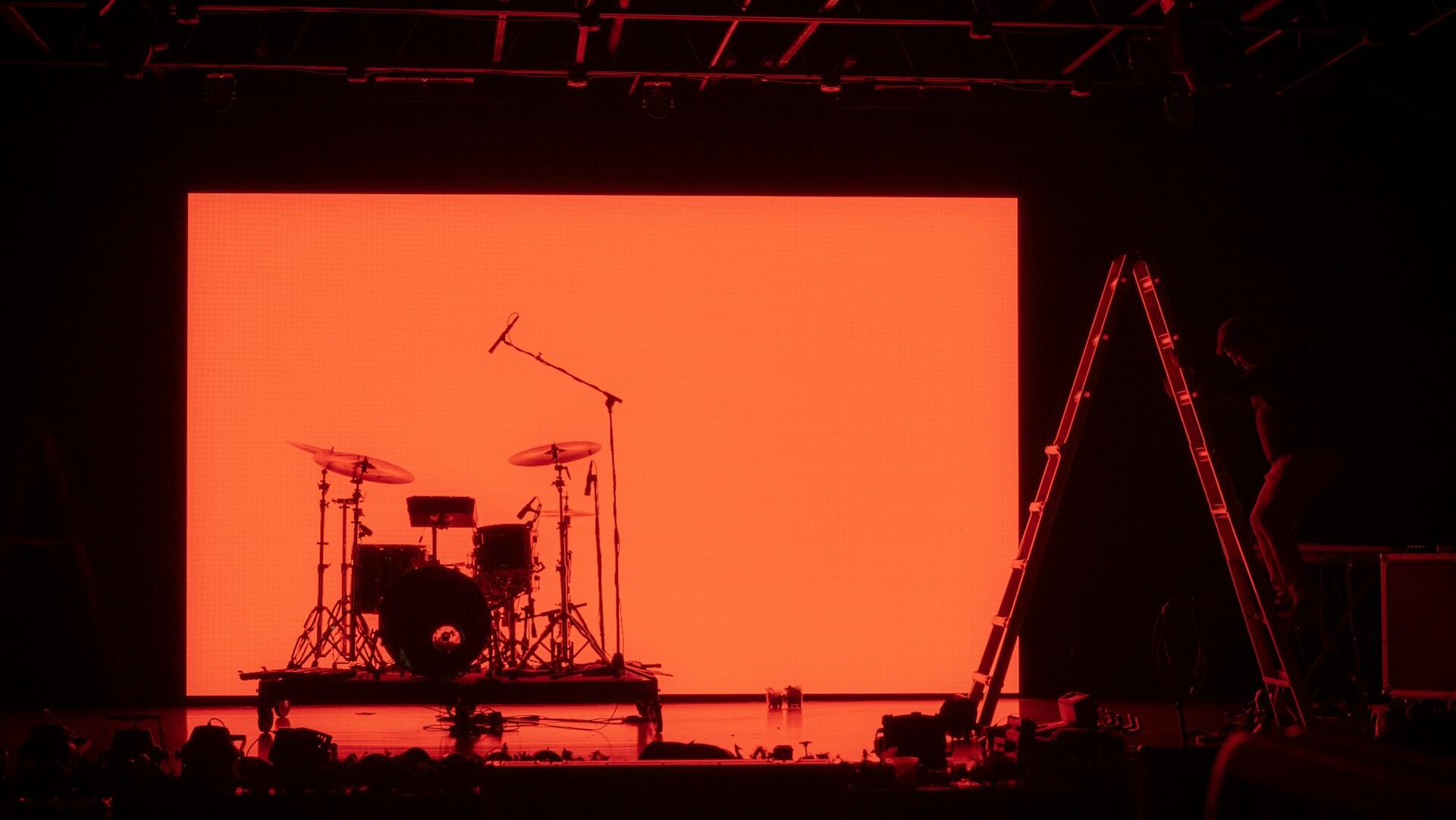
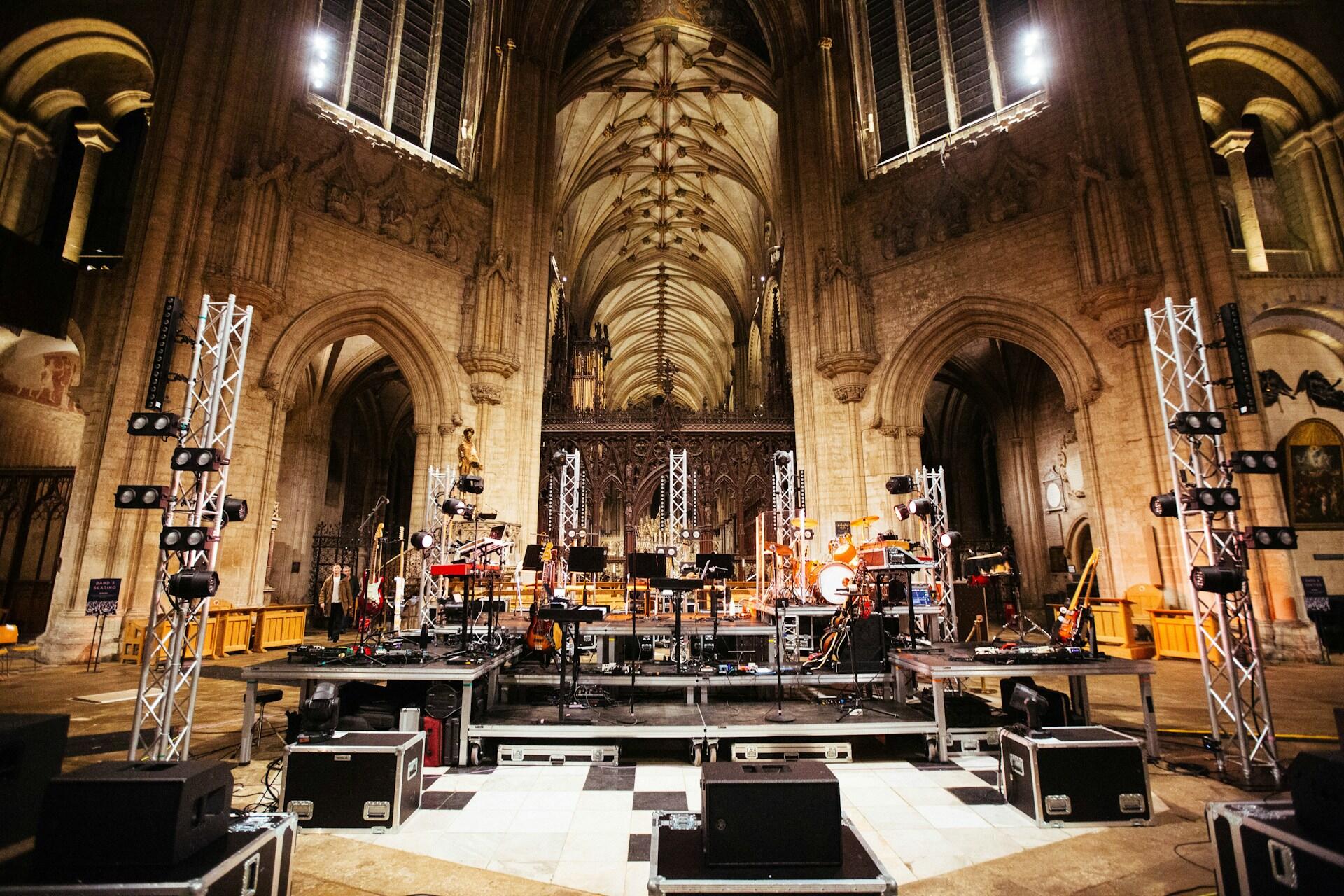
- Staging and structure: Truss, decks, barriers, backline, power distribution
- Technical crew: Sound engineers, light operators, video technicians, stage managers, production managers to run the show day-of
Production elements elevate experiences. Without proper lighting and sound management, an event can be a total disaster. When hosting online or hybrid events, having an experienced team to run the digital offerings is crucial for remote attendees to get the experience they expect.
The Event Production Process
Most live events are arranged with a three-step process: pre-production planning, on-site execution, and post-event load-out. At times, the specific responsibilities of the event producer or production team may overlap with or be in conjunction with event planners and managers. Cooperation, teamwork, organisation, and clear communication is imperative for each person involved.
Pre-Production Planning
In this stage of event production, you’ll need to work out with your client what responsibilities and expectations you need to fulfil in planning, procurement, and on the day of the event.
Are you in charge of all signage across the venue, or just what will be shown on LEDs or live streams? Will the client supply you with any AV files, or do you need to make them or hire a subcontractor? If you create audio, do you need to make something short and simple, or hire a music producer?

All these details must be determined before you can move on to specific planning. The planning stage is critical for evaluating expectations, determining fees and quotes, surveying the site, securing insurance, ensuring compliance, and figuring out as many problems as you can before they happen.
It’s also when you make the plans for the sound and audio, lighting, screens and visual content, and staging, while determining your team and their tasks. Creating a cohesive, effective display of AV elements that meets all the client’s needs takes a lot of communication, coordination, and drafts with feedback and changes.
6-12 months in advance
Initial planning
Get contacted by an event planner. Together, work out goals and objectives. Create timelines, event production schedules, budgets, and put together teams.
Determine possible vendors for rental equipment or purchases. Create quotes for the client.
4-6 months in advance
Solidify planning
Solidify the concept, stage setup, and other elements. If possible, visit the venue with the event planner or coordinator to ensure the vision is communicated and understood properly, and get a proper look at the layout.
Gather permits and approvals, if needed. Coordinate with vendors to secure equipment for the event day.
2-3 months in advance
Building the event
Plan the technical setup. If possible, visit the venue again to confirm power and internet capabilities.
Finalise sound and visual components (music, graphics, etc.) which may be provided by the client, may be created in-house, or may be created by a design subcontractor.
Finalise timelines with vendors and staff, usually coordinated with event planning and management. Go through rehearsals with performers and staff to finalise audio and lighting cues.
Leading up to event day
Last-minute checks
Go through AV test runs. Ensure all bases are covered and expectations are met between the client, the event planners and event coordinators, and event managers.
Set-up
Showtime
Large events may allow set-up several days in advance, while smaller events, like weddings, usually only allow a few hours the morning-of. If you have more than one day to work with, take advantage, setting up all the foundations as soon as possible so you can troubleshoot as needed. Arrange the event as per your timeline and schedule with vendors and staff.
On-Site Execution
On the day(s) of the event, event production companies execute both production and management tasks. After a final check to ensure everything is working properly (power, internet, connectivity between equipment, ambient audio and visual elements, staging and rigging, etc.), guests begin to arrive.
During the event, you’ll be dealing with maintaining functionality and quickly solving any problems that arise. Technicians will be responsible for AV displays, light effects, and perhaps filming, as planned. This can include guiding spotlights on a stage, playing music and sound effects as cued, and putting on presentations.
Through the day, the production team is usually responsible for:
Unloading trucks, building the stage, hanging lights, setting up the PA, running cables (sometimes done before the first day of the event, but sometimes required on the day of)
Test audio, lighting, and video content with performers or stand-ins. Ensure technical crew is prepped.
Collaborate with production manager, stage manager, and/or event manager who runs the timeline. Execute lighting, audio, video, and stage changes as cued and rehearsed.
Engineers operate consoles, technicians monitor equipment, support crew resolve any issues in real time.
Work with venue security to ensure the site is kept safe, especially regarding power, rigging, and barriers.
Most entry-level event producers work as technicians or coordinators for the production team during the event. Seeing what goes on behind the scenes is a good introduction to the industry. From there, it usually becomes possible to specialise and transition into a planning or management role, sound engineering position, or other technical role.
Post-Event Activities
After the show is over, there is still work to be done.
Load-out and strike
Pack up
Dismantle all the equipment and structures, pack everything, return it to the warehouse or rental company
Inventory and damage checks
Inspect items
Taking stock of what equipment made it back to the warehouse and noting any damaged or lost items. Depending on the contract and circumstances, the client may be billed for missing or damaged items.
Debriefing
Wrapping up
Meeting with the team and client to review what went well and what could be improved for next time.
Reporting, payments, invoicing
Administrative duties
Finalise timesheets, crew payments, and any other outstanding expenses. Send invoices to client and/or event planners for equipment and services provided.
It’s important to take time after each event and evaluate if the planning, setup, and execution went well. Continuous improvement is vital for cost and time effectiveness and maintaining a good reputation.
Careers in Event Production
There are many roles in event production. Salaries are influenced by position, as well as experience level, industry and types of events, the company you work for, and location. Large event production companies may have their own in-house staff or partnered contractors, including music mixing and mastering engineers, graphic designers, marketing teams, and others.
Beginners usually get their start as hands-on technicians or assistants to managers on-site. From there, they often take more responsibility on project-specific management. Then, it can be possible to become a senior in physical production and management, or decision-making in the office.
Here’s a brief overview of annual figures for event producers at various roles and experience levels:
| Role | Experience Level | Typical Salary |
|---|---|---|
| Freelance technical crew & producers | Any | £300–£500+ per day |
| Event Assistant / Production Assistant | Entry-level | £18,000–£25,000 |
| Event Coordinator / Production Coordinator | Junior to mid-level | £23,000–£32,000 |
| Audio / Lighting / Video Technician | Entry to mid-level | £27,500–£38,000 |
| Event Manager / Production Manager | Mid-level | £30,000–£45,000 |
| Event Producer | Mid-level to senior | £35,000–£55,000 |
| Senior Event Manager / Senior Producer | Senior | £45,000–£65,000 |
| Head of Events / Technical Director | Senior to Leadership | £60,000–£80,000+ |
The data changes depending on which reporting company you’re reading. The salary range for event managers varies widely, depending on the company, exact seniority level, and responsibilities. Overall, it can be a comfortable wage for many people, once they climb past entry-level.
average base salary
Event production is a wide, versatile and useful field. Clients rely on event producers to make their events go off without a hitch. Without it, events like theatrical shows, conventions, and live sports just wouldn’t be the same. As more digital technology becomes available, there are even more production options for in-person and virtual attendees.
References
- Thorpe, Jill. “How to Master Event Production: Tips, Challenges and Timelines.” Eventbrite All Access, 3 Jan. 2025, www.eventbrite.com/blog/event-production. Accessed 16 Aug. 2026.
- “The Ultimate Event Production Playbook.” Shoflo, info.shoflo.tv/event-production. Accessed 16 Aug. 2026.
- “What Is Event Production?” Beatz Hire, 21 June 2026, www.beatzhire.co.uk/blog/event-production. Accessed 16 Aug. 2026.
- “Where Can Event Management Training Take Your Career?” Event School London, 13 May 2026, www.eventschool.london/post/where-can-event-management-training-take-your-career. Accessed 16 Aug. 2026.
Summarise with AI:
Did you like this article? Leave a rating!

 Loading...