
Want to learn how to say colours in French? Whether you're a beginner in French or brushing up on your vocabulary, mastering the names of colours is a fun and essential part of the language. This guide covers the most common French colours, how to pronounce them, and how they’re used in everyday phrases.
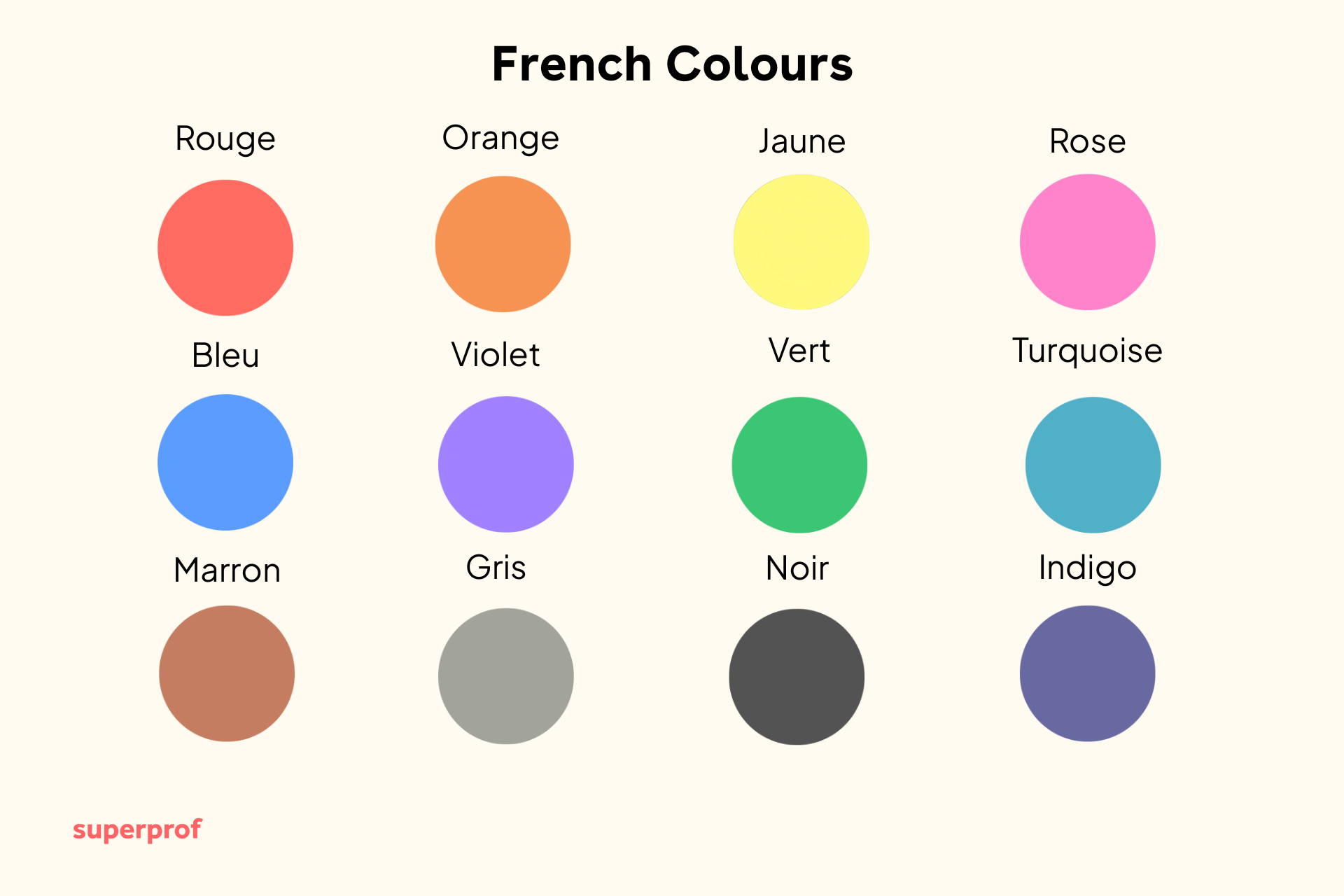


Colours in French: Building Your Vocabulary
The first step in mastering colours in French is getting to know the words for them. You should also know what they sound like and how to use them. You can study them with group French lessons, which provide opportunities for collaboration and peer support. Or simply take a few moments to go through this list to build those basic skills.
French Words for Colours: What to Know
- Unlike in English, French colour adjectives follow the objects they describe.
- Grammatical gendering applies, but only for some colours.
- The French language is famous for using colours to add expressiveness.
- The French do not use standard colours when describing hair colour.
- Some words for colours have verb forms: bleuir, rougir, verdir, and others.
| 🥐French | 🏰English | 🔎Example Usage (French) | 📼How to pronounce |
|---|---|---|---|
| rouge | red | une pomme rouge | |
| bleu | blue | un ciel bleu | |
| jaune | yellow | une fleur jaune | |
| vert verte | green | un arbre vert une chemise verte | |
| noir | black | un chat noir | |
| blanc blanche | white | le chocolat blanc une chemise blanche | |
| gris grise | grey | un mur gris une chatte grise | |
| orange | orange | une voiture orange | |
| rose | pink | un ballon rose | |
| marron | brown | un sac marron | |
| violet violette | purple | un manteau violet une robe violette | |
| turquoise | turquoise | un collier turquoise | |
| doré | golden | un bijou doré | |
| argenté | silver | une montre argentée | |
| beige | beige | un pantalon beige |
Typically, native French speakers describe colours as primary, secondary and tertiary. Mixing primary colours delivers the secondary hues. Tertiary tones result from mixing primary and secondary colours. These columns show you which colours belong where.
Primary Colours
- bleu (blue)
- rouge (red)
- jaune (yellow)
Secondary Colours
- violet/violette (violet)
- vert/verte (green)
- orange
Tertiary Colours
- rose (pink)
- turquoise
- marron (brown)
If you’re putting a greyscale tone into words, you would resort to the French ‘shades’ category. It covers white, black and grey. You may further refine your description by adding light, dark or ‘middle’ – “Un gris moyen”, for instance.
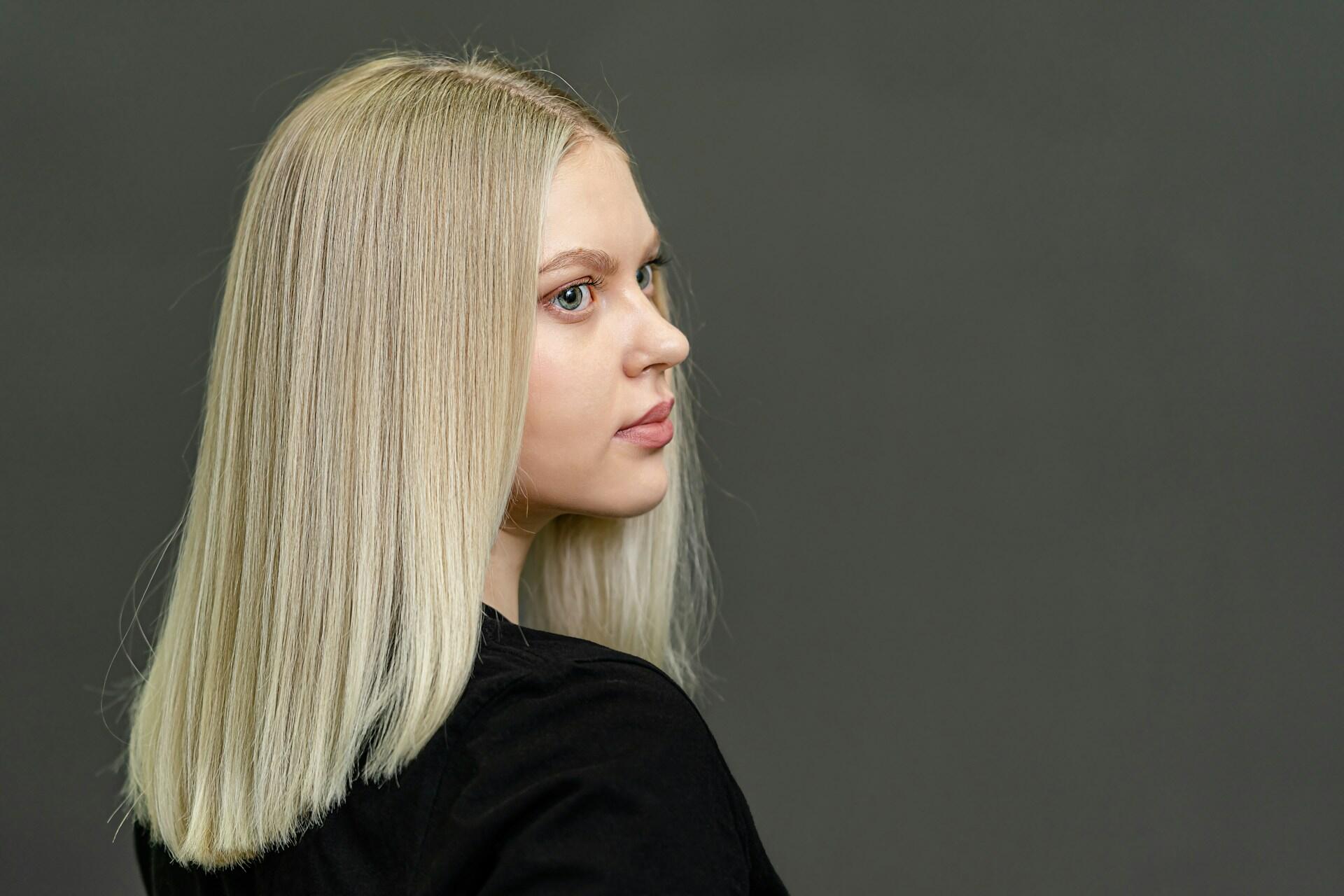
French Words for Colours of Hair
Describing hair colour in French calls for yet more vocabulary. In English, we’re fine with calling gingers red-heads and saying brunettes have brown hair. Blondes remain blond in English and in French. Otherwise, note these differences:
English description
- My brown hair
- She's a ginger.
- He's got red hair.
- Chestnut hair is great!
French description
- Mes cheveux bruns
- Elle et rousse.
- Il a les cheveux roux.
- les cheveux châtain sont chouette!
What NOT to say:
- Mes cheveux marrons.
- Elle a les cheveux rouges
- Il a les cheveux rouges.
- Les cheveux marrons sont beaux.
If you’re describing non-standard hair colours, you must use the colours’ standard forms: “Elle a les cheveux verts pâle”, for example. Note the word order in all of these examples: “He/she has the hair + colour + descriptor(s)”
Pro tip: French lessons often incorporate multimedia resources such as videos, audio recordings, and interactive exercises. These tools give you many ways to master hair colours in French.
Use French Colours as Everyday Expressions
If you’re like most people, you have a preferred colour palette.

Should that be the case, you would be no problem shopping for shoes and clothes in your favourite colours.
Standard requests like “Est-ce que vous avez celui en (enter colour here)?” - “Do you have this one in (my colour)?” should be easy for you.
Let’s say you’re searching for a flat in Paris. As you tour the room, you might exclaim, “Ces murs jaunes illuminent la pièce!”.
Using colour to describe the room’s brightness (rather than the natural light) will tip the rental agent off to your cultural competence.
The French language is nothing if not formal and polite. These qualities lend the language a poetic quality that more utilitarian tongues like English lack. You needn’t worry about coming off as a wannabe bard when speaking in flowery, descriptive language. On the contrary, you’ll fit right in with native French speakers.
Can All French Colours Be Verbs?
No, all French colours cannot be verbs. That's a privilege reserved for just a handful of them.
| 🤓Colour verb | 😀Sample sentence | 🔊What it sounds like | 📖Meaning |
|---|---|---|---|
| 💙bleuir | Il veux bleuir ses cheveux. | He wants to dye his hair blue. | |
| 💓rougir | Elle va rougir ses levres. | She's going to apply lipstick. (She's going to 'redden' her lips). | |
| 💚verdir | L'entreprise veut verdir son image de marque. | The enterprise wants to 'green up' its brand. | |
| 🤍blanchir | Les cheveux peuvent blanchir avec l'âge. | Hair can turn white with age. | |
| 🖤noircir | La haine fait noircir le coeur. | Hate blackens the heart. | |
| 💛jaunir | Les pâquerettes font jaunir les pattes des chiens. | Daisies turn dogs' paws yellow. | |
| 🔘griser | Le temps peux griser les murs des bâtiments. | Time can turn grey the walls of buildings. |
French colour verbs conjugate just like any other verb in French. You might be dismayed over your pork chop ‘qui a verdi’; with today’s prices, nobody could blame you. Or you might fret over your gran, qui a blanchi sous le harnais (who 'turned white' under the harness), meaning she's aged. For guided practice on these conjugations, try working with an online French teacher.
Use colours’ verb forms as often as possible. Doing so will help boost your French conjugation while helping you remember French colours.
The Cultural Significance of Colours in French Language and Art
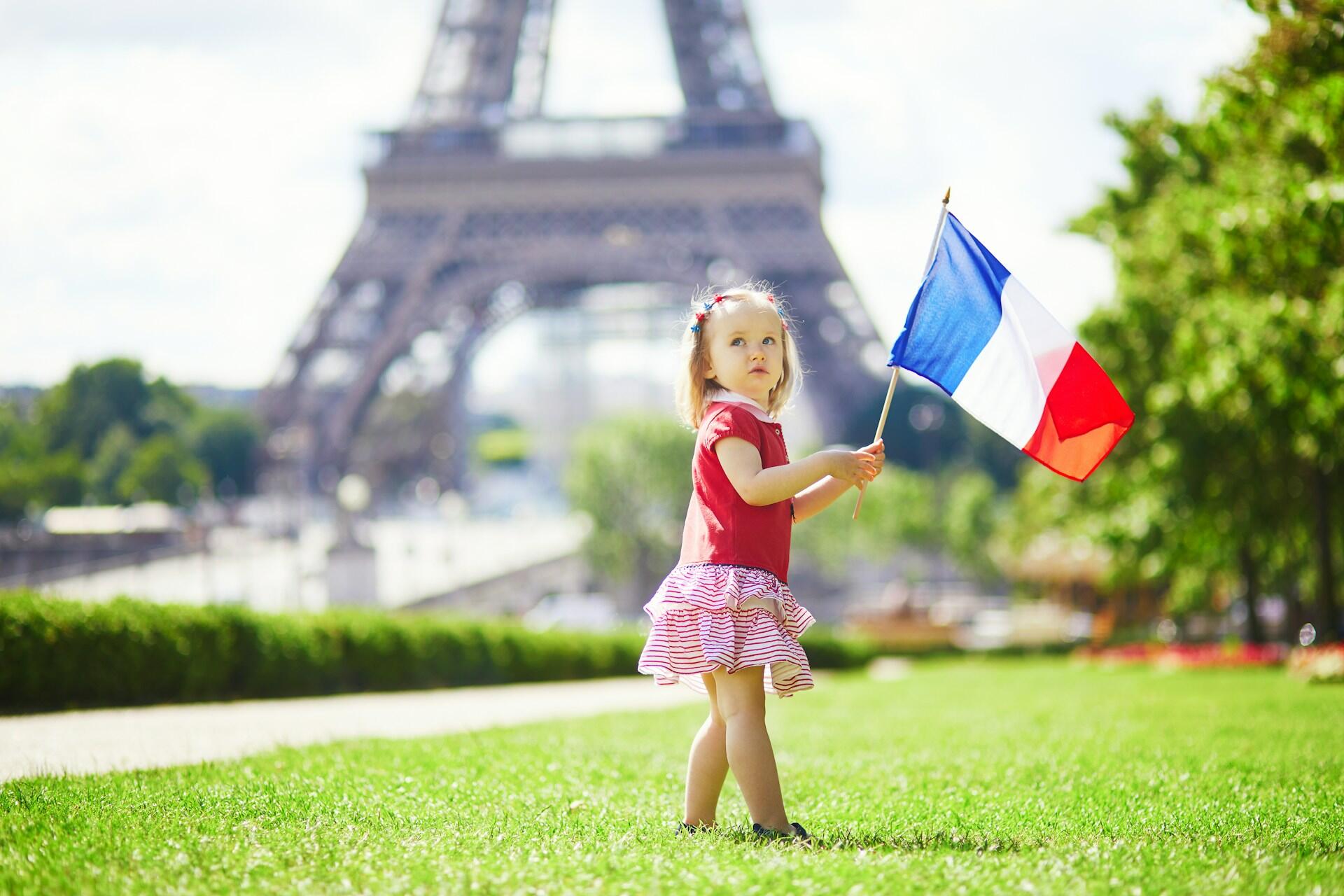
France is not the only country to have colour-named places. From le Mont Blanc to la Côte d’Azure, hues dapple the French landscape and language.
Bleu de France is a colour that holds cultural and historical significance in France.
It's a vivid, bright blue historically associated with the French monarchy.
Seen it on/in: national sports team uniforms, royal crests, and heraldry.
Find it online: search for Hex code: #318CE7
Bleu de France is a great example of how language, culture, and French colours overlap. In fact, the French attach meaning to the full spectrum of colours. Flip through this flashcard deck to learn all about them.
You might think of these interpretations as horoscope hoaxing or some such. However, the French take these colour meanings seriously. You should put as much effort into learning French colour interpretations as you do in mastering the proper goodbye for each situation.
French Words for Colours in Common Phrases
As colours in French are so culturally significant, having an entire catalogue of idioms built around colours should be expected.
However, the French usage of these words is different from the expressions we English speakers are familiar with. For instance, did you know that the French are seldom green with envy? If they describe themselves as green, it’s often with rage: “Je suis vert de rage!”.
Likewise, ‘je suis vraiment au rouge’, doesn't mean your friend is angry or burning with passion. Rather, they may be about to ask you for a tenner to tide them over because they’re ‘in the red’.
Online French lessons offer convenience and flexibility for learners worldwide. You can cover anything you like with a private tutor, including quirky French phrases like these.

The examples above are just the tip of the French colours idiom iceberg. Now, we plumb its depths.
To Be Embarrassed
Être rouge de honte represents extreme embarrassment. This idiom is close to the English 'shame-faced', as honte means 'shame', rather than embarrassed. Still, those emotions go hand-in-hand, so this phrase serves for both.
Scared Blue
Avoir une peur bleue invokes stark terror. Tu m'as donné une peur bleue! It is so much more evocative than 'You gave me a fright!', isn't it?
Sleepless Nights
Passer une nuit blanche means you didn't sleep a wink. Imagine being up all night with the lights on. The whiteness of light contrasts with the blackness of night.
What a Crowd!
Être noir de monde is about the same as 'a blackout crowd' in English: wall-to-wall people, such that you can't see anything.
In Low Spirits
Faire grise mine is roughly equal to our 'in a grey mood'. It comes from the idea that one may look ashen when they feel down.
Rose-Coloured Glasses
Voir la vie en rose is perhaps France's most famous colour idiom, as popularised by the eternal chanteuse, Edith Piaf. It signals optimism. If you see la vie en rose, you have a sunny, happy outlook on life.
French Colours: Grammar Notes for Using Colours
Like most adjectives in French, colours must agree in gender and number with their noun.
A black hat (singular, masculine) = Un chapeau noir
A black dress (singular, feminine) = Une robe noire
A pair of shoes (plural, feminine) = Des chaussures noires
The black trousers (plural, masculine) = Des pantalons noirs
Not all colours change form in the feminine. Vert becomes ‘verte’ and noir turns into 'noire', but rouge will remain rouge regardless of gender. Other colours with feminine forms are:
blanc - blanche
violet - violette
gris - grise
Colours in French: Word Order
In French, colour adjectives follow the object they describe: 'La voiture jaune' is correct; 'la jaune voiture’ is not.
Also, the colour progression is enforced: colour first, then shade, then tone. Consider these examples:
Une voiture bleu-gris moyen (A medium grey-blue car)
Une jupe en rouge foncé (A dark red skirt)
French Colours That Don't Follow the Rules
Secondary descriptors remain grammatically masculine regardless of the object they describe. For example: Une jupe en rose foncé (a dark pink skirt) does not get a second E. In this case, foncé describes the colour pink, not the (grammatically female) skirt.
Examples: les chemises orange; les chaussettes olive; des bagues turquoise.
Example: une voiture bleu clair (a light blue car) — "bleu clair" doesn't change to accord with the feminine 'voiture'.
des jupes mauves (mauve skirts)
des robes pourpres (purplish-red dresses)
Knowing these rules helps avoid common grammar mistakes in French writing and speech. This summary will help you master them quickly.
Summary: Grammar Rules for French Colours
- Five French colours have feminine forms: noir, vert, blanc, violet, gris
- In most cases, those colours accord with grammatical gender and number.
- When used as compound colours, they do NOT accord with gender or number
- Some colours derived from nouns do not change form, while others do.
Learning your colours in French is part of the language-learning experience. Learning how to use colours to communicate your feelings is as important as using the right hello at the right time. Both will ensure your access and acceptance into French society.
Summarise with AI:
Enjoyed this article? Leave a rating!

 Loading...