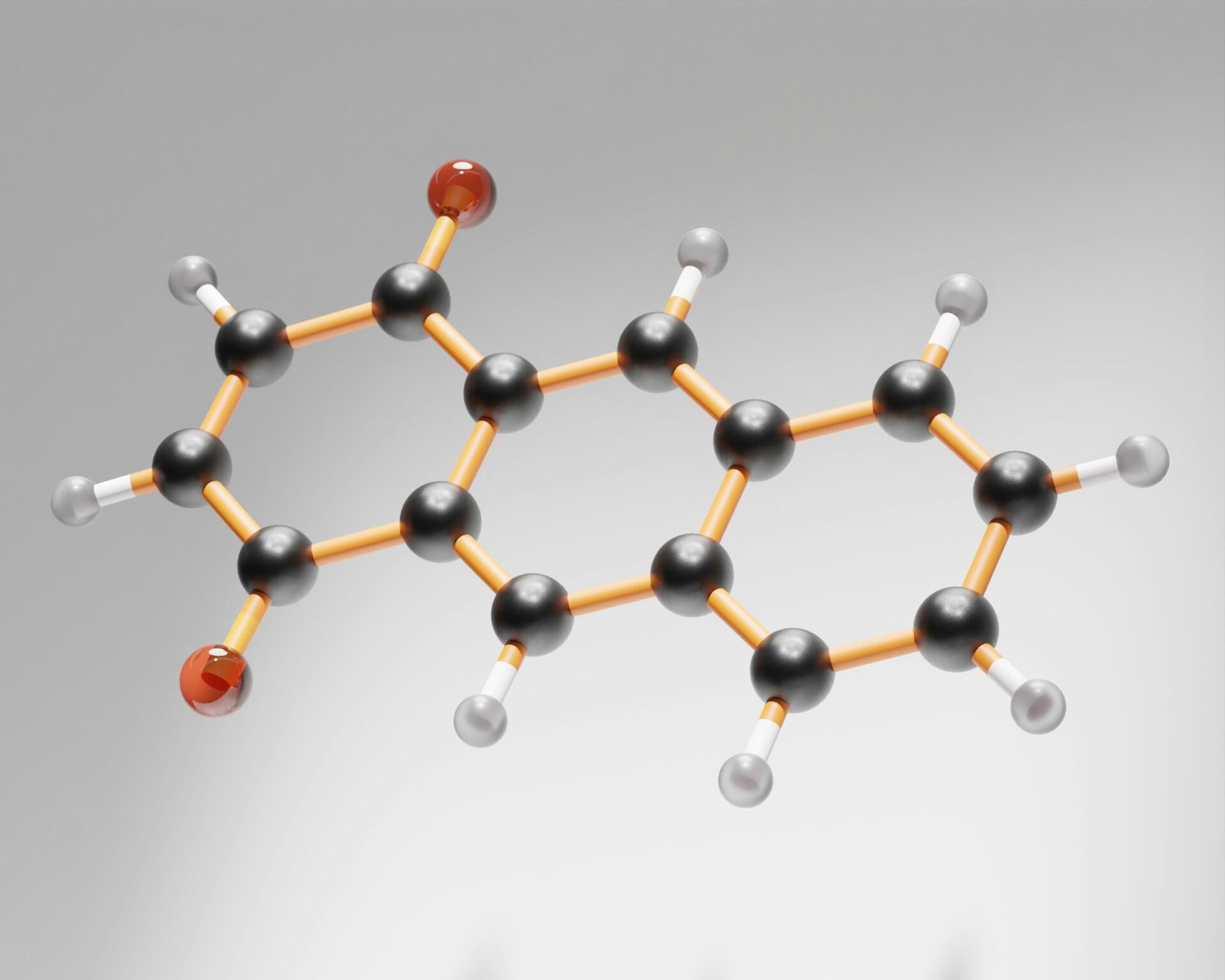

Thousands of students across the country will be sitting their GCSE chemistry exams in the summer. With changing mark schemes, and increasingly hard questions, they need to develop a revision strategy, and fast. In this article, Superprof lays out the steps to take for solid exam preparation, and exam success.
Key Takeaways: How to Revise for Chemistry GCSE
- Know your challenge: an overview of AQA Chemistry GCSE
- AQA Chemistry GCSE grading and grade boundaries
- Chemistry GCSE revision strategies
- Revision timeline and resources








AQA GCSE Chemistry Specification

Savvy students know they must do plenty of chemistry revision, but going over and over one's notes does not qualify as a sound strategy. For one, because it's a memory exercise, not a review of knowledge you possess.
For two: unless you've organised your notes to AQA's specification, combing through what you wrote over the past two years will do you no good.
Exam questions could be set in unfamiliar contexts. You might have to link together ideas that your notes don't suggest may be linked.
This is how exam boards test your knowledge and understanding of the subject, rather than just your ability to memorise.
This exam tests your ability to apply what you know.
It doesn't question how much, or how well, you remember chemistry facts.
The key to mastering your topic is to constantly test your knowledge, within the framework of the AQA specification. Doing all the past chemistry papers you can find is a part of this strategy, that you'll apply towards the end of your revision timeline.
In this article's last chapter, you'll find a timeline to build your revision schedule around. Here, we continue detailing the AQA Chemistry GCSE specification.
Your exam consists of two papers, each allows you one hour and 45 minutes to complete it. They are each worth up to 100 marks, and each is 50% of your total grade. They both feature multiple-choice, open-response and closed, short-answer questions. However, they differ on the subjects covered:
Paper 1 topics
- the periodic table, and atomic structure
- matter: bonding, structure, and properties
- quantitative chemistry
- chemical changes
- energy changes
Paper 2 topics
- chemical change: rate and extent
- organic chemistry
- chemical analysis
- chemistry of the atmosphere
- using natural resources
Some of your second paper's questions rely on topics you explored in your first paper, particularly chemicals' atomic structure, bonding, and properties. You will also rely on the periodic table to answer some Paper 2 questions, but your exam booklet contains a table. No need to stress over memorising atomic mass and proton numbers.
Maths in the Chemistry GCSE Specification AQA
Your Chemistry GCSE calls for some maths, but it's not particularly difficult. You'll use arithmetic for expressions in standard and decimal forms. You'll also use fractions, percentages, and ratios to define values.
Graphing may pose a bit of a challenge. You'll graph rates of change and convert graphical information into numerical form. Geometry and trigonometry play a small role, too. You'll calculate volumes and surface areas of cubes, and other shapes.
Students will convert numerical values into units for physical quantities in equations.
Around the time GCSE revision heats up, internet searches spike for 'How to balance equations chemistry GCSE'. Aspects of algebra that feature on your exam include these exercises, as well as changing the subject of an equation. Below, you will find tips to maximise your score but, next, we talk about this specification's grading scheme and boundaries.
Chemistry Specification GCSE AQA: Grades and Boundaries
Starting in 2017, our Department for Education (DfE) worked with exam boards to establish a fairer grading system for GCSEs. Now, in 2025, the changeover is complete. Students will receive grades ranging from 1-9, rather than A-D and below.
However, the grade boundary system remains. This system aims to make access to higher education more equal, by balancing the total number of students sitting exams across a spectrum. Exam boards set these boundaries after all exams are marked, analysed, and scaled.
Students have no input or control over setting grade boundaries.
Exam boards set boundaries only after all exams have been marked.
At the end of the 2024 exam cycle, grade boundaries were very generous. As this chart shows, last year's GCSE candidates could miss up to 51 points and still earn a Grade 9.
| 🕴Exam level | ✅Available marks | Grade 9️⃣ | Grade 8️⃣ | Grade 7️⃣ | Grade 6️⃣ | Grade 5️⃣ | Grade 4️⃣ | Grade 3️⃣ | Grade 2️⃣ | Grade 1️⃣ |
|---|---|---|---|---|---|---|---|---|---|---|
| Foundation | 200 | --- | --- | --- | --- | 133 | 112 | 82 | 53 | 24 |
| Higher | 200 | 149 | 130 | 112 | 90 | 68 | 46 | 35 | --- | --- |
Many factors go into calculating grade boundaries. For instance, if an exam is particularly difficult, exam boards will take that into account. Likewise, if many students all answer the same questions incorrectly, examiners know the fault lies in the teaching, or with the question itself.
Students found this question difficult. A common misconception was ...
From AQA Examiner's Report, June 2023
If many students have trouble with the same question, exam boards will take that into consideration when setting their grade boundaries. In most cases, they will revise the exam to incorporate more easily understandable questions. Also, the exam board will adjust teaching resources to stress guidance on that aspect of the exam.
You can get an idea of these strategies by reading each year's Examiner Reports. These papers summarise the exam board's general findings about the exams, as well as insights into each question's responses. These reports are a great tool to begin your revision because:
Final Tip on Grades and Grade Boundaries
Many students fret over where and how their exams' grade boundaries will be. They wonder how many points - what percentage, they should aim for, to earn a pass.
Whether foundation or Higher, Grade 4 is passing. Grade 5 is a solid pass.
However, that doesn't tell you much, because grade boundaries shift with every exam. So, it's best to focus your energies on solid revision, and building test-taking strategies.
How to Revise for GCSE Chemistry
In this article's introduction, you read that the first step to prepare for your challenge is knowing what you're up against. Everything you read so far, about the GCSE Chemistry specification, and the grade boundaries, lays that out for you.
You likely also caught the hint about reading through examiners' reports, too. Some students overlook those, while others wait until much later in their exam revision timetable.

The wise student will comb through past papers, marking schemes, and examiners' reports when they start their Chemistry course. Or, better yet: over the summer, before classes begin. They will also mark their calendars for critical exam cycle dates.
Chemistry Paper 1 date: Monday, 19 May
Paper 2 date: Friday, 13 June
Results Day: Thursday, 21 August
Chief Examiner’s Reports
Start with reading the Examiner’s Report. There is a report written every year after exams are taken which details students' efforts, and where or how they could have done better. Reading this will help you avoid common mistakes, including:
| 🤦♀️Mistake | ❌Example | 🙆♂️Mistake-avoiding strategies |
|---|---|---|
| Failing to prepare properly | Waiting until the last minute to start revising | Create revision tools as you study. Make visuals - mind maps and sticky notes Build flashcard decks |
| Failing to follow instructions | Writing a description when asked for an explanation. | Read instructions carefully. Identify and underline the command word. Verify you've done as the question asks. |
| Confusing terms | Writing 'adsorption' instead of 'absorption' | Build a glossary of key terms for each topic. Test yourself on how you would use them in an exam. Practice writing 'model' answers to common questions. |
| Running out of time | Writing incomplete answers. Not answering the last (few) question(s). | Take mock exams to get used to exam timing. Answer questions you know first, regardless of order. When in doubt, trust your instincts (rather than hesitating) |
Read the Mark Scheme
Once you've made note of those common mistakes, read through past papers' marking schemes. These documents explain how points were assigned, and why students lost points.
This early in your revision timetable, mark schemes serve to help you identify weaker areas in your knowledge. If you are struggling with a particular chemistry topic, highlight it so you can ask your teacher for help. Or, work with an online Chemistry tutor to sort things out.

Gather Revision Tools
A dedicated study space - a desk in a quiet room, with no distractions, is a fundamental resource you will return to again and again. Once you've secured such a space, you may populate it with:
- Past papers - an essential tool for chemistry revision
- Textbooks and workbooks
- Mind maps: visual tools to help you draw connections between related chemistry concepts
- Flashcards: pocket-sized revision materials, to study while you're on the go
- Writing tools: pens, pencils, highlighters, notepads, sticky notes
These resources are available in digital and 'analogue' forms. Many students prefer digital tools but we can make a stong case for relying on creating physical copies by hand.
Writing by hand reinforces memory pathways and enhances comprehension and retention.
Cognitive psychology studies show that using digital tools does not offer the same benefit. This conclusively proves that your penmanship is one of the best resources to use as you revise.
Create a Revision Timetable
Congratulations! You're now at the end of your two-year learning journey, soon to sit exams. This is when you take charge of your revision, but how to go about it? Building a revision timetable can add structure to your revision techniques, and help you identify which topics you need to prioritise. Such a timeline might look like this:
Monday, 6-8pm
Revise atomic structure, bonding, and matter properties
Consolidate knowledge on mind map; create flashcards
Tuesday, 6-8pm
Rate and extent of chemical change
Use formulas to define
Wednesday, 7-8pm
Practice balancing chemical formulas
Thursday, 6-8pm
Organic chemistry
Revise from notes and textbook
Friday
Take the night off!
Saturday, 3-5pm
Atmospheric chemistry
Sunday, 3-5pm
Mock exams
Alternate between papers; grade your results using mark scheme
Don't hesitate to put fun activities on your timetable too. If you've got a friend's birthday one evening put it on the timetable! It will serve as a great motivator to get your work done so you can go enjoy yourself afterwards.
We can't stress enough that this exam is about demonstrating your knowledge - not regurgitating it. Should you need help getting organised, or understanding the exam's subject content, a few sessions with a GCSE chemistry tutor can help. Superprof has chemistry tutors standing by, ready to guide your efforts.
Summarise with AI:
Did you like this article? Leave a rating!

 Loading...