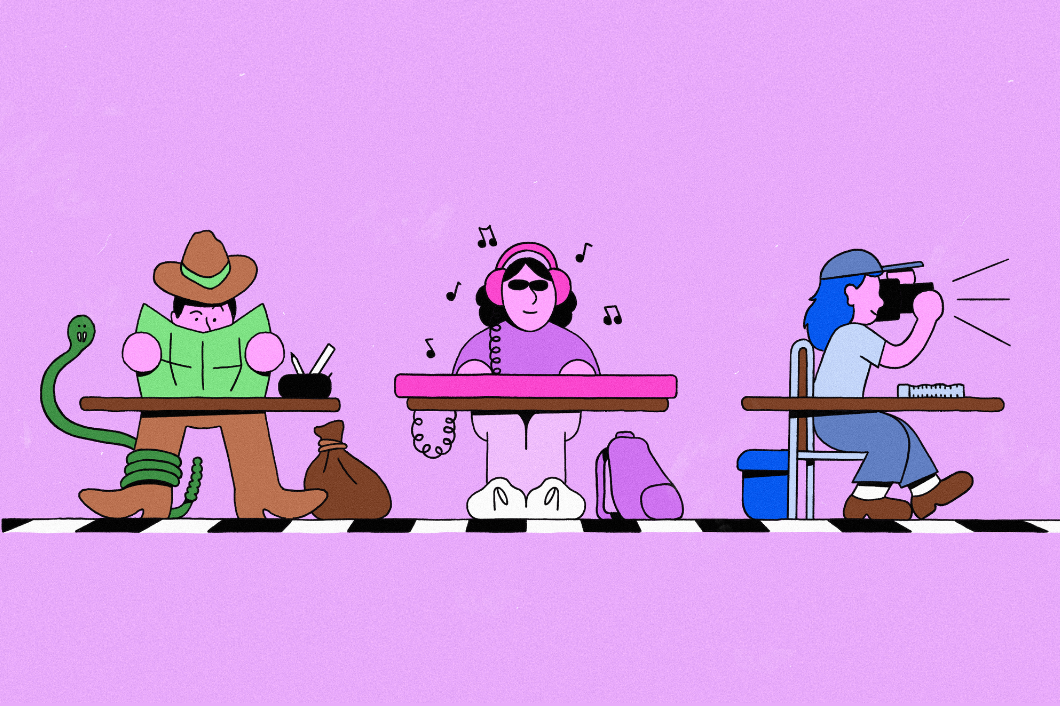

Choosing your GCSE options is one of the first big decisions you get to make about your own education. At 13 or 14, that can feel like a lot of pressure.
Your GCSE options are the subjects you choose to study alongside your core subjects. Core subjects are the ones nearly everyone takes, such as English, maths and science. Your options shape your timetable for the next two years, so it's worth picking subjects you'll enjoy and can do well in.
If you're wondering "what GCSE subjects should I take?", this quiz is a fun place to start. Answer 15 questions about how you like to think, learn and spend your time, and we'll match you with one of six subject areas that might suit you best. It won't replace advice from your teachers, but it might help you see what really motivates you. Ready? Let's find out.
Quiz
Quiz :


How to Choose Your GCSE Options 🧭
Treat your quiz result as a starting point, not a verdict. Plenty of students fall between two result types, and a mix of interests is a good thing. When you make your final choices, keep these points in mind:
- Pick subjects you enjoy and do well in. You'll study them for two years, and motivation makes a real difference to your grades.
- Think ahead, but not too far. If you have an A-level or career in mind, check whether it needs a particular GCSE. Sixth forms often set a minimum grade in a subject before you can take it at A-level.
- Keep doors open if you're unsure. A balanced mix, such as a humanity, a language and a creative or practical subject, keeps lots of routes available.
- Know what kind of qualification it is. Some courses in your options booklet, especially in IT, may be vocational qualifications rather than GCSEs. They can be just as worthwhile, but it's worth checking how sixth forms and colleges treat them.
- Choose subjects, not people. Your friends may end up in different classes, and teachers can change.
- Ask questions at options evening. Find out what the course involves, what current students think of it and where it can lead.
It also helps to know how each subject is assessed. Exact weightings vary between exam boards, but here's a general guide:
| Assessment style | Example subjects | Might suit you if you... |
|---|---|---|
| Mainly written exams | History, Geography, Religious Studies | Enjoy revising and performing under timed conditions |
| Exams in speaking, listening, reading and writing | French, Spanish, German | Like using what you learn in conversation |
| Portfolio and practical assignments | Art and Design | Prefer working steadily on long projects |
| A mix of coursework and exams | Design and Technology, Drama, Music, IT courses | Want to balance hands-on work with theory |
When Do You Choose Your GCSE Options? 🗓️
Every school runs its own timetable, but in England the process usually follows a similar pattern:
Year 8
Taster lessons and careers guidance begin.
Year 9 - Autumn Term
Your school introduces the options process.
Year 9 - Spring Term
Options evening, then you submit your choices plus a reserve subject.
Year 9 - Summer Term
Your school confirms your subjects.
Year 10
Your GCSE courses begin.
The spring term is usually the busiest point, so try to start thinking about your options before then. Use the autumn term to talk to teachers, ask older students about their subjects and look at the course content for anything you're unsure about.
Common Myths About Choosing GCSE Options 🤔
Not usually. Most sixth forms accept Combined Science for science A-levels, though they may ask for higher grades. Check the entry requirements for the sixth forms or colleges you're considering.
Many do. Lots of degree courses set minimum GCSE grades, especially in English and maths, and competitive courses may look closely at your overall GCSE results.
No subject is easy for everyone. The subjects you enjoy are usually the ones you'll work hardest at, and those tend to be where you get your best grades.
Your choices matter, but they rarely close doors for good. Many A-levels don't require a GCSE in the same subject, so ask your sixth form if there's something new you'd like to try later on.
The EBacc Is Going: What That Means for You 🏫
For years, many schools steered students towards the English Baccalaureate (EBacc). The EBacc is a combination of English, maths, science, a language, and either history or geography.
That is now changing. In November 2025, the government confirmed it would remove the EBacc and reform the Progress 8 performance measure to encourage students to study a wider range of GCSEs, including the arts, humanities and languages1. The aim is for schools to take the revised measure into account when setting subject choices for students starting GCSEs in September 2027.
This could mean more freedom to choose creative or technical subjects. Schools will adapt at different speeds, though, so ask how your school's option blocks work this year. The EBacc mix is still a strong, well-rounded combination. It just won't be the measure schools are judged on.
There's no single "right" set of GCSEs. There's only the combination that fits your interests, strengths and plans right now. Use your quiz result to start a conversation with your parents, teachers and careers adviser. Your options can open doors for you, and they rarely close any for good.
Which GCSE subject are you planning to take?
References
- Schools Week. "DfE ignores Francis review and proposes sweeping Progress 8 reform." Schools Week. https://schoolsweek.co.uk/dfe-ignores-francis-review-and-proposes-sweeping-progress-8-reform/. Accessed 6 Oct. 2026.
- Tes. "Curriculum and assessment review: 14 key points." Tes Magazine. https://www.tes.com/magazine/news/general/curriculum-and-assessment-review-key-recommendations. Accessed 6 Oct. 2026.
Summarise with AI:
Did you like this article? Leave a rating!

 Loading...