

Two of the poems that are on the GCSE syllabus that you may study during your course are Ozymandias and My Last Duchess. The two are often the subject of comparison and analysis due to the fact that they share certain themes and poetic and literary devices.
In this guide, we’re exploring some of the similarities as well as the differences, helping people to write GCSE essays or plan for exams.
The two poems prove to be a study of hubris and power dynamics. They both present similar themes in different ways, but the writers clearly have similar messages that they wish to get across in the lines of their poems.


Comparative Overview: My Last Duchess & Ozymandias
| Feature | Ozymandias | My Last Duchess |
|---|---|---|
| Author | Percy Bysshe Shelley | Robert Browning |
| Publication Date | 1818 | 1842 |
| Form | Sonnet (Petrarchan) | Dramatic Monologue |
| Rhyme Scheme | ABABACDCEDEFEF | Rhymed couplets (AABBCC...) |
| Structure | 14 lines | 56 lines |
| Narrative Voice | First-person narrator recounting a traveler's tale | First-person (Duke of Ferrara) |
| Setting | Desert with a ruined statue | The Duke's gallery displaying the Duchess's portrait |
| Main Themes | Transience of power; hubris | Power; control; jealousy; art vs. reality |
| Tone | Reflective; ironic | Controlling; proud; sinister |
| Imagery | Ruined statue; vast desert | Portrait of the Duchess; the Duke's descriptions |
| Symbols | Statue of Ozymandias; inscriptions | Portrait of the Duchess; Neptune taming a seahorse |
| Irony | The mighty statue now lies in ruins highlighting the ephemeral nature of power | The Duke reveals his own monstrous nature while trying to present himself as sophisticated |
| Character Analysis | Ozymandias: Proud; powerful; but ultimately forgotten | Duke: Authoritarian; possessive; possibly murderous; Duchess: Innocent; cheerful; unassuming |
| Moral/Lesson | Power is fleeting and will eventually fade | Obsession with control and power can lead to destructive behavior |
Summary of Ozymandias
Ozymandias is a sonnet by Percy Bysshe Shelley, and it is on the GCSE curriculum, like My Last Duchess. This poem delves into the theme of the insignificance of human achievements and the inevitable decline of all empires, with a focus on entropy.
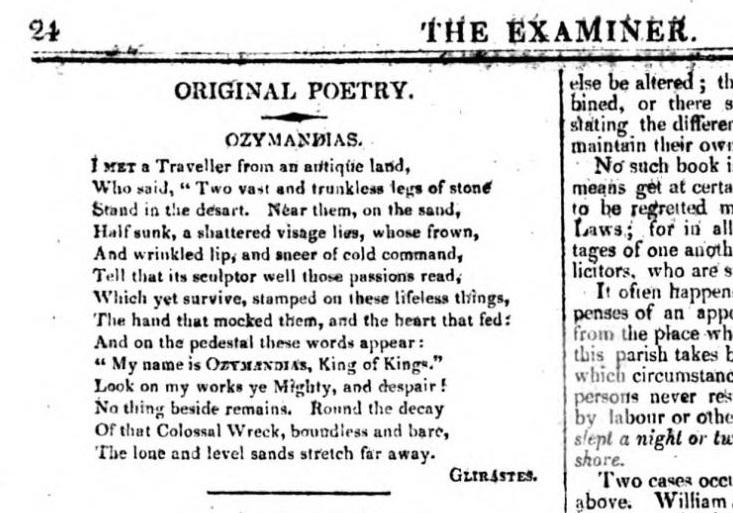
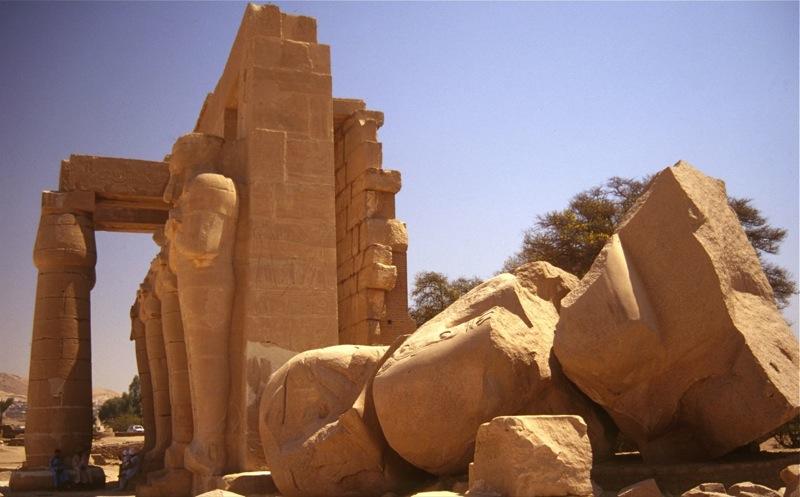
The poem begins with the narrator recounting a story told by a traveller from an ancient land. The traveller describes coming across the ruins of a once-mighty statue in the desert. The statue, now fragmented and eroded, consists of two vast legs and a shattered visage lying nearby, half-buried in the sand.
Despite its broken state, the facial expression of the statue, with its frown, wrinkled lip, and sneer of cold command, conveys the character and arrogance of the ruler it once depicted. You can see how this is a representation of the insignificance of human empires and the message that over time, even great empires crumble.
At the base of the statue, an inscription reads:
"My name is Ozymandias, king of kings; Look on my works, ye Mighty, and despair!"
This proclamation of greatness and command for awe contrasts sharply with the surrounding scene of desolation, where nothing remains of Ozymandias’s empire but the decaying statue.
Through the juxtaposition of the proud declaration and the stark reality of the eroded ruins, Shelley underscores the nature of power and the hubris of rulers who believe their legacies will endure forever. The poem suggests that time and nature ultimately erode all human constructs, reducing even the greatest monuments and empires to dust.
Ozymandias's once-great works have vanished, leaving only a faint, ironic reminder of his ambition and arrogance.
Ozymandias serves as a powerful commentary on entropy and the inevitable decline that follows even the most grandiose human empires. It is a poignant reminder that no matter how mighty one's achievements may seem, they are ultimately subject to the ravages of time and will fade into obscurity.
Through this evocative imagery and ironic tone, Shelley invites readers to reflect on the fleeting nature of human glory and the enduring power of time and nature.
Summary of My Last Duchess
An analysis of My Last Duchess is something that many GCSE students will need to carry out.
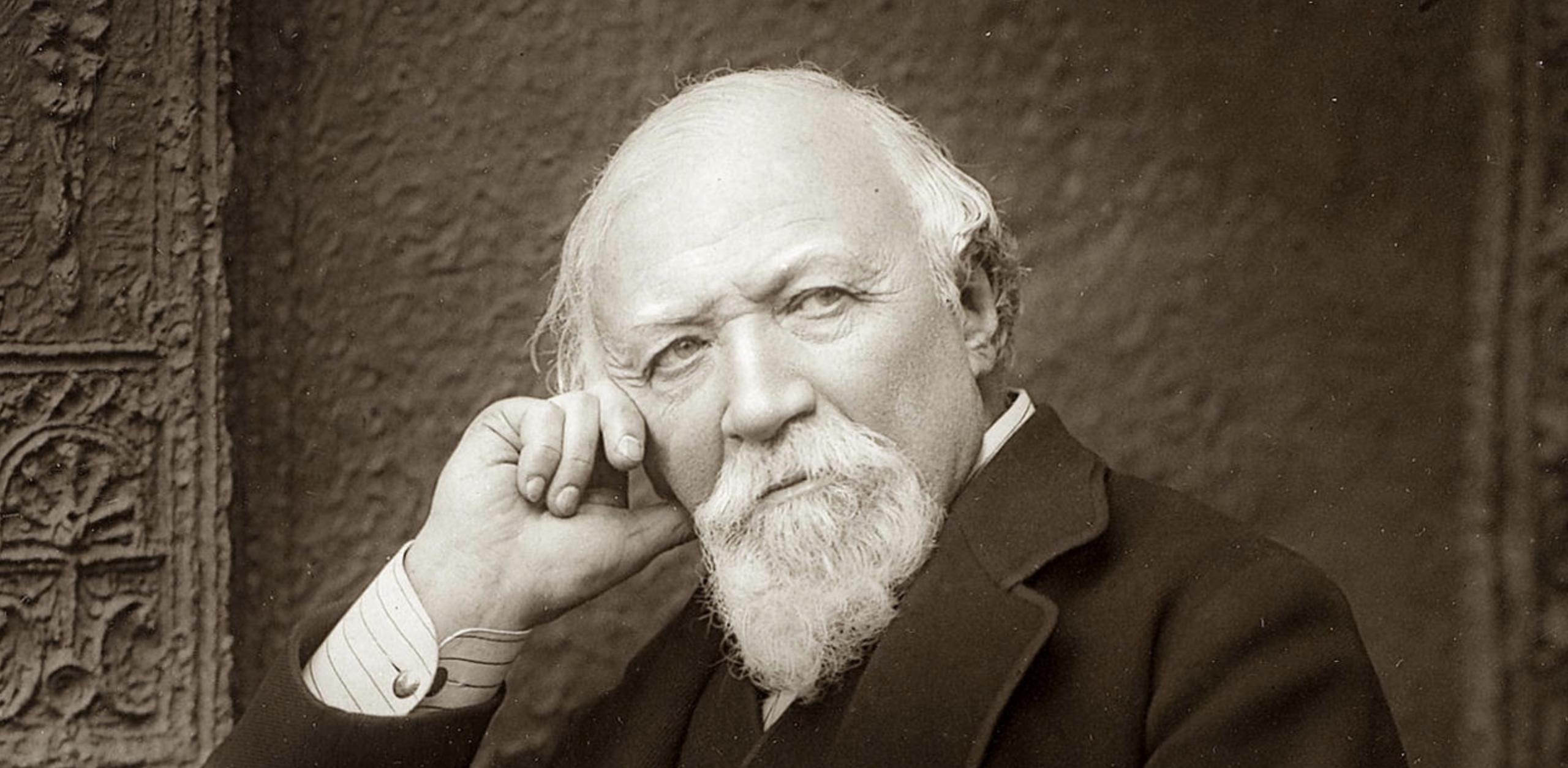
This poem is a dramatic monologue by Robert Browning, reveals the controlling and arrogant nature of a Duke as he describes a portrait of his late wife to an emissary visiting him. The poem is set in Renaissance Italy and opens with a Duke showing a portrait to the envoy, who (it is revealed later in the poem) is there to negotiate a new marriage for the Duke. As he describes the painting, the Duke reveals much about his character and his relationship with his deceased Duchess.
The Duke's narrative subtly unveils his obsessive need for control and his jealousy. He reveals that the Duchess was a cheerful and friendly woman who found pleasure in simple things, such as sunsets, gifts, or compliments from others. However, the Duke was displeased by her behaviour, feeling she did not value his "gift of a nine-hundred-years-old name" and instead treated all gestures and people with equal appreciation. The Duke was clearly paranoid and did not appreciate her approach to others.
The poem’s tension escalates as the Duke casually mentions:
"I gave commands; Then all smiles stopped together."
This spine-chilling line suggests that the Duke, unable to control his wife’s behaviour and embarrassed by her perceived indiscretions, had her killed. Despite this dark confession, the Duke’s tone remains detached and matter-of-fact, emphasising his cold nature and revealing how he thought of his Duchess as a possession.
Robert Browning spent much of his life in Italy, where the poem was set. He uses this dramatic monologue to explore themes of power, control, and the objectification of individuals. The Duke is a self-centred man, and the poem is a dramatic monologue which allows him to explore these selfish themes.
The poem's simple plot concludes with the Duke moving on to discuss another artwork, a sculpture of Neptune taming a sea-horse, further illustrating his need to dominate and his objectification of both people and art.
My Last Duchess serves as a critique of patriarchal power and the dehumanising effects of seeing people (women in particular) as mere objects to be controlled. Through the Duke’s own words, Browning reveals the dark side of the character. Our full My Last Duchess critical analysis looks further into the themes in this poetic masterpiece.
Study in Power Dynamics
Power is a key theme in both of these poems. Ozymandias sees the power dynamics illustrated through the ruins of a statue that once represented the might of a great king.
The surrounding desolation of the statue, and the "colossal wreck" and "boundless and bare" sands, shows that the power in his life was ultimately insignificant.
The irony of the poem lies in the contrast between Ozymandias's arrogant proclamation and the current state of his legacy, reduced to ruins by time.
Within My Last Duchess, the dynamics are slightly different, but power is once again under the spotlight.
The Duke’s monologue reveals his authoritarian nature and his desire for control over the Duchess, both in life and in her representation through art. His discontent with the Duchess's behaviour, her perceived lack of exclusive appreciation for his status and gifts, leads him to "give commands" that result in her death.
His interaction with the emissary also demonstrates his domineering personality, as he subtly but unmistakably communicates his expectations for his next marriage in a very one-way conversation. Through the Duke's narrative, Browning critiques the patriarchal and possessive nature of power, illustrating its dehumanising and destructive effects.
You could say that both poems are in their own way, a critique of power.
Themes of Decay and Hubris
Both poems use the themes of decay and hubris to critique the nature of power and its limitations.
Ozymandias:
Hubris: The poem centres around a once-grand statue of the ancient king Ozymandias.
Decay: Despite Ozymandias's grand claims, the statue is now broken and eroded, lying in pieces in the desert. Additionally, the vast, barren desert further emphasises the theme of decay.
My Last Duchess:
Hubris: The Duke of Ferrara speaks with a sense of superiority and entitlement, showcasing his hubris.
Decay: While the Duke admires the lifelike quality of the portrait, it also serves as a reminder of the Duchess’s death and the decay of their relationship. The Duchess' untimely demise represents the moral and ethical decay within the Duke.
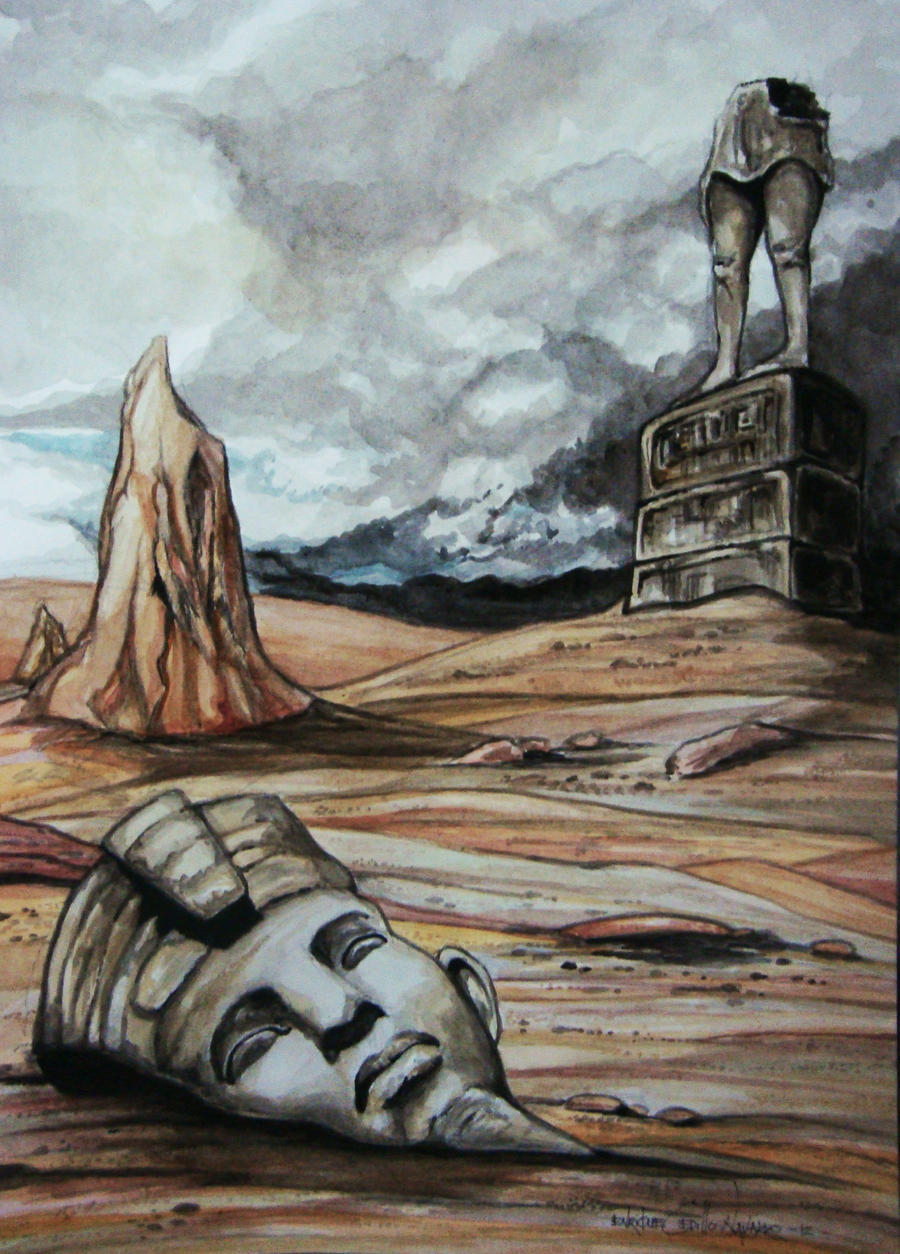
In Ozymandias, the physical decay of the statue serves as a metaphor for the inevitable downfall of those who seek to immortalise their power through these kinds of monuments. The Pharaoh's hubris is rendered meaningless by the relentless passage of time, illustrating the transience of human achievements.
In My Last Duchess, decay is more personal and psychological, reflecting the Duke's corrosive influence on those around him. His hubris manifests in his desire to control and dominate, resulting in the literal and figurative death of the Duchess. Unlike Ozymandias, whose legacy is in tatters, the Duke's arrogance leads to a more immediate and intimate form of decay, as he destroys the spirit of those under his power.
Both poems ultimately convey a powerful message about the dangers of hubris and the impermanence of human power.
Narrative Voice
Ozymandias
Layered narrative voice
Firs-person perspective
My Last Duchess
Dramatic Monologue
Unbroken Narrative
Shelley employs a layered narrative voice in Ozymandias. The poem begins with the first-person perspective of a narrator who recounts a story told by a "traveller from an antique land."
This framing device creates a sense of distance and layers of perspective, emphasising the passage of time and the fading of memories and achievements.
Browning uses a dramatic monologue, where the Duke of Ferrara speaks directly to an emissary arranging his next marriage. This single, unbroken narrative voice provides deep insight into the Duke’s character and his perception of power and control.
Both narrative techniques are effective, Ozymandias using a more distanced and reflective approach to convey the overarching theme of the impermanence of human achievements, while My Last Duchess employs a direct and personal narrative to expose the destructive nature of hubris and arrogance.
Summarise with AI:
Did you like this article? Leave a rating!


 Loading...
