

In these stressful times, it's no surprise that students wonder whether higher education is worth it. Let alone for a subject like Geography. The answer to both those questions is 'Yes'. In fact, a Geography degree is one of today's most valuable.
The first and most obvious reason is our climate emergency. As I write this, Spain is reeling from flooding rains, and the UK has had one of its wettest summers on record. We've many other reasons that prove the need for geography skills; you'll find them throughout this article. But, first things first: this is what you will learn from a Geography degree:
- skills such as data analysis and software applications, that apply across many industries
- a global perspective, on everything from politics and economy to climate and ecology
- understanding society, and its impacts on the physical environment
- transferable skills: communication, critical thinking, problem-solving, and leadership








The Geography Degree Curriculum

In the United Kingdom, the Department for Education (DfE) sets the curriculum for primary and secondary schools. It also determines General Certificate of Secondary Education (GCSE) and Advanced-Level (A-Level) subjects.
What those subjects cover, and the topics students learn, are under constant review. The curriculum is routinely updated to include new information. So, choosing Geography A-Levels means you'll find roughly the same curriculum, regardless of which exam board your school uses.
That's not the case at the university level. These institutions have the latitude to set their own curriculum.
Mandatory and Optional Courses Across the UK, university Geography degree plans present a blend of core subjects, and a long list of elective topics to choose from.
In the days when the Royal Geographic Society (RGS) formed, it had a lot of input on what geography students learned. That was more than 100 years ago. Today, the RGS does not advise universities on curriculum elements. However, the Society publishes a lot of papers, which universities might use to inform their curriculum choices.
Across the UK, mandatory topics are much the same. Though their titles may be different from one campus to the next, these are core course components:
- key geographical concepts
- human geographies
- environmental processes
- environmental change
- physical geography
- urban studies
Mandatory courses first-year university Geography students revolve around those topics. Besides them, those students will have a few 'tutorial' classes, to help them get used to university-level learning. And, they will have a few optional subjects to choose from - but not many, in their first year. Your university Geography course guide describes them, and other aspects of geography study.

Choosing Optional Courses
Geography is a wide-ranging field. If universities offered degree plans for every speciality, their Faculties of Geography would take up the entire campus! So, rather than trying to manage such complexities, many universities offer several degree plans that all include the core components.
And then, they offer a list of optional selections, tailored to students' learning and career goals. Here, we contrast two degree plans, and the options that best serve their aims:
BA Geography optional courses
- intro to Geographical Information Systems (GIS)
- economic geography
- critical geographies
BSc Geography optional courses
- globalisation
- environmental pollution
- climate change
- social-cultural geography
Students applying for the Bachelor of Science Geography degree may have planned on one of the technical careers in geography. They may have paired their Geography A-Level with Biology or Chemistry, to earn their place in this more demanding programme. So, it's reasonable that they would choose optional subjects that cultivate such knowledge.
By contrast, the Bachelor of Arts Geography student might have been unsure where their direction lies. They may nurture a passion for social justice, or have an interest in politics, as well as geography. Or, they may be of an artistic bent, and map-making is their height of aspiration.
The first is that both pathways are worthwhile.
The second demonstrates how broad this study field is.
So far, we've talked a lot about Geography course subjects. We haven't said much about what you'll learn from a Geography degree. Those subjects, the mandatory ones and those you choose, are just the start. Get set to learn much more than that.
Geography Skills You Learn
The world's diversity: its habitats, systems, and creatures. That is the most important geography concept you'll master during your studies. You might already know that, as a by-the-by fact. Your geography courses will drive that point home.
With your greater awareness comes an instinct for stewardship. You'll discover a sense of responsibility to the krill that make up whales' meals, and to the forest, home to so many species.
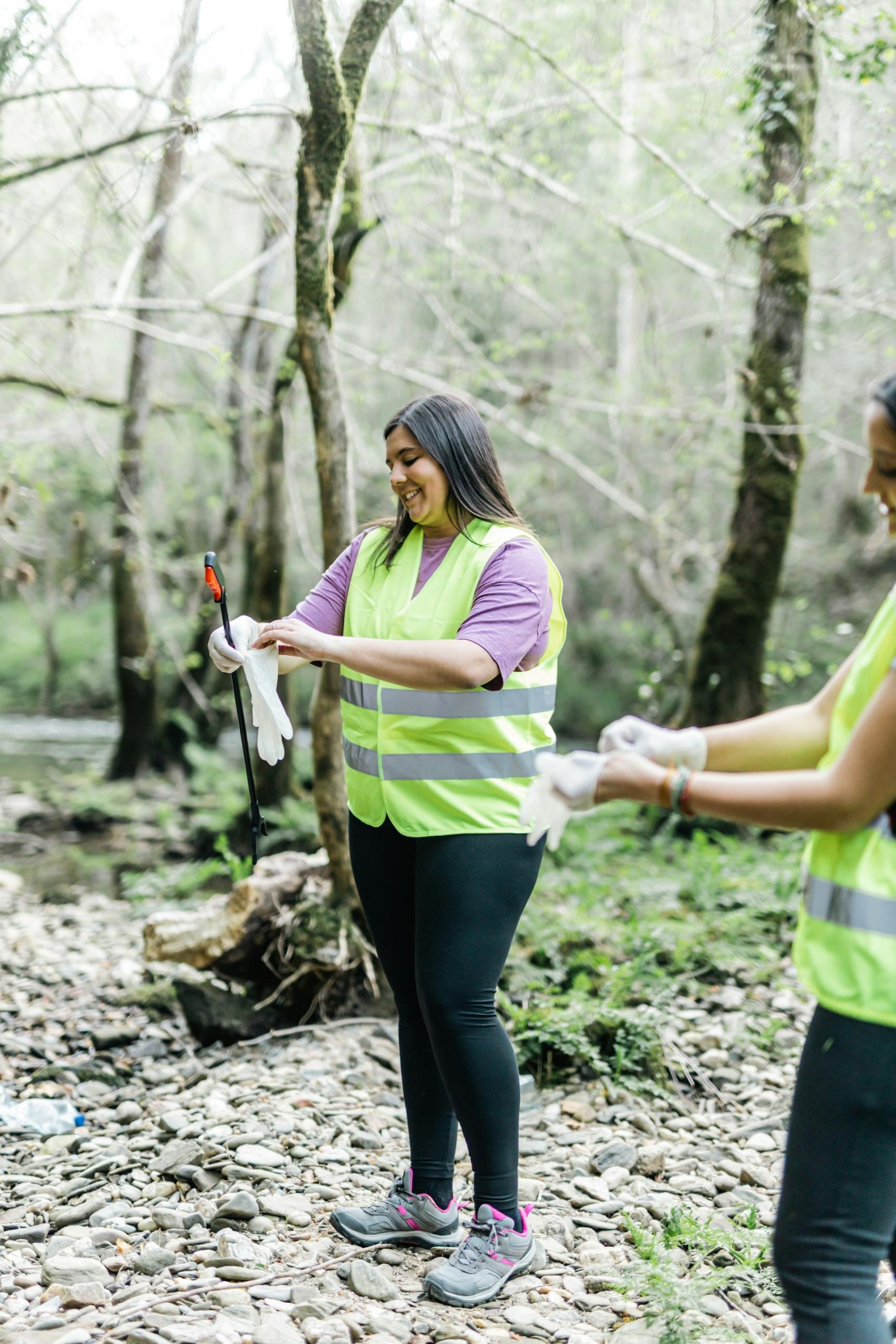
In other words, studying geography isn't just an academic or intellectual exercise. It's a moral and philosophical pursuit.
Once you see your environment and the world through a geographer's eyes, you won't be able to unsee it. You'll not be the one on social media, quipping about some happening far away having no impact on you. You'll not dismiss news about the Thames water quality, even if you live in York or Glasgow.
On a more practical level, studying geography prepares you for a range of careers. You might work with an architectural firm, conducting environmental impact studies on building sites. Or, you might use cutting-edge technology to design sustainable construction materials. This Ted Talk describes how such can be done.
If geography studies interest you from an ecological standpoint, you may well have a hand in revolutionising waste management. Or, you might get in on the ground floor, helping to design green cities, if urban landscapes call to you.
In Geography, diversity means imagining the possible, and then working to make it real.
Geography studies graduates don't just excel at critical thinking, they're also masters of creative thinking. In more mundane terms, we might call this problem-solving, but at the exponential level.
Imagine the level of creativity one must have to formulate hypotheses and design research programmes. Or to engineer solutions to our planet's and society's most pressing problems. The best UK universities for Geography studies strive to help students build those skills, alongside the practical knowledge they teach.

Is A Geography Degree Worth It?
As a passionate advocate of lifelong learning, my answer is a resounding 'Yes!'. But then, that goes for any type of learning. The question is: would today's university students benefit from pursuing a degree in Geography?
The less biased answer may still be 'Yes'. The only exception is if the university candidate has no interest in the subject, far-reaching as it is. Furthermore, geography is not a field to get rich in - at least, not money-wise. So, if you're looking for a high-paying, high-prestige career, your chances are slim, as a geographer.
However, if you see the value in learning about this world, its systems, and its inhabitants, geography is perfect. Anyone who recognises the imperative of pushing civilisation onto a sustainable track should absolutely study geography. And, any student concerned about today's geopolitical tensions could choose no better degree plan than this one.
Geography Degree Downsides?
With all that said, we must point to the downsides of earning a geography degree. Perhaps the greatest one is how poorly geography-related careers are compensated. Entry-level positions, particularly for field-type jobs, start out at, or just above the living wage standard (£24 570).
Those are the positions most students feel most passionate about: ecology, hydrology, and environmental protection. The higher up the value chain, perhaps as a GIS system operator or palaeontologist, the more money you stand to earn.
A geography degree's second drawback is competitiveness - though, that's changing quickly. Until recently, entry-level jobs for Geography majors were few. Today, green initiatives drive the need for ever more skilled and knowledgeable workers. You might keep that in mind as you choose your optional courses, to position yourself well once you graduate.
This lifelong learner wouldn't call it a drawback, but many do: continuous education. Technology advances so fast, and geographers must keep up with all the changes and innovations. On the geopolitical front, global challenges crop up before we have time to understand the ones already in play.
Geographers always have their thinking caps on. Or, more specifically: they've trained themselves to always think in geographical terms. Once they graduate, it might take them a while to recognise a pond as just a pond, and not an entire ecosystem. But, how do these negatives stack up against the positives?
Benefits of a Geography degree
- understanding the physical world
- environmental awareness
- living a sustainable life
- many transferable skills
- discover other cultures, languages and histories
Drawbacks of a Geography degree
- low pay
- very competitive (maybe)
- continuous learning
- trouble 'switching off'
Side by side, it's clear that the benefits outweigh the drawbacks. Still, whether studying geography is worth it for you, only you can decide. If you find value in these studies, be sure to communicate that when you draft your university application personal statement.
If you're not sure geography is the right path for you, talk with your teachers, advisers, family, and friends. You might even call on a Superprof academic coach or Geography tutor to help you sort things out.
Summarise with AI:
Did you like this article? Leave a rating!


 Loading...