
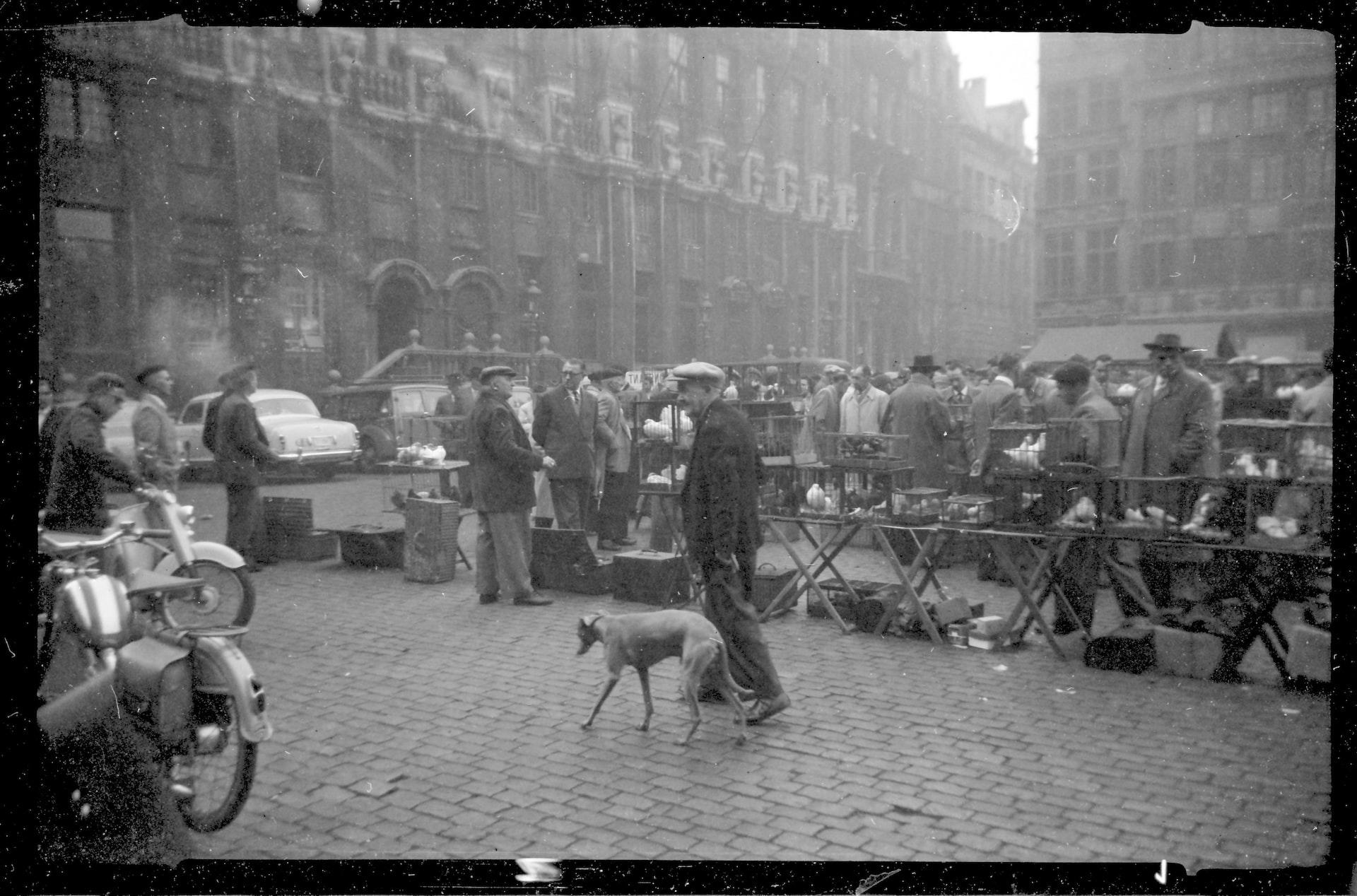

We feel that French film production and its part in film history has been a little overshadowed by Hollywood blockbusters, Japan's Anime industry and Hong Kong's film production in recent years. For example, did you know that the inventors of the first movie camera were from France?
They were! Two brothers from the town of Besançon in western France patented their cinematograph in 1895, a device that not only made it possible to record images on moving film but also to project those images onto a screen. We'll talk more about them later in the article.
Of course, the fact that French films are not as widely seen may be because they only export a fraction of their annual production compared to the biggest film giants. Another reason could be the language, French is not spoken by as many people as English, for example.
And since French films are not as widely available, it is quite possible that you have not yet been exposed to the best that the French film industry has to offer. You may not be aware of the long list of France's contributions to the art of the moving picture.
Let us enlighten you on a few facts of French filmmaking, and its place in the history of the cinema.
If you are a French cinema fan then taking French lessons can help you to enjoy your favourite films in their original version.


The earliest efforts in the history of film
The film we watch today, either in the cinema or at home on our TVs, consists of about 24 frames per second. The earliest cameras had an exposure time of over ten minutes, making it impossible to photograph things that moved. But developments in the 19th century were rapid; in the early 1870s a new type of negative was introduced that made it possible to take a photograph in a fraction of a second.
Eadweard Muybridge, a British photographer working in the US, in a way laid the foundations for the moving picture. He was commissioned in 1872 to create an image that would settle a much-debated question, namely whether there is a moment in a horse's leap when all four hooves are lifted off the ground at the same time.
In 1878, Muybridge finally succeeded in photographing the horse in motion using a wet plate process and proved that there is indeed a moment when all four legs of the horse come together under the body.
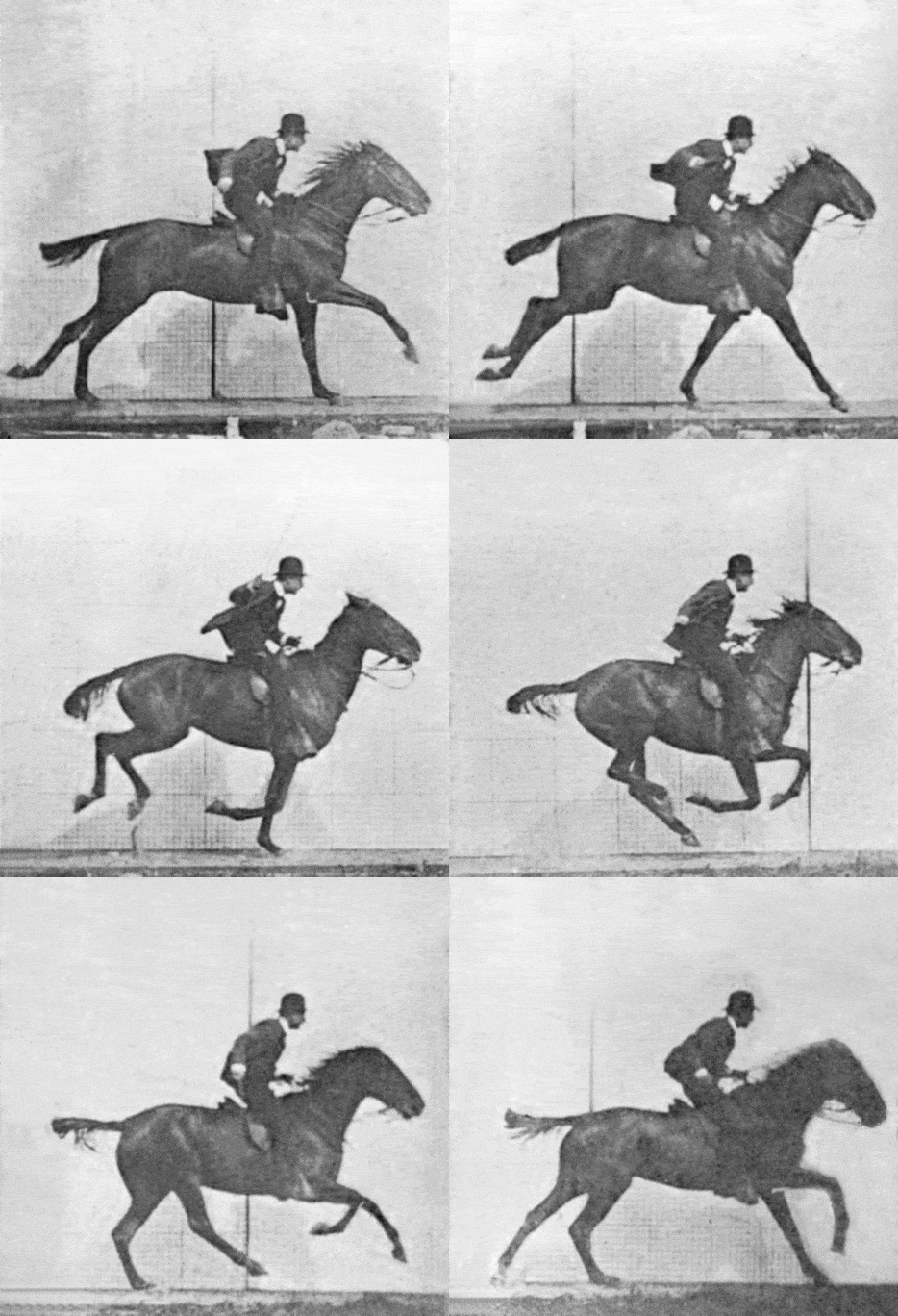
He used 24 cameras positioned along a track parallel to the horse's path, 27 inches apart, and controlled shutters using tripwires triggered by the horse's legs. The series, which shows what had never before been seen with the unaided eye, is often referred to as an early silent film. The images caused a stir in Europe and the United States.
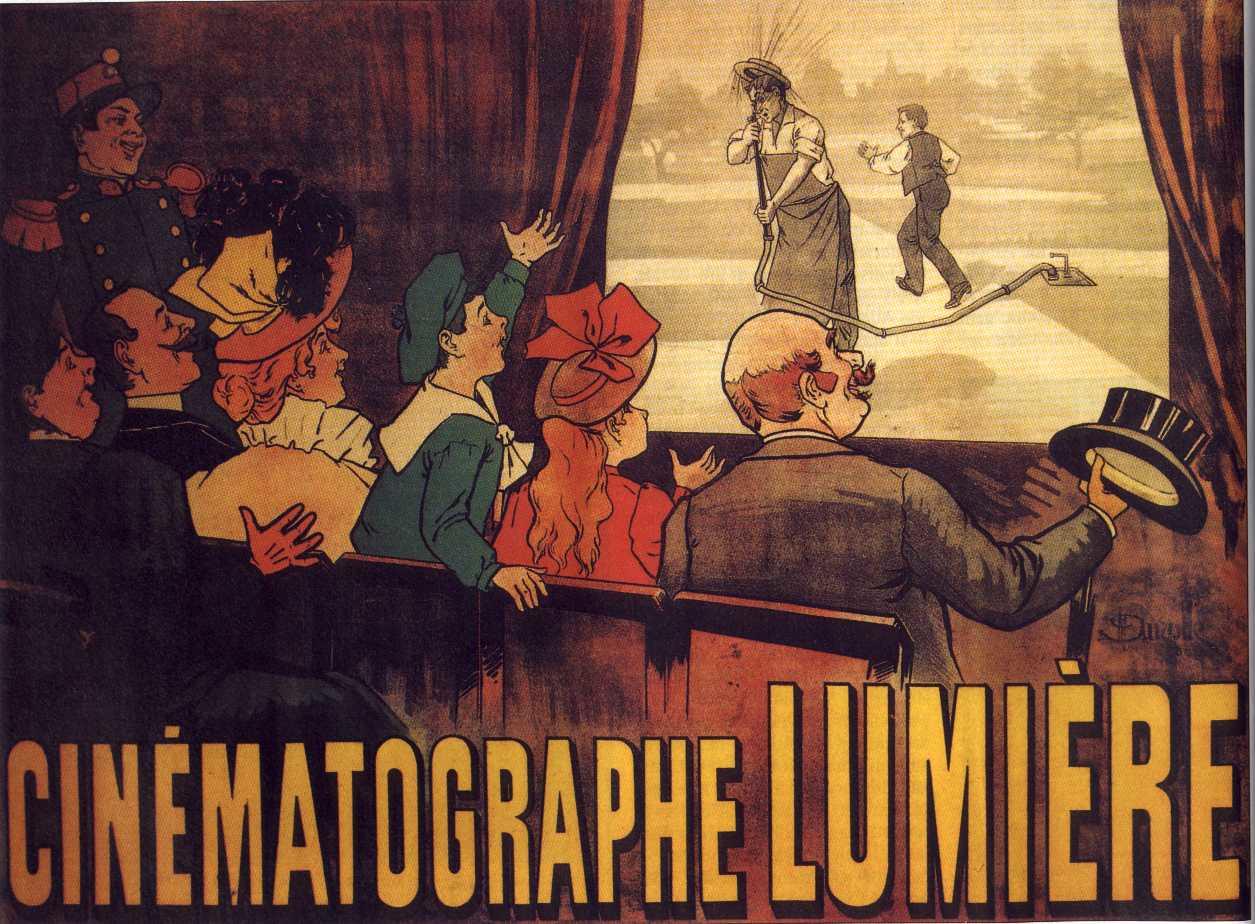
Seventeen years later, in 1895, and thanks in part to Muybridge, the brothers Auguste and Louis Lumière patented their cinematograph, a device that not only made it possible to record images on moving film but also to project those images onto a screen. This invention made it possible to show the first moving pictures on a screen to an audience.
The Lumière brothers were a few years behind of Thomas Edison's kinetoscope, which used the same type of perforated film patented by the French inventor Louis Le Prince. Edison's device was nicknamed the "peepshow" because you had to look through a small peephole to see the film.
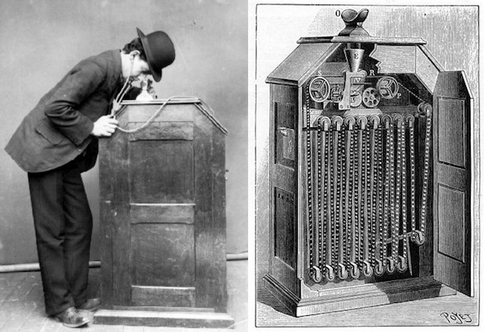
Edison, who only made it possible for one person at a time to watch the accompanying film reel, found it difficult to compete in the long run with the Lumière brothers, whose invention made it possible for an entire audience to enjoy the visual feast they had created.
Ironically, the inventors themselves saw no industry in film. After receiving accolades from the Society for Industry in Paris, and even making some money from their device, they claimed it was a passing fancy.
The cinema is an invention without of a future
Louis Lumière
Oh, if he only knew!
Perhaps the Lumière brothers' perception of their own invention had to do with the fact that they only used the camera to document everyday things. The very first film they created was called Workers Leaving the Lumiere Factory in Lyon. And it's just as it sounds, the film shows images of workers leaving their father's factory at the end of the working day.
https://www.youtube.com/watch?v=DEQeIRLxaM4
It was Georges Méliès who first understood that film is an artistic form of expression. A former stage magician, he knew all the tricks for embellishing a scene and creating illusions. He put his talent to work and opened a film studio in Paris.
He went on to create wildly inventive fantasy films, including the world's first science fiction saga, entitled A Journey to the Moon (le Voyage Dans la Lune) in 1902. In all, Méliès' studio produced over 500 films, some in colour.
In those early days, film only provided contrasts in black and white, no colours. Each frame therefore had to be coloured by hand to be seen in the film. If you look at some of these earliest films in colour, you can see that the artists sometimes missed a square and it looks like the colour is blinking.
As you might imagine, the production of such entertainment required great effort. One might even imagine that if so much time was spent in the studio, how did these films ever see the light of day?
If you're more curious about what these earliest French films looked like, just Google it. Muybridge's photographs are available both as stills and as intercut videos on youtube. You can also see all the early films of the Lumière brothers, Georges Méliès films, both coloured and in black and white. And if you want to learn more about French cinema, you can read more in this article.
Early movie distributors
You may recognise the names Pathé and Gaumont, the very first film distributors, whose companies exist still today. Studio head Léon Gaumont engaged the services of one Alice Guy, a visionary in the world of filmmaking, and unusually talented at it.
Alice Guy is credited as the world's first female film director, and inventor of the concept of film narrative.
Pathé Studios, not to be outdone, is credited with discovering the world's very first international movie star: Max Linder. In a tragic pattern that has plagued the industry ever since, he committed suicide at a young age by drinking barbiturates, injecting morphine and slashing his wrists.
Another oft repeated pattern of famous film stars that he initiated: changing a far more cumbersome birth moniker to a more memorable stage name.
Having conclusively established that France is where cinema as we know it was born, let us now look at the standouts from each era of French cinematography.
Find French classes Edinburgh here on Superprof.
Epochs of French Films
The Silent Years of French cinema
Prior to the first World War, France led the movie industry, with America lagging a substantial way behind. However, a shortage of film stock, coupled with the war, led the French to scale back their efforts at creating silver screen magic. By the time peace was declared, the American box office had overtaken French ticket receipts.
The next wave of French film production provided the bedrock of what is now dubbed auteur theory:one person having complete control over creative direction.
Abel Gance directed the auteur epic Napoleon, a six-hour master opus that stands as the greatest silent film ever made.
Other visionary names of that period include:
- Marcel L'Herbier
- Jean Epstein
- Germaine Dulac
- René Clair
- Jacques Feyder
- Louis Delluc
- Raymond Bernard
Period dramas and literary adaptations were the prevalent genres at that time, as reflected in Fescourt's Les Miserables.
But not all great French films of that period were directed by French people.
The Passion of Joan of Arc (1928),one of France's most culturally relevant films, was directed by Danish filmmaker Theodor Dreyer.
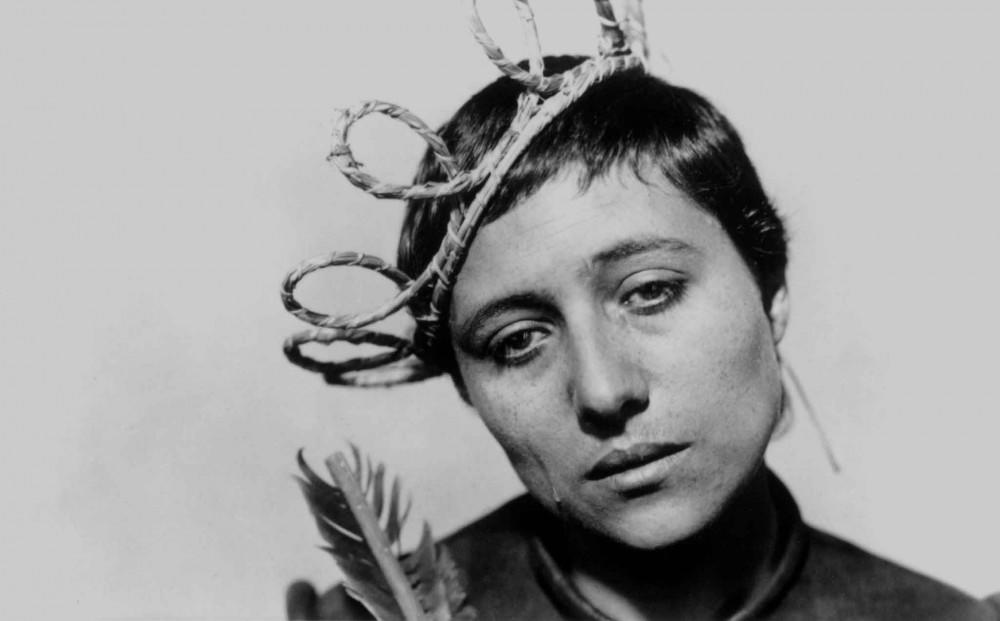
In fact, as French cinema grew internationally, a number of actors, producers and editors from other countries made their way to France, to break into the business. For example, the leading lady in the film above was played by Italian Maria Falconetti.
You can check Superprof if you want to take French lessons online.
The 1930s
This decade ushered in the era of sound. Some till-then successful movie makers found it difficult to adapt to this new technology. Others, such as Jean Renoir, accepted the challenge and ran away with it.
Away from the sound stage, life was hard, so people enjoyed the respite provided by the hour or so that sitting in a dim theater could bring.
They enjoyed such titles as:
- La femme du boulanger (1932)
- L'Atalante (1934)
- La Belle Equipe (1936)
- La Bête Humaine (1938)
- Pepe le Moko (1937)
The standout from this era must be La Règle du Jeu – The Rules of the Game, Renoir's satire of the French class system.
Note: this is the decade that the incomparable Danielle Darrieux first made her appearance on screen. Since then, she had featured in more than 110 films, during a career that spanned 80 years.
In order to more effectively compete with Hollywood fare, German and French film making combined forces, even though their respective countries' politics were nowhere near that cooperative.
The Dark Decade
WWII cast a pall on all forms of entertainment in Europe, and all over the world. However, even after the nazi occupation they demanded entertainment, so a few films were turned out; The Murder of Father Christmas and The Devil's Hand among them.
Were these titles the artistic version of thumbing noses at their oppressors?
Even after the liberation of France, severe rationing, of everything including electricity, brought any French film making effort asunder. Still, there were treasures...
Have you ever seen Beauty and the Beast? Which version? Jean Cocteau's 1946 masterpiece is hailed today as one of the most influential French films of all time.
That same year saw the first film festival at Cannes, to celebrate past accomplishments in cinematography as well as to encourage future endeavours. Not all was magic and delight during that time, however.
As a pact to repay Americans for liberation, France agreed to screen far more American movies than French ones, which put the brakes on French cinema for a few years.
Barraged by the glut of imported films, French moviegoers soon made no issue of the fact that most everything they were watching had little to do with French culture or history.
To stem that tide, the French government instilled a tax on each theatre ticket purchase, which led to the movie industry in France being heavily subsidized by the state, a condition that exists still today.
Interim
Directors Jacques Tati, Robert Bresson, Jean-Pierre Melville, and Jacques Becker all subscribed to the François Truffaut idea of film auteur, namely that the finished product should reflect the director's ethos.
That is why French films of the 1950s seems to embrace distinctly different categorisation: drama, gangster, thriller, comedy...
Check for French lessons Manchester here on Superprof.
The French New Wave
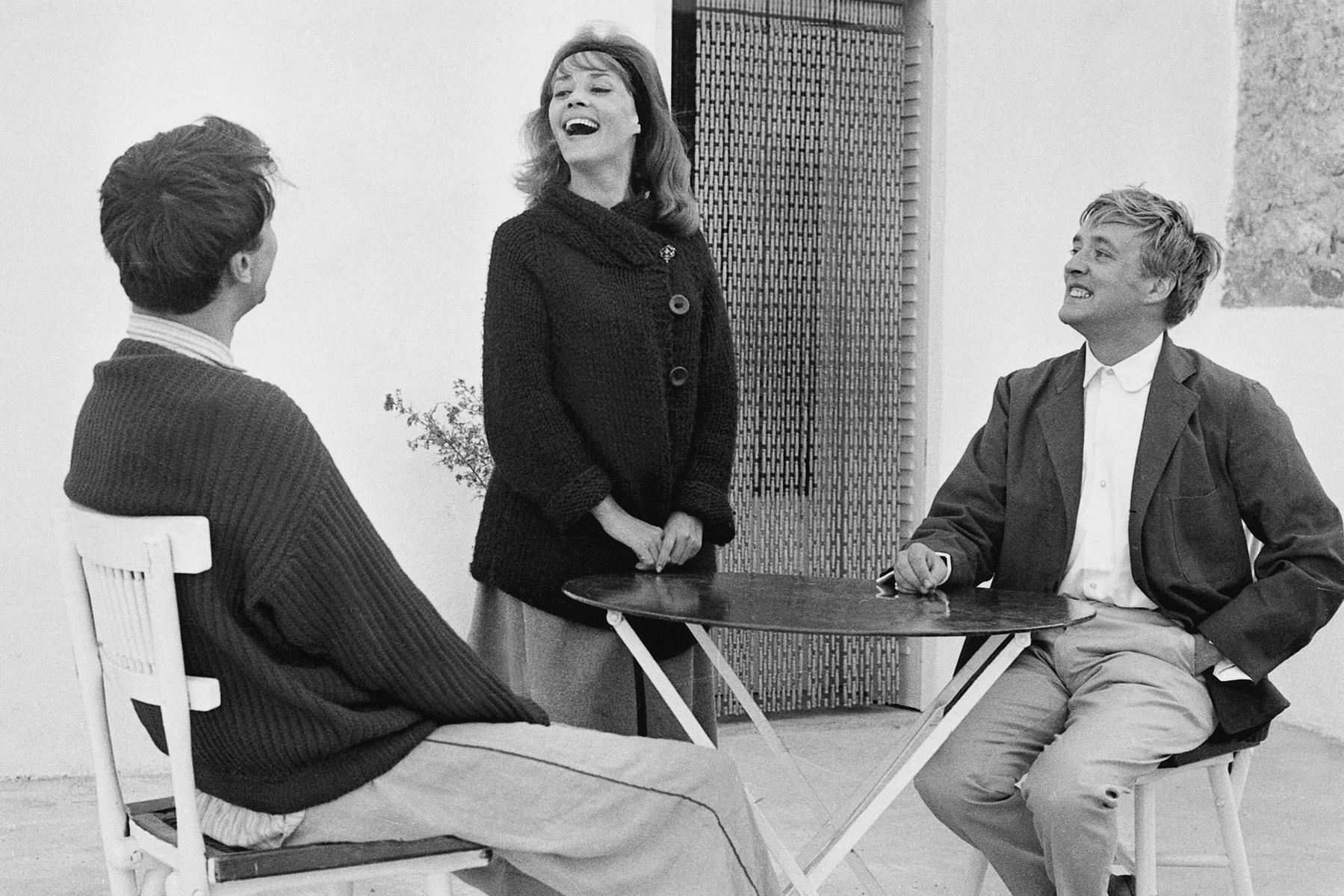
The late 50s to late 1960s is when French cinema came into its own, freed of the shackles of American movie companies.
At that point, French film makers rejected austerity and period pieces in favour of poetic realism, validating Truffaut's argument that films' content is indeed the sole purview of the director's ideals.
Gems from that period include:
- 400 Blows
- Breathless
- Hiroshima mon Amour
- Le Mépris
- Pierrot le Fou
This Nouvelle Vague saw an explosion of talent! Luminaries who emoted on-screen from that period were:
- Alain Delon
- Brigitte Bardot
- Jean-Paul Belmondo
- Catherine Deneuve
- Claude Jade
- Stephanie Audran
These talents and more populated the landscape of French cinema through its evolution into the modern age.
To complement your French courses London, you should watch French movies with subtitles!
Where Can You Watch French Films In The UK?
As you will know, many films can be downloaded (with payment often required) from the Internet to watch from your laptop or computer, but you can also find some popular (and less so!) international films on Netflix. You can visit their website to find a list of French films being aired right now.
However, if you want the full cinema experience, then you can check out independent cinemas in your area to see if they are showing any French movies, as well as visit the art deco Ciné Lumière in South West London. Visit their website to see what's on, their special screenings and any series they may be showing.
So don't just stick to what you know, take a chance on a French film the next time you fancy a movie night!
Check out French lessons here.
Summarise with AI:
Enjoyed this article? Leave a rating!


 Loading...
