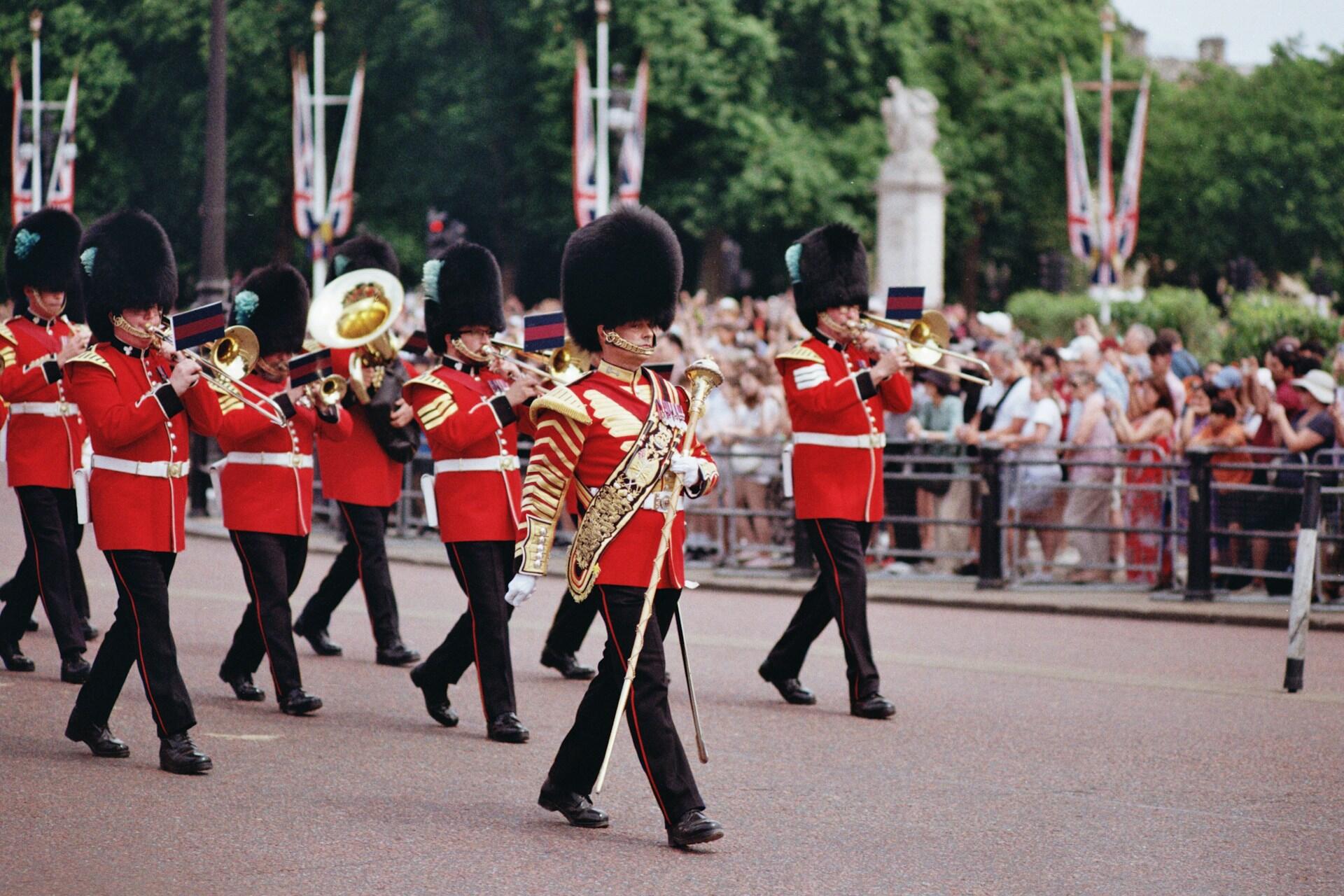

Marching bands can be enormous, with dozens or hundreds of members stretched across a field or along a parade route. The players may not be able to hear other sections well, which makes it easy to lose the beat and become de-synchonised. Drum majors act as visual metronomes to help the group stay together. They also often take on leadership and management roles behind-the-scenes.


What Is the Role of a Drum Major?
A drum major helps lead the ensemble of all marching band instruments during rehearsals and performances. They are experienced with music and are similar to a conductor in an orchestra.
They may stand at a podium or raised platform during a field show. During parades, they usually lead at the front and there may be several other drum majors dispersed throughout the parade sections as well. Specific duties can vary by band, but conducting, communication, and practical support are typical responsibilities.
Military Roots of Drum Majors
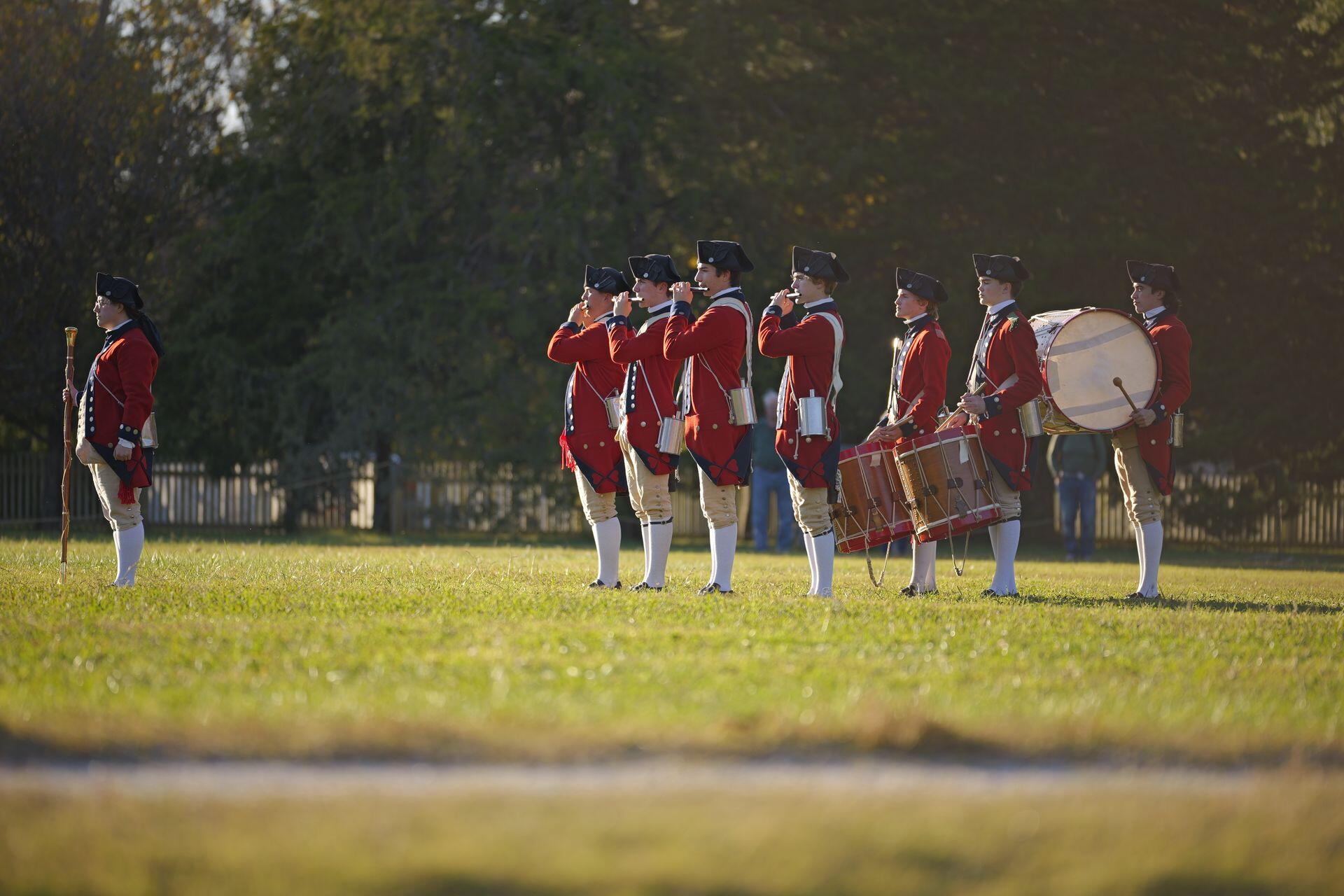
Drum majors originated as members of the military, hundreds of years ago. In the British military, drum majors were in charge of leading all the military drummers, who used their instruments to signal commands to troops across long distances by beating different command rhythms.
While not used in modern military settings, the historical importance of drummers (and fifers) is still recognised and celebrated.
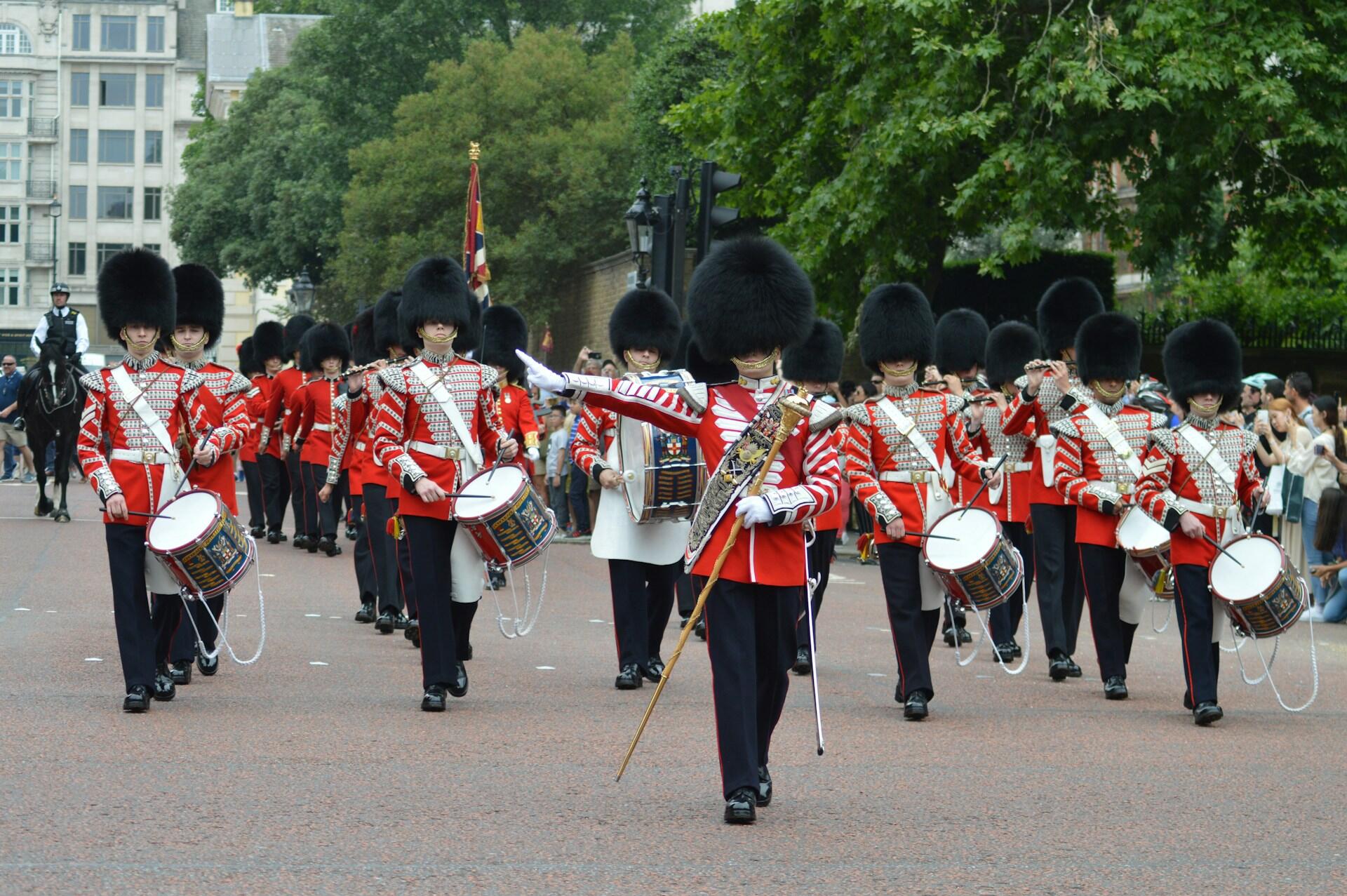
Today, military marching bands and recreational marching bands often have drum majors to lead the musicians. They use a staff, or mace, to signal commands. They sometimes use whistles as well, especially during parades.
No. Drum majors are familiar with playing music, but they can have a background in any type of instrument; they don’t have to be a drum player. They also do not play any instruments during a marching band performance. They keep time with their mace and signal the players to perform specific actions.
1650
Origin of drum majors
The British army created the Corps of Drums, which included the first drum majors. They were military soldiers in charge of the military drummers for official communication.
19th century
Marching bands move away from military
Drums and fifes in war started becoming obsolete. Ex-military also wanted to continue their band experience after leaving/retiring. The US Marine Band clarified the Drum Major role compared to the Drum Leader.
20th century
Increased interest in performing marching bands
As marching bands for sport became more popular, drum majors became increasingly necessary.
1972
First Drum Corps International competitions
North America started having competitive field shows.
1980
Drum Corps United Kingdom first competitions
British performers began competing in marching band performances.
Today
Intricate marching band routines
Choreography has advanced, requiring higher talent and expertise in drum majors.
What Does a Marching Band Drum Major Do?
Drum majors do more than just march in front of the other players and move their maces up and down. They also have roles distinct from conductors and band directors.
| Role | Main responsibility | Typical setting |
|---|---|---|
| Drum major | Gives visible cues, helps coordinate marching performers and supports the group’s leaders | Parade, field show or marching rehearsal |
| Conductor | Shapes a musical performance through beat patterns, cues and expression | Concert or rehearsal; sometimes also a marching ensemble |
| Band director | Plans and oversees the programme, teaching and performance preparation | Behind-the-scenes in planning and at rehearsals across the band’s season |
Drum majors, conductors, and band directors usually work together to make the marching band function. All positions can conduct during rehearsal and performances, and they often collaborate in choosing programming and choreography.
In essence, all three roles can be filled by three separate people or one person, depending on the band’s needs, size, and funding.
Keeps the Band Together
The most obvious role of a drum major is to lead marching band performances. When musicians are spread out, they can easily become asynchronous. Sound echoes and travels at a delay across long distances, making it hard for the players to keep the same tempo.
The percussion instruments in the drumline also helps the entire band stay on rhythm.
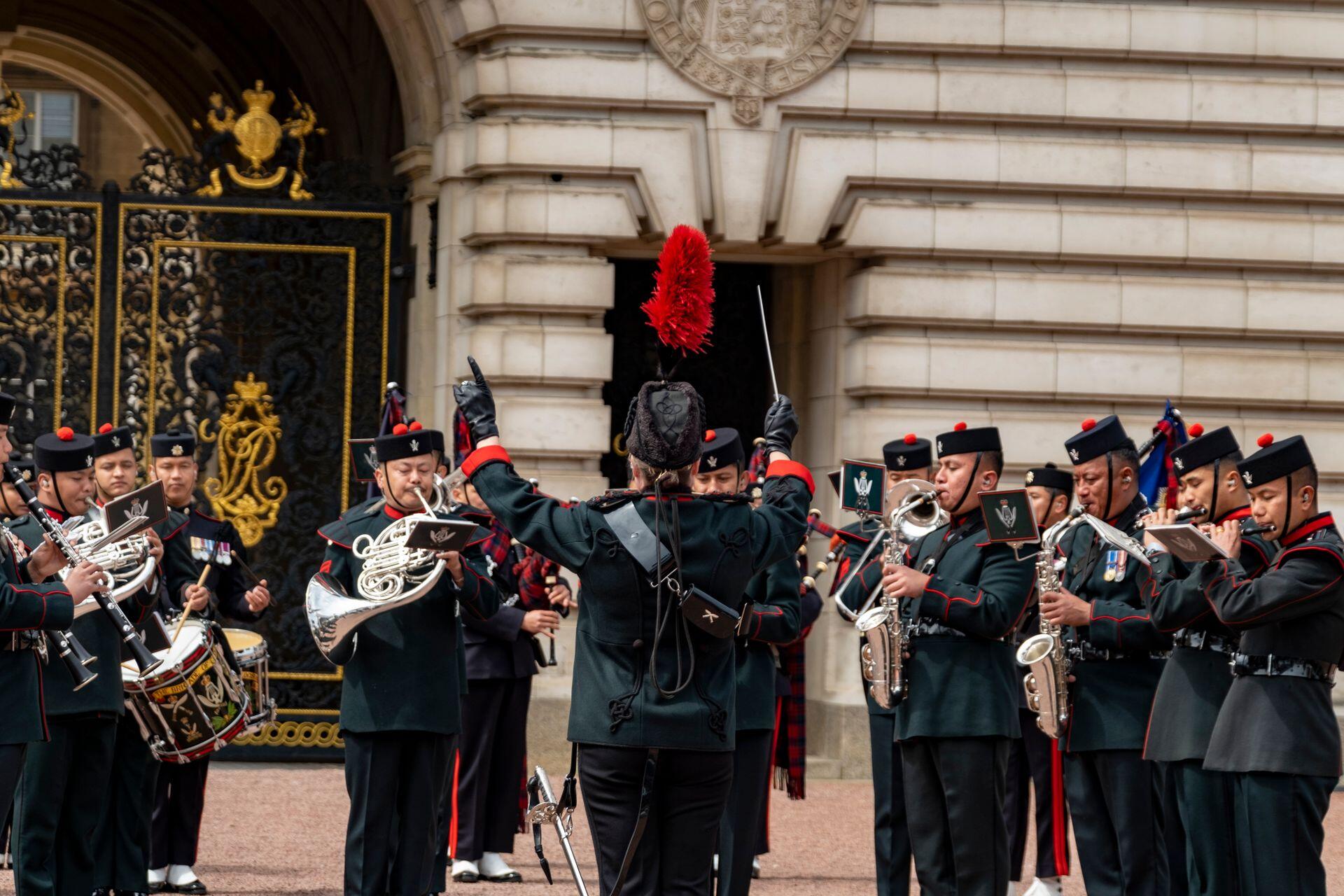
A clear visual cue eliminates the delay and gives the players a synchronised beat to follow. Drum majors provide accurate and easy-to-see rhythm for all instrumentalists. Their uniform stands out, making them easy to spot. They raise and lower their large mace, often while marching, to give the instrumentalists guidance. They may sometimes use a whistle as an additional signaling tool.
Their job in a performance is not only to keep time. They also signal entrances, changes, and endings, ensuring all the players begin and conclude the performance at the same exact moment. Drum majors need to have the entire performance memorised so they can give accurate direction at the right time to each instrumental section throughout the entire show.
Leads Rehearsals and Performances
Since they must memorise the performance, drum majors must be part of rehearsals. They often conduct warm-ups, musical drills, marching drills, and organise with section leaders.
They must be very observant and keen to notice mistakes. Marching band instrumentalists need to be extremely well-rehearsed to succeed in their performance; even a small mistake needs to be addressed and fixed during practice. Woodwind instrument players can easily lose the beat during their flourishes.
Supports Band Discipline and Morale
The drum major’s consistent presence and leadership in rehearsal and performances should make the entire band feel united. But, they also need to be disciplined. They help the group stay focused and on task.
Discipline in marching band means everyone arrives on time ready to perform. Each person needs to know the parts they should already know, be ready to learn any new material in the day’s session, be alert in listening and watching for instructions, and not be disruptive.
A drum major can model those habits while getting the band members to understand and respect the rules as well. This is especially important in marching bands for younger players who don’t always have the required reverence.
Additionally, they can act as advocates for the band members, noting if rehearsal schedules or sessions are too intense or if there are other issues that need addressing.
Drum Majors in Marching Band Performances
In rehearsals, drum majors are like teachers. During performances, they become conductors. The exact responsibilities can change depending on the band’s purpose and setting.
Parades
The main role is to lead the group’s movement through the parade route, keeping time and pace. They provide signals to turn or stop as needed, and even help keep the marching path clear of people.
For large parades, there may be additional drum majors in the middle and near the end of the line. These majors need to keep time and keep the proper distance between their section and the section in front throughout the performance.
Field Performances
Drum majors may stand at podiums in front of the whole band, near the pit and auxiliary instruments, and conduct from one spot. For sizable bands spread over a large distance, there may again be multiple drum majors positioned at different places around and/or within the formation. Again, these additional drum majors need to keep time with one another and give all the correct signals at the right moments.
American high schools are famous for having these types of performances at their (American) football games.
Field performances can also consist of parade-like movement, but in an open area with a seated audience. These formations can include drum majors who march in front of their sections, or they may stand at podiums and provide guidance for section leaders.
In Britain, field performances are usually limited to community bands, youth organisations, parade groups, or competitive drum corps.
Competition
Under pressure, the drum major must keep time and present accurate cues to each section, even when the audience is distracting or if a performer makes a mistake.
Using distinct movements and gestures for the brass section, woodwind section, and percussion section is critical for proper timing. The exact role of the major depends on the band’s size, routine and performance style.
How Is a Drum Major Chosen?
Drum majors are a very niche position. Small school and community bands are usually led by a local community member, while competitive bands and corps may attract ambitious applicants.
No matter the program or institution, the hopeful drum major should meet the requirements of the specific outfit. Though drum majors need to have experience with music, they don’t need to be the “best” instrumentalist to secure the role. Like any other job, drum majors usually begin with an application or by speaking with leaders in the program they want to join.
Candidates may be interviewed or participate in tryouts or auditions. They may be asked to lead a small band, explain their methodology and personal approaches to different situations and rehearsal, and answer technical questions.
Small programs are usually less selective, and as long as the applicant has experience, demonstrates leadership and responsibility, and has a good attitude, they have a decent chance. Competitive roles in large, notable band programs require applicants to have previous experience and a higher level of expertise.
Drum majors often learn through experience from their own marching band days, though some may opt for a formal training course. Usually, one can learn from a current or former drum major through advice, lessons, and observation.
What Makes a Good Drum Major?
Effective drum majors are competent leaders with musical experience. Many can meet the requirements to become a major, but it takes a lot of skill and talent to become an exceptional one.
Leadership Skills
Good leadership starts with demonstration: arriving to rehearsal early, being prepared for the day, taking corrections in stride and valuing input from others, and treating each band member with respect.
Drum majors care for their band members and want them to succeed. They take the time to really work with the musicians to perfect their instrumentation and choreography.
They have a good, confident attitude that gives the band a healthy morale. Marching band is an exceptionally good example of requiring teamwork from each and every person. An effective drum major leader ensures each band member cares about the shared goal.
Physical and Visual Control
Drum majors must have impeccable timing and body control. Their raising and lowering the mace, moving arms and legs, marching at pace, and any other physical movements must be consistent throughout rehearsal and performance.
The motions must be precise and deliberate, requiring a level of movement that can only be achieved through commitment. Half-hearted visual cues ruin morale and discipline and lead to a sloppy sound and performance from the rest of the band.
Color guard also provide visual spectacle, which helps keep the beat and entertains the audience.
Musicianship and Communication
Majors don’t need to play every instrument, but they should be familiar with each type of instrument they’re leading.
When leading, drum majors must have each part of the song and routine memorised, including tempo changes, tune changes, and all movements. They need to be able to cue each section at the exact right moment with the exact right commands.
Marching bands have several main figures in charge of leadership. Drum majors are one of the most visible, appearing in parades and field routines alongside the marching musicians. Without their consistent, precise guidance, the music and choreography could easily fall apart.
References
- “Drill for Band and Corps of Drums.” Yorkshire Corps of Drums, www.yorkshirecorpsofdrums.com/Drill.html. Accessed 30 Sept. 2026.
- “Drum Major Competition.” Peebles Highland Games, www.peebleshighlandgames.com/drum-major-competition. Accessed 30 Sept. 2026.
- Semones, David. “Making the Most of Drum Majors.” The Instrumentalist, 9 Aug. 2013, theinstrumentalist.com/august-2013/making-the-most-of-drum-majors. Accessed 30 Sept. 2026.
Summarise with AI:
Did you like this article? Leave a rating!

 Loading...