
As a nation, the British have a lot to be proud about.
Whether it’s success in the Olympics, the sciences, or other areas, there are many successful Brits who have given the country a reputation to be proud of over the years.
While it’s all too easy to focus on the shortcomings (let’s not get into the 2021 Euros Final) and be cynical about the talent on our island nation, the truth is that there are many brilliant minds and athletes that grace our shores.
Nowhere is that statement more true perhaps than in the field of science.
Yes, that’s right, even though people like you and I might have struggled with the sciences in school, Britain has a history of producing top scientists - many of whom have gone on to win prestigious prizes such as the Nobel Prize.
As of 2023, the United Kingdom has won a total of 140 Nobel Prizes. This includes prizes across all categories: Peace, Literature, Physics, Chemistry, Medicine, and Economic Sciences. The UK ranks second in the world for the number of Nobel Prizes awarded, after the United States.








List of British Nobel Prize Winners
| Year | Name | Category | Reason for Award |
|---|---|---|---|
| 1904 | John William Strutt (Lord Rayleigh) | Physics | Investigations of the densities of the most important gases and for his discovery of argon |
| 1906 | J. J. Thomson | Physics | Theoretical and experimental investigations on the conduction of electricity by gases |
| 1907 | Rudyard Kipling | Literature | Considered for his great narrative stories, especially for the Jungle Book |
| 1922 | Niels Bohr | Physics | Investigation of the structure of atoms and the radiation emanating from them |
| 1927 | Charles Glover Barkla | Physics | Work on X-ray scattering by gases |
| 1929 | Owen Willans Richardson | Physics | Work on thermionic phenomena, especially his discovery of the law named after him |
| 1932 | Charles Scott Sherrington | Physiology/Medicine | Discoveries regarding the functions of neurons |
| 1932 | Edgar Douglas Adrian | Physiology/Medicine | Discoveries regarding the functions of neurons |
| 1935 | James Chadwick | Physics | Discovery of the neutron |
| 1936 | Guglielmo Marconi | Physics | Development of wireless telegraphy |
| 1947 | Edward Victor Appleton | Physics | Investigations of the ionosphere, especially the discovery of the Appleton layer |
| 1948 | T. S. Eliot | Literature | Pioneering modernist poetry, especially 'The Waste Land' |
| 1950 | Bertrand Russell | Literature | For his varied and significant writings in which he champions humanitarian ideals |
| 1953 | Winston Churchill | Literature | For his mastery of historical and biographical description, as well as for his oratory |
| 1954 | Max Born | Physics | For his fundamental research in quantum mechanics, especially the statistical interpretation |
| 1955 | William Golding | Literature | For his novels which, with the perspicuity of realistic narrative art, illuminate the human condition |
| 1962 | Francis Crick, James Watson, and Maurice Wilkins | Physiology/Medicine | Discoveries concerning the molecular structure of nucleic acids and its significance for information transfer in living material |
| 1963 | Alan Lloyd Hodgkin and Andrew Fielding Huxley | Physiology/Medicine | Discoveries concerning the ionic mechanisms involved in excitation and inhibition in the peripheral and central portions of the nerve cell membrane |
| 1967 | George Porter, Ronald George Wreyford Norrish | Chemistry | Contributions to the study of extremely fast chemical reactions, affected by disturbing the equilibrium by means of very short pulses of energy |
| 1972 | John Hicks | Economic Sciences | His pioneering contributions to general equilibrium theory and welfare economics |
| 1973 | Patrick White | Literature | His epic and psychological narrative art which has introduced a new continent into literature |
| 1977 | Frederick Sanger | Chemistry | His work on the structure of proteins, especially that of insulin |
| 1979 | Abdus Salam | Physics | Contributions to electroweak unification theory |
| 1983 | William Golding | Literature | For his novels which, with the perspicuity of realistic narrative art, illuminate the human condition |
| 1985 | Joseph Rotblat | Peace | For his efforts towards nuclear disarmament |
| 1988 | James Black | Physiology/Medicine | Discoveries of important principles for drug treatment |
| 1990 | John Eccles, Alan Hodgkin, and Andrew Huxley | Physiology/Medicine | Their discoveries concerning the ionic mechanisms involved in the excitation and inhibition in the nerve cells |
| 1996 | Harold Pinter | Literature | Who in his plays uncovers the precipice under everyday prattle and forces entry into oppression's closed rooms |
| 2001 | Paul Nurse | Physiology/Medicine | Discoveries of key regulators of the cell cycle |
| 2007 | Doris Lessing | Literature | Who, with scepticism, fire and visionary power has subjected a divided civilisation to scrutiny |
| 2010 | Robert Edwards | Physiology/Medicine | Development of in vitro fertilization |
| 2017 | Richard Thaler | Economic Sciences | For his contributions to behavioral economics |
| 2019 | Peter Handke | Literature | For an influential work that with linguistic ingenuity has explored the periphery and the specificity of human experience |
What is the Nobel Prize?
It’s an award granted to the very best talent across several fields, started by Alfred Nobel of Sweden.
In the science of chemistry, there have been 33 UK Nobel Prize winners. This is an equal number to the number of winners from Germany, which would put the country tied for the silver medal position if this were the Nobel Prize Games. The only country that has more Nobel Prize winners, and by a significant margin, is the United States which can claim an enormously impressive 72 laureates.
This video provides a concise overview of the Nobel Peace Prize and how it works:
It must be said of course that the US has a much larger population, so with that in mind, the UK isn’t doing so badly!
In this guide we’re going to celebrate British success with regards to the Nobel Prize for chemistry, covering everything from the first Brit to win it to the most distinguished winners from the country.
Who Was The First British Nobel Prize Winner?
The first British-born scientist to claim a Nobel Prize in chemistry was Sir William Ramsay.

Ramsay won the award just three years after its inception, following three other European chemists who made significant progress in their respective fields of study,
The official line from the ceremony organisers is that Ramsay won the award for his 'services in the discovery of the inert gaseous elements in air, and his determination of their place in the periodic system’.
Put into layman’s terms, this basically means that Ramsay was responsible for discovering the noble gases and in doing so expanding the scope of the periodic table as it was known back then.
This groundbreaking progress concerning the periodic table wasn’t enough for Ramsay, though. Later on that same year, alongside his colleague Fourneau, the chemist discovered the element argon which was deemed worthy of a second Nobel Prize - this time in the field of physics.
There aren’t many scientists who’ve picked up more than one Nobel Prize, and to do so in two different fields of science is an incredible accomplishment. In fact, it’s only Frederick Sanger who managed to do the double by winning the chemistry Nobel Prize two times which puts Ramsay in an elite category of Nobel Prize winners.
The Glaswegian chemist, Ramsay, started out his academic career curiously enough with a doctorate in philosophy. From there, he returned to his homeland of Scotland in order to become a chemistry assistant at the Anderson College in Glasgow where he would later work for several years.
Throughout his academic career in the late 19th century Ramsay jumped from one university college to another, before settling upon the position of Chair of Inorganic Chemistry at University College, London, where he stayed until he retired in 1913.
His work focused mainly on inorganic chemistry, and over the course of his career, Ramsay published a series of high-profile papers on nitrogen oxide, as well as on several discovered elements such as xenon, krypton, and argon.
After finding argon, Ramsay would go on to discover helium too in 1895. These discoveries helped him to piece together a new group of elements in the periodic table which included neon, krypton, and xenon.
It wasn’t just the Nobel Prize in chemistry that Ramsay was awarded throughout his career, but a whole host of scientific honours from all over the world.
Find chemistry tutors here on Superprof.
Most Distinguished British Nobel Prize Winners
Sir William Ramsay aside, who were some of the other most distinguished chemistry Nobel Prize winners?
Here are some Nobel Prize in chemistry winners, featuring top Nobel Prize chemistry candidates that hail from the UK:
Ernest Rutherford
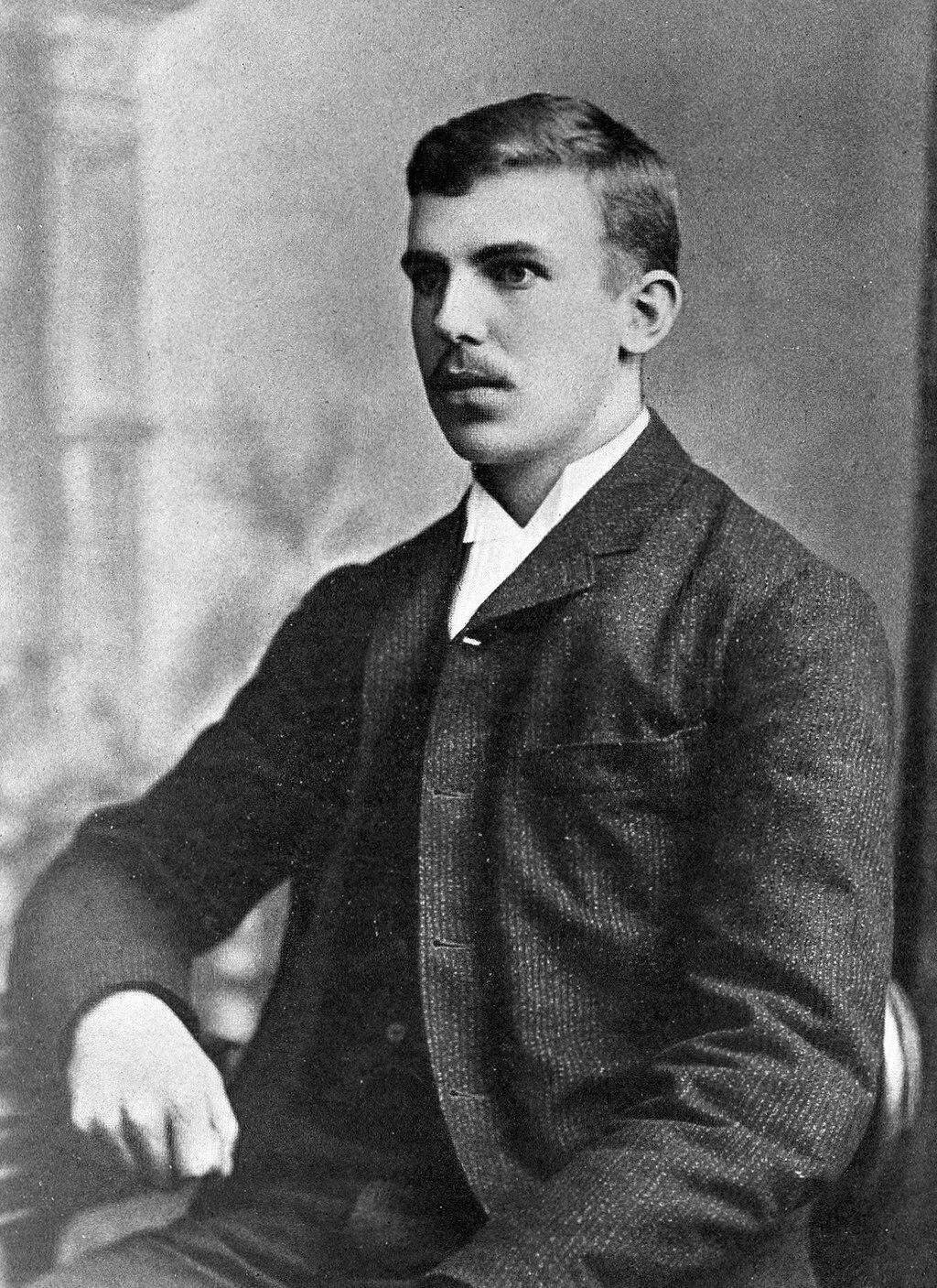
While the first chemistry Nobel Prize winner was a German, it wasn’t long before a Brit won the prize with Sir William Ramsay in 1904, shortly followed by Rutherford in 1908.
Ernest Rutherford made a huge contribution to science, so much so that he came to be known as the ‘father of nuclear physics’.
Winner of the 1908 Nobel Prize in chemistry, Rutherford discovered the concept of radioactive half-life and the radioactive element radon. He was known in the scientific community as one of the very best experimentalists.
Sir Arthur Harden
Sir Arthur Harden won the Nobel Prize for chemistry in 1929 alongside Hans Karl August Simon von Euler-Chelpin.
The two were recognised for ‘their investigations on the fermentation of sugar and fermentative enzymes’.
The British biochemist was one of the founding members of the Biochemical Society, editing its journal for more than 25 years. His work included research into glucose, yeast, and antiscorbutic and anti-neuritic vitamins.
Sir Walter Norman Haworth
Sir Walter Norman Haworth was a British chemist who claimed the Nobel Prize in 1937, for ‘his investigations on carbohydrates and vitamin C’.
Haworth discovered a lot of crucial information about Vitamin C, or ascorbic acid, including its structure and optical-isomeric nature.
The chemist also sat in on the MAUD Committee which led research efforts into the British atomic bomb project.
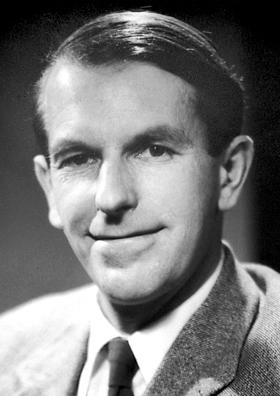
Frederick Sanger
Frederick Sanger is unique in Nobel Prize history, as he goes down as the only Nobel Laureate to have received the Nobel Prize in chemistry on two separate occasions.
Sanger first won it in 1958, ‘for his work on the structure of proteins, especially that of insulin’ and then again in 1980 with Walter Gilbert ‘for their contributions concerning the determination of base sequences in nucleic acids’.
Sir Gregory Paul Winter
More recently in 2018, Sir Gregory Paul Winter won the Nobel Prize alongside George P. Smith ‘for the phage display of peptides and antibodies’.
The British molecular biologist has dedicated his life to the study of monoclonal antibodies, based in the MRC Centre for Protein Engineering in Cambridge.
His techniques allowed the use of antibodies in humans for therapeutic use, something which before was difficult to translate to humans from mice.
Find online chemistry tutor here on Superprof.
Nobel Prize Winners By Country
In case you’re curious, we have a breakdown of the numbers of Nobel Prize winners by country.
It makes for excellent trivia knowledge to have on hand!
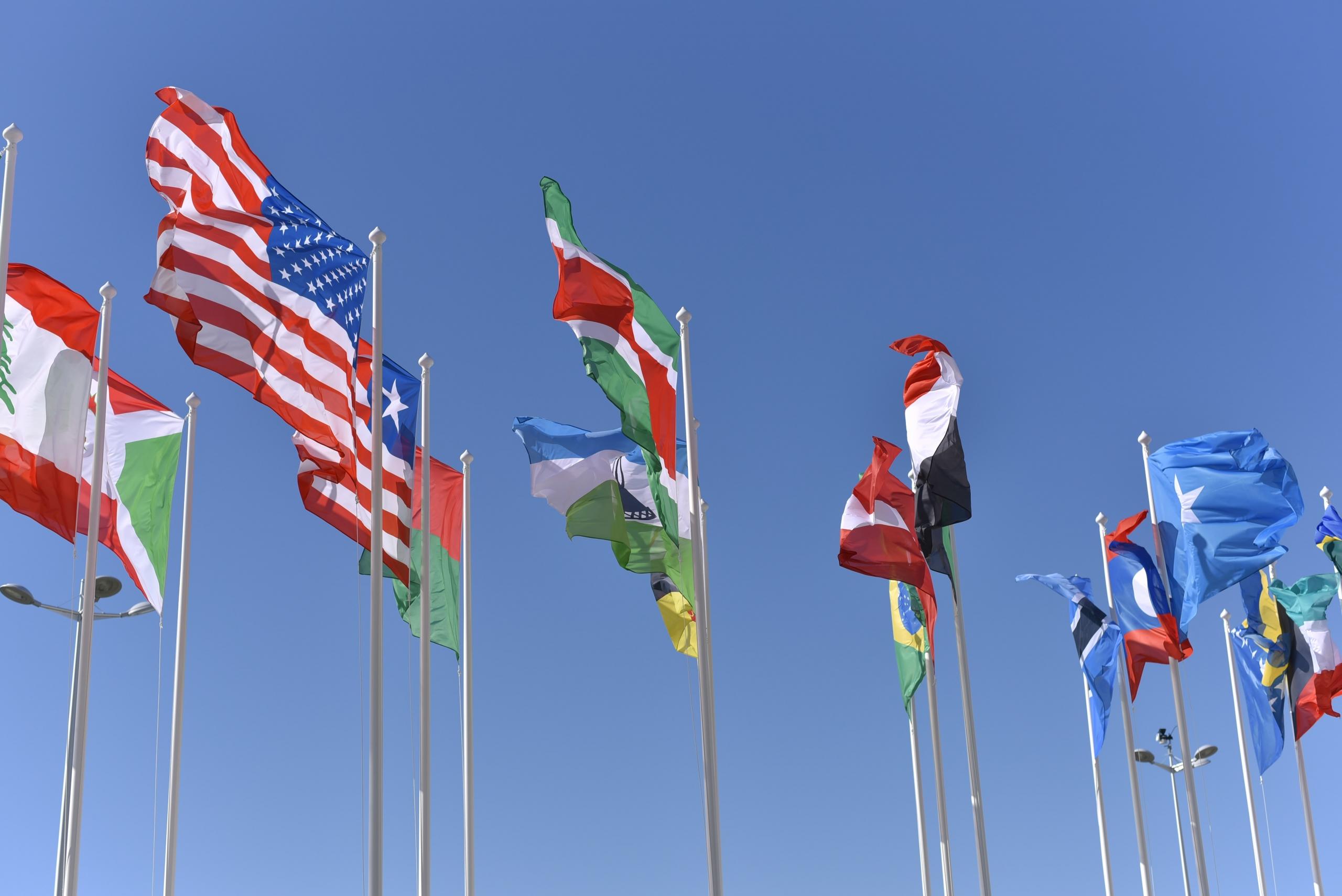
First things first, looking at the big picture, in terms of overall Nobel Prizes across all disciplines the US leads the way by a significant margin with 388 or so awards.
After the Americans, it’s the British with a highly impressive 133 Nobel Laureates, followed by Germany who has 109 to date - including the great Albert Einstein. Then there is a flurry of countries with around 30 winners including France, Sweden, Russia, Japan, and Switzerland.
| Country | Total Nobel Prizes | Physics | Chemistry | Medicine | Literature | Peace | Economics |
|---|---|---|---|---|---|---|---|
| United States | 403 | 98 | 72 | 103 | 12 | 22 | 96 |
| United Kingdom | 138 | 26 | 34 | 30 | 11 | 18 | 19 |
| Germany | 111 | 33 | 35 | 17 | 10 | 5 | 11 |
| France | 71 | 13 | 9 | 12 | 15 | 11 | 11 |
| Sweden | 32 | 4 | 4 | 8 | 8 | 7 | 1 |
| Switzerland | 28 | 5 | 5 | 8 | 3 | 9 | 0 |
| Japan | 28 | 11 | 8 | 7 | 3 | 0 | 1 |
| Russia/Soviet Union | 31 | 10 | 9 | 8 | 2 | 3 | 0 |
| Canada | 27 | 4 | 4 | 6 | 2 | 10 | 1 |
| Austria | 22 | 6 | 4 | 7 | 1 | 3 | 1 |
| Italy | 20 | 5 | 4 | 5 | 6 | 0 | 0 |
| Netherlands | 21 | 8 | 6 | 3 | 3 | 0 | 1 |
| Israel | 13 | 0 | 1 | 3 | 2 | 5 | 2 |
| Australia | 13 | 2 | 0 | 9 | 2 | 0 | 0 |
| Norway | 13 | 0 | 0 | 0 | 3 | 12 | 0 |
| Denmark | 14 | 3 | 6 | 4 | 1 | 0 | 0 |
| Spain | 8 | 1 | 1 | 2 | 5 | 0 | 0 |
| China | 9 | 1 | 3 | 2 | 1 | 2 | 0 |
| India | 12 | 4 | 0 | 4 | 1 | 3 | 0 |
| Belgium | 11 | 1 | 4 | 2 | 1 | 3 | 0 |
But how do the British fare when it comes to the chemistry Nobel Prize?
We’re glad you asked because it’s something every Brit should know, and be proud of.
The UK currently claims 33 Nobel Prize wins since the award ceremony’s inception more than 100 years ago in chemistry. This astonishing accomplishment is matched by Germany, which also has 33 Nobel Prizes in chemistry.
It goes without saying that the United States is leaps and bounds ahead with 72 Nobel Prize winners in chemistry, but considering the size disparity of the countries the UK more than holds its own.
After the top three countries are France with 10 chemistry Nobel Prizes, then Japan with 8, and Switzerland with 7.
Could you be the Next Nobel Prize Winner?
Ok, maybe we overstepped a bit.
While a Nobel Prize is something very few of us will ever come close to in our lifetimes, in theory, anybody can win one if they consistently work smart and hard.
Though that’s not to say it isn’t without controversy. The chemistry Nobel Prize 2020 was strife with controversy and it’s now referred to as the chemistry Nobel Prize 2020 controversy. Basically, as with many Nobel Prize controversies, it was a result of scientists who perhaps should have been credited being left out.
So, if you’re still young, why not pour all of your energy into chemistry and see if you can join the ranks of the elite?
Even if you don’t have aspirations of taking over the world, we hope we’ve shown you that chemistry can be an endlessly fascinating subject that covers a broad spectrum of topics that affect all of humankind.
To get started, it’s not a bad idea to find a private chemistry tutor as they can help guide your studies and indulge your interests in the subject.
On the Superprof website, you can find local tutors near you, or take chemistry classes online in order to take your studies to the next level and explore your curiosities within the science.
Find chemistry A level tutor here on Superprof.
Summarise with AI:
Did you like this article? Leave a rating!


 Loading...