

Earning a role in a theatrical production, film, commercial, or other project requires more than just talent. Auditions are opportunities to showcase your skills as well as a test of your ability to prepare, follow instructions, cooperate, and pivot. This guide outlines how performers can prepare for auditions to give a confident and competent presentation.


Understanding the Audition Requirements
The most important part of an audition is the acting. To fully prepare for an audition, you must practice the right skills and elements, which requires research and intuition. Many performers rush through the preparation process, which leads to avoidable mistakes.
Researching the Role and Production
There are many elements to research before you even begin acting practice for your audition. Get a solid foundational understanding of the work you’re about to audition for by learning as much as you can about the details.
The best performers are the performers who know who they are and are comfortable with who that is.
Kelly Valentine Hendry, Casting director
Production Company & Production Specifics
Learn everything you can about the production company and casting crew. Research previous productions done by the same company to understand the type of performance they prefer. Understanding what the casting team is looking for will help you select material and inform your approach to the character.
Learn about the production's context. Is it comedic, dramatic, contemporary, or a whole new approach to a classic? Do the producers want a traditional portrayal of a beloved character, or a fresh take? Read a summary and any other information given. Each style requires a different strategy in terms of acting choices.
Find out about the local scene, if you're not already knowledgeable. Auditioning in a city like Atlanta is different than Broadway, for instance.

History of the Production
Watch previous versions of the same work, listen to the songs (if it’s a musical), and read source material. Find out where the production company is coming from. Do they want to give a classical show or a modern interpretation? Once you understand the context of the story and its place in theatre, you can make informed creative choices.
Specific Role
Even if the casting call is a general audition, you can still approach audition day with a character in mind. This is often helpful for focusing your intention, even if you end up being selected for a different character.
Research previous iterations of the production and the character or role you’re focusing on; look at their personality, relationships, motivations, and key moments in the story. Decide how to approach this information in the context of the production to guide your acting choices.
Considering the Audition Instructions
Audition notices usually include specific instructions outlining the framework that the performer must follow for their audition. Each production company and specific production may have different specific requirements, so you must always carefully read the instructions on the casting call. They’ll also tell you if you’ll have a partner read and/or an accompanying piano for your song.
Usually, the instructions include things like:
- Preparing one or two monologues, each being less than 2 minutes long, and usually contrasting (e.g., comedic vs dramatic, classical vs contemporary, etc.).
- For musical theater auditions, preparing 16-32 lines (about 1 or 2 minutes) of a song or two, usually contrasting.
- For dancing roles, preparing 1-2 minutes of a solo dance that may include a variety of techniques, and being ready to learn new choreography on-the-spot.

The most important part of the audition instructions is adhering to the strict time limit. Many casting calls, especially general ones, may see hundreds of performers over 8 or more hours. The casting crew does not have time to see more than 1-2 minutes from each performer.
If they want to see you for extra time, they will request you to stay longer. Overshooting your audition time by more than a few seconds, especially intentionally, is a great way to get your name immediately crossed off. This is especially true in places like Broadway, which regularly sees huge turnouts at auditions.
Knowing the requirements helps you use your time well. It also shows the panel that you can follow direction, which is a key part of acting and performance work.
Selecting Appropriate Material
Choosing the right material is one of the most important steps in preparing for an audition. Many auditions allow you to choose your monologues and songs from any source you choose. Others may require you to present specific material or read sides.
‘Sides’ are excerpts from a script that the actor is expected to perform at an audition. They may be from the production being cast, or from another show. Auditioners may be given sides to prepare in advance, or they may be handed out on-the-spot for a cold read.1
The exact process for each production should be outlined in the casting call information. If there is any confusion, do your best to find out the answers; contact your agent, the company, or another useful connection to answer your questions. If questions remain, simply do your best.
All the research you’ve done on the production and the character will inform which monologues and songs you choose, as well as how you want to deliver them. If you have the option to select material, choose monologues and music that:
- Highlight your talents and your range
- Suit the production and the style of the show
- Are within your comfort zone
- You can perform very well
A simple piece performed convincingly well is better than a complex one performed poorly. Avoid overdone numbers that the casting team is tired of hearing. Putting a personal spin on the song is better than trying to recreate a famous performance.
Unless you’re auditioning for a specific part, and you’re extremely comfortable with the source material, it's best to avoid monologues or songs from the show. The director might have a specific vision of how the character should speak and sing that you’re unlikely to hit on the mark.2
Effective Practice Strategies
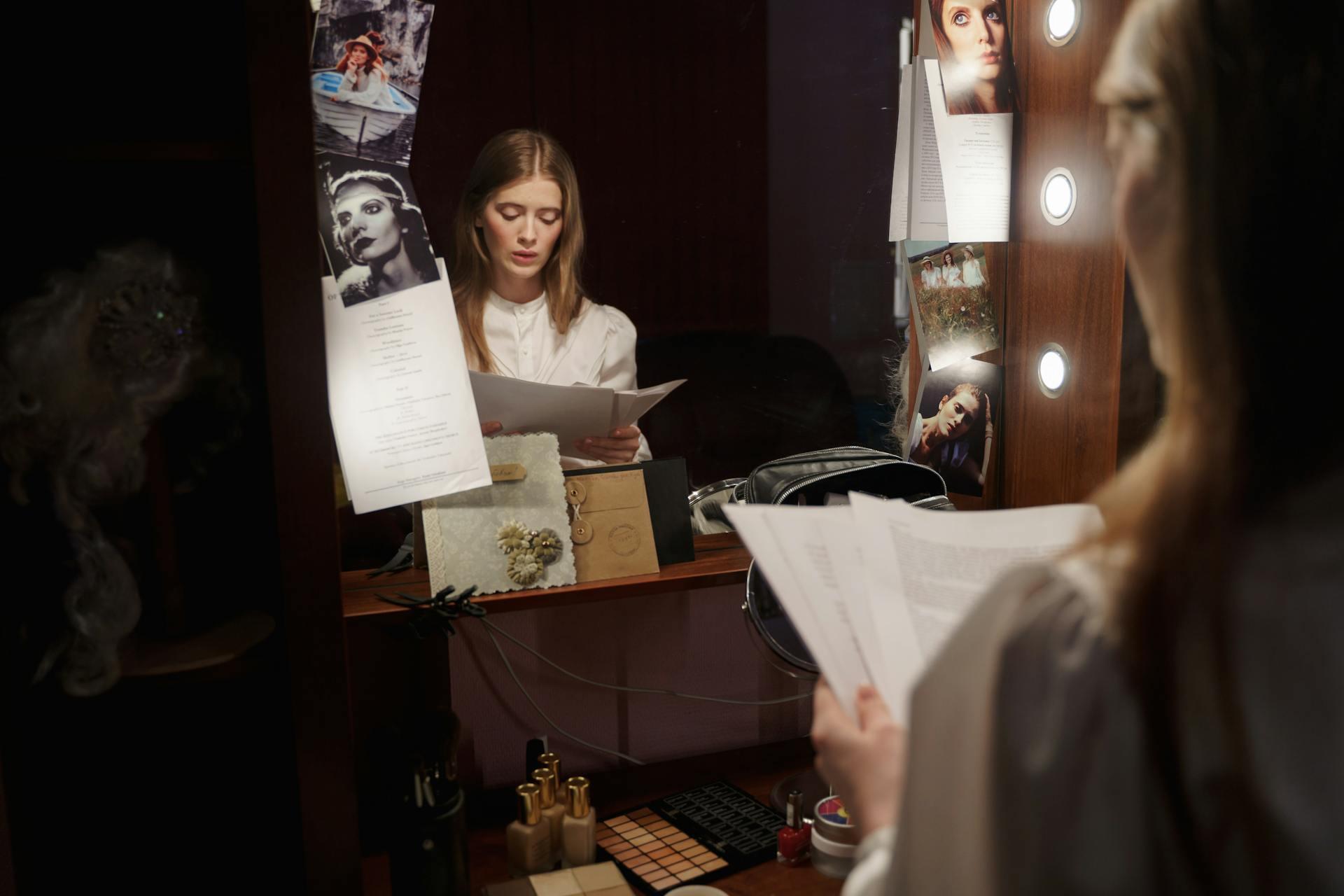
Approach your audition practice with intention. Simply reading a monologue or singing a song over and over does not help you improve. The performance is an art, so you need to hone all the elements to construct an overall strong creation.
Memorization Techniques
Memorization is imperative for any theater audition. Even if you only have a few minutes, hours, or days to prepare, you should have an appropriate level of memorization when performing the piece. What techniques can you develop to make memorization easier?
Remember how researching your character helps you make informed artistic choices? It also helps you remember your lines. Understanding the character’s motivation makes what they’re saying make sense. When you know where they’re coming from and what they hope to achieve by speaking, you’ll understand why every word is chosen.
Write the words down on paper or type them out. Feel each word as you go. This helps engage the parts of the brain involved in memory.
If possible, have a friend read lines with you and practice reducing the amount of time you spend glancing at your notes each time. If you don’t have a buddy, record yourself saying the other character’s lines and play them for yourself so you have something to react to more naturally.
Learn small sections of material at a time. Then, string them together.
There’s always a chance you’ll be asked to give a cold read. Hone your ability to quickly take in the material, make artistic choices, focus, and deliver. Remember, it’s okay to look at the sides while doing cold reads; the more important part is being able to act out what you’re reading, not memorize it straight away.
More than memorization, casting teams want to see you put forth an interpretation of your material that speaks to the production. However, with days of advance notice, you’ll be expected to have a firm grasp on the lines.
For your own benefit, memorization boosts confidence, which gives you a more favorable image in the casting room and helps you roll with the punches.3 Honing this skill will serve you no matter where you are, even in Chicago theatre auditions.

Rehearsing with Purpose
Set clear goals for each practice session to build up all the necessary skills for your ideal audition. This starts with identifying your weak points and creating a plan to improve them. What elements of acting have you struggled with in the past? Consider:
Acting
- Emotional delivery
- Conviction and confidence
- Pacing
- Enunciation
- Body movement
- Breathing
- Memorization
Singing
- Emotional delivery
- Pitch accuracy, tempo, etc.
- Projection, diction
- Conviction and confidence
- Breathing
Other skills you can work on include how to recover from slip-ups and maintain composure, taking direction and adapting, the interpersonal elements of the audition (introducing yourself, answering questions, developing a rapport with the casting staff and accompanying pianist, etc.), and staying calm.
Over the course of your career, you’ll have many opportunities to develop each of these skills. When preparing for a specific audition, identify the most important aspects that need sharpening and work on those with each practice session.
Record your rehearsals so you can get more comfortable being watched and look back to observe your performance from the caster’s point of view. You’ll find things that go unnoticed during your performance, like nervous habits, pacing, pitchiness, and more.5
We’re not only looking for talent, we also want to see if a person has drive, commitment, focus, and a level of versatility between vocal stylings.
Liza Gennaro, Associate Dean and Director of Musical Theatre at Manhattan School of Music
Physical and Vocal Preparation
Your voice and body are your tools, instruments, and medium. Preparing and maintaining them are imperative for good, consistent performance. Conditioning not only allows you to express your material better, but it also helps you perform all the duties required in acting more easily.
Vocal Warm-Ups
Warming up your voice prepares your vocal cords for singing and speaking. This reduces strain, improves control, and can prevent injury and nodes. Anyone who does a lot of talking can benefit from vocal warmups, even if they don’t sing.
Start with gentle exercises focused on breathing, posture, and relaxation, especially in your throat and neck. Tension negatively impacts sound quality and stamina. Then, move on to sound exercises:
- Lip trills
- Humming, and humming with resistance
- Scales
- Sirens (going from low pitch to high pitch and back, stretching your low and high notes)
Pay attention to how your voice feels. If it’s strained or painful, back off to avoid injury. Consult with a doctor or vocal coach to find out the root of the problem and how to solve it.
The number one way to care for your voice is: hydration! Stay hydrated (ideally at all times) to keep your voice tissue hydrated from the inside. Practice your vocal exercises regularly in short sessions to stay conditioned.
Physical Conditioning
A good speaking or singing voice requires support from the body. Good posture from head to toe, plus breathing control, allows you to execute the full range and power of your voice.
Simple exercises can help: stretching the whole body improves flexibility, movement releases tension, and light cardio keeps the lungs and heart healthy. Rest and nutrition are also important, as the body can’t perform any functions at full capacity if you’re fatigued and lacking in nutrients.7
Additional Vocal Coach Tips
Beyond strictly training your voice, there are a few practical habits that can improve your vocal performance. Managing your stress is the most important. Feeling nervous at an audition is normal, but you shouldn’t let that make your voice weak, wavering, or pitchy, or make your breathing shallow. Practice reducing your anxiety to gain control over your nerves during auditions.
Practice speaking with confidence so you can introduce yourself effectively and give a good first impression. Staying calm and poised when giving any communication makes you appear reliable and desirable as an actor. Your confidence will also help you stay in control even if you slip up or something unexpected happens.6 This level of poise will help in every aspect of life, including auditioning for Phoenix theatre.
Day of the Audition Tips
After all your preparation, you’ll want to go through the other minutiae of audition day as smoothly as possible. Remember these quick tips to make the day a success, even if you don’t get the part.
- Have all your materials printed: Have your headshot, resume, sheet music with clear marks for the accompanist, and your monologues/sides, and music readily available.
- Arrive early: Settle into the environment before entering the audition room, plus punctuality is important for the casting team. Stay hydrated while waiting.
- Dress appropriately: Clothing should be comfortable and not distract from your performance.
- Warm up: Before entering the room, go through your vocal and physical warmups.
- Greeting: Politely greet the panel, introduce yourself, and distribute your headshot, resume, and sheet music (if applicable).
- Centering: Take a beat to focus and position yourself before beginning to demonstrate awareness and confidence, and calm your nerves.
- Stay open to feedback: Sometimes, panels may give instructions. Be prepared to take them in stride and deliver without feeling negatively.
- Focus on performing: Your goal is to give a good performance that demonstrates your qualifications, not worry about the casting team’s reactions. Execute what you practiced, regardless of how anyone reacts (unless they give you notes, of course). If you make a mistake, start over or continue, as appropriate, without apology.
- Parting: Thank the team for their time before leaving.
After the audition ends, reflect on what went well and what you could improve. Continue practicing in your own time to stay sharp and build up the things you want to change or expand upon in your skillset. Acting is a unique art that allows each performer to sculpt themselves into the artist they want to be. Focus on the type of performer you want to be, and the type of performance you want to give, and make it happen!
References
- Cain, Abigail. “What Are ‘Sides’ in Acting?” Backstage, 26 Apr. 2022, www.backstage.com/magazine/article/what-are-sides-in-acting-72452. Accessed 26 May 2026.
- Koch, Andrew. “How to Pick Your Best Audition Monologues.” Dramatics Magazine Online, 27 Aug. 2021, dramatics.org/how-to-pick-your-best-audition-monologues. Accessed 26 May 2026.
- Kostroff, Michael. “The Key to Memorization Before an Audition.” Backstage, 15 Aug. 2013, www.backstage.com/magazine/article/key-memorization-audition-12963. Accessed 26 May 2026.
- Lossie, Nicole. “How to Prepare for an Audition.” Erie Playhouse, 2 Apr. 2024, www.erieplayhouse.org/how-to-prepare-for-an-audition. Accessed 26 May 2026.
- Raymond, Natasha. “Skills That Make You Stand Out According to Casting Directors.” Spotlight, 11 Dec. 2025, www.spotlight.com/news-and-advice/the-essentials/skills-that-make-you-stand-out-according-to-casting-directors. Accessed 26 May 2026.
- “Tips and Tricks for a Successful Musical Theatre Audition.” Manhattan School of Music, 13 Jan. 2022, www.msmnyc.edu/news/tips-and-tricks-for-a-successful-musical-theatre-audition. Accessed 26 May 2026.
- “Vocal Warm-Ups Every Voice Actor Needs to Know.” The Booth, 29 Sept. 2025, voice123.com/thebooth/vocal-warm-ups. Accessed 26 May 2026.
Summarise with AI:
Did you like this article? Leave a rating!

 Loading...