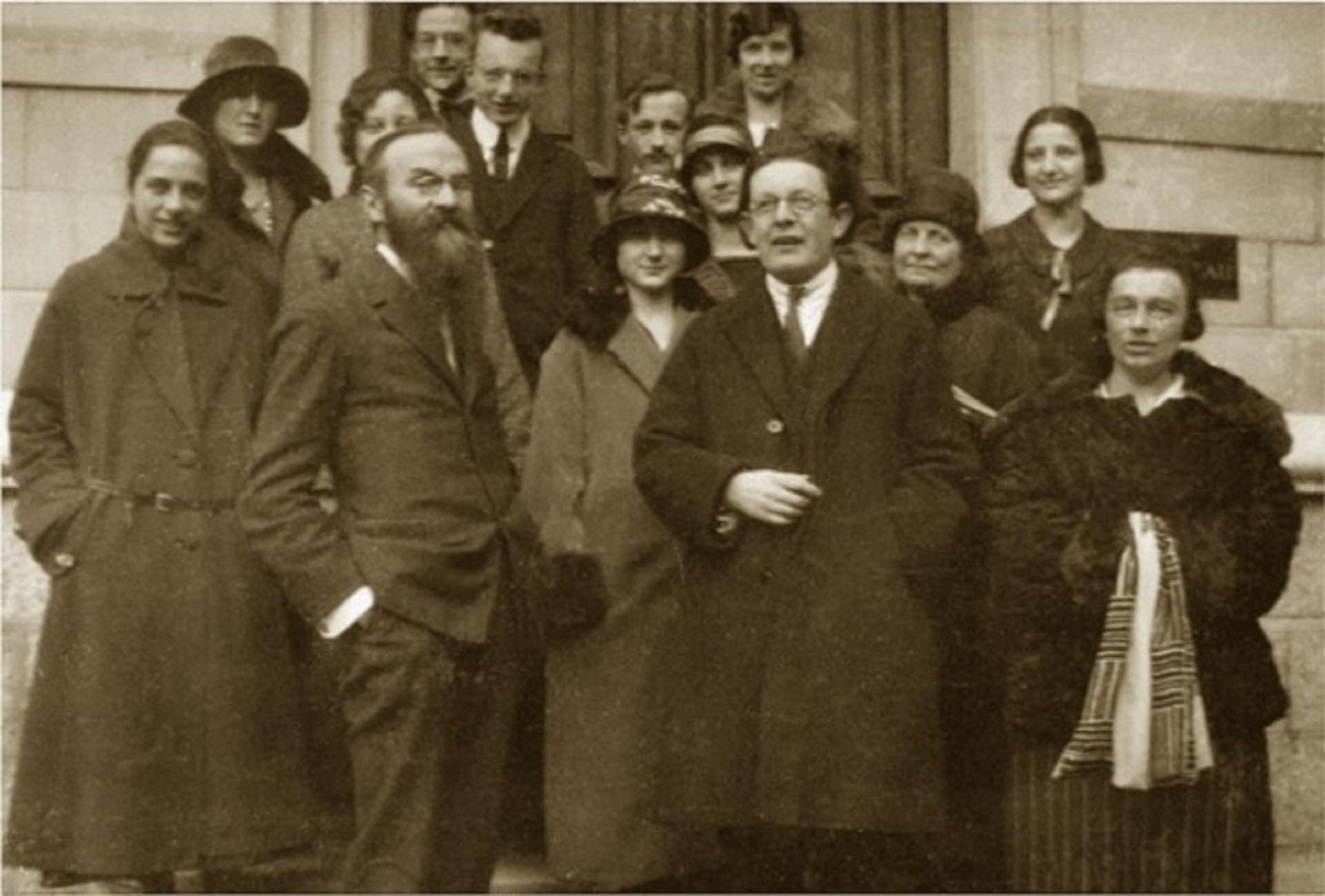

Only education is capable of saving our societies from possible collapse, whether violent or gradual. - Jean Piaget
Most famous psychologists work in various fields alongside psychology. For instance, arguably the biggest name in psychology was primarily a neurologist who also dabbled in philosophy. Sigmund Freud 'fathered' psychoanalysis as a way to wed neurology to psychology.
But Dr Freud is not our psychologist du jour. Today, we discuss Jean Piaget and the foundation he laid for us to better understand intellectual development. If that were the sum total of his life's work, that would already be enough. But, like many others in his field, his work touched on so much more:
- morality
- education
- the origins of human intelligence
- primatology and non-human development
- computer science and artificial intelligence (AI)
- philosophy
- historical studies of thought and cognition
Besides being the second-most renowned psychologist of his era - B F Skinner claimed the top spot, who was Jean Piaget? Why did he pursue these ponderous topics? And what do those topics represent, clinically and actually? Let's find out.





Jean Piaget: Early Life
Jean Piaget was born into an impressively pedigreed family. His French-born mother was descended from English steel magnate James Jackson. His Swiss-born father was a professor of medieval literature at the University of Neuchâtel; the city of Jean's birth.
Jean, with unbridled curiosity about the natural world, submitted a series of articles on molluscs before he was 15 years old. Astounded zoologists hailed this precocious youth's discoveries and extended him a standing welcome into their field. He might have taken them up on their offer, so besotted was he with biology. His godfather had other ideas.

Young Piaget wasn't solely interested in how and why creatures lived. He was fascinated with the idea that all creatures possess knowledge. He wanted to know how they know what they know and how they learned it. His godfather seized on the youth's extraordinary mind to nudge him in that direction. Thus, Jean Piaget is as renowned for epistemology - the theory of knowledge, as he is for his work in intellectual development.
Perhaps his most impactful significant emotional event (SEE) was his supposed attempted kidnapping. When he was 15, his childhood nanny confessed that she had made up a story about fighting off the kidnapper. Young Jean would spend decades wondering how he could have a memory of such an event. This false memory persisted even though he knew he was never involved in such a series of actions.
Adolescence is a crucial time for intellectual and socio-emotional development, as Jean Piaget would later discover through his work. Luckily, he enjoyed a safe, comfortable childhood. He was fortunate to be surrounded by adults who encouraged his scientific and philosophical curiosity. His youth raised all of the questions he would seek answers to for the rest of his life.
What Is Intellectual Development?
Jean Piaget influenced many later psychologists' work, including Arthur Bandura. That doctor of psychology's most renowned experiment is deemed controversial for exposing children to abusive behaviour. Piaget's work bears no such stigma, though he has faced criticism. But then, every intellectual powerhouse does/did, even Albert Einstein. In that spirit, let's examine a bit of Jean Piaget's work.
Genetic Epistemology
As previously noted, Jean Piaget considered himself an epistemologist - a philosopher who studies the theory of knowledge. His formal philosophical dabblings were short-lived but he applied philosophical principles to everything he studied. He wondered, for instance, how ideas came about. How does a scientist get the idea to explore a particular study?
He wanted to study 'genesis' ideas and actions to discover how they came about. He needed test subjects that had no historical relationship to the action performed. He believed that, by studying children, he could isolate and study genetic epistemology. He opened the International Genetic Epistemology Institute in Geneva in 1955.
Jean Piaget Theory on Play
Play is the work of children. - Jean Piaget
As medieval paintings portray, people thought that children were just mini-adults. That view held up to the time Jean Piaget turned that idea on its head. He was writing questions for an intelligence test in French to match similar exams English children routinely took. He couldn't understand why his tiny test subjects gave incorrect answers. He set out to study the matter.
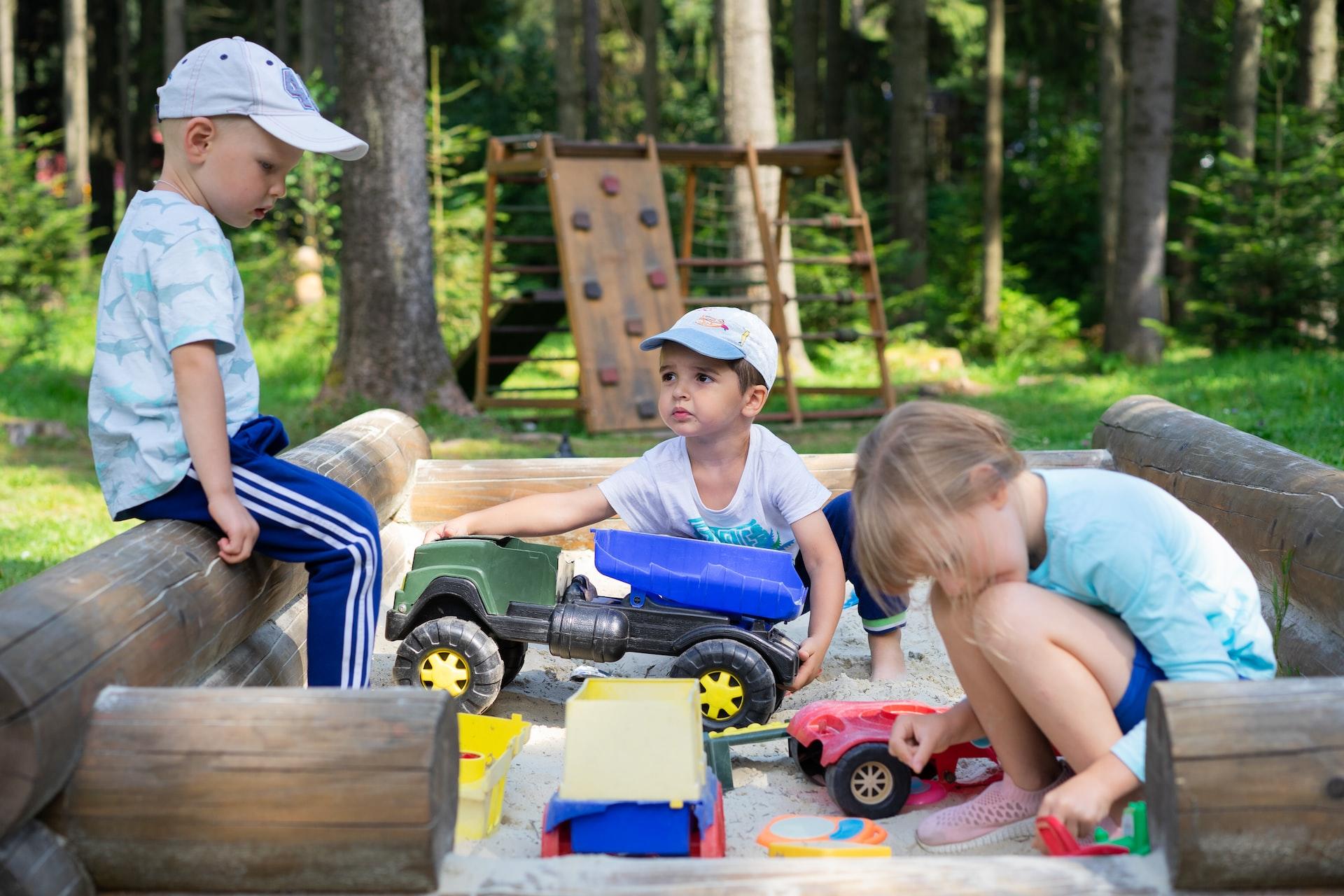
Much as he studied wildlife when he was a child, he studied children in their natural environment. They were doing what children do best: play. The conclusions he drew were nothing short of stunning. Piaget's Stages of Play describes how children learn and grow through play. This study would inform the work he's most renowned for.
Some scientists and psychologists prompt or condition their test subjects. For example, Ivan Pavlov conditioned dogs to respond to stimuli. Jean Piaget gave these test subjects no instructions or directions. He simply observed them at play. From there, he let logic guide him to findings that have shaped the way we teach children today.
Piaget's Theory of Cognitive Development
Finally, we get to the meat of things. Jean Piaget marked his territory, as it were, by postulating that the quality of children's intelligence determined how well they could solve problems. He believed that children gain an understanding of their world through their experiences. When they experience something altered or different from past experiences, they reshape their ideas.
He was himself critical of how limited his theory of cognitive development was. Each theoretical stage was sharply defined and rigidly applied to specific age groups. That left little room to entertain the idea of continuous development. Still, we see his theory in action in every Montessori school. But not just there. Piaget's theory of cognitive development is widely used in pediatric clinics, most often expressed as developmental milestones.
Sensorimotor Stage
This stage runs from birth to age two. At this time, the child draws on all five senses to learn about the world. Movement also enhances knowledge. The sensorimotor stage is further broken into stages. The instinctual - sucking and rooting (birth to one month), Circular reactions: unplanned firsts such as laughing and putting the hand in the mouth that lead to habits.
Primary circular reactions start when the baby is one month old. From four to eight months old, babies become more object-oriented. Their ability to move also increases. At this secondary circular stage, babies start doing things intentionally. As their list of experiences grows, they begin making trying new things like using toys in novel ways. From 12 to 18 months old and beyond, children experiment with the knowledge they have, seeking different results.
Preoperational Stage
This stage is rather ill-defined. The literature indicates it should start at age two. However, our groundbreaking psychologist specified that children become verbal at this stage. Today, we know that children start talking when they're much younger than two. Perhaps Piaget didn't consider 'mama' and 'dada' actual speech.
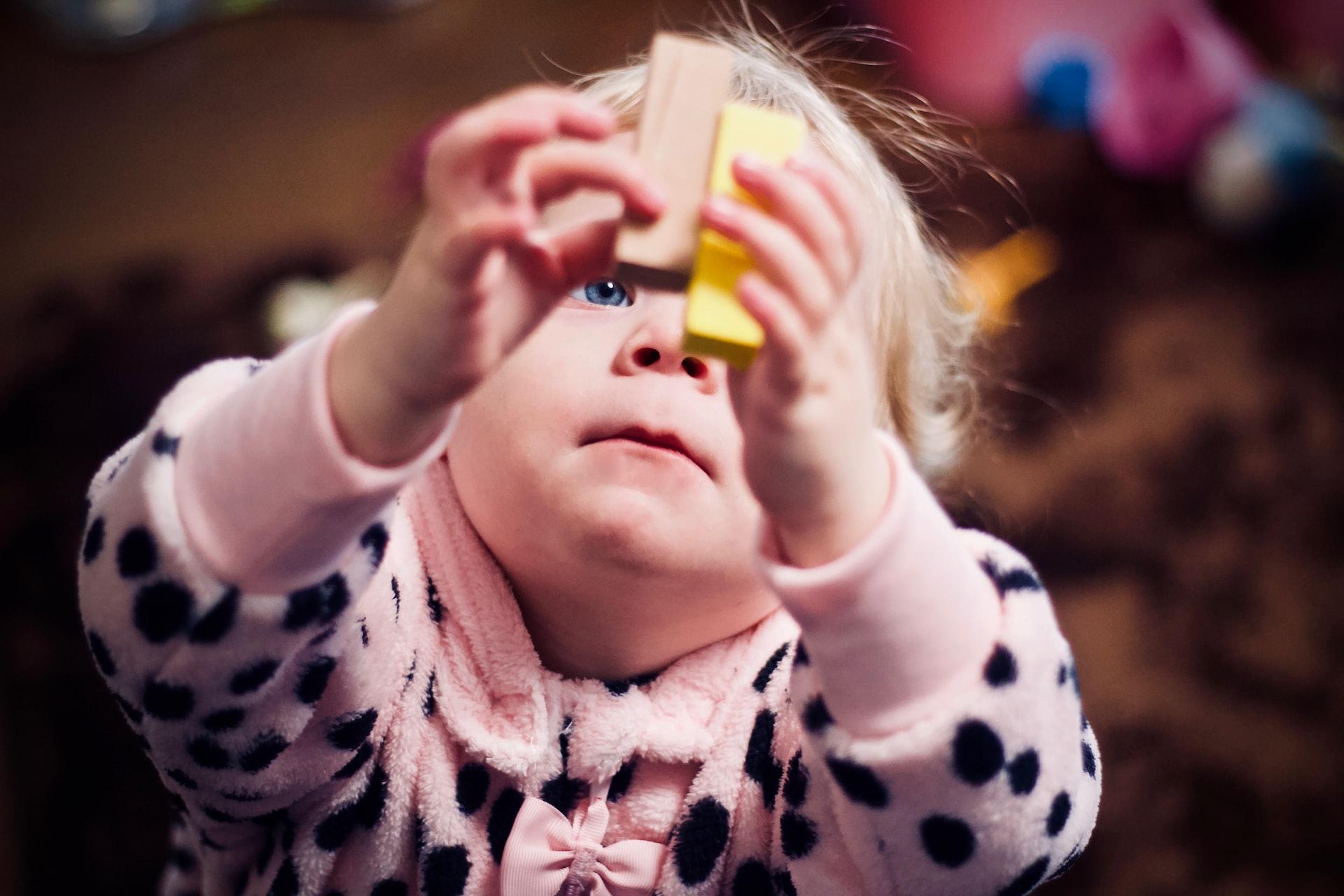
Piaget seemed impressed with toddlers' capacity for imagination. However, he believed they had little in the way of logic. For instance, a checker might be a snack. A box could double as a table. One might argue that his subjects were indeed very logical. After all, don't some biscuits resemble checkers in shape and size?
The preoperational stage is further divided into two sub-stages. The symbolic function substage might see a child engaging in more real-world play. For instance, a doll might become their baby. A stick turns into a rifle. Children at this stage know but don't seem to care that a stick cannot fire bullets. Therein lies the presumed lack of logic.
The intuitive thought substage is more charitable. Children ask a lot of questions at this stage (between 4-7 years old). They try to understand why things are the way they are. They're aware of the knowledge they possess but they have no idea where it came from.
Concrete Operational Stage
Between the ages of seven to 11, children begin to think logically. Their conversation is more fluid at this stage and they can express ideas well. They become more aware of the world around them; less egocentric. That may have something to do with being in school.
Formal Operational Stage
The formal operational stage represents preteens and adolescents who can think logically and abstractly. Throughout their cognitive development, children have built classification systems. You might think of types of words: nouns, verbs, adjectives and so on.
In the early development stages, children have little sense of classification. However, as they grow their stores of knowledge, they start classifying it. Clothes are for wearing, food is for eating, toys are for playing and suchlike. At the operational stage, they start combining this concrete knowledge in new ways. They also start thinking critically.
We know today that developmental processes are nowhere near that rigid. However, as Piaget stated nearly 100 years ago, a child's environment has a lot to do with how they build intelligence. Wilhelm Wundt, the father of experimental psychology intuited that children's experiences and the information provided to them shape their cognitive development. Strange how those two epistemologists came to the same conclusion, decades apart.
Summarise with AI:
Did you like this article? Leave a rating!


 Loading...