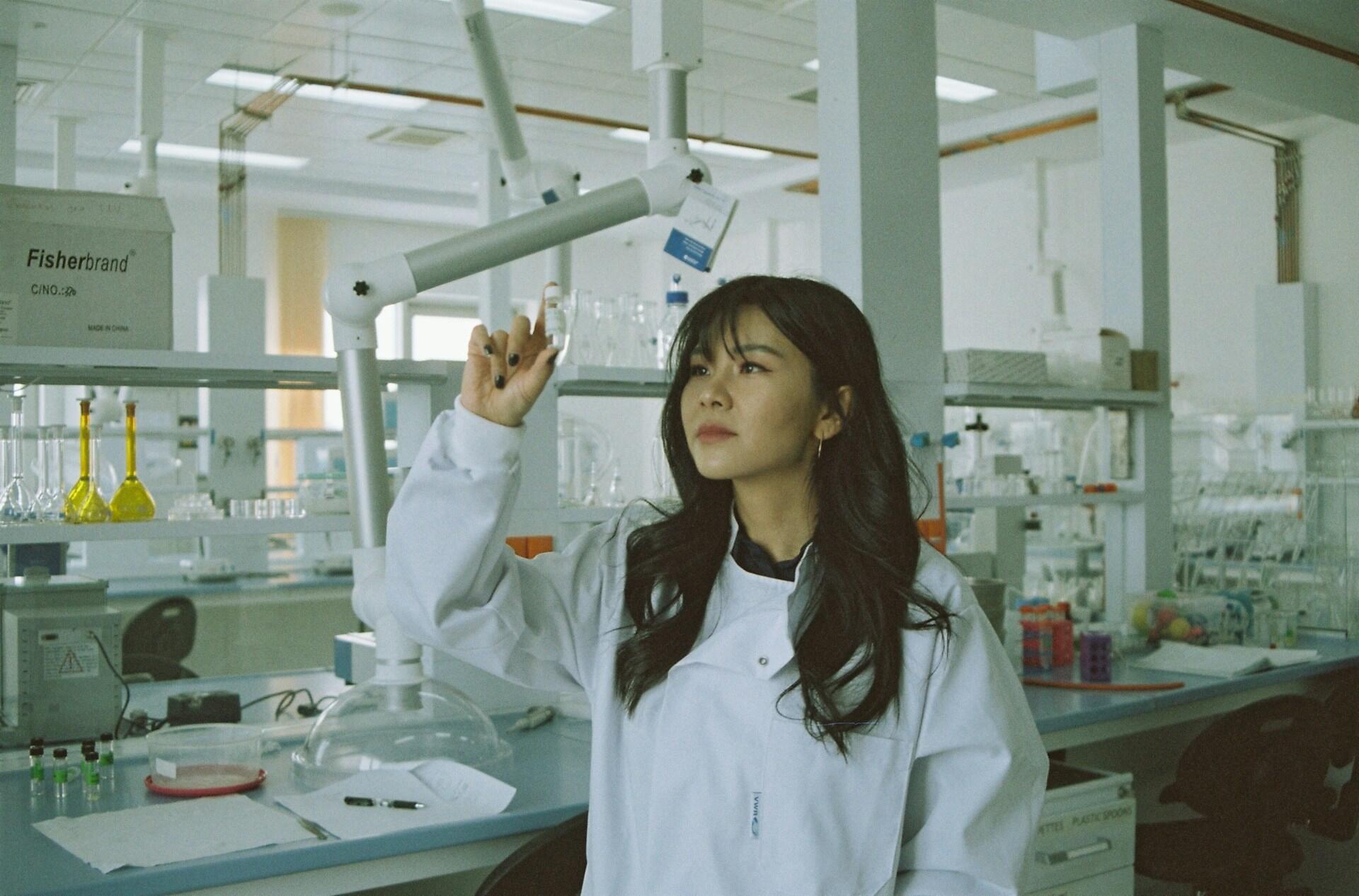

International Day of Women and Girls in Science is coming up on February 11th, 2026 - a valuable opportunity to shine a spotlight on those who, throughout history and even today, have left their mark on the scientific world! Whether they worked behind the scenes or in the spotlight, these women have all contributed to advancing knowledge, often overcoming significant gender-related obstacles. Take our quiz to find out which famous female scientist you resemble!
Quiz
Quiz :







A Long-Hidden Presence
For centuries, women were excluded from scientific institutions and access to formal education. Even when they actively participated in research, their contributions were often attributed to men—husbands, colleagues, or mentors. This systemic invisibility helped shape a predominantly male history of science, relegating women to the margins or to supporting roles.
Only recently have efforts begun to restore women to their rightful place in the global scientific narrative. Historians, associations, and educational initiatives are mobilising to restore historical truth and bring inspiring figures to the attention of younger generations.
A Diversity of Fields of Excellence
Women scientists have worked in all fields, from physics to medicine, biology, mathematics, chemistry, and astronomy. They have laid the foundations for major theories, led large-scale research programs, contributed to essential discoveries, and transformed scientific practices. Some have won prestigious awards, such as the Nobel Prize, while others have only been recognised posthumously.
But beyond awards and distinctions, what matters is the richness and diversity of their contributions. These women often worked in hostile environments, without support and with limited resources. Their perseverance commands respect and demonstrates that scientific talent knows no gender or boundaries.
Role Models for Future Generations
Even today, women are underrepresented in many scientific fields, particularly in the so-called STEM disciplines (science, technology, engineering, and mathematics). There are many reasons for this: persistent stereotypes, a lack of visible female role models, gendered educational guidance, the glass ceiling in academic careers, a higher mental load, and more.

In the face of these challenges, famous female scientists play a crucial role. They offer concrete examples of success, resilience, and creativity. Their stories allow young girls to imagine themselves in scientific careers and believe in their potential.
More and more initiatives are aimed at strengthening the position of women in science: mentoring programs, awareness campaigns, dedicated scholarships, inclusive educational resources, etc. These actions often rely on promoting inspiring career paths to break down stereotypes and promote equality.
A Question of Innovation and Justice
Promoting the presence of women in science is not just a matter of fairness: it is also a question of innovation. Studies have shown that diversity in teams improves the quality of research, stimulates creativity, and allows for better consideration of societal issues.
By incorporating a variety of perspectives, science becomes more inclusive, more rigorous, and more representative of the realities of the world. It also helps to correct certain historical biases: for example, in medicine, many diseases have been studied almost exclusively in male bodies, leading to misdiagnosis or mistreatment in women. A greater diversity of female researchers makes it possible to broaden the field of investigation and produce more balanced knowledge.
A Memory to Be Passed on
In schools, libraries, and the media, it is essential to give these female figures a real place. Not to tick a box or fulfil a representation obligation, but to enrich the scientific culture of everyone.
Including the names of women scientists in textbooks, organising exhibitions, offering appropriate reading material, and inviting female researchers to speak in classrooms are all actions that help to build a more egalitarian mindset.
Discover the names of some famous women scientists (the list is obviously not exhaustive!):
| Name | Domain | Major Contribution |
|---|---|---|
| Marie Curie | Physics / Chemistry | Discovery of polonium and radium, double Nobel Prize |
| Rosalind Franklin | Biology / Chemistry | Fundamental work on the structure of DNA |
| Ada Lovelace | Math / Computer Science | First female programmer in history |
| Katherine Johnson | Math / Astronomy | Critical calculations for NASA space missions |
| Barbara McClintock | Genetics | Discovery of mobile genetic elements, Nobel Prize |
| Chien-Shiung Wu | Physics | Key experience on non-preservation of parity |
| Françoise Barré-Sinoussi | Virology | Co-discovery of HIV, Nobel Prize in Medicine |
| Valentina Terechkova | Astronautics | First woman in space |
| Emmanuelle Charpentier | Biology / Genetics | Co-inventor of CRISPR-Cas9 technology, Nobel Prize winner |
| Mae Jemison | Medicine / Astonautics | First African-American woman in space |
Conclusion: Building the Future Together
By highlighting famous women scientists, we are not only celebrating the past: we are preparing for the future. A future where young girls can dream of becoming engineers, biologists, astrophysicists, or inventors without encountering invisible barriers. A future where science reflects all of humanity—in its diversity, richness, and collective intelligence.
Because it is together, women and men, that we will meet the scientific challenges of tomorrow!
Summarise with AI:
Did you like this article? Leave a rating!

 Loading...