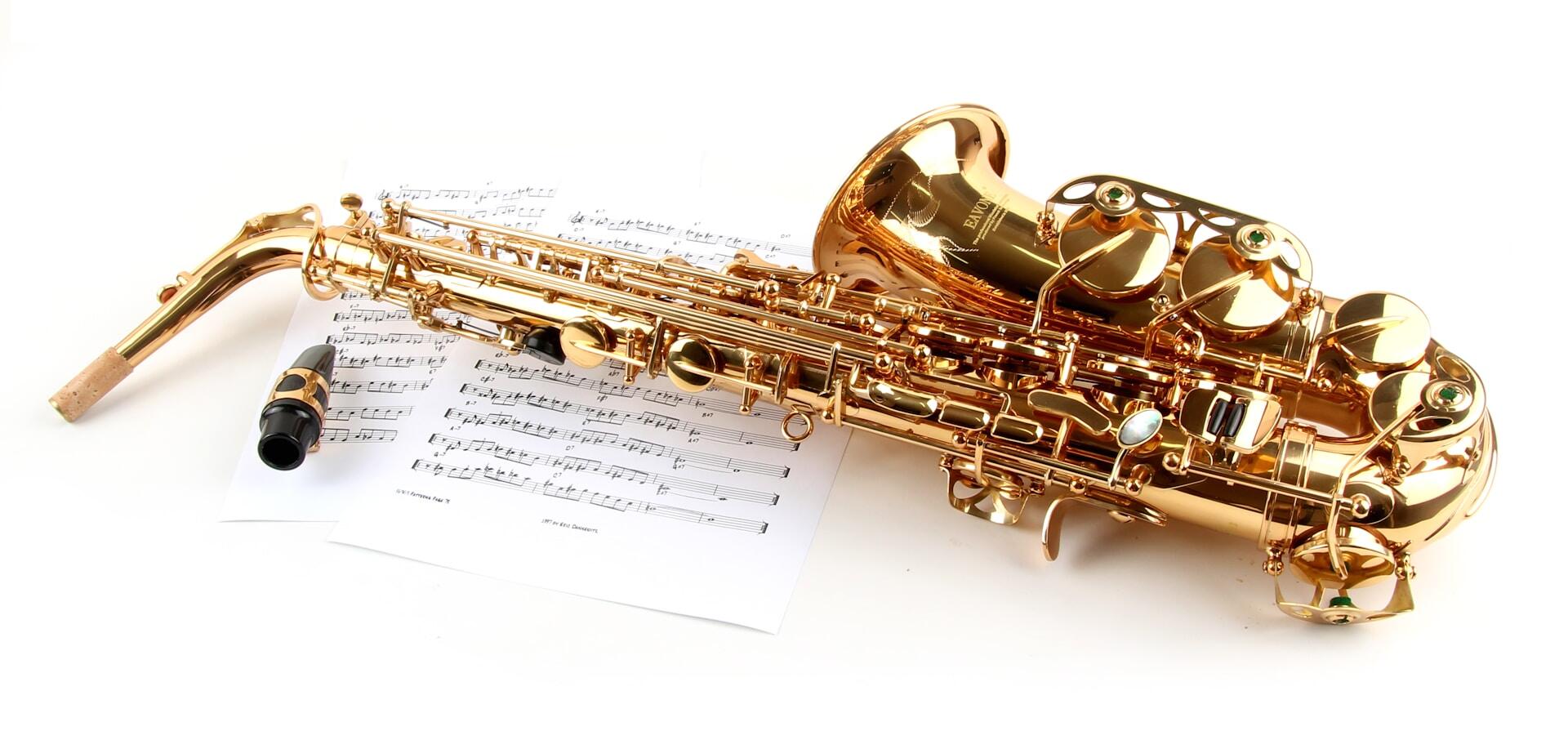

At first glance, the saxophone is equal parts intimidating and fascinating. It lacks the smooth lines and warm glow of, say, a guitar; in fact, it has 'things' sticking out all over it. Don't let its appearance fool you; the saxophone is one of the most beginner-friendly wind instruments. You'll do great with it if you follow these steps.
How to Hold a Saxophone in High Regard
- Study the saxophone: its history, anatomy, features, and types.
- Master embouchure, breath control, and tone production
- Maintain proper playing posture and position your sax properly.
- Take care of your instrument for years of music making.





How to Play Saxophone: Understanding Your Instrument
So, you're thinking about learning how to play saxophone but you worry it might be too hard. Let's put those fears to rest by laying out why the saxophone is so easy for beginners.
Now that you're reassured, learning how to play saxophone is absolutely something you can do. Let's explore your instrument.
A Brief History of the Saxophone
Sometime around 1840, a Belgian instrument maker named Adolphe Sax constructed the first saxophone. He had already improved on the bass clarinet's design; he also had vast experience working with brass instruments. He took the best features of all the instruments he'd worked with/on, and incorporated them into his instrument's design.
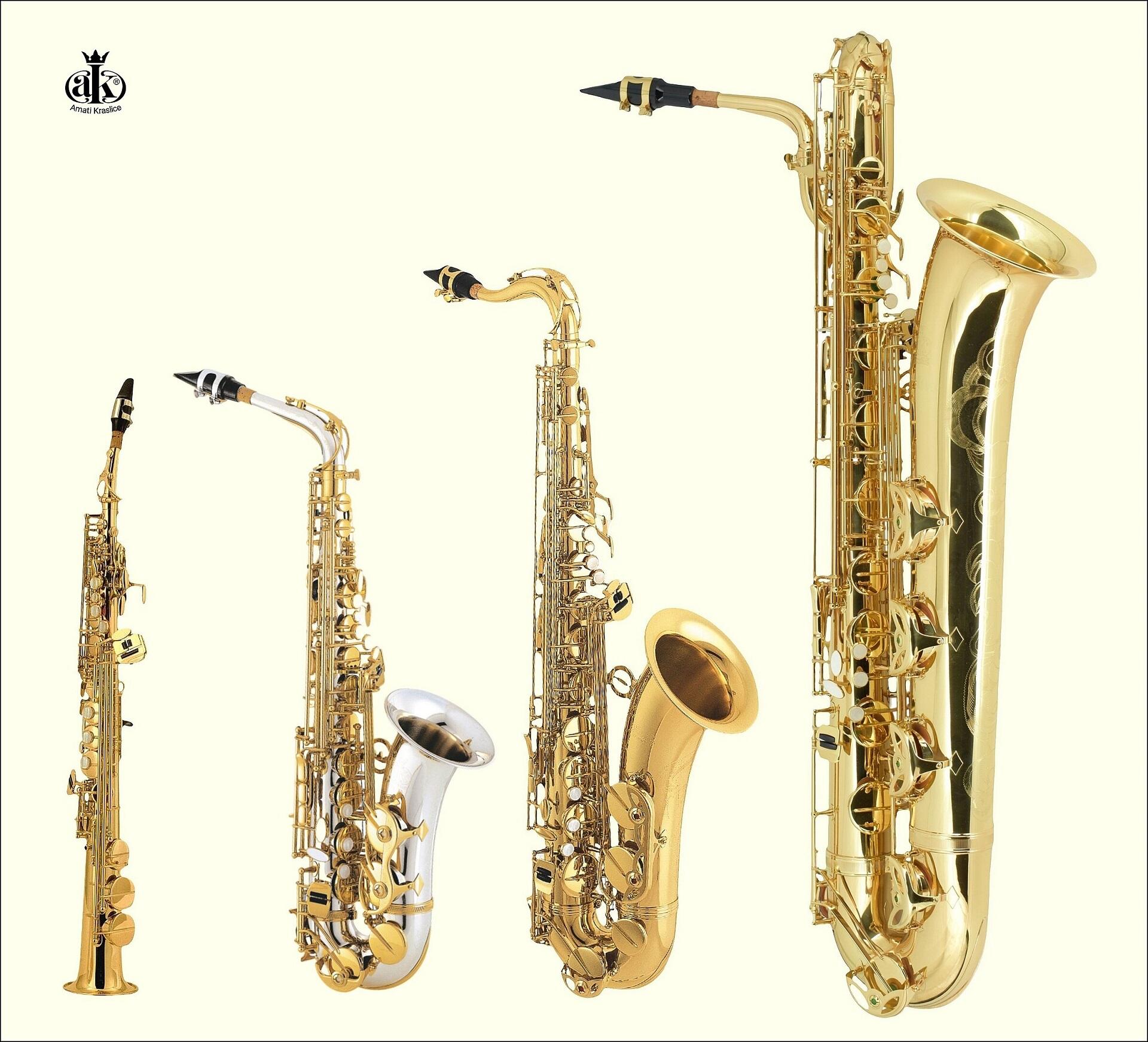
Types of Saxophones
This instrument's relatively short playing range demands a (slightly different) instrument to cover the full musical spectrum. Musicians include eight or more saxophone types but only four dominate.
Sax Anatomy
No matter the type of sax, they all have four main sections.
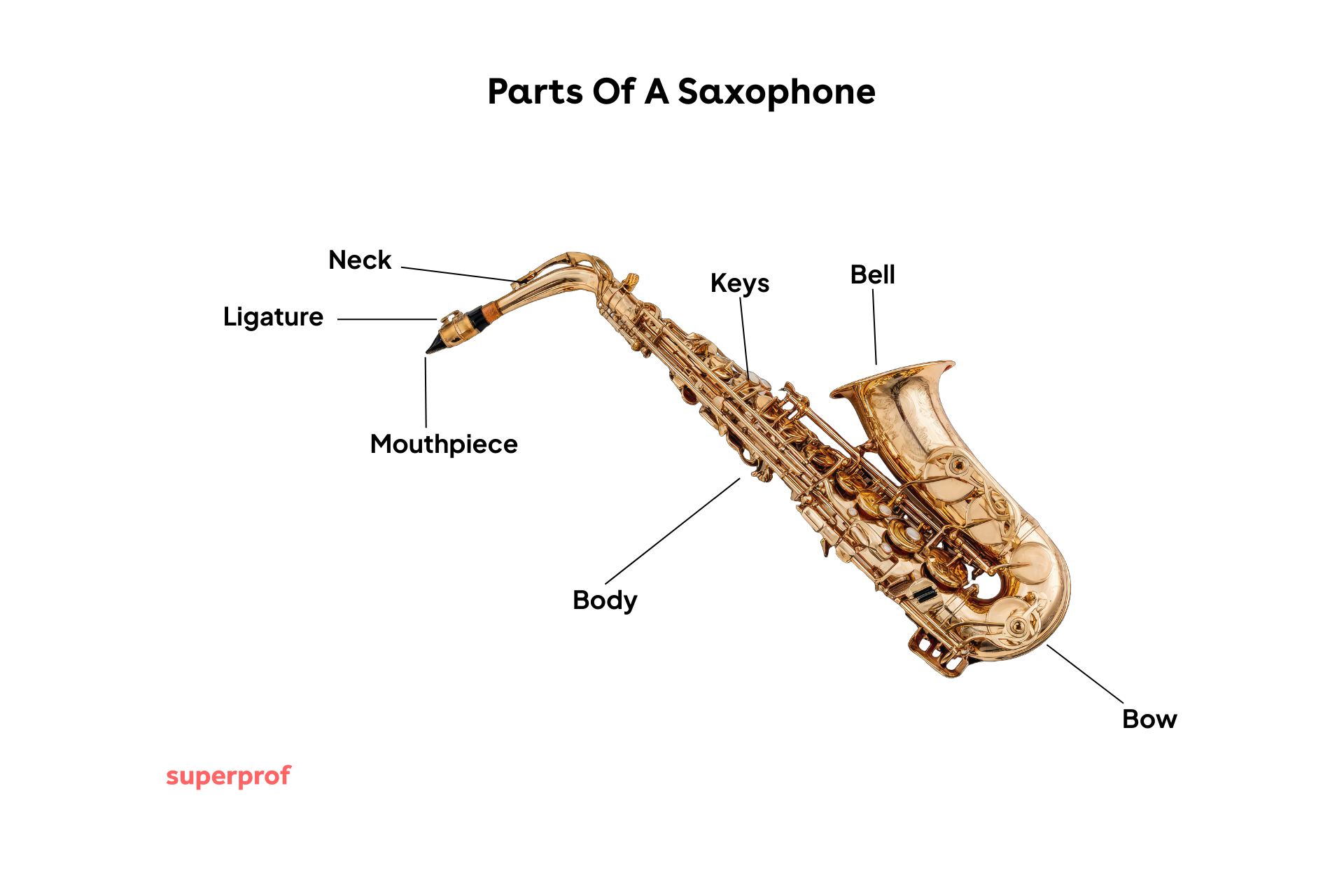
Neck
including mouthpiece
Body
where all the keys are
Bow
the U-shaped part
Bell
where the sound comes from
As a beginner, most of your focus will be on your instrument's neck. It features the mouthpiece where you mount your instrument's reed, affixed by a ligature. The type of reed you play with and your ligature placement modify your instrument's sound. Even the material your mouthpiece is made of makes a difference!
As you assemble your saxophone, inspect the neck's cork and apply neck grease, as needed.
This will help seal the neck and prevent damage to the cork.
Admittedly, for all its simplicity, it will take you a while to play anything remotely recognisable on your sax. In the beginning, even the easiest songs for saxophone will be out of your reach. You must first train your face to coax sounds out of your instrument — a crazy-sounding proposition, but true!
Saxophone Embouchure and Other Essential Aspects
Collins defines 'embouchure' as "the correct application of the lips and tongue in playing a wind instrument." The operative word is 'correct'; sax players don't just stick their saxes' mouthpieces in their mouths and wail! In fact, it takes quite a while to train your face's muscles to play the sax.
Your music teacher may have a go-to embouchure technique that they teach to every student. It may involve exercises to strengthen lip and cheek muscles; flexing and stretching your mouth and the like. However, this embouchure technique works well for beginners.
1. Rest your upper teeth lightly on the mouthpiece; your upper lip clamps down lightly.
2. Seat the reed lightly on your lower teeth, cushioning it on your lower lip.
3. Hold the corners of your mouth firm, so that they create a seal around the mouthpiece.
To be sure, you will need to exercise your facial muscles to maintain that pose for a full playing session. So maybe those stretches and scrunches aren't such a bad idea, after all.
Breath Control
Test your saxophone embouchure by breathing a steady — not too forceful! — flow of air in your mouthpiece. Blowing too hard will result in a harsh sound; too softly will make your sax hiss or worse: make no sound at all.
In a sense, you could say your sax will train you in breath control. You could also practise metered breathing, so you won't have to hold your sax up to train your breath.
1. Breathe in through your nose for a set count.
2. Hold it for the same count.
3. Exhale for the same count each.
4. Hold the exhale for the same count.
Pro tip: this is also a great stress reliever and a fantastic way to regain focus!
Saxophone Posture
As with many instruments, saxophone players may sit or stand to play. In either case, slouching is out of the question. Doing so will limit your breath and maybe even cause injury over time. Otherwise, these are the saxophone posture ground rules.
Seated saxophone posture
- sit towards the front of the chair
- feet flat on the floor
- back straight and shoulders back
- arms at rough 90-degree angles
- head high; no leaning forward
- sax on a neck strap
Standing saxophone posture
- feet shoulder-width apart
- back straight and shoulders back
- arms at rough 90-degree angle
- head high; slight forward bend allowed
- sax on neck strap.
Side note: a saxophone neck strap is a must-have accessory for your saxophone, especially as a beginner player. It trains you how to hold your saxophone at the right height when properly adjusted. It also serves to relieve your arms and back of strain as well as protect your instrument from accidental drops.
How to Play Saxophone: Best Practices
The wise saxophone beginner learns how to play saxophone from a teacher (or a Superprof sax tutor in your home.) During your lessons, you'll learn all about saxophone music notes and how to read music.
To help you advance faster, we've included three different printable fingering charts below. That way, you can practise fingering without playing. This will help you build muscle memory for your playing sessions.
But let us not tread on your teacher's instructions! They're in the room with you and likely have far more experience teaching beginners how to hold a saxophone and coax tones out of it. We're happy to provide this 'best practices' checklist so you'll make steady progress.
| 🎷Practice | 🕵️♂️What it does | 💪How to do it |
|---|---|---|
| Breath work | Helps you build stamina. Helps you meter airflow into your instrument. Helps relieve stress and relax you ahead of playing. | Breathe in from your diaphragm over a number of counts. Hold the breath for the same number of counts. Exhale for the same number of counts. Hold the nadir for the same number of counts. |
| Embouchure toning | Conditions the face muscles to hold embouchement. Prevents fatigue and facial cramps. | Stand with head up, back straight, shoulders back (playing posture). Open your mouth as wide as possible while sticking your tongue out. Flow into embouchement pose while pressing your tongue to the bottom of your mouth. With your sax: play a G to ensure proper embouchure, then gradually relax your mouth until the note fades. Repeat. |
| Upper body work | Builds muscles to maintain posture. Builds arm strength. | Calisthenics, core work, strength training, stretches/reaches, etc |
| Fingering | Helps build muscle memory. Helps keep your fingers' movements fluid. Keeps you from accidentally pressing keys. | Play 'air sax': without your instrument, move your hands and fingers as though you were. |
| Warm-ups | Gets you and your instrument ready for the playing session. | Stretches Embouchure Play and note each note for a few seconds. |
| Practice | Builds and keeps momentum from one lesson to the next. Keeps you interested in playing. | Go through warm-up exercises. Run scales. Play what you learnt during your last lesson. |
Caring For Your Instrument: An Essential Part of How to Play Saxophone
No beginner's guide for learning how to play the sax would be complete without a chapter on cleaning and maintaining the instrument.

As an absolute beginner, you might consider renting a sax. But even if you buy one outright, the music shop should give the instrument the once-over before releasing it to you. After all, it would reflect badly on them if they sold/rented a defective product, right?
Straight out of the case, the most you'll likely have to do is grease the neck, install a reed, and assemble your instrument. Consider wiping it down once you do to avoid accidental grease smears.
Oh, and you should definitely clean the mouthpiece before putting it in your mouth.
Store your sax in a protective case, either a gig bag or a hard-shell. The latter offers more protection from temperature and moisture, and also against accidental drops.
Before Every Session
Inspect your alto saxophone, including the leather pads. Apply teflon powder or another dry lubricant if they look or feel dry. Make sure they seal properly. Inspect your reed; if jagged/defective/worn out, discard it and install a new one. Check the neck cork for signs of wear or dryness; apply a light coat of grease, if needed.
After Each Session
When to Call a Specialist
Despite proper maintenance, your sax will eventually need specialist care. Unfortunately, we've no set schedule to point you to. At best, we can present a list of signs to watch for:
- When your sax starts sounding and feeling 'off' (and it's not the reed).
- When your pads don't seal quite right anymore.
- When the keys start feeling less responsive.
- When you notice cracks and chips in the neck cork.
- Should you drop/dent it.
Let's hope that last never comes to pass! Still, if it does — or your saxophone needs attention for another reason, it's good to know someone's there to take care of it. To that end, consider building a relationship with your music store's repair crew or ask your teacher to recommend a qualified tech.
Comprehensive Fingering Charts
- Mark Charette: https://www.wfg.woodwind.org/sax/
- Yamaha saxophones division: https://www.yamaha.com/en/musical_instrument_guide/saxophone/play/play002.html
- Taming the Saxophone: https://tamingthesaxophone.com/lessons/beginners/fingering-chart
Summarise with AI:
Did you like this article? Leave a rating!

 Loading...