"Education is not preparation for life; education is life itself." -John Dewey
Being a successful student is not just about studying hard; it's about developing good habits that help you stay focused, motivated, and organized. Whether you're struggling to keep up with your coursework or looking for ways to improve your grades, this article provides valuable advice on how to be successful in your studies. We'll explore the habits of successful students, study tips, and a daily routine that can help you achieve your academic goals.


Habits of Successful Students
To be a successful student, you need to develop habits that help you stay on track and achieve your goals. Here are some habits that can help you become a successful student:
- Time Management: Successful students manage their time effectively by creating a schedule that includes study time, class time, and other activities. They prioritize their tasks and avoid procrastination.
- Organization: Successful students keep their study areas neat and tidy. They use planners, calendars, and other tools to keep track of assignments, deadlines, and exams.
- Active Listening: Successful students listen actively during lectures, take notes, and ask questions when they need clarification. They also participate in group discussions and seek feedback from their peers and teachers.
- Persistence: Successful students never give up. They persevere through challenges and setbacks, seek help when needed, and maintain a positive attitude.
- Self-Discipline: Successful students are disciplined and motivated. They set goals, create action plans, and follow through with their commitments.
Study Tips for Success
To be successful in your studies, you need to adopt effective study techniques. Here are some study tips that can help you achieve academic success:
- Set Goals: Set specific, measurable, and achievable goals for each semester. This can help you stay motivated and focused on what you want to achieve.
- Stay Focused: Eliminate distractions while studying by turning off your phone and avoiding social media. Take breaks every hour to avoid burnout.
- Use Active Learning Techniques: Use active learning techniques like mnemonics, mind maps, and flashcards to retain information better.
- Collaborate with Peers: Collaborating with peers can help you learn from each other, share ideas, and get feedback on your work.
- Seek Help When Needed: Don't be afraid to ask for help when you're struggling with a concept or assignment. Seek help from your teachers, tutors, or classmates.
Daily Routine of a Successful Student
To be a successful student, you need to have a routine that helps you stay on track and achieve your goals. Here's an example of a daily routine that can help you be a successful student:
6:00 AM: Wake up, exercise, and eat a healthy breakfast.
7:00 AM: Review your schedule and prioritize your tasks for the day.
8:00 AM: Attend your first class or start studying for your first exam.
12:00 PM: Take a break, have lunch, and socialize with peers.
1:00 PM: Continue studying, working on assignments, or attending classes.
6:00 PM: Finish studying and take a break to relax.
7:00 PM: Attend a club meeting, participate in sports, or pursue a hobby.
9:00 PM: Review your schedule for the next day and plan your tasks accordingly.
10:00 PM: Wind down, relax, and get a good night's sleep.
Should I take french lessons?

Parlez-vous français?
While many people think that students who study modern languages such as French or Spanish at a university level are setting themselves up for failure in the job market because of the supposed lack of employment positions available, that couldn't be farther from the truth. How's that? Well, there are plenty of jobs across various fields for recently graduated French majors. Take a look at the following list:
- Speech Therapist: speech therapy is a rewarding career that would suit a graduate who loves improving people’s lives; you'd be a great French speech therapist.
- Finance Jobs: surprisingly, modern language graduates are in high demand in the banking and finance sectors; having a second language such as French bodes well with international clients.
- Translation and Interpretation: your excellent listening and oral communication skills that you've acquired from your French degree will make you perfect for a career in translation or interpretation.
- English as a Foreign Language Teacher: as a language learner yourself, you'll possess an excellent understanding of the processes and challenges of learning a foreign tongue.
- Multi-Lingual Editor or Proofreader: upon graduating with your French degree, your analytical skills and aptitude for languages will make you a fast and efficient proofreader and editor in French.
- French Tutor: there's a major need for French tutors to instruct children and teens learning this language at a primary or secondary school level. Create your profile on sites such as Superprof to begin your side hustle today!
You'll be able to find all of the previously mentioned jobs and more by visiting great online recruiting platforms such as Indeed and Glassdoor.
How Can I Apply for a Big Bang Theory Scholarship?

While you might have heard about the hit show The Big Bang Theory, did you know that they also offer a scholarship to students? What?
The Big Bang Theory’s stars, producers and sponsors have donated to a $4 million fund to support low-income students studying in the fields of science, technology, engineering and mathematics at UCLA (the University of California, Los Angeles). Stars such as Jim Parsons, Johnny Galecki, and Kaley Cuoco, along with creator Chuck Lorre, have opened their wallets to see emerging talent from all walks of life receive the attention they need at a university.
The eligibility requirements are the following:
- Students must be admitted to a UC graduate program like a research-based master's or PhD in a STEM field, Medical School (MD), Dental School (DDS or DMD), or Master of Public Health (MPH).
- Applicants must have participated in and completed the Big Bang Theory undergraduate scholars program and received their qualifying degree from UCLA within two to five years* of applying.
- Any changes to a scholar’s graduate program or focus need to be shared with the Office of Scholarships & Student Support Initiatives as soon as possible. Changes could impact scholar eligibility for this fellowship.
But, how can I apply for this marvellous scholarship that almost seems too good to be true? Every year the deadline for first-year applicants is May 1. The Big Bang Theory Graduate Fellowship Application will be provided by and must be submitted to the Office of Scholarships and Student Support Initiatives at UCLAScholarships@support.ucla.edu. We hope you get in!
Should I Be Learning Philosophy?
Known as the study of asking questions that lead to more knowledge, philosophy is a popular topic among university students. However, did you know that certain subdisciplines and basic teachings of philosophy can be shared with students at a primary or secondary school level? In recent years, there has been a push for students of all ages to learn philosophy. But, why? Let's consider three reasons.
First and foremost, philosophy is about an inquiring mind and children ask plenty of questions; therefore, they shouldn't have a hard time discussing ideas and asking/answering questions.
Secondly, philosophical discussions with children can be prompted by simple stimuli such as a simple story like ‘Charlie and the Chocolate Factory.' You could ask students philosophical questions such as, is it ever ok to steal? Are all lies bad? and Can we think of times when it would be justified?
Thirdly, classroom discussions during philosophy class have many benefits for the learners such as the development of invaluable skills including communication, problem-solving, critical thinking, and the ability to understand others' opinions without rejecting them as people.
So, the quick answer to the question, should I be learning philosophy, is YES!
Finding Out What School Reports Mean
Do you want the best for your child? Do you look forward to their report cards to determine their grades? If so, you're similar to many mothers and fathers who possess an active interest in the academic achievement of their son or daughter. But, do you struggle to understand and decode the complex comments from teachers on their report cards? Have no fear, Superprof is here to save the day!
Before we get into the meat of our discussion, it's worth stating that a school report serves the purpose of assessing the performance of a student and providing valuable information and feedback from the teacher to the parent. Without a report card, it would be difficult for parents to know how their children or teens are getting along at school because, let's face it, kids tend to stay hushed and say that everything is working out fine.
But, why exactly are school reports so vague at times? Well, that's primarily due to two main reasons: 1) an overabundance of report cards to complete and, 2) the fear of the wrathful parents who aren't satisfied with direct comments.
Nevertheless, is there a way that reports cards can be better comprehended by well-intentioned parents? Absolutely! Thankfully some resources decoded the mysterious terminology and acronyms used by teachers:
- Age-Related Expectations (ARE): when this is written it means that there are certain expectations of students for their age group and what they should be able to accomplish.
- Working Towards (WT): slightly below the average level and striving to improve.
- Working At (WA): satisfying expectations.
- Emerging: working below the expected level.
- Developing: working below the expected level but is slightly showing improvement.
- Secure: the student has achieved a secure level.
- Mastery: better than anticipated.
- Expected: teachers expected the student to work fine at their level.
- Exceeding: doing much better than they should be for their stage.
Also, if you would like to discover some other terms used by teachers on school reports, read our well-structured article.
What are the Best Resources for Promoting Good Mental Health Awareness?
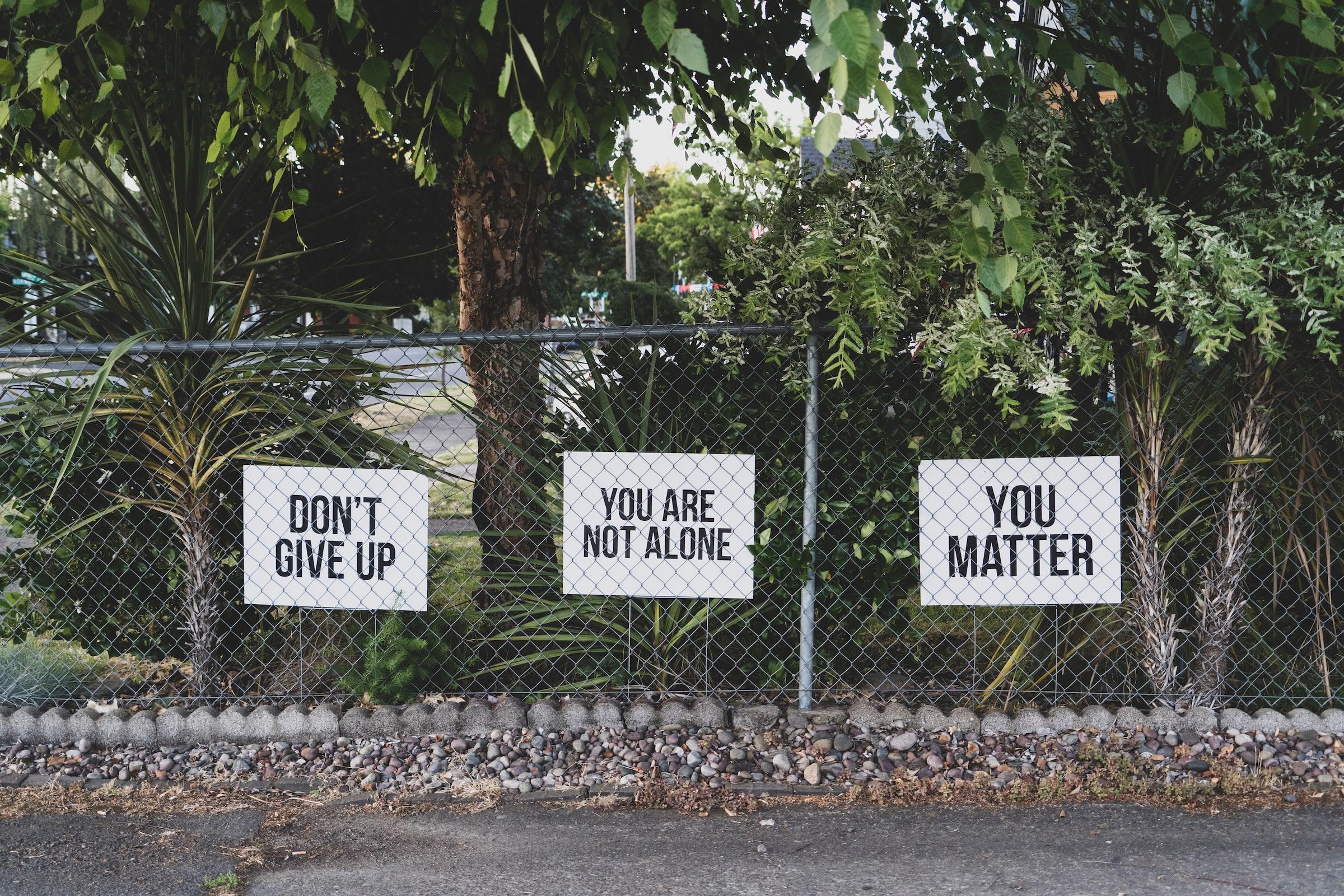
Don't give up. You are not alone. You matter.
These are all simple phrases that persons dealing with mental health issues need to hear. More than ever before, teenagers and young adults are struggling to keep negative thoughts at bay. Mental health problems such as anxiety, depression, eating disorders, and substance abuse seem to be trending more than the Kardashians!
Thankfully, teachers and parents have been encouraged by government entities and exam boards to take an active interest in the well-being of youths struggling with their mental health. Slowly but surely, the stigma around mental health is slowly fading away and people are talking about what eats them up inside.
Also, it's worth stating that there are many helpful resources available online that help teachers and parents become better prepared to approach the topic of mental health in a positive light. Such as? Let's consider a few of these resources in the following list:
- We All Have Mental Health: a beautifully made video by the Anna Freud National Centre for Children and Families, We All Have Mental Health helps parents and teachers address any issues that may arise.
- Go Ask Alice!: an amazing online resource created by a team of experts from Columbia University that allows youngsters to ask questions and get anonymous responses.
- The Jed Foundation: known by many as a Mental Health Resource Center that provides fundamental information about common emotional and mental health issues and shows teens and young adults, the Jed Foundation helps individuals and their loved ones.
Take a look at our informative article to discover more resources and additional helpful information about mental health awareness.
Is Online Tutoring as Effective as Face-to-Face Lessons?
Since its inception centuries ago, face-to-face private tutoring has always been successful and extremely popular. However, it's worth pointing out that since the start of the digital age, virtual tutoring has become the norm. But, that begs the question, is online tutoring as effective as face-to-face lessons?
While face-to-face learning sessions are fantastic and greatly suggested for reasons such as the fact that there are no technical issues, there's a heightened social experience, and it's better for kinesthetic/tactile learners, online sessions boast a significant number of benefits too. Take a look at the following list to learn more:
- You don’t have to spend time and money travelling to and from classes,
- There's a larger range of tutors/students available other than just the select few in your local area.
- Even if you're on vacation, you can still have class because all you need is an electronic device and an internet connection.
Truthfully, online tutoring is as effective as face-to-face lessons and we highly recommend that you try both to get an idea of what you prefer and what suits your personality best.
In conclusion, we hope that we've answered some questions that you've had about school. Have a wonderful year studying!
Summarise with AI:
Enjoyed this article? Leave a rating!

 Loading...