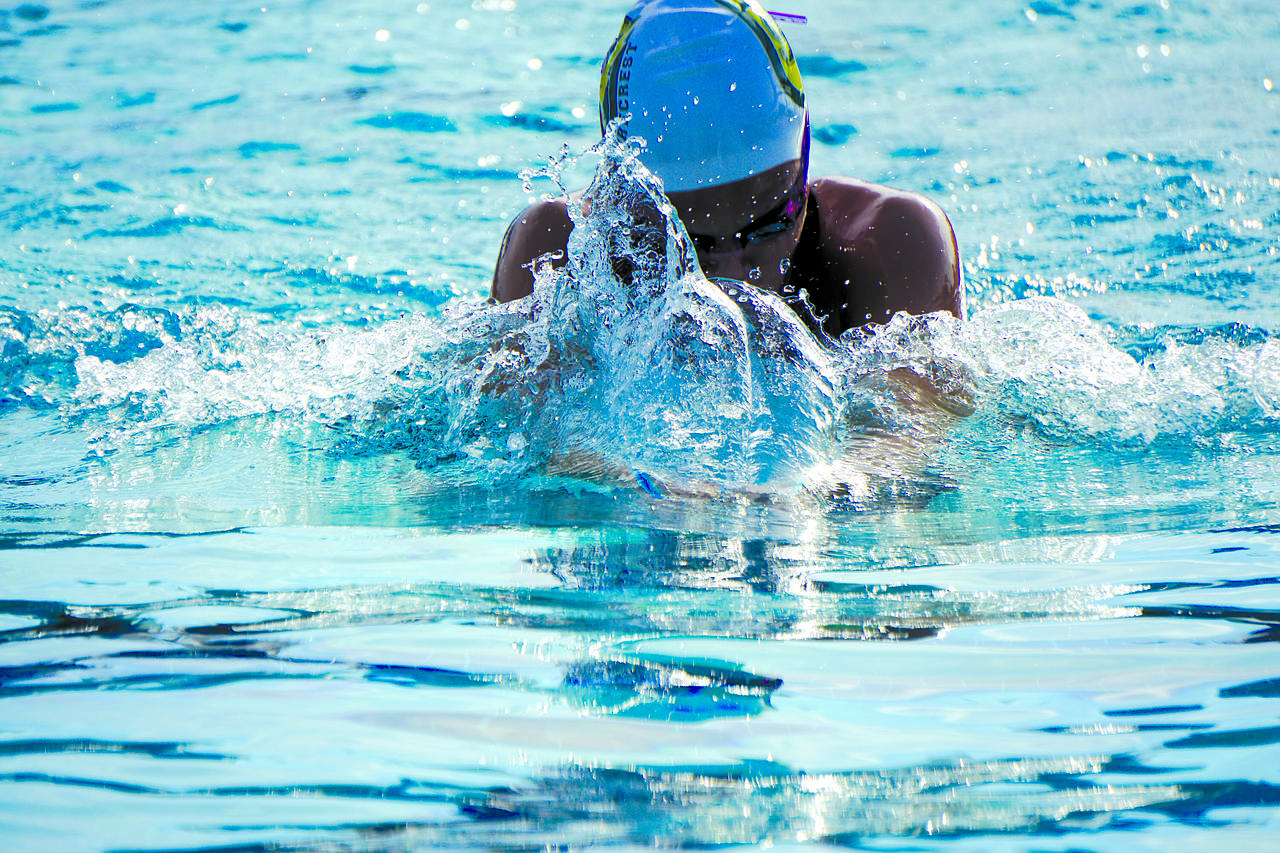

Dive into the intricacies of the breaststroke, one of the foundational techniques in swimming, with our comprehensive guide. Whether you're a novice just dipping your toes into 'breaststroke swimming for beginners' or an intermediate swimmer looking to refine your 'breaststroke technique,' this article will provide clear, step-by-step instructions on 'how to do breast stroke.' We will cover everything from the basics of 'breaststroke swimming technique' to the 'muscles used in breaststroke,' providing a comprehensive understanding of the 'breaststroke muscles' involved. So whether your query is 'how to swim breaststroke,' 'how to breaststroke,' or improving your 'breast stroke swimming technique,' our in-depth exploration will give you the tools and knowledge to master the art of breaststroke swimming.
Breaststroke is one of the most popular swimming strokes in all orders of aquatic activities, being one of the three most standard styles that most people choose to learn when they start learning to swim. Alongside backstroke and front crawl, both of which act as a mirror to the other, breaststroke is the more unique of the three in terms of technique, with a little more complexity going into mastery of breaststroke technique than the other two.


Breaststroke for beginners
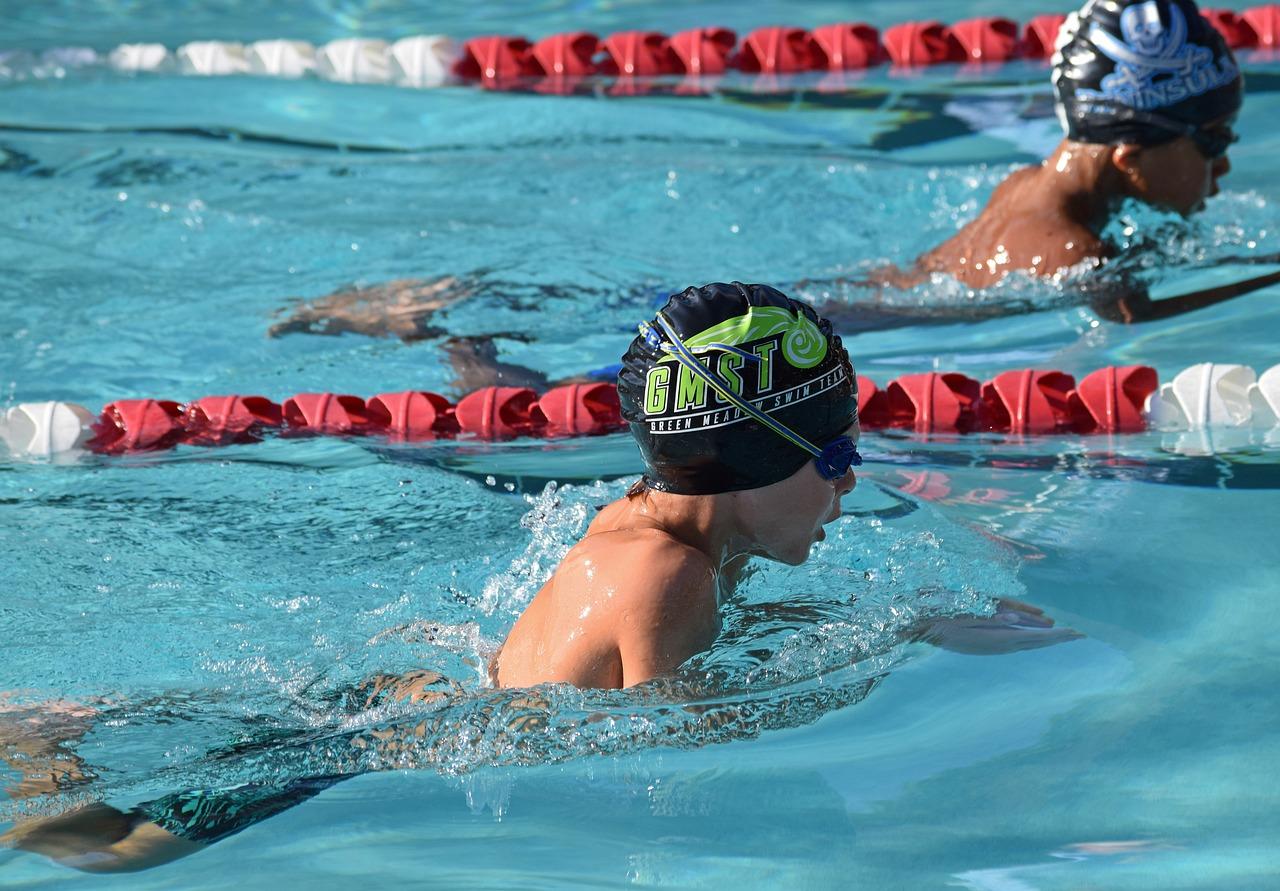
Swimming breaststroke can be a little unintuitive initially, but with some practice, it quickly becomes clear why it's one of the most popular swimming styles. It takes a little more time than front crawl and backstrokes to get the technique down; however, soon enough, you'll be gliding through the water like never before.
Breaststroke swimming technique for beginners
There are essentially three main components to how to swim breaststroke correctly, with a fourth step to link them all together, and they go as follows:
- Core and body position
- Leg kick technique
- Arm motion technique
- Co-ordinating the parts of the motion
It's worth practising all of the first three separately before jumping right into trying to link it all up, although if you get each step down properly, they should fit together rather intuitively.
As the great Latin writer Publilius Syrus said, "Practice is the best of all instructors", and the best way to learn breaststroke is to practise each part of the technique until it feels as natural as walking.
The core and body position
The backbone of the breaststroke swimming technique, this fundamental part focuses on how the bits of your body that you don't move anchor the bits you do. It's a relatively straightforward position, but finding comfort is the first key to properly performing breaststroke.
, the position involves laying horizontally in the water and extending both the arms and legs. Place your arms above your head, and extend your hands out, so your fingers are pointed in your intended direction of travel.
On the other side, extend your legs straight behind you and point your toes in the opposite direction to your fingers, such that your body forms a very straight line from end to end.
It would be best to face down while doing this, with your face looking at the bottom of the pool. This is important, as when you lift your head above the water to take a breath, you will naturally find your torso sinking into the water, compromising the position.
In simple terms, the keys to the core position are:
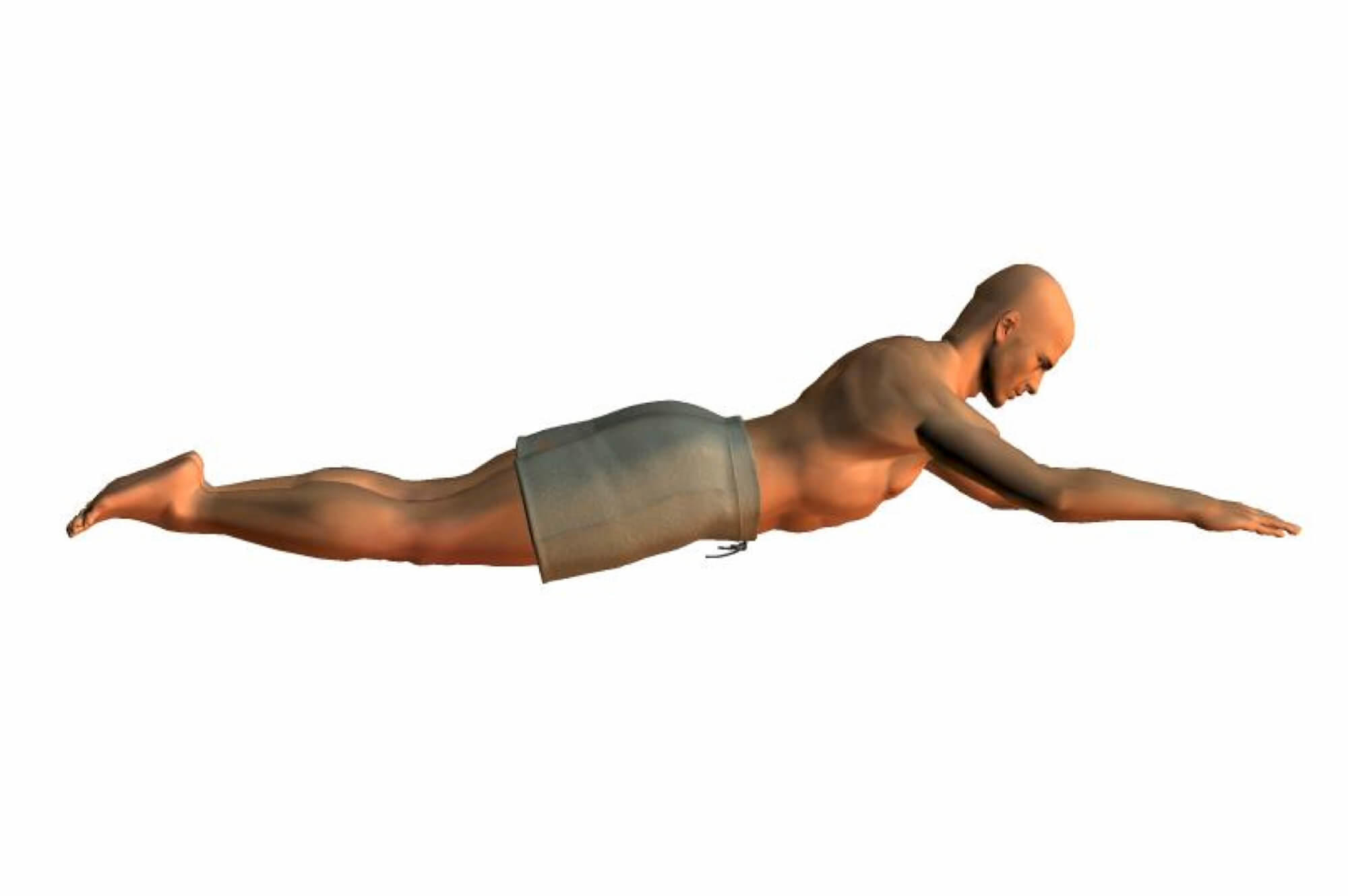
- Face down, flat body.
- A straight line from the tip of your fingers to the end of your toes
- Take short breaths to avoid time the position is broken
This position will form the basis of all the other steps of the process, so it's important to master it. We will talk more about breathing later, but the main focus at this stage should be on keeping your breaths quick and efficient to keep the stability of the position.
The leg kick technique
Probably the least intuitive of the steps of good breaststroke technique, the leg kick is also the most important. It generates much of the drive of the breaststroke swimming technique, and therefore it's essential to get it right.
The motion itself can be broken down into two parts: leg retraction and actual push motion. The leg retraction starts from the core position and involves tilting your legs outwards so that your feet face parallel with the water's surface. You then bring your heels up towards your torso to keep your feet as level as possible with your shoulder line.
The reason for this is that they will generate more thrust later on. In essence, this part of the motion resembles an open-legged squat.
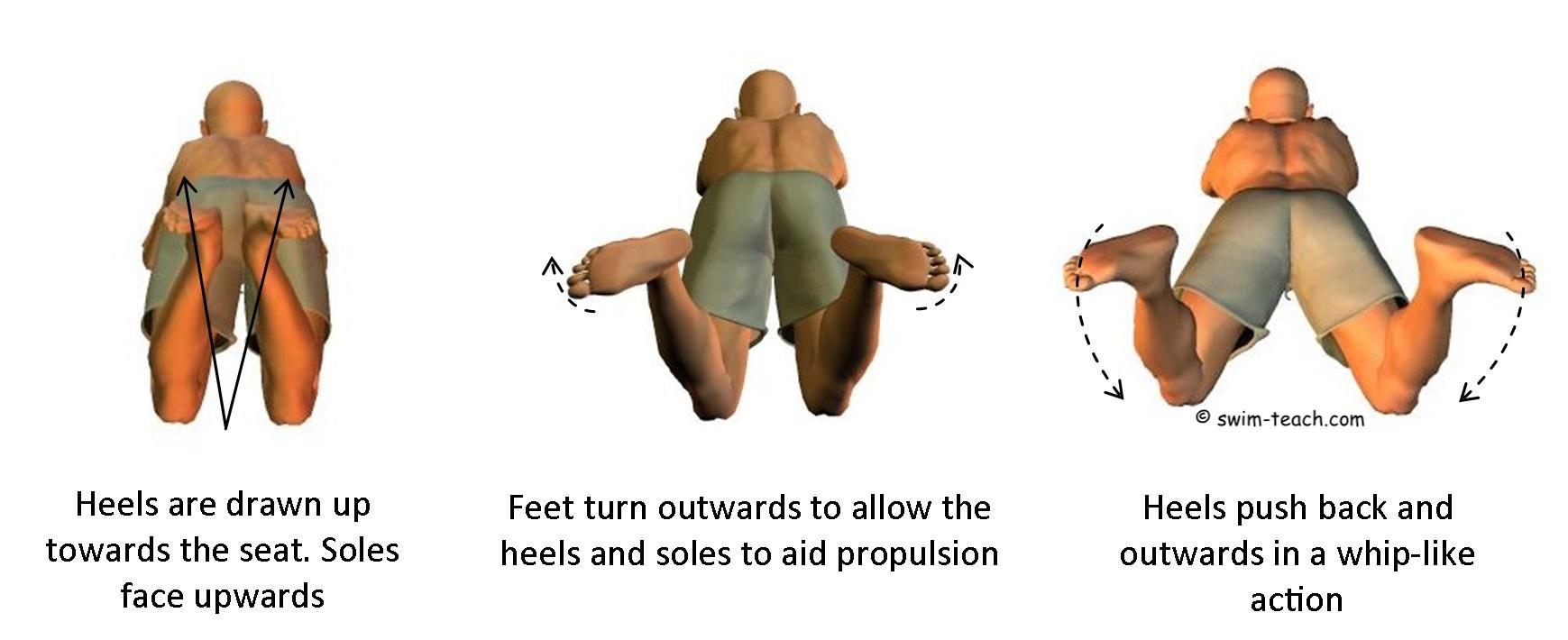
The second part of the motion is the bit that actually generates forward motion. Explosively, push your legs backwards behind you in a slight V shape, as though kicking off from the water behind you.
By keeping your feet still relatively level with your shoulders, you will maximise the amount of water you are applying force to, and therefore maximise your forward motion. To complete the cycle, bring your now straightened legs back together to the core position. In summary:
- Tilt your legs outwards from your body
- Bring your heels up to your torso
- Push backwards quickly
- Bring your straightened legs back together to complete a cycle of the motion
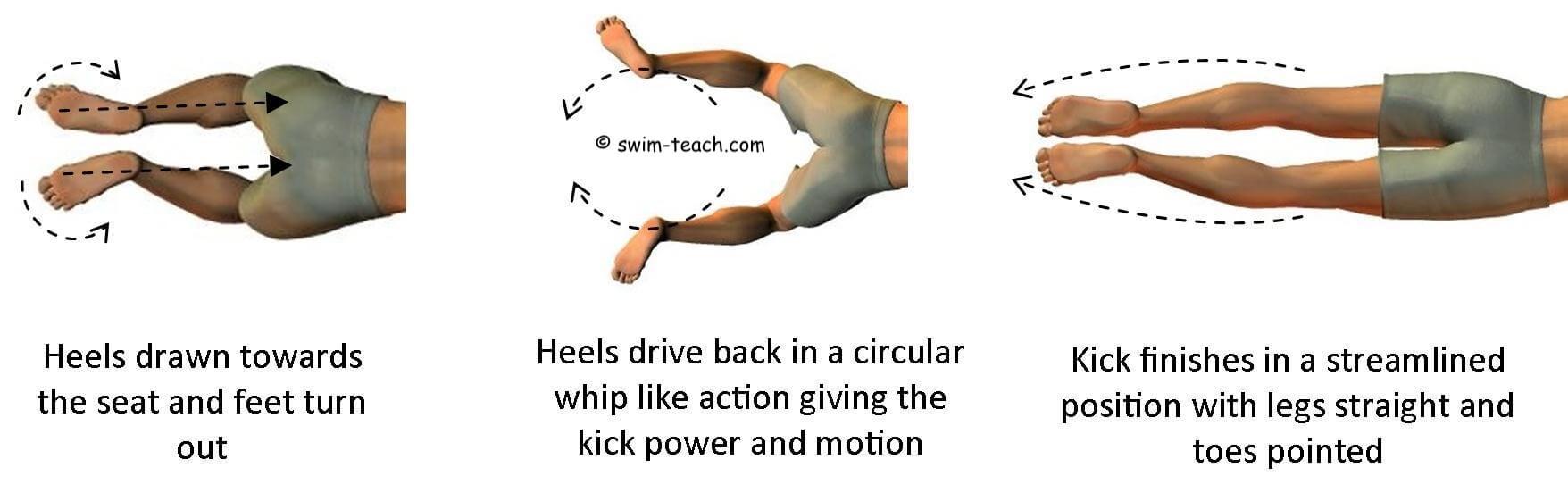
This will be the main source of forward motion in your breaststroke, so it's worth practising it well. Using the side of the pool or a float for stability may be helpful to make sure your technique is good.
The arm motion technique
In how to breaststroke, what you do with your arms is just as important as what you do with your legs. Fortunately, the motion is somewhat simpler and easier than the leg motion, with the main difficulty being synchronising the leg and arm motions. For now, though, we will focus on the actual arm motion.
The motion begins from the core position, and the first step is to turn your palms outwards so they face away from the centreline of your body. Once you have done this, keep a straight arm and bring your arms backwards in an arc to form a T shape with your torso.
From here, bend your elbows and continue the arc with your fingers round to the middle of your body. Bring your hands together, and push them past your face to return them to the core position.
The other important part to the arm motion is working out when to time taking a breath. The best time to take a breath is during the first part of the motion when you move your arms from in front of you to the T position.
To keep good form, it is essential to ensure you only lift as much of your head out of the water as is necessary for a single inhale. It is most efficient to exhale once your head is back in the water so that you are ready to breathe in again when you reach the same point in the next cycle.
Putting all of that together:
- Rotate your palms outwards from the core position
- Bring your arms back to a T shape, and lift your head to take a breath in
- Bend your elbows to bring your fingers into your torso
- Push your hands forward to return to the core position and complete the motion
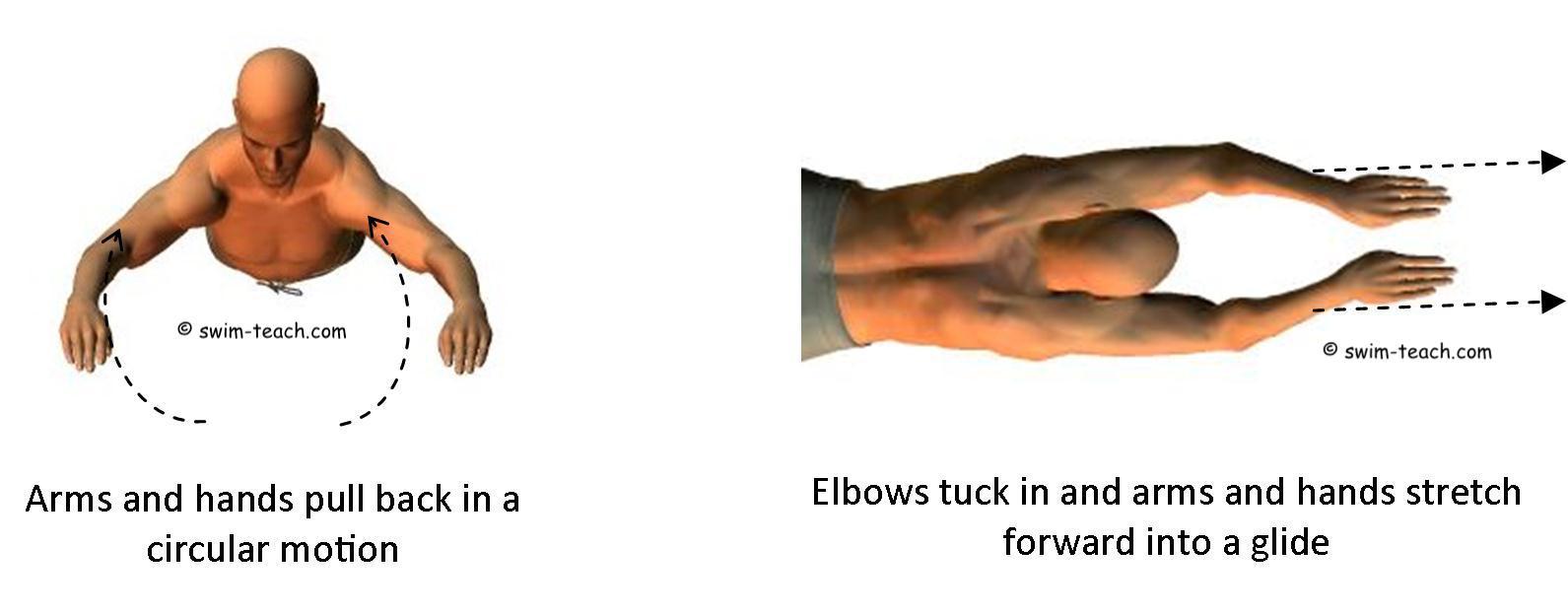
With that, you have now done every part of the breast stroke motion, and can now put them together.
Putting the motion together
The final step in this crash course on how to breaststroke properly is taking the three parts we have learned and bringing them together. In this case, there are several right answers, but for beginners the generally accepted best way is to start with the leg motion, then follow with the arm motion after a short gap of gliding in the core position.
There is more than one way to time your breaststroke rhythm, though, so you may find yourself tweaking the timings on this slightly to your comfort.
Advanced tips for improving your breaststroke
Breaststroke is considered a power stroke in the world of swimming, which means it is very reliant on putting on muscle mass to be at it's most efficient. In that case, the simplest thing you can do to improve your breaststroke performance is hit the gym.
How do I train the muscles used in breaststroke?
For most people, the breaststroke muscles that will be the most important to train will be their biceps and triceps. There are a lot of great exercises you can carry out at the gym and mix into your workout plan to strengthen them, such as bicep curls and tricep pushdowns.
Tricep pushdowns using a cable machine are a great way to train the muscle, and are easy to learn and carry out. Stand in front of a cable machine (if the cable has a movable pulley, ensure it is set to a high setting) and take hold of the bar with both hands.
Keeping your elbows still at your sides, pull down on the bar until your arms are straight. Then, curl your arms back up while keeping your elbows still, and repeat 10-12 times for 3 sets.
Bicep curls are even more straightforward to learn. Take hold of an equal weight dumbbell in either hand, and stand with both your arms straight down at your side. Curl the dumbbells one at a time up to inline with your shoulder, taking care to keep the plane of motion of your arm straight forward. Repeat for 3 sets of 10 repeats on either side, for a total of 20 in a set.
Whatever level of breaststroke you were at when you came into this, hopefully, you have learned something that can help you personally elevate your breaststroke to the next level. Now go out there and use your newfound skills to carve through the water elegantly and efficiently!
Summarise with AI:
Did you like this article? Leave a rating!

 Loading...