

Spanish has grown into one of the world’s most widely used languages, carried from place to place over hundreds of years through travel, trade, and the movement of people. You’ll hear it in the busy streets of Madrid, in the markets of Mexico City, in the mountain towns of Peru, and in a huge number of neighbourhoods across the United States.
So why should you study Spanish? Well, it is the official language in 20 countries, stretching across Europe, the Americas, and even parts of Africa. Listen out, and you'll hear it while travelling in places like Spain, Mexico, Colombia, Argentina, Peru, Chile, and most of Central America. It's also spoken by millions of people living in the United States.
| Country | Spanish Speakers (millions) | Share of Population (%) |
|---|---|---|
| Mexico | 132 | 100 |
| United States | 57 | 17 |
| Colombia | 53 | 100 |
| Spain | 48 | 99 |
| Argentina | 47 | 100 |
| Peru | 31 | 89 |
| Venezuela | 29 | 100 |
| Chile | 20 | 100 |
| Guatemala | 17 | 94 |
| Ecuador | 17 | 97 |
| Bolivia | 12 | 99 |
| Cuba | 11 | 99 |
| Dominican Republic | 11 | 100 |
| Honduras | 10 | 100 |
| Paraguay | 8 | 99 |
*Note. Figures are rounded to the nearest million (speaker count) and nearest whole percentage (share of population). Data sourced from Visual Capitalist’s 2024 analysis of global Spanish-speaking populations.¹




Historical Spread of the Spanish Language
Rough estimates suggest that well over half a billion people speak Spanish today.2 Because of that reach, Spanish has ended up connecting communities that would normally sit a world apart. In this guide, we’ll look at where Spanish is spoken now, how it spread so widely, and why its influence keeps growing across so many parts of the planet.
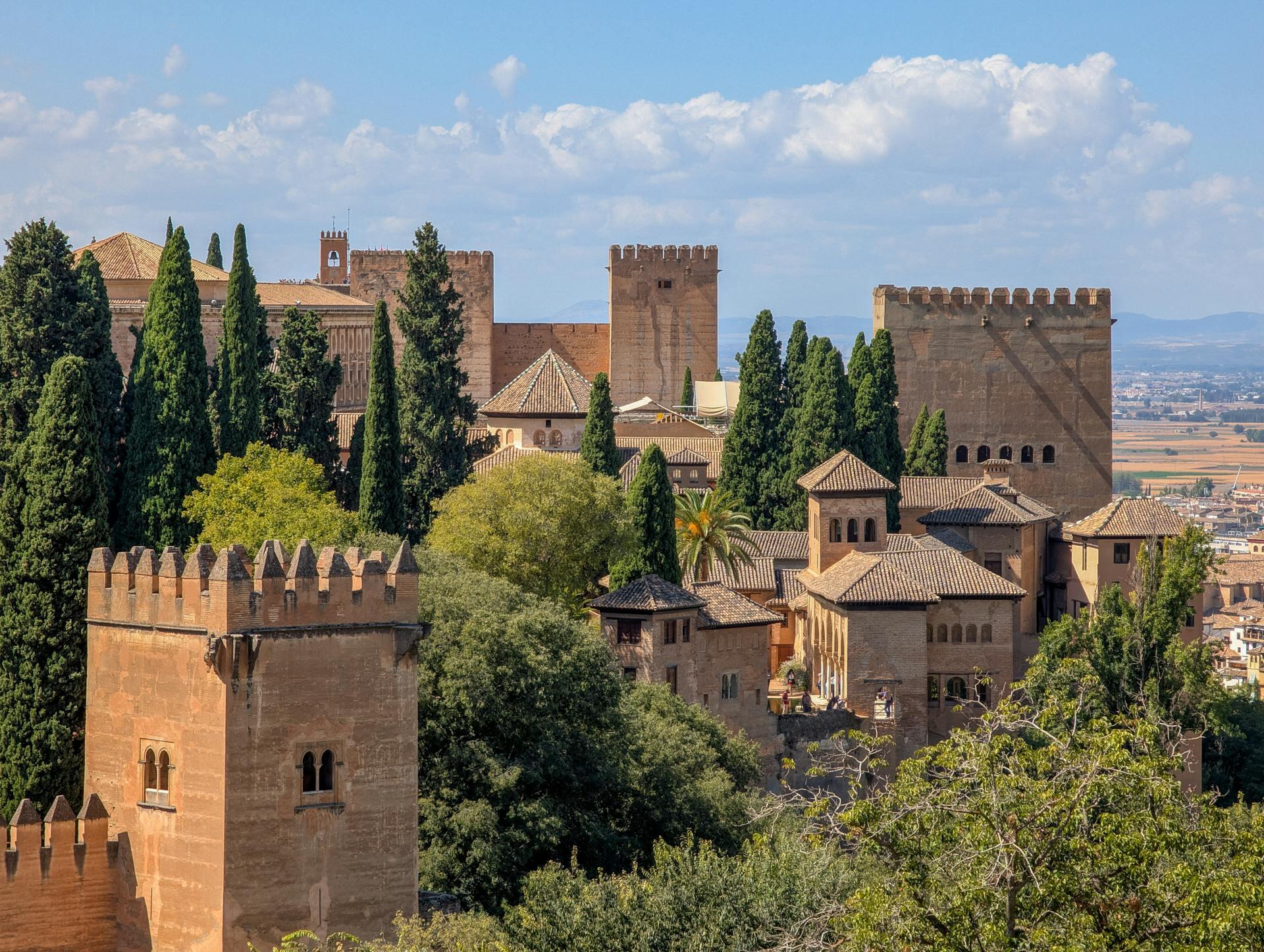
The history of Spanish has made it widespread. It originated on the Iberian Peninsula, developing from spoken Latin after the Roman period and gradually taking on features from the many different cultures that called this part of the world home.
As the medieval kingdoms unified, Castilian became the most widely used variety and eventually formed the basis of modern Spanish. Later on in the 15th century, the language would make its way across the Atlantic where it rapidly took root throughout the Caribbean and the Americas.
Roman Era (3rd–5th century)
Latin becomes the dominant language across the Iberian Peninsula
Early Middle Ages (8th–12th century)
Local Romance dialects begin to develop,
These are largely influenced by Arabic and the linguistic mix created during the period of Al-Andalus.
Late Middle Ages (13th–15th century)
Castilian rises in prominence as Christian kingdoms expand.
It becomes the language of administration and literature, especially under Alfonso X.
1492 - The Turning Point
Castilian is standardised in Spain, and the first expeditions across the Atlantic carry the language to the Caribbean.
1500s–1700s - Expansion in the Americas
Spanish takes root across Central and South America
Here, they mix with Indigenous languages, giving each region its own sound and character
19th century - Independence Movements
Even after breaking away from Spain, new nations keep Spanish as their main language
RGI helps it remain firmly rooted in the region.
20th century to Today
Across Latin America, Spanish is still the main language, and it’s also used in Equatorial Guinea.
Altogether, over 500 million people speak it around the world.
Spanish in Europe
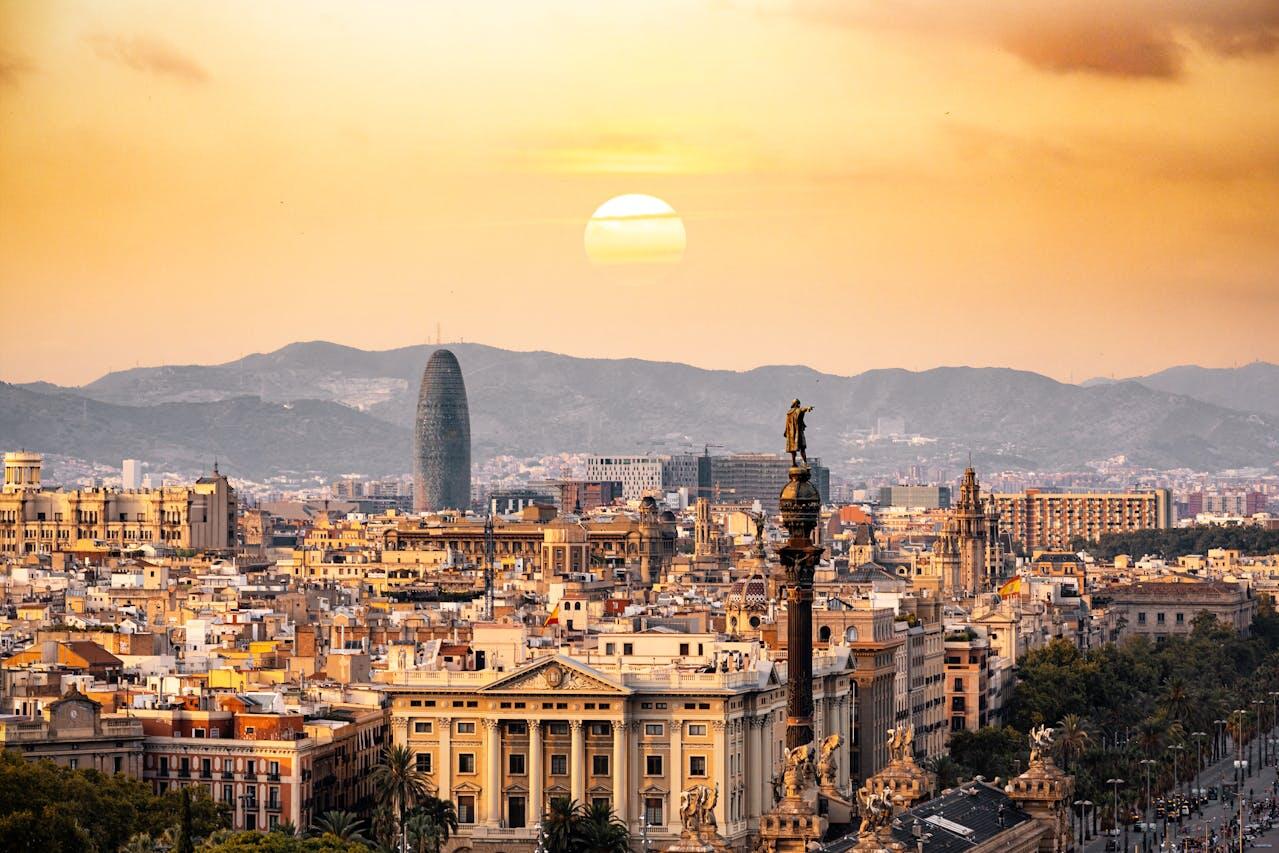
The Spanish language originally comes from Spain, where today it is spoken by around 47 million people. While not a main language in any other country in Europe, many smaller communities use it interchangeably or as a second language.
For instance, this is commonplace in the British territory of Gibraltar, where residents sometimes combine English and Spanish into a weird mix of the two, as well as in Andorra, where the official language is Catalan. Elsewhere in Europe, you'll mostly encounter Spanish in larger cities like Berlin, Portugal, and Rome, where students and international students come together to create small Spanish-speaking communities. If you want to work in a Spanish-speaking country, then one of these could even be your new home!
The number of native speakers and the number of countries where Spanish is spoken are just some reasons to learn Spanish.
Spanish isn't the only language spoken in Spain, with Catalan being widely spoken in Catalonia, the Balearic Islands and parts of Valencia. Additionally, Basque (Euskara) is also used in the Basque Country and Galician in Galicia.
Spanish in Africa
All in all, Spanish has a significantly smaller footprint in Africa, but it still holds official status in one country: Equatorial Guinea. Here, Spanish is used in government, education, and public services alongside two other languages - French and Portuguese
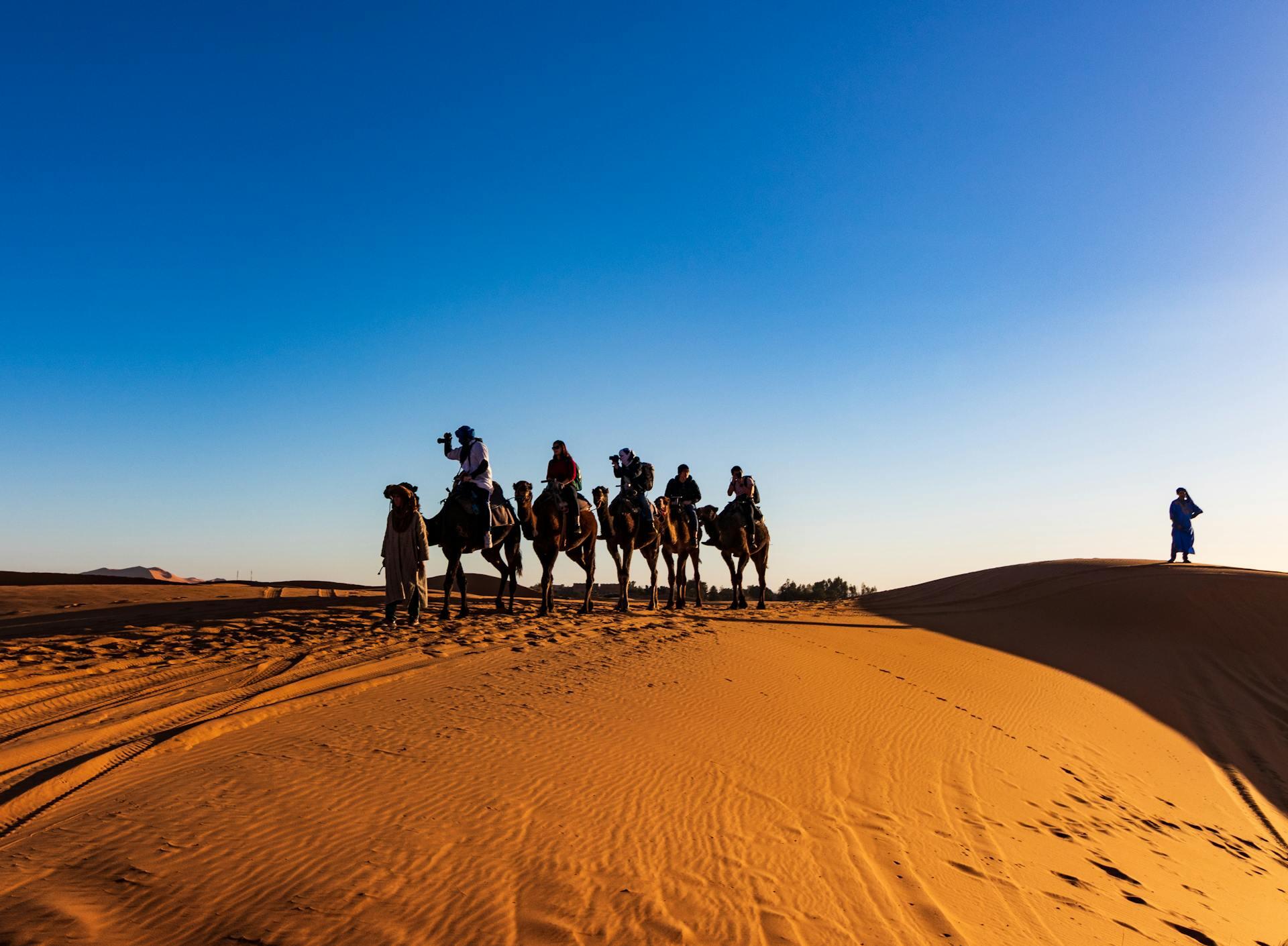
Spanish took hold in Equatorial Guinea during the colonial period but stayed on as an official language after its independence from Spain in 1968.
Outside of Equatorial Guinea, Spanish is also understood in parts of Morocco and Western Sahara. The reason for this is mostly coming down to historical ties and a close proximity to Spain. In Northern Morocco, many residents speak in Spanish when dealing with tourists or when conducting cross-border business and trade, for example.
Spanish in Asia and Oceania

While it's not spoken as an official language anywhere in Asia and Oceania now, you can easily spot the historical influence of Spanish in several scattered places across the region, including the Philippines.
While centuries have passed since colonial rule, many town and family names in the Philippines still carry clear Spanish roots.3 Alongside this, the Spanish-based creole Chavacano continues to be spoken in a handful of communities in places such as Zamboanga City and parts of Cavite. That being said, pure Spanish is not commonly spoken and survives more through said cultural traces rather than day-to-day speech.
Although the Philippines holds the strongest link to Spanish, you can still find smaller echoes of the language elsewhere as well. Check out the list below to find out more:
Do you know you can get Spanish lessons online here?
Spanish Dialects and Variations

If you speak Spanish and take a flight from Spain to Brazil, the chances are you'll probably notice that the language sounds similar but not quite the same between the two countries.
What's the reason for this? Well, these differences mainly come down to things like pronunciation, everyday vocabulary and how people address each other, which evolved naturally as Spanish spread across different regions. As a result, Spanish has developed a range of regional styles that can sound quite distinct while still being completely understandable to speakers from other parts of the world, like Madrid and London. Let's explore them below.
| Feature | Spain (Castilian) | Latin America (General) | Argentina & Uruguay (River Plate) |
|---|---|---|---|
| Pronunciation of C/Z | “th” → grathias | “s” → grasias | “s” → grasias |
| Plural 'you' | vosotros | ustedes | ustedes |
| Use of 'vos' | Not used | Not common | Very common |
| Word for 'car' | coche | carro / auto | auto |
| Word for 'computer' | ordenador | computadora | computadora |
| Pronunciation of ll/y | y | y | sh / zh |
| Overall sound | Sharper consonants | Softer, smoother | Rising–falling melody |
Quick Examples of Regional Differences
The Future of the Spanish Language
There are many advantages to learning Spanish — from expanding your career opportunities to connecting with millions of people across different cultures. Recent data from the Cervantes Institute also shows that the number of Spanish speakers worldwide has continued to grow over the past decade. Below are some key statistics that highlight its global reach:
- Spanish has more than 500 million native speakers worldwide4
- Over 24 million learners are studying Spanish formally
- It's also one of the most used languages online, especially on social media platforms
- The U.S is projected to become one of the largest Spanish-speaking countries by 2050
The number of native speakers and the number of countries where Spanish is spoken are just some reasons to learn Spanish.
The widespread use of Spanish in such means that if you learn business Spanish, it could open up many different doors from a professional point of view.
Where is Spanish Growing The Fastest?
United States
In America, Spanish is used daily by tens of millions of citizens, and the number continues to rise year by year. Factors like Spanish language media and schooling have made it arguably the 2nd most visible language in the country overall.
Latin America
Meanwhile, population growth in countries such as Mexico and Colombia means Spanish is continuing to gain native speakers. Many of these nations also have expanding digital communities, helping the language and learning methods spread across the web like wildfire.
References
- Visual Capitalist. Which Countries Have the Most Spanish Speakers? 2024.
Available at: https://www.visualcapitalist.com/which-countries-have-the-most-spanish-speakers/ - Ralvarezt. (2019b, October 15). Spanish, a language spoken by 580 million people, and 483 million of them native - Blog del Instituto Cervantes de Londres Blog del Instituto Cervantes de Londres. https://blogs.cervantes.es/londres/2019/10/15/spanish-a-language-spoken-by-580-million-people-and-only-483-million-of-them-native/
- Reid, A. (2021, July 20). The Spanish Philippines: its history and influence on 7,000 islands. Homeschool Spanish Academy. https://www.spanish.academy/blog/the-spanish-philippines-its-history-and-influence/
- Instituto Cervantes. (2025). El español en el mundo 2025: 20 claves del español en el mundo. Instituto Cervantes. https://cvc.cervantes.es/lengua/anuario/anuario_25/elm/p01.htm
Summarise with AI:
Did you like this article? Leave a rating!

 Loading...