Currently revising The Crucible for WJEC GCSE English Literature but a bit confused as to where to start? While useful, memorising key scenes and characters won’t be enough to earn you those top marks. Instead, you'll need to thoroughly understand how Arthur Miller uses drama to explore ideas like fear, power, truth, and reputation. From here, it becomes much easier to apply that understanding to any questions you'll face in the exam. In this short guide, you’ll find a focused selection of The Crucible exam questions, supported by key themes, quotes, and a bunch of practical pointers to help you prepare more effectively.


What The Crucible Is About
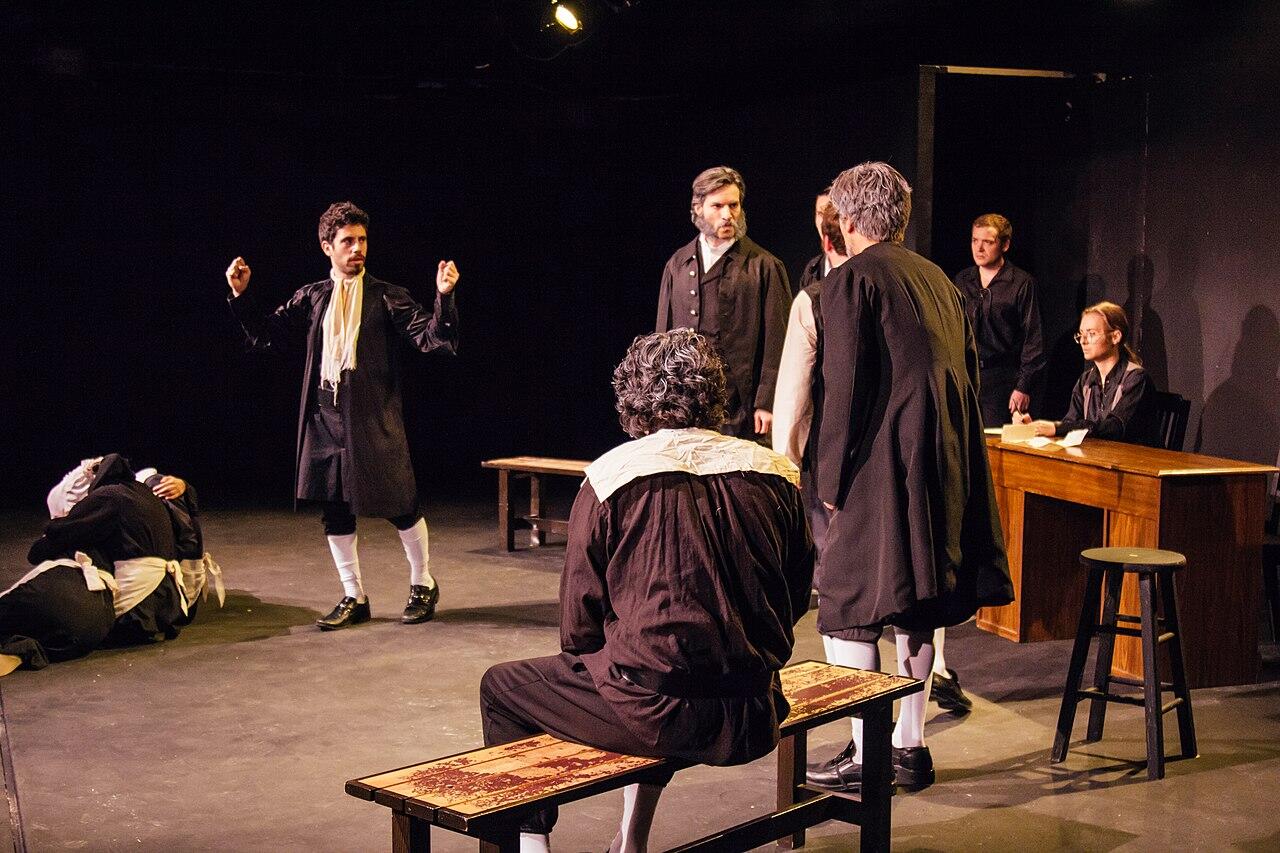
Set in the strict Puritan town of Salem, Arthur Miller’s The Crucible follows the fallout after a group of girls are discovered behaving suspiciously, triggering a wave of rumours about witchcraft that quickly spirals out of control.
From here, a sort of mass hysteria falls upon the town, with neighbors accusing one another to protect themselves or settle old scores. The towns court gains enormous power and begins deciding who is innocent and who is deserved punished, often based on little more than hearsay.
John Proctor is a farmer in Salem and the central character of the Crucible. He's married to Elizabeth Proctor and previously was in an affair with Abagail Williams, a secret that fuels of a majority of the conflict in the play. Unlike most people in the town, Proctor is willing to question authority even when it puts his life in danger.
Key Themes in The Crucible
In this section, we'll explain several of the major themes present in The Crucible. Overall, having a better grasp of the themes running through the play will make it a lot easier to tackle exam questions - so let's get to it.
Hysteria and Fear
The towns gone wild
John Proctor
Arguably the most obvious of the themes present in The Crucible is fear. It's fear that drives the witch trials forward in Salem and causes many townspeople to abandon logic, choosing instead to believe that their neighbours are working with the devil to commit horrific crimes

This growing hysteria also becomes a tool for certain characters to gain power or take advantage of others - a clear example being Abigail Williams. Abigail quickly realises that accusations give her influence, allowing her to control the court and intimidate those around her. By playing on the town’s fear she is able to deflect suspicion from herself while manipulating events to suit her own desires.
Reputation and Integrity
Because it is my name!
John Proctor
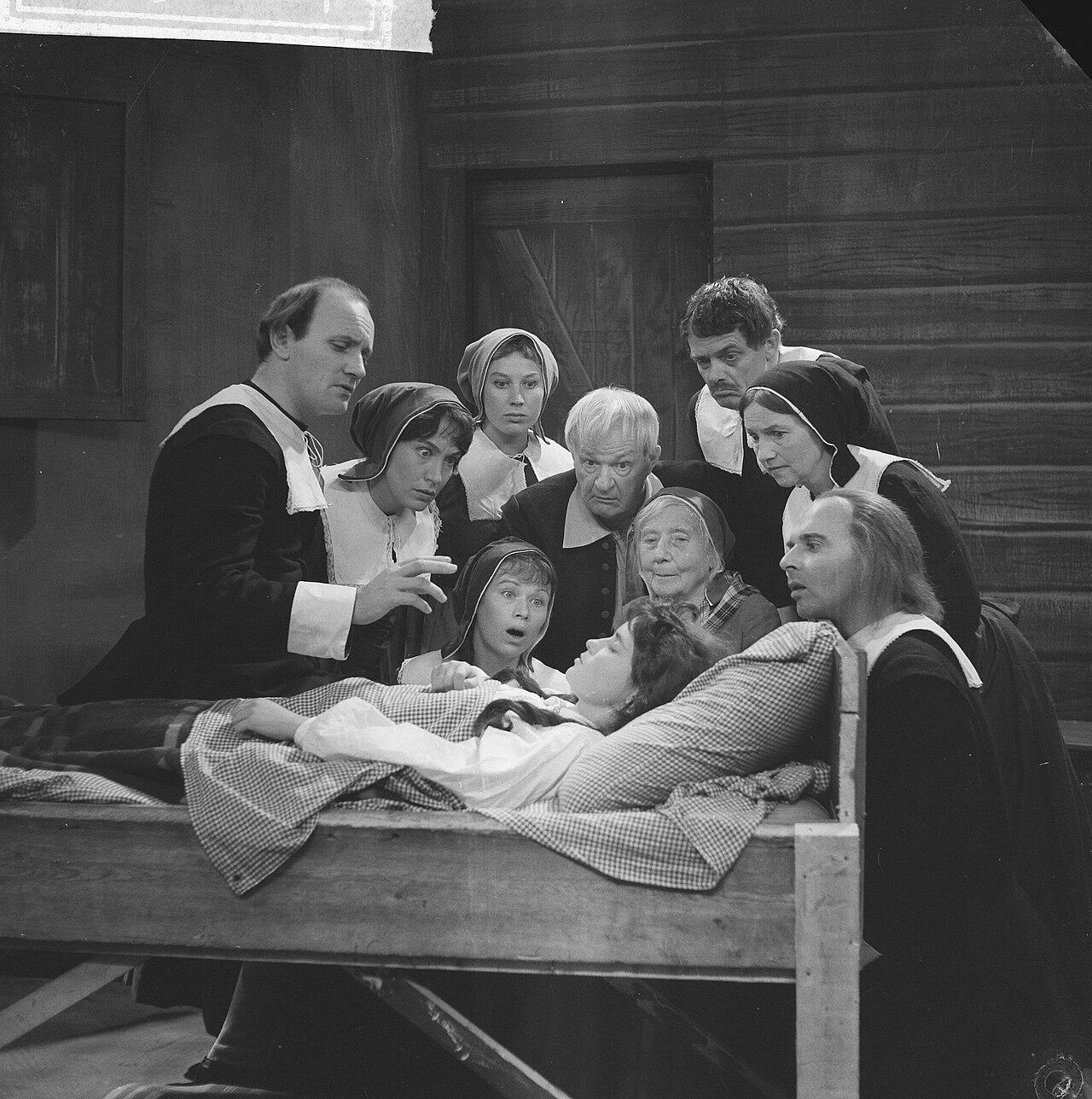
In Salem, a persons reputation is never completely private. How others see you determines your standing in the community, and in many cases, whether you survive to see another day.
In order to protect their names, many characters blatantly lie and accuse others, or stay silent in order to try and protect their names. For example, this be seen when both John Proctor and Reverend Parris hesitate to speak out due to perceived damage to their reputations.
In The Crucible, integrity is about doing the right thing even when the consequences are severe. Miller sets up a clear contrast between characters who lie to save themselves and those who choose honesty, knowing it may cost them everything. John Proctor’s refusal to make a false confession shows that, for Miller, integrity matters more than reputation or even life itself.
Power, Authority, and Intolerance
A person is either with this court or he must be counted against it
Deputy Governor Danforth
Miller also presents Salem as a society where authority is not meant to be questioned. Figures such as Danforth believe that the court represents absolute truth so any challenge to its decisions is seen as a threat to order and religion itself.

This way of thinking unfortunately leaves no space for doubt or debate, meaning that disagreement is quickly treated as disobedience. For instance, a good example of this can be seen when Danforth refuses to stop the trials even as it becomes clear that innocent people are being accused.
Truth, Lies, and Justice
The truth is no longer what it were
Elizabeth Proctor

Throughout the play, miller raises serious questions about justice can easily become distorted when the truth is ignored.
As the trials progress, those that are honest are punished while those who lie in a bid to support the courts narrative are rewarded. Ultimately, this creates a sort of system in the town where survival is dependent on being deceptive rather than being innocent.
Consequences of Actions
It is a providence, and no great change; we are only what we always were.
John Proctor
Lastly, another important theme in The Crucible is the idea that actions have consequences, even when they seem small or insignificant at first. Many choices made early in the play eventually spiral out of control, i.e John Proctors affairs and Abagail's lies, for example.
In his writing, Miller aims to show how small or selfish choices can quickly lead to widespread injustice if not addressed or at least challenged. By allowing fear and dishonesty to go unchecked, these early actions soon grow into consequences that affect the entire town.
Key Characters in The Crucible
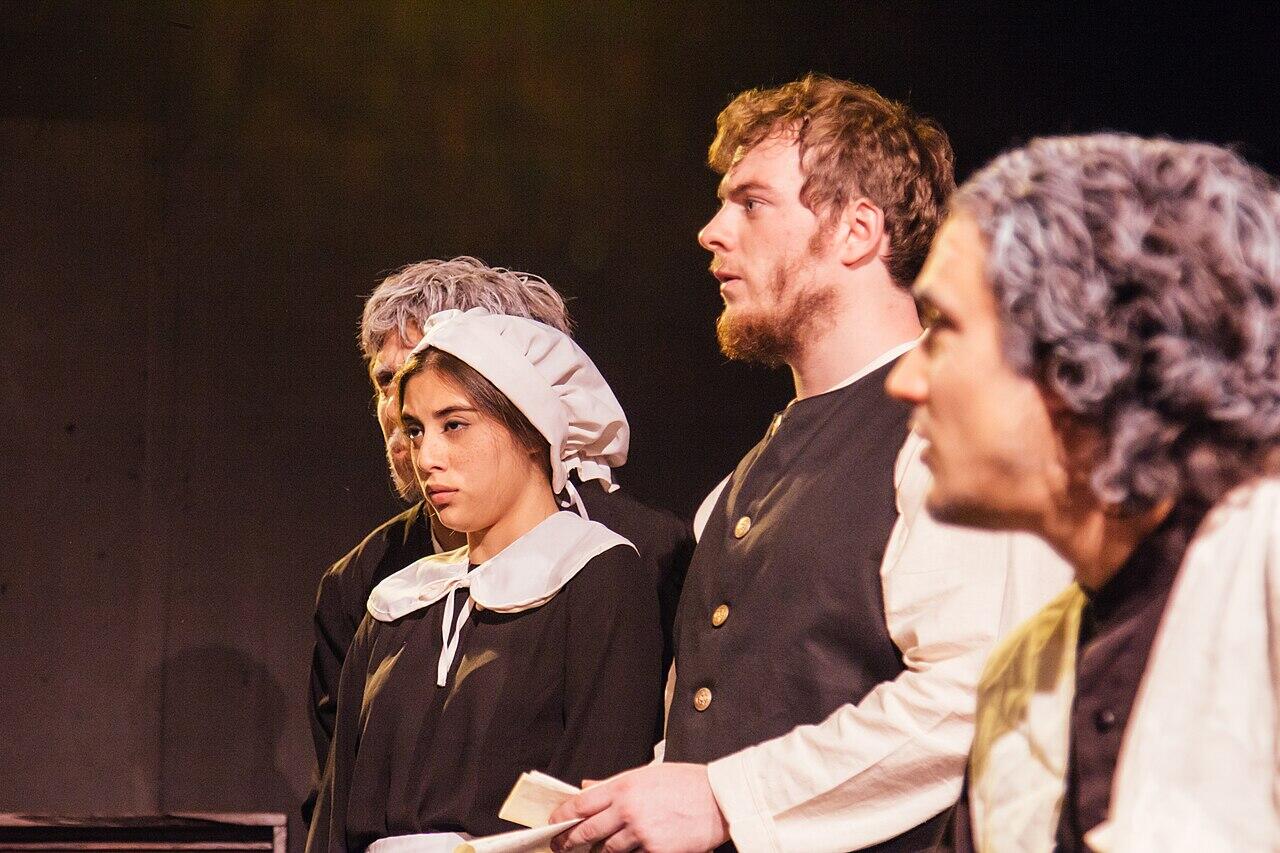
WJEC exam questions often focus on a small number of characters who best reveal Miller’s ideas about fear, power, and morality. Understanding why these characters matter makes it much easier to respond to a wide range of questions, even when the wording changes.
Essential Quote Bank forThe Crucible
Looking for quotes you can use in almost any exam question? The table below brings together a small selection of short, useful quotations that are easy to remember and apply across different themes and characters.
| Theme / Focus | Quote | Speaker | Why it’s useful |
|---|---|---|---|
| Fear & Suspicion | There is a faction that is sworn to drive me from my pulpit. | Reverend Parris | Shows how fear creates paranoia and mistrust in Salem. |
| Fear & Control | Let either of you breathe a word… and I will come to you in the black of some terrible night. | Abigail Williams | Demonstrates how fear is used to silence others. |
| Reputation | I like not the smell of this ‘authority’. | John Proctor | Reveals early distrust of authority and control. |
| Reputation & Guilt | I have sins of my own to count. | John Proctor | Shows Proctor’s awareness of guilt and moral struggle. |
| Power & Authority | We burn a hot fire here; it melts down all concealment. | Deputy Governor Danforth | Highlights the court’s belief in its own moral purity. |
| Authority & Intolerance | Do you know who I am? | Deputy Governor Danforth | Shows how authority is used to intimidate. |
| Truth & Justice | Until an hour before the Devil fell, God thought him beautiful in Heaven. | Reverend Hale | Suggests that respected figures can still be wrong. |
| Moral Conflict | I cannot mount the gibbet like a saint. | John Proctor | Shows Proctor’s humanity and inner conflict. |
| Responsibility | There is blood on my head! | Reverend Hale | Acknowledges guilt and responsibility for the trials. |
| Consequences | More weight. | Giles Corey | Symbolises resistance and the cost of integrity. |
Past WJECThe CrucibleExam Questions

Looking at past paper questions is a fantastic way to figure out what WJEC expects in an exam answer as it gives you a sense of how the questions are phrased/the kind of ideas you'll be asked to explore.
It’s worth noting that WJEC changes its set texts over time - essentially, this that means The Crucible doesn't appear in every exam series. As a result, publicly available questions for this play mostly come from earlier papers where it was officially set as the drama text.
June 2013 – Past Paper
- Question 13: How does Miller present the relationship between Elizabeth and John Proctor at the beginning of Act 2, and how does it change by the end of the play?
- Question 14: How does Miller present ideas about witch-hunts in The Crucible?
January 2013 – Past Paper
- Question 13: How does Miller use the ending of each act to make the audience feel the madness in Salem?
- Question 14: What do you think is the importance of Mary Warren in the play and how does Miller present her?
June 2012 – Past Paper
- Question 13: How do you respond to Giles Corey in The Crucible and how does Miller make you respond as you do?
- Question 14: How does Miller present different attitudes to the court in The Crucible?
January 2012 – Past Paper
- Question 13: How does Miller show the changes in Hale during the course of The Crucible?
- Question 14: How does Miller present ideas about freedom in The Crucible?
June 2011 – Past Paper
- Question 13: How does Miller seek to create an atmosphere of hysteria and tension in the opening of the play?
- Question 14: How do you respond to Miller’s presentation of Abigail in The Crucible?
The Crucible Sample Questions
How to Answer aThe CrucibleExam Question
WJEC wants to see that you can answer the question clearly and explain how Arthur Miller gets his ideas across, rather than simply describing what happens in the play.
Summarise with AI:
Did you like this article? Rate it!


 Loading...