


Creating a strong GCSE sketchbook is essential, as it counts for 60% of your final grade in Art. Your sketchbook makes visual your journey through your creative process. With it, you're showcasing your research, idea development, experimentation, and final outcomes. To ensure that you're awarded top marks for your Art GCSE sketchbook, you must demonstrate a clear progression of your work. This article guides you through the process, offering practical tips to structure, refine, and present your sketchbook effectively.
What Do You Need for GCSE Art?
- Demonstrations of idea development and observational drawings.
- Experimentation with media and techniques.
- Artist research and analysis, along with personal reflections and evaluations.
- Clear presentation and annotation.


The Purpose of Your GCSE Sketchbook
On the surface, your GCSE sketchbook is an assignment like any other. You must produce work that demonstrates your progress towards understanding the use and purpose of media. As with other GCSEs, you will present your work, and your presentation accounts for a portion of your grade.
As far as your school is concerned, your sketchbook should reflect the development of your artistic skill and conceptualisation, and how you decide idea progression1. It should show how you engage with your subject through research and the development of ideas.
Ultimately, your sketchbook should demonstrate how your thoughts combine with artistic techniques and influences, all of which should be apparent in your work.
Your GCSE art sketchbook should demonstrate your progress and show your engagement with your subject matter. It should include a variety of artistic mediums, evidence of experimentation, and a clear personal connection to the themes you explore.
When creating a work like a sketchbook, you need to generalise and be specific at the same time. You can do that by giving yourself set goals while leaving things open-ended enough to facilitate experimentation.
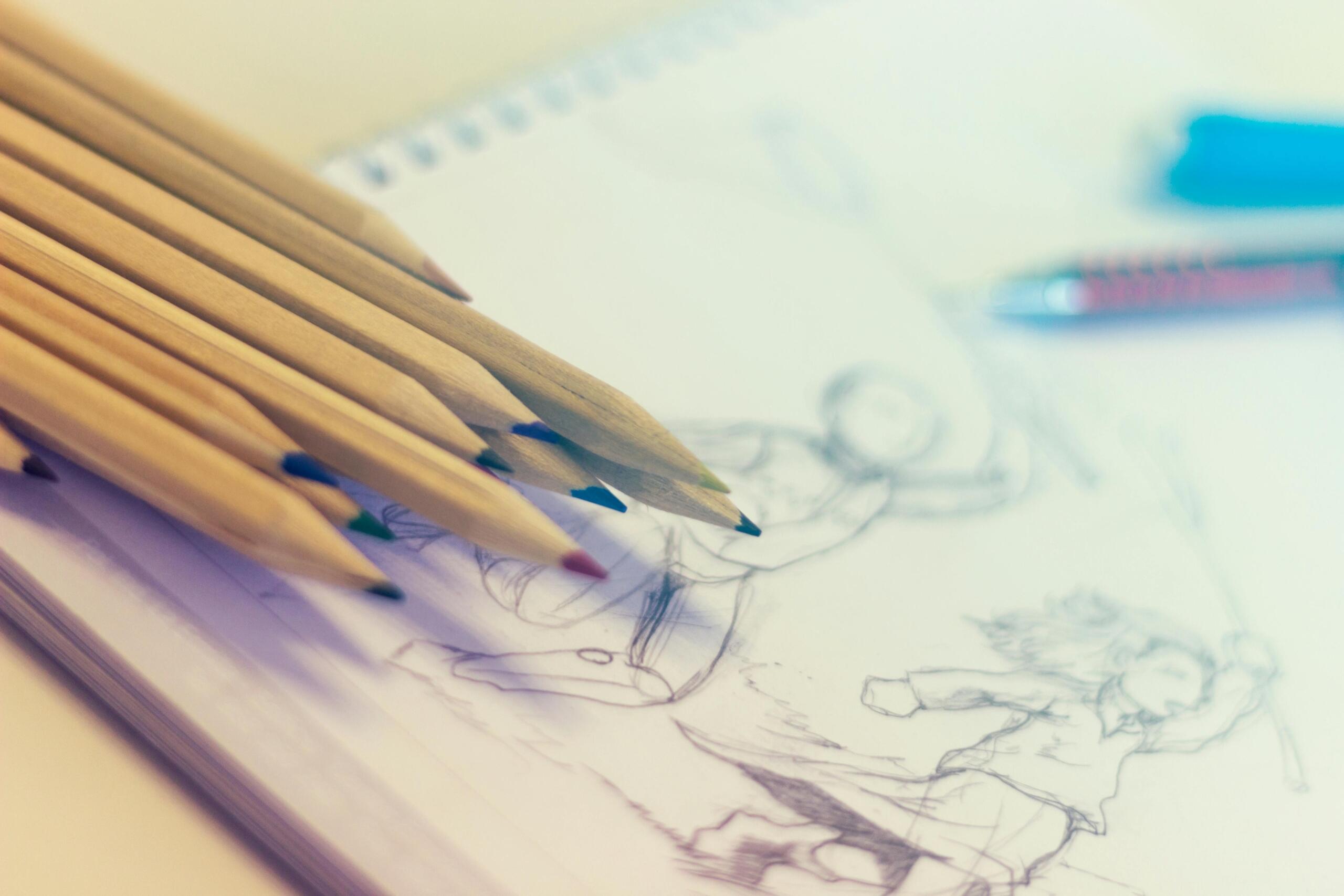
The Essential Components of a GCSE Art Sketchbook
As noted above, to achieve a strong grade, your sketchbook should demonstrate experimentation, research, and reflection, alongside high-quality artwork. By meeting these key requirements, you’ll present a well-rounded and compelling body of work that highlights your artistic development2. These are the components to include in your work.
Observational Drawings
Drawing from life helps artists develop their technical skills; it also sharpens their powers of observation. The focus you lend your subject trains your eye and brain to capture its every detail. From there, you'll hone your ability to reproduce that image as faithfully as possible.
Your capacity for observational work showcases your technical skill and attention to detail.
Create detailed studies to demonstrate your ability to capture form, texture, and perspective.
Experimentation with Media and Techniques
Creativity takes courage.
Marcel Duchamp
Indeed, it takes courage to dabble with acrylics if pastels are your favourite medium. The creativity Mr Duchamp alluded to wasn't just the boldness of creation. Himself an experimenter who dabbled in various media, he advocated for reaching beyond one’s own creative boundaries.
Your sketchbook should reflect experiments in a variety of materials and methods, from pencil and ink to paint and mixed media. Experimenting demonstrates your creativity, adaptability, and willingness to take artistic risks.
Artist Research and Analysis
This is a phase of sketchbook creation that stymies many students. Choosing an artist to study is a challenge in itself. Should you choose an artist whose works accord with your style, or one renowned for a style that clashes with your own?
The artist(s) you study should be relevant to your work.
Once you've selected a relevant artist3, analyse their techniques and themes, making sure you cite their influence on your work. Include written reflections and visual studies to demonstrate your understanding.
For this criterion, evaluating your chosen artist’s work is only half your duty. To earn higher marks, strive to incorporate your understanding of their work into your own.
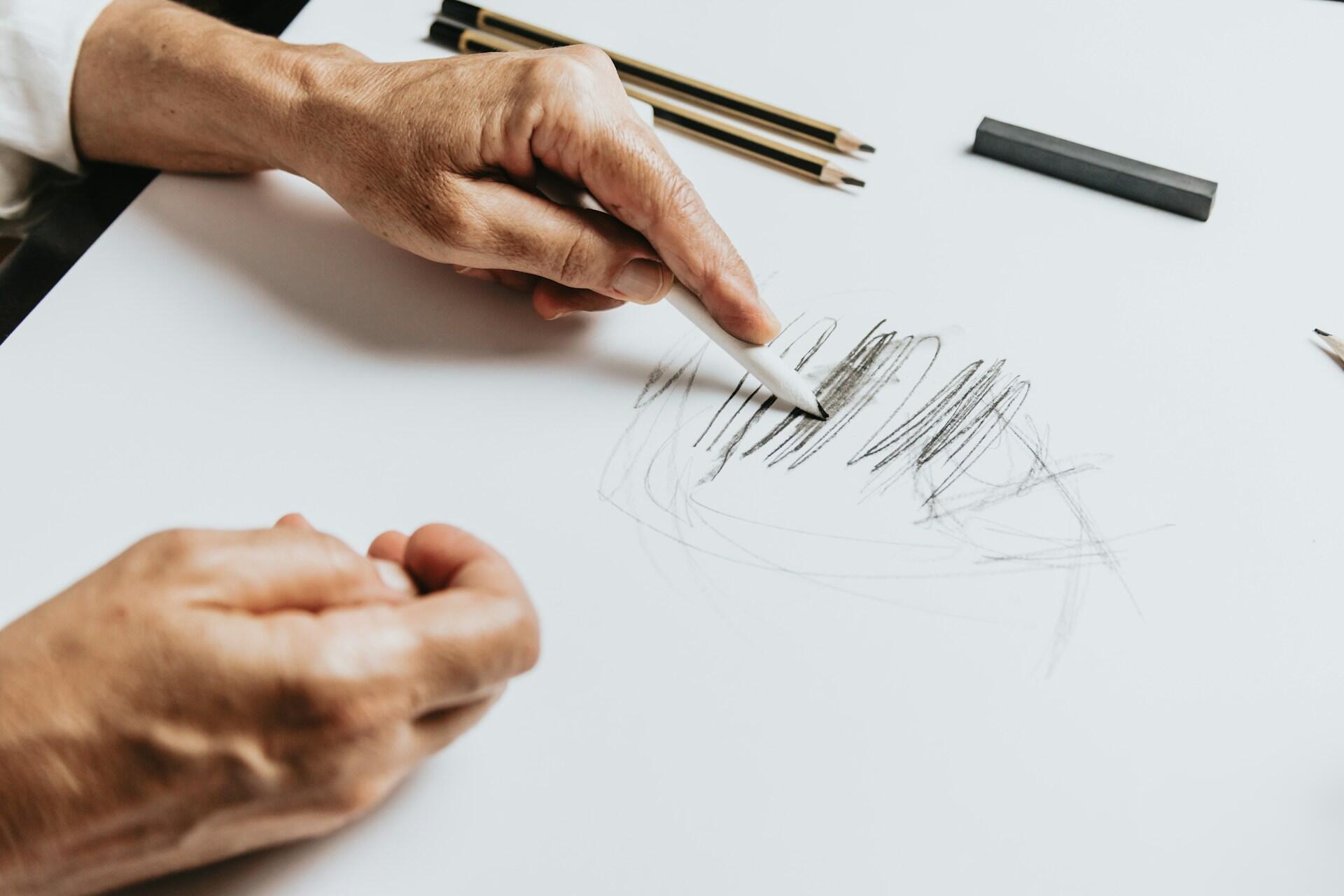
Idea Development
Brainstorming ideas is the least of the challenges for a creative person like you. Still, your idea generation must have some sort of process and structure. Apply these steps to ensure fruitful brainstorming sessions.
As you undergo this process, be sure to document your thought process with annotated sketches and rough drafts. Show how your initial concepts evolve, helping assessors understand your creative journey.
Personal Reflections and Evaluations
Either at the start of your course, or at various points, you will be given a brief, a theme, or a guideline on what your work should be about4.
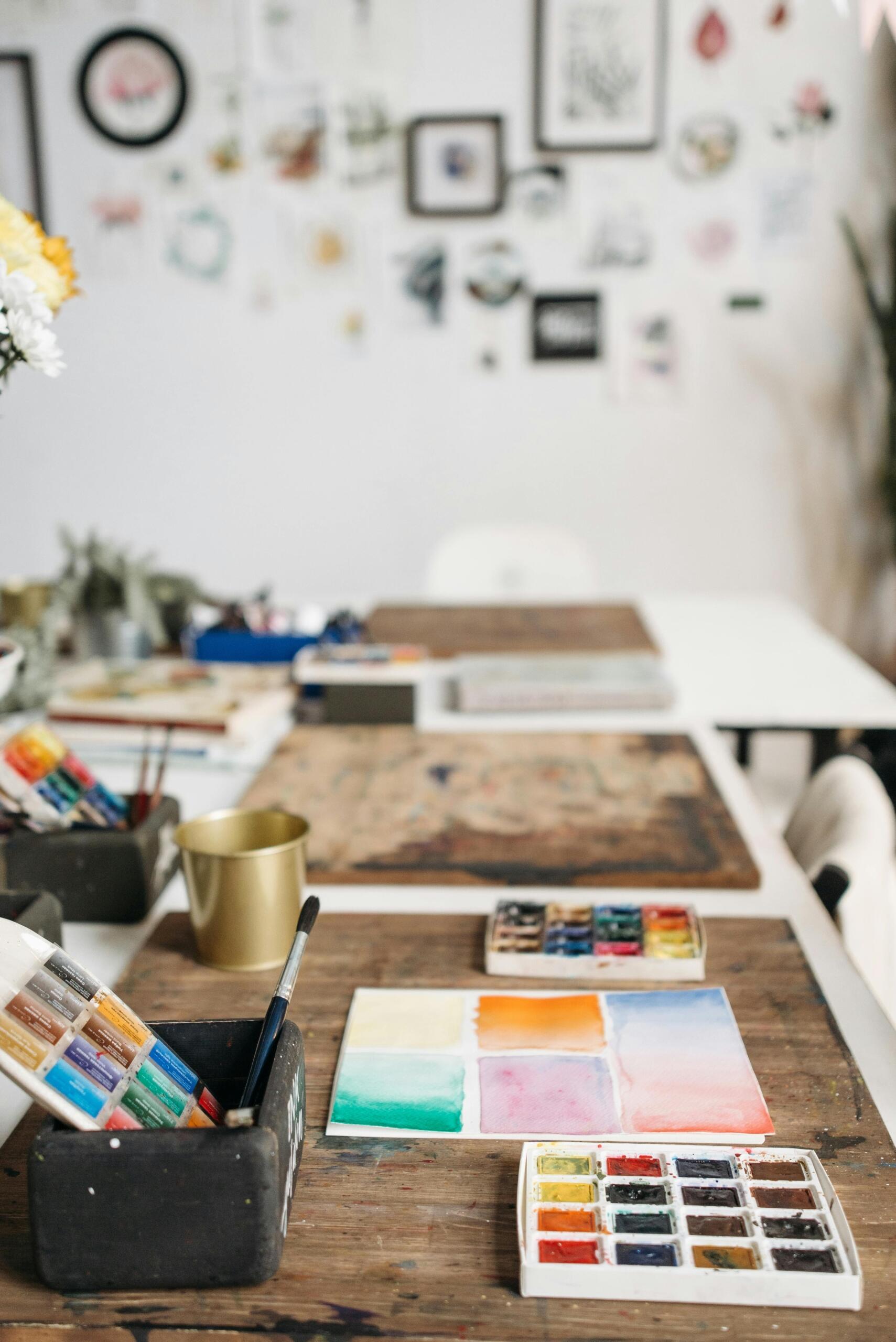
Some briefs are very specific, while others are more open-ended. In truth, experienced artists only need a few words or suggestions to get started.
Once you receive your brief, you should begin exploring the idea in your head before doing any work towards it.
And then, as you progress through your assignment, regularly assess your work by noting strengths, areas for improvement, and future plans. At every step, be sure to relate your evaluations to your brief.
This type of thoughtful evaluation demonstrates your engagement with the creative process.
By thoughtfully incorporating these components, your sketchbook will effectively communicate your artistic growth and exploration of ideas.
Planning and Structuring Your GCSE Sketchbook
Begin with the end in mind.
Stephen Covey, motivational speaker
Now that you have the start and end points of your project clearly defined, it’s time to think about how you'll get yourself from start to finish. In GCSE and A-level art, the first steps entail research, where you find out as much as you can about your theme or brief, and identify artists who focus on similar issues.
But even before you start digging into your task, you should have some idea of the result you're striving for. In other words, you have to know where you’re going before you can get yourself there. As Mr Covey asserts, you should have some idea of what your end result will be.
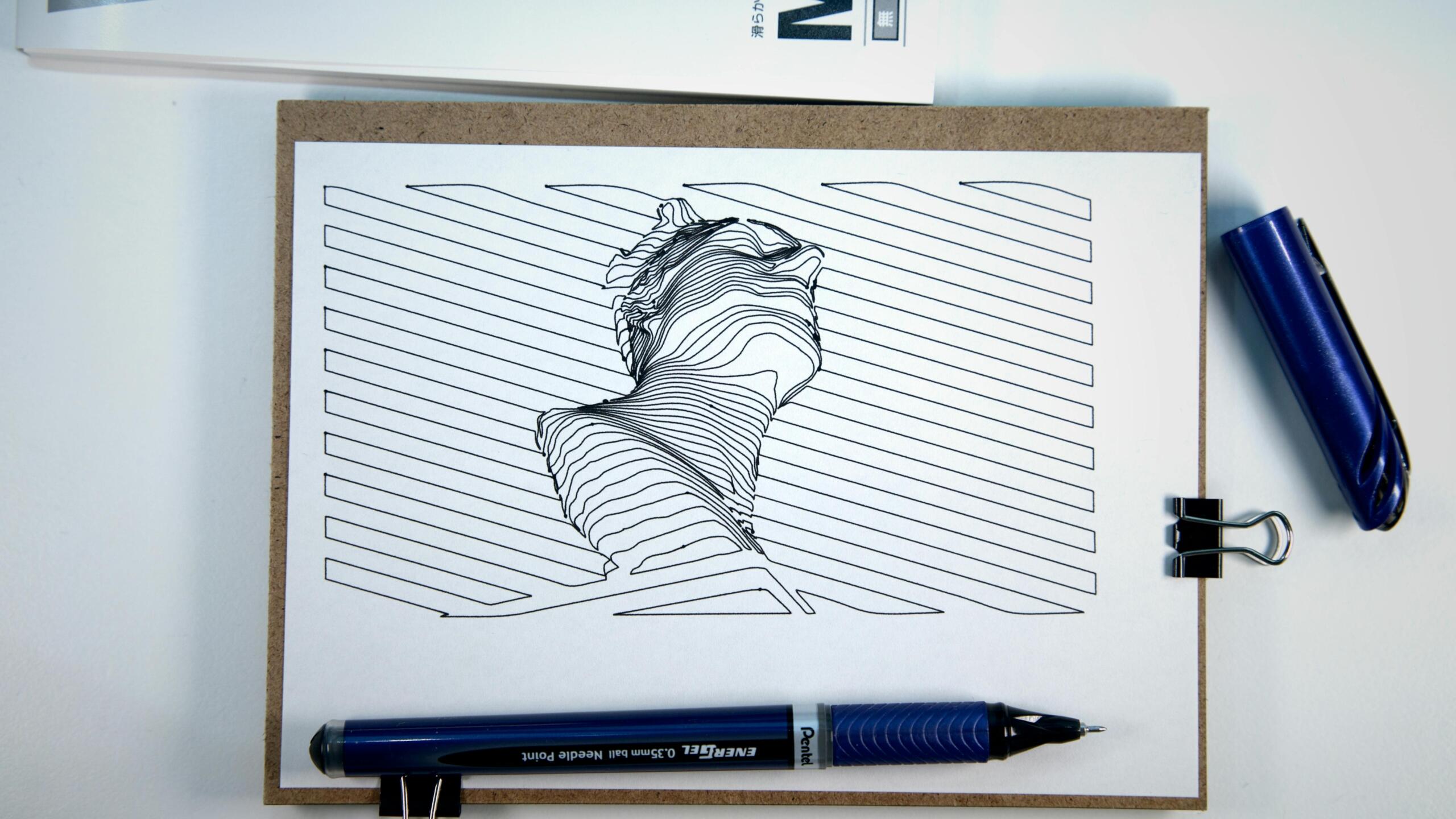
Set Objectives for Your GCSE Sketchbook
Even before you receive your brief – in fact, before you begin your Art GCSE course, you might set a few objectives for yourself. Such might include how you intend to pursue your artistic development, the samples you might include in your book, and the media you plan to experiment with.
Timing your work stages is a crucial component of planning your sketchbook.
Key Stage 4 is two years long and, at the start of it, that seems like a bounty of time. This is a trap many students fall into. Believing you have all the time in the world to deliver this assignment invites procrastination and lack of focus.
Avoid these pitfalls by planning the stages of your work. Begin early with artist research and experimentation. Set a schedule for yourself: you’ll have observational art done by the Christmas holidays, experiment with different media during your course’s first two terms, and so on.
Effective Content Organisation
Your sketchbook should follow two parallel tracks. So far, we’ve covered what you need for a qualified GCSE art book. The second track is: what do you want your sketchbook to say about your artistic sense and ability?
Recall that the point of your sketchbook is to illustrate your journey as an artist. As such, your sketchbook should trace that path in such a way that it tells your artistic story. Sequencing your pages from early assays, through medium experimentation, and to your latest works.
Exam boards accept digital sketchbooks, including online portfolios, Google Slides or PowerPoint presentations. Be sure to check with your school to see if it will accept digital work.
Working in the digital space makes it much easier to organise and/or arrange your work. However, if you’re working manually, planning and organising your layout ahead of its creation is essential. These tips and tools will ensure you don’t miss a step.
- Use tabs to assign a numerical sequence to your work
- Create a table of contents listing your work titles
- Number your pages as you create your works
- Create a checklist of works to include in your desired order
GCSE Sketchbook Presentation and Annotation Techniques
Presenting your work might seem like the last step in your development as an artist. But, as emphasised earlier, you should be considering your presentation from the start, all throughout, and up to the final pieces of your sketchbook.
Even if your work is diverse and different on a piece-by-piece basis, you need to find a way to tie everything together and present it so that it shows how they are all related.
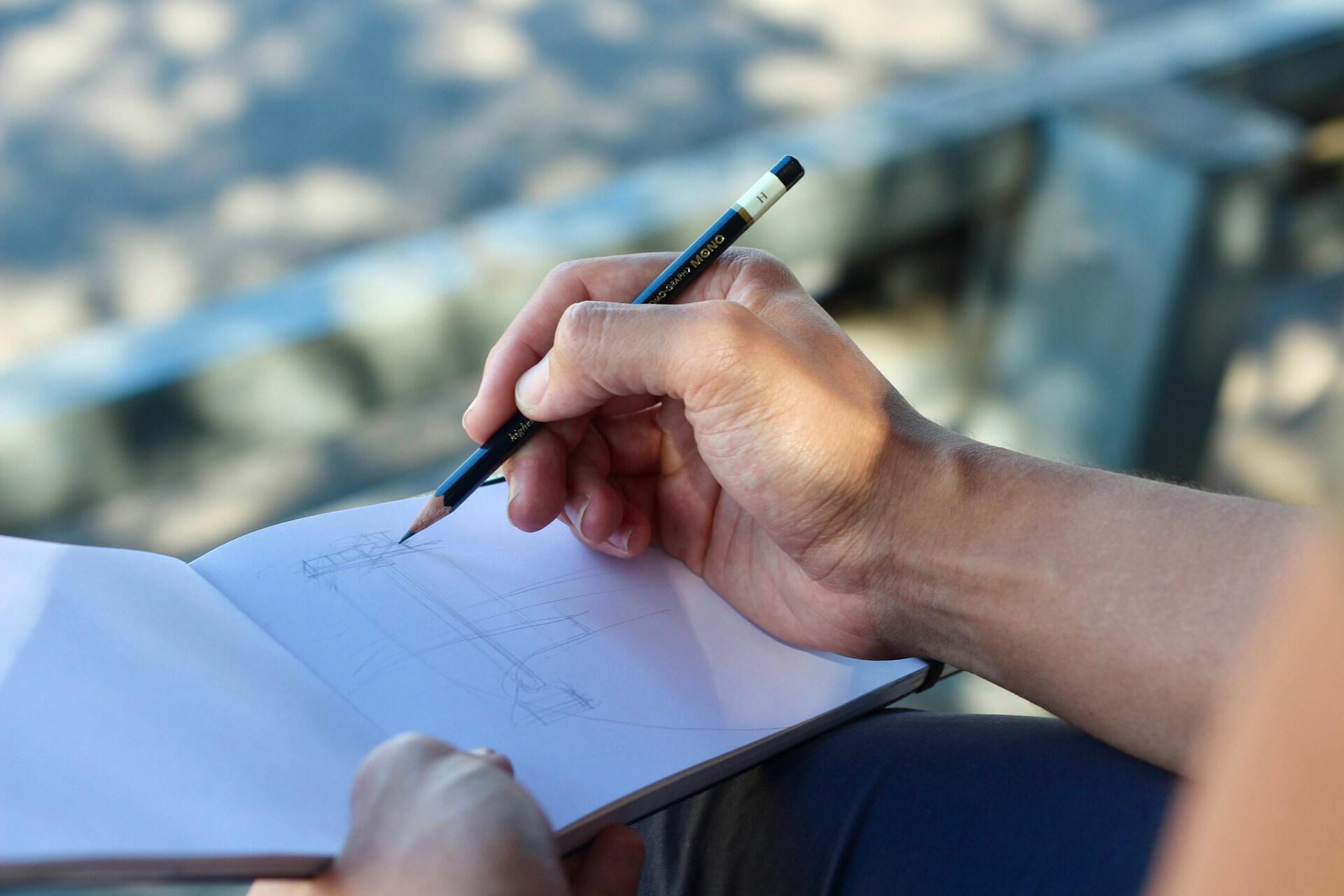
How to Annotate Your Art Book GCSE
Many students believe that annotating their sketchbook means describing their work, but that idea is misguided. Effective annotation means that you explain your creative process, not the work. Your focus should be twofold: critical analysis and personal reflection of your experiments5.
In annotating your work, you must use artistic terminology.
For example, you’d introduce a piece as a ‘composition’ rather than ‘a work’ or ‘a drawing’.
Using artistic vocabulary demonstrates your understanding and proper usage of art terms.
You may find that applying the principle of 'Describe, analyse, evaluate ' to pieces of your work makes for a successful reflection of the purpose or goal you are trying to achieve through your design. However, those in the know advocate for the SEMI approach.
Or you could take the direct route: explain what the piece is and why you created it (to explore a new medium?). And then, detail the techniques you used, evaluate your work objectively, and describe what you learned from its creation.
GCSE Art Sketchbook Presentation Tips
For many students, GCSE is the first level where they have the opportunity to focus and specialise in the subject of art itself. They revel in and dedicate large blocks of time to creating their GCSE art book.
As such, you’ll want to create as professional a compilation as you can, even though artistic licence gives you the room to improvise. In fact, your teachers and exam boards want to see impulsive creativity, but within boundaries.
For instance, using the same writing style throughout your book gives your work the feeling of consistency. Evenly spacing your writing and balancing visuals with script makes your work appealing. And, if you plan to apply margins to some pages, plan on applying them to all pages.
It’s better to have fewer quality pieces to show than a book packed full of mediocre art.
It might help you to think that whoever will mark your work will be happier to see clear, balanced, and visible progression throughout your sketchbook. That's much better than a series of ‘perfect’ pieces that show no development as an artist. But don’t take our word for it; let this Art GCSE student explain how she earned a 9 on her sketchbooks.
Avoid These Common Mistakes
After working so long and hard, you’ll want to make your sketchbook a magnum opus – well, your first magnum opus, as you’re bound to create more. You’ll be well on your way to that if you avoid the mistakes and omissions so many other students have made.
👨👨👧👧 The fix: have somebody (or several people) review your work for completion.
📃 The fix: when planning your sketchbook, detail the order of works you intend to present.
👩🔧 The fix: save your doodles and sketches. As you’re putting your book together, decide which ones to include.
More Information About Your Art GCSE Sketchbook
- Miss Wilson. “GCSE Sketchbooks.” Photography with Miss Wilson, 2024, photographywithmisswilson.weebly.com/gcse-sketchbooks.html. Accessed 21 Apr. 2026.
- “GCSE Art Sketchbook Tour [A* / Grade 9 FULL MARKS Student || Pastel Inspire].” Pastel Inspire, 2 Sept. 2018, pastelinspire.wordpress.com/2018/09/02/gcse-art-sketchbook-tour/. Accessed 21 Apr. 2026.
- Institute, Art. “Researching Artworks and Artists | the Art Institute of Chicago.” The Art Institute of Chicago, 2025, www.artic.edu/research-guides/researching-artworks-and-artists. Accessed 21 Apr. 2026.
- “GCSE Art Sketchbook Tour [A* / Grade 9 FULL MARKS Student || Pastel Inspire].” Pastel Inspire, 2 Sept. 2018, pastelinspire.wordpress.com/2018/09/02/gcse-art-sketchbook-tour/. Accessed 21 Apr. 2026.
- Annotating Your Sketchbook Use These Heading to Explain Each Piece of Work You Have Done in Your Book WHAT? GCSE Art and Design Knowledge Organiser. https://www.stmarks.anthemtrust.uk/_site/data/files/4C816BCC3622902D035249775441FD15.pdf. Accessed 21 Apr. 2026.
Summarise with AI:
Did you like this article? Leave a rating!


 Loading...
i need help with my sketchbook coursework; i chose emotions as my theme and after my 2nd artist research i dont know what to explore next. i previously researched colour and colour theory and symbolism after my 1st artist research but now im a little lost so if you can help me i would really appreciate it.
when writing your statement of intent, do you write one for each artist or for the whole project? Great website!