

Geography is an earthly subject, but a heavenly science.
Edmund Burke
Geography is an in-depth study of lands, people, and natural phenomena; the basics can be studied during elementary and secondary school to peak the interests of students at a further and advanced level.
It is essential to state that a thorough study of geography is mostly attained during higher education classes.
There are 3 types of geography and five main themes of geography, that provide a structured framework for organising and understanding the world. They help geographers answer critical questions about the Earth’s and human systems.
Given their importance, let’s see what are the 5 themes of geography. We are going to have a look at: location, place, human-environment interaction, movement and region.
Before delving into each theme in detail, it is important to understand how they address core geographic questions and why recognising their significance is crucial.
Now, let us explore in detail each of the 5 themes of geography definitions to understand their significance better.
| Geography Theme | Definition | Key Questions Addressed | Examples |
|---|---|---|---|
| Location | Identifies the specific position of a place on Earth. It can be absolute or relative. | Where is it? | Absolute: Eiffel Tower (48.8584° N, 2.2945° E); Relative: 2 km south of the Arc de Triomphe. |
| Place | Physical characteristics that help differentiate one location from another | What is it like there? | Sahara Desert (arid climate) vs. Amazon Rainforest (lush vegetation). |
| Human-Environment Interaction | It analyses how humans interact with their environment and what’s their impact. | How do humans interact with their environment? | Farmers relying on water for crops; Inuit adapting to Arctic conditions. |
| Movement | The flow of people, goods, ideas, and information across space. | How and why do people and goods move? | Migration patterns; global trade routes; and spread of information via the internet. |
| Region | Areas that share common characteristics, which can be formal, functional, or vernacular. | How are these areas similar or different? | The Middle East as a cultural region; London commuting area as a functional region. |








Location

The biggest thing I've learned is location
Roy Hallyday
Among the 5 themes of geography, location answers the question: “Where is it?” and identifies the specific position of a place on Earth.
Now let’s discover something even more fascinating. The two location types! Location can be absolute or relative.
Well, there are two types of location: absolute location and relative location.
Absolute location
Absolute location refers to the exact location or address of a person's home, a place of interest, a town, or a city. Longitude and latitude are used to determine the absolute location.
For example, the absolute location of London, when using the coordinates of latitude and longitude, is 51.5074° N, 0.1278° W. Also, an example of the exact address of a point of interest is the Le Louvre in Paris: Rue de Rivoli, 75001, Paris, France.
Today, different technologies can allow us to determine the absolute location. The most accessible one is the Global Positioning System, known as GPS, which provides incredible accuracy and enhances navigation.
Relative location
On the other end of the geography spectrum is the relative location which is the relationship of a place to other places. It uses measurements like miles, kilometres, cardinal directions, and time.
For example, we know that Rome has the geographic coordinates of 41.9028° N, 12.4964° E; however, in terms of relative location, Rome is approximately 1,160 miles southwest of London.
As mentioned, we can also use time or cardinal directions for relative location “New York City is about a 5-hour flight east of Los Angeles”.
📌 Location, helps comprehend where places are and how they relate to each other.
🧑🏼⚕️Location also serves as a starting point for understanding place, human-environment interaction, movement, and regions.
🌿 Location is crucial for various fields like urban planning and logistics, or environmental studies.
Place: one of the 5 themes of geography
A place for everything, everything in its place
Benjamin Franklin
Various dictionaries define a place as a particular position or point in space or a portion of area available for someone. The place in 5 themes of geography focuses on the unique physical and human characteristics that distinguish one location from another.
Physical characteristics
Physical characteristics include natural features such as topography (mountains, valleys, planes), climate (arid, humid, temperate), water bodies (rivers, lakes, oceans) and flora and fauna.
A place can be described as humid, arid, desert, infertile, among others. For example, the Sahara Desert has vast dunes and an arid climate while the Amazon Rainforest is known for its lush vegetation and humid climate.
Human characteristics
Human characteristics refer to language, architecture, religion, traditions, transportation systems, food etc.
For example, most inhabitants of Paris speak French, they’re catholics. With over 10 million inhabitants in Greater Paris, it’s also worth mentioning one-tenth of the population is foreign-born, those would be the human characteristics of a place.
This theme allows geographers to compare different places, understand what makes each location unique and analyse how humans interact with the environment and how they impact it.
For instance, while both Sahara and Atacama are deserts, they have different locations, temperatures, and wildlife.
Place is the theme of geography also associated with the following three terms:
For more geography terms, you can consult a basic geography glossary we have put together.
Without this second theme of geography, learners would not have a clear picture of distinct places in their mind and confusion would be likely to occur. It is important to state that each geographic location or place is distinct; the landforms, the hydrology, the biogeography, the pedology, etc.
Want to find inspiration by reading about the world's most famous geographers?
Human Environment Interaction
Thank God men cannot fly, and lay waste the sky as well as the earth
Henry David Thoreau
It is undeniable that no other species has had as much of a tremendous impact on the environment as humans. The third geography theme of human-environment interaction examines how people interact with their environment and how this impacts both humans and what’s around them.
Humans have the incredible ability to adapt to harsh conditions and different environments which has led to dominating all other species.
Human-environment interaction has been developed by geographers specialising in environmental geographic information and consists of the following three different aspects:
Dependency
Dependency discusses the manners in which humans are dependent on the natural environment. Humans depend on their environment for food, water, raw materials, and energy sources.
For instance, farmers rely on water for crops and cattle and on forests for timber. The lack of these resources can significantly impact human activities.
Adaptation
Adaptation relates to how humans have the brilliant ability to adapt themselves to live in a new environment, or in a place that can seem unhospitable.
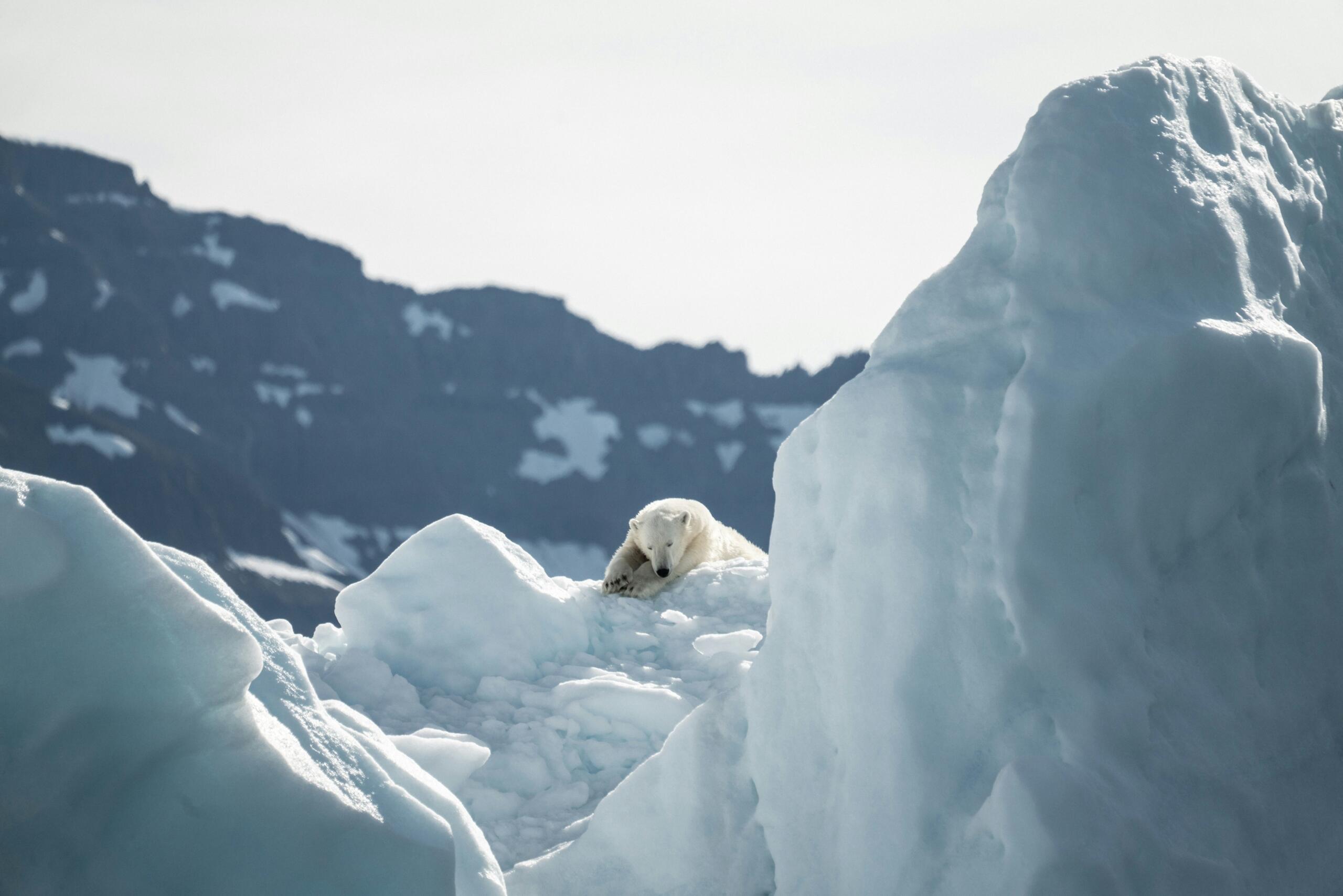
For example, the Inuit people show how humans are able to adapt to extreme Arctic conditions. They managed to create specialized clothing, innovative housing like igloos, and impressive hunting skills.
Modification
When facing challenging environments, humans are ingenious enough to find solutions and make life easier. This can go from reshaping landscapes for agriculture to processing natural resources, or even polluting ecosystems.
For instance, terrace farming shows how cultivating land can be optimised. Building dams or deforestation are other examples.
While the modification is often beneficial for human societies, it also leads to numerous challenges, such as global warming, species extinction, and climate change.
Researchers have developed frameworks to address these issues.
Movement
Trust only movement. Life happens at the level of events, not words. Trust movement
Alfred Adler
What is movement in geography?
Is the fourth theme of geography and focuses on how people, goods, ideas, and information travel.
The movement definition in geography helps us understand how humans and items are interconnected on Earth and how elements interact and influence each other.
Studies of population immigration or emigration are dealt with in the study of movement which has to do with human geography.
As a result of the human movement, the human race has been able to dominate all of the world's continents, discover the oceans, outer space, and even land on the moon.
Examples of movement in geography
This can help study human behaviour and predict trends, clarify the impact of technology on human beings, and understand how these different types of movement can influence the Planet.
Human trade and how goods are transported from one place in the world to another is also studied in the geographic theme of movement.
An example of the trade is how tea is imported from China, India, or Thailand and purchased in major countries from the Western World such as Canada, the United States, and the United Kingdom.
The movement and distribution of ideas is major aspect and subtopic of movement; they're shared between nations are essential in unifying countries and contributing to growth in underdeveloped areas.
Furthermore, since the developments of modern technology in recent decades, ideas are being shared faster than ever.
The study of movement is an essential theme of geography that aids humans to comprehend the manners in which they move themselves, their goods or products, and their thoughts.
Region
In a region with a growing population, if you're doing nothing, you're losing ground.
Stewart Udall
What is a region in the 5 themes of geography?
Region is the fifth theme of geography and refers to areas that share common characteristics. Regions can be formal, functional, or vernacular.
Studying regions can help organization and comparison, and can be useful for economic decision-making, without forgetting that it leads to a better cultural understanding, therefore region in 5 themes of geography is important.
Major international cities such as New York City, Rio de Janeiro, Mumbai, and Tokyo all have suburbs that can be regarded as functional regions since workers commute to earn a living.
It is important to state that many regions near cities bearing the same traits do not have defined borders; we imagine that they do.
For example, since Middle Eastern countries share many similar characteristics they are often grouped as a region commonly known as the Middle East; even though on official maps that specific area is never mentioned.
Having a basic understanding of the five themes of geography provides a future geographer and other interested learners with a more thorough knowledge of planet earth.
Furthermore, by studying this subject, besides learning some very intriguing geography facts, people realise the crucial need for working together to protect our dear and fragile planet!
Summarise with AI:
Enjoyed this article? Leave a rating!

 Loading...
