

Beyond the satisfied murmurs and the very real risk of overeating, several factors define a truly memorable barbecue. Quality BBQ equipment and the choice of grill fuel make a difference, as does what you cook. How you cook - your food prep and grilling technique, as well as your presentation, helps define you as a grillmaster extraordinaire. This page is chock-full of BBQ cooking tips, as well as safety tips and how to maintain your grill equipment to earn you that title.
BBQ Grilling Techniques: Key Points
- The grill - charcoal, gas or electric: each presents advantages and delivers distinct flavours.
- The fuel and how you use it can affect cooking speed as well as the grilled foods' flavour.
- Grillers can enhance their BBQ with various smoking techniques, sauces, and rubs.
- BBQ techniques must always keep both food and physical safety at the forefront of every grilling session.


Choosing Equipment and Fuel
Those seeking BBQ tips because they're new to grilling must consider everything from the type of grill to invest in to the type of fuel they'll cook over. Conversely, if you already have a grill, you might be reluctant to upgrade. You'll still find value in this section, if only for the tips and tricks it uncovers.
Grill Selections
BBQ chefs have three types of grills to consider: gas, charcoal, and electric. Each type offers portable models as well as larger, more 'stationary' cooking centres. All three offer grillers pros (✅), cons (❌), and neutral points (➖).
Gas grills
- easy to light and cook on ✅
- larger cooking surfaces ✅
- easy to control temperature ✅
- many built-in extras ✅
- can be pricey ❌
- more prone to breakdown ❌
Charcoal grills
- simple construction ✅
- traditional cooking method ➖
- more challenging to light ❌
- less control over heat ➖
- typically less expensive than gas ✅
Electric grills
- smaller cooking surface ➖
- typically lower temps ❌
- easier to clean ✅
- less cooking flexibility ❌
Fuel Options
In this category, things are more straightforward. Electric grills use electricity, gas grills require propane, and portable gas grills come with smaller propane bottles. So, the only type of grill left is charcoal. What options do you have to fuel it1?
Let's say, for instance, that you found a recipe for grilling a cut of meat you're keen to try. The instructions say it takes four hours of cooking time. In that case, grilling it over a wood-pellet fire would be ideal.
The type of wood that goes into making the pellets or lump charcoal defines its flavour profile2.
Hickory pellets or lump charcoal are perfect for grilling ribs, but if you're grilling chicken, apple wood is the choice to make. By contrast, beef needs a 'stronger' wood, such as oak or mesquite - always depending on the cut, of course. In our next chapter, you'll discover more ways to use wood to enhance your grilled food's flavour profiles. For now, let's get ready to grill!
Preparing and Lighting the Grill
For electric models, 'lighting' the grill is easy: plug it in and choose the desired temperature setting. Likewise with gas grills: you simply open the gas valve(s), press the ignition button, and turn the grills' knobs to the desired heat setting.
Ensure your grill is on a stable, even surface, in a well-ventilated space, away from anything that might catch fire. Inspect all components for integrity before lighting. Components include vents, burners, gas regulators, hoses, connections (gas grills), and cords and grill plates (electric grills).
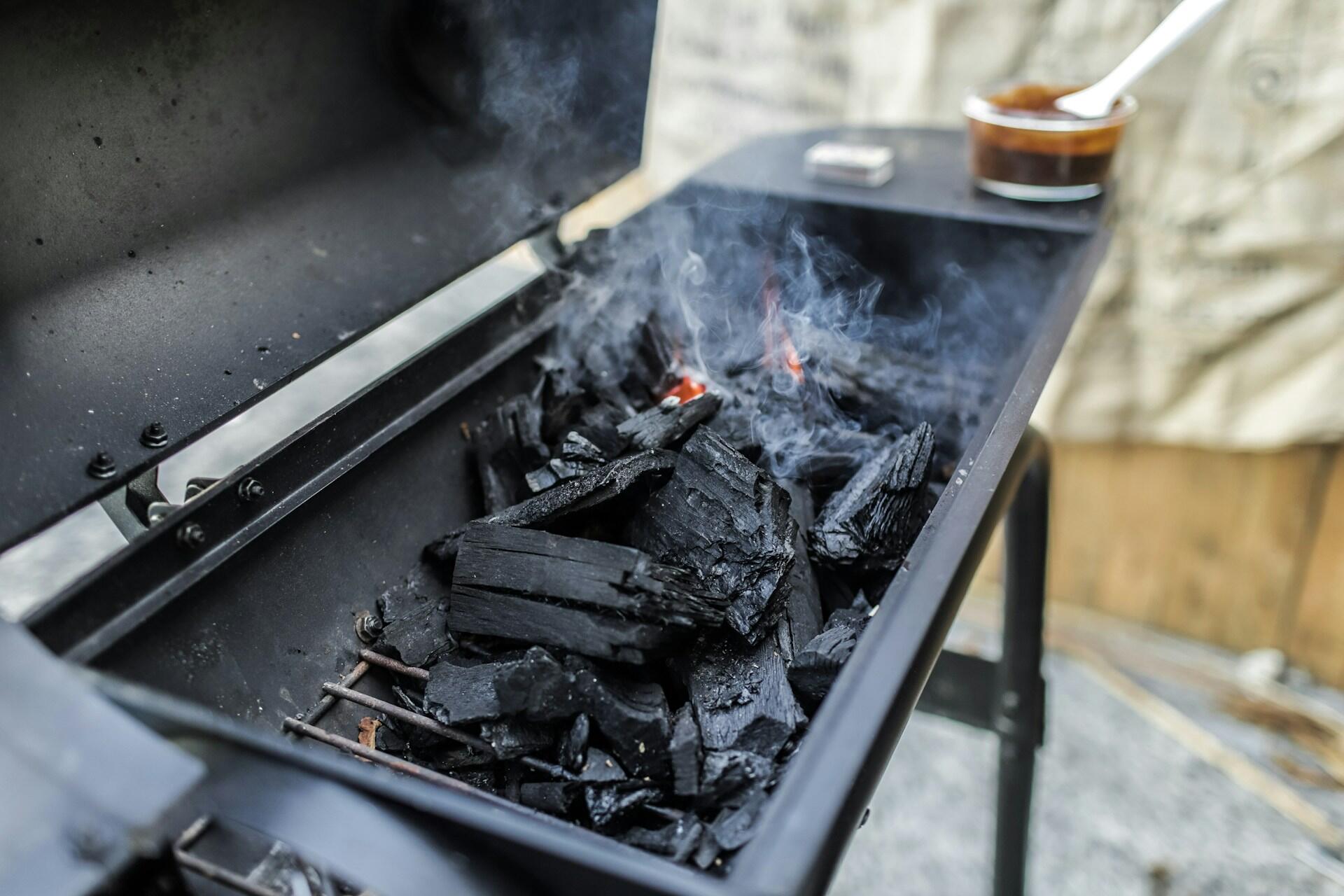
So again, we prioritise charcoal, as lighting electric and gas grills requires no special considerations other than safety. Charcoal grills, on the other hand, give you many points to think about; the primary among them is how to light your coals.
With a chimney
- stuff paper and/or a paraffin cube in its base
- place chimney in the centre of the grill's bottom
- fill with coals
- ensure grill's top and bottom vents are open
- light the paper in 3 different places
- allow coals to burn for up to 15 minutes
- pour coals into the base of the grill; spread them around
- position grill rack.
With lighter fluid
- ensure top and bottom vents are open
- stack coals in the centre of the grill
- soak them with lighter fluid
- allow 3 to 5 minutes to soak in
- CAREFULLY apply flame to 3-4 areas at the base of the pile
- allow coals to burn for 15 minutes
- use tongs or a poker to spread coals around
- position grill rack
In either case, your coals must be ashy-grey in appearance, and glowing red beneath the ash. And it goes without saying that you must only light your grill in a well-ventilated area, away from anything flammable.
BBQ Techniques for Cooking Meats, Veg, and Desserts
This section isn't about BBQ recipes; you likely already have a few you'd like to try. But you might need some inspiration for desserts off the grill. You'd be amazed at all the sweet treats your outdoor cooking station can produce!
Here, we talk about using your grill to maximum efficiency to produce an array of tastes and textures. It all starts with managing your grill's heat, for which you have two means of control.
Vents
- grills have top and bottom vents
- always leave top vent partially open
- use bottom vent to manage temp
- leave both fully open for high heat
- close bottom vent for lower heat
Heat zones
- shift heat centre to one side
- provides direct and indirect heat
- for gas grills: turn off one side's burner
- for charcoal grills: arrange coals on one side of the grill
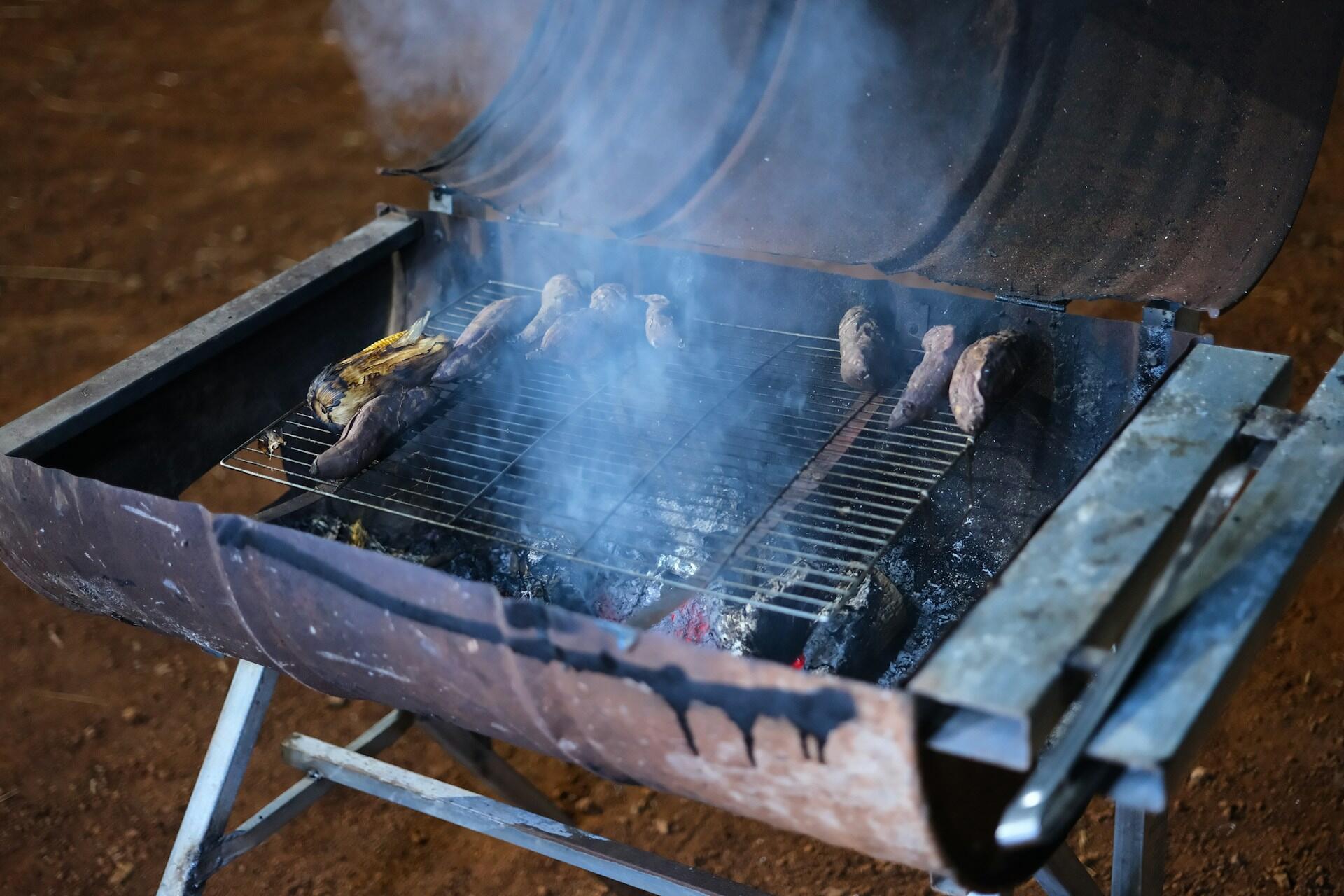
Creating heat zones allows you to grill different-textured foods, such as meats and veg, at the same time. Place the meats over the higher-temp zone and the veg in the indirect heat section.
The Hand Test
Many grills come with thermometers built in, but you don't have to splurge on a fancy grill with such a device on the lid. You can estimate your grill's temperature levels using the hand test. It entails counting how long you can hold your hand about five inches above the grilling surface4.
Grill thermometers read the grill's inner air temperature.
The hand test 'reads' the cooking temperature; the radiant heat that does the cooking.
This chart gives you a 'handy' guideline of what you can cook at which temperatures. Note that you can use the hand method to test your heat zones, too.
| ⌚ Time | 🔥 Approximate temperature (Celsius) | 🏆 Best for |
|---|---|---|
| 1 to 2 seconds | 230 to 340 degrees | searing tuna grilling chops and steaks |
| 3 to 4 seconds | 190 to 232 degrees | fish burgers vegetables |
| 5 to 7 seconds | 160 to 190 degrees | pork chicken sausages |
| 8 to 10 seconds | 100 to 160 degrees | ribs roasts briskets |
Smoker Boxes
Earlier, we mentioned how different woods affect your grilled foods' flavour profile. Should you have limited charcoal selections, you can still use wood to create the most savoury of meats. You only need a smoker box filled with wood or wood pellets5, preferably soaked in water so they'll give off more smoke.
Smoker boxes are particularly effective for flavouring meats that take a long time to cook, such as pulled pork and brisket. Give your smoker box about 15 minutes to start emitting smoke before beginning your grilling session.
Ensuring Food Safety
Cooking outdoors over an open flame is enticing and fun, but it demands extra safety precautions for just about every aspect of the culinary experience. Ensuring your outdoor kitchen is well-ventilated and away from anything flammable is a given. You must also use extra care when handling your food.
Of all the grill accessories and equipment to have, a probe thermometer is essential. The UK's Food Standards Agency sets a baseline of 71o Celsius as the internal temperature for most meats3. A lower inner temperature may cause foodborne illness, just the thing to make your grill party infamous!
Grill Cleaning and Maintenance
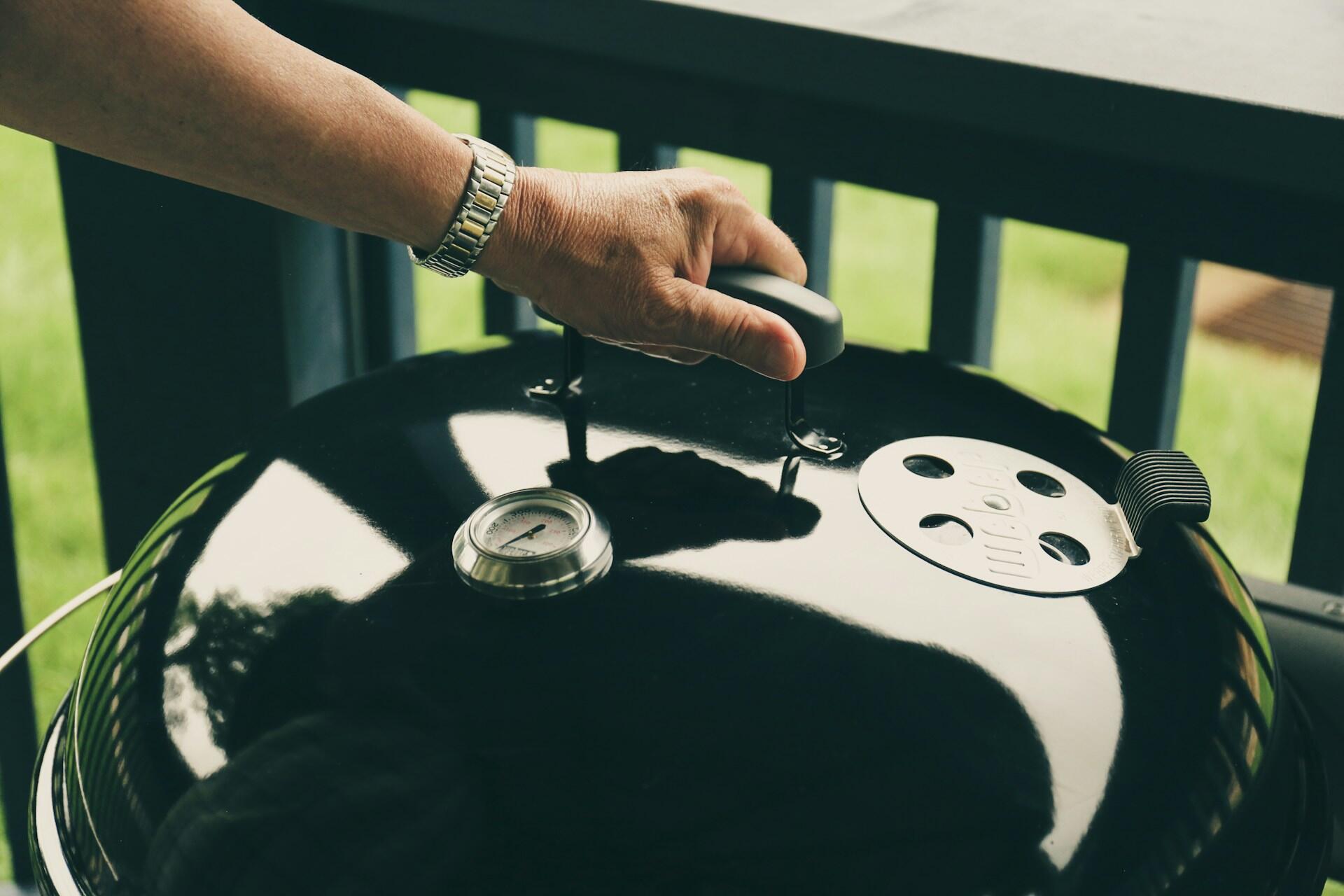
How you clean and maintain your grill depends on what type of grill you have. Arguably, electric grills are the easiest to keep clean; you only need to remove and wash the grill plates. If they're fixed, wiping them down with non-abrasive materials gets the job done.
Cleaning charcoal and gas grills demands more care and attention. To that end, this chart walks you through all the steps to take to ensure your outdoor cooking centre brings you joy for years to come.
| 🧾 Process | 🤩 Gas grill | 😋 Charcoal grill | ⌚ When? |
|---|---|---|---|
| Cleaning | While still warm: Scrub grill racks with aluminium foil ball, grill stone or nylon grill brush. coat racks with high-heat oil to prevent food from sticking. empty grease tray. | While still warm: Scrub grill racks with aluminium foil ball, grill stone or nylon grill brush. coat racks with high-heat oil to keep food from sticking. After completely cool: empty ash catcher | after every grilling session |
| Deep cleaning | Disconnect gas soak racks in a vinegar-baking soda solution use a wire brush to scrape the inside of the grill chamber wipe all surfaces down. | soak racks in a vinegar-baking soda solution use a wire brush to scrape the inside of the grill chamber wipe all surfaces down. | at least twice per grilling season |
| Inspection | Check gas line and connections. Inspect tank valve for damage. verify burners aren't clogged or cracked. Make sure vents move freely. | Make sure the grill is on a stable, level surface. Ensure ash catcher is in place. Verify vents move freely. Check for rust. | before every grilling session |
| Protect | Cover with a UV-resistant, waterproof cover. | Cover with a UV-resistant, waterproof cover. | Once the grill is cleaned. |
Every new grill comes with a guide featuring setup instructions, best practices for grill care, and even BBQ cooking tips. To add to it, this comprehensive guide to all things barbecue, from recipes to best practices, rounds out your grillmaster education.
References
- Tony. “Know Your BBQ Fuel: How to Choose the Right One for Your Grill - Firebrand® BBQ.” Firebrand® BBQ, 23 Mar. 2023, firebrandbbq.com.au/2023/03/23/know-your-bbq-fuel-how-to-choose-the-right-one-for-your-grill/. Accessed 23 May 2026.
- Clarissa, Janice. “Best Woods for Grilling and Smoking: Flavor Pairing Cheat Sheet Every Cook Needs.” The MeatStick, 25 Dec. 2025, themeatstick.com/blogs/tips-recipes/best-woods-for-grilling-and-smoking-flavor-pairing-cheat-sheet-every-cook-needs. Accessed 23 May 2026.
- “Cooking Temperature Chart | Guide for UK Chefs.” ETI Thermometer Shop, thermometer.co.uk/content/296-food-temperatures. Accessed 23 May 2026.
- Michiel Schuitemaker. “Check Grill Temp without Thermometer (Hand Test) | Arteflame.” Arteflame Outdoor Grills, 16 July 2025, arteflame.com/blogs/grilling/faq-how-do-i-check-grill-temperature-without-a-thermometer. Accessed 23 May 2026.
- Outdoor Cooking Pros. “A Beginner-Friendly Guide on How to Use a Smoker Box & Prevent a BBQ Disaster.” Outdoor Cooking Pros, Sept. 2021, outdoorcookingpros.com/blogs/news/how-to-use-a-smoker-box. Accessed 23 May 2026.
Summarise with AI:
Did you like this article? Leave a rating!

 Loading...