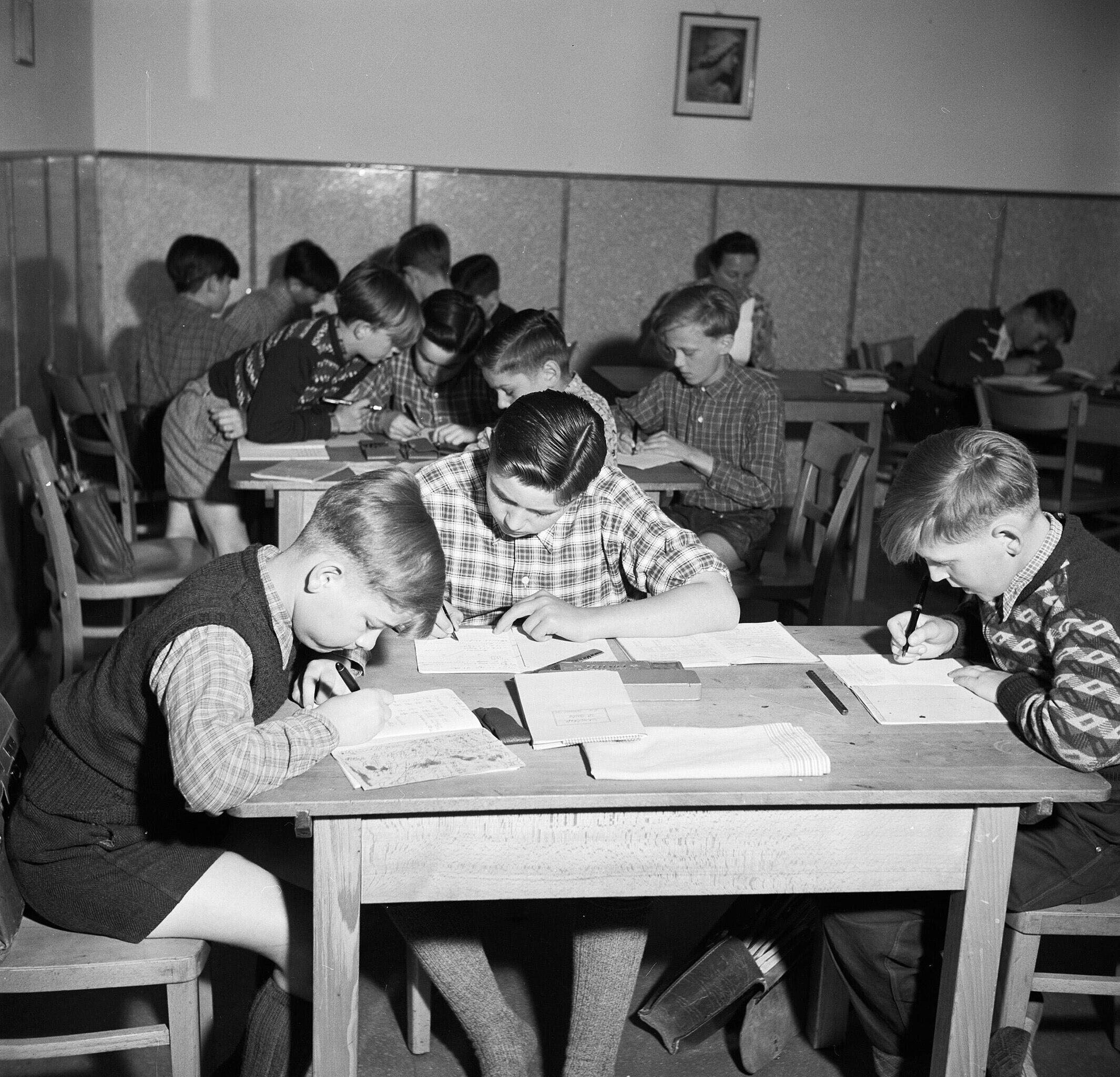

Homework has played a central role in children’s school experiences for decades (if not centuries). Many valid reasons are being brought to light lately in favour of banning homework, but is going to that extreme the right move? Discover the reasons why homework still has some benefits to offer students.
Key Takeaways
- Homework is a valuable tool for academic learning
- The biggest problem with homework is the amount (too much) and the quality, not the idea of homework itself
- Primary students and secondary students have different homework needs that should be respected


Homework Can Help Students In School and Beyond
While many students, and some parents, would rather not have to worry about take-home assignments, homework can play a pivotal role in education.
Homework is intended to help students engage with their classroom learning, practise valuable life skills, and prepare for university. It’s important to note that most ‘traditional’ homework is really only appropriate for secondary school students; primary schoolers are typically too young to gain any benefit from academically-heavy homework.
Here are a few of the main reasons why homework is a valuable activity for students.
Homework has been a staple in education for centuries. The reason it has stuck around is that educators can clearly see the benefit. Even if it needs an upgrade, homework is a concept that will stick around for many years to come.
Homework Helps Reinforce Classroom Learning
One of the ways the human brain integrates new information is with spaced repetition. Having students re-engage with ideas from class again at a later time (preferably the next day or the next few days) helps the information get retained. Homework also allows students to engage with the material in a different way through hands-on projects, essay-writing, etc.
This is the top reason among the benefits of homework academic performance.
Homework Correlates with Student Achievement
While it’s not yet possible to prove a definitive link between homework and grades and test scores, data suggest that students who complete a reasonable amount of homework (usually less than an hour) per night tend to score higher on exams. This benefit allows students to climb higher academically. It can also translate into a student’s higher morale for academics in general, leading to more engagement in the classroom.
Homework Can Develop Good Study Habits and Life Skills
Taking stock of what needs to be done, planning when it will be completed and how to complete it, and executing the plan are extremely valuable life skills. Homework allows students to practise time management, organisation, self-motivation, and independent learning and problem-solving. These skills will help them succeed in university and in their professional (and personal) lives.

Fosters a Love of Learning
Done right, homework can spark students’ interest in learning on their own for fun. An interesting homework assignment can easily inspire a child to repeat the assignment again for a different topic.
Having a practice of active learning at home can translate into continued learning and self-study after high school or university graduation.
Homework Gives Parents the Opportunity to Be Involved
Many parents, especially hands-on parents, value understanding what their child is learning at school. Sending assignments home helps parents feel more involved and knowledgeable about their child’s school experiences. Furthermore, it can help them understand their child’s strengths and weaknesses so they can be better prepared to help their child as school gets harder.
It’s also a valuable opportunity for parents to observe their child’s academic abilities, and may even clue parents into any learning disabilities.
Why Do Some People Want to Ban Homework?
In recent years, many countries, school systems, and individual classrooms have opted to move away from assigning homework. Some people are even calling for an outright ban on homework, claiming the negatives vastly outweigh any positives.
Too much homework is associated with consequential problems for students, including
- Academic burnout
- Depression and anxiety
- Family conflict
- Not having enough time for important things in life
The biggest complaint about homework, from students, parents, and teachers, is when there is simply too much of it. Especially in secondary school, students may have several in-depth assignments for their advanced classes.
If schools adhere to the recommended “10-minute rule,” Year 12 students will have 2 hours of homework per night to complete. This is obviously far too much work to regularly expect a student to do, all while balancing other important things in life.
Low-quality, time-consuming assignments are the heart of the issue in the homework debate.
If teachers assign a reasonable amount of effective homework, the effect on students and parents, as well as teachers who have to grade homework, can be vastly improved.
Homework itself is not what those in favour of banning homework have a problem with. The issue lies in harmful homework practices that are causing too much stress on students, leading to lasting negative outcomes. The homework issue is part of the larger debate about education and how it needs to be changed to better serve students and society.
Homework in UK Schools: What's Actually Changing
England has no national homework rules — schools have set their own policies since the DfE withdrew its guidance, and that debate is covered in detail in our article on [why homework should be banned]. What's more useful here is what's happening inside UK homework right now, because the picture has shifted considerably in the last two years.
UK Workloads Are Smaller Than the Debate Implies
Much of the case for abolition runs on alarming numbers, but typical UK homework loads are modest.
A survey of UK parents found children spent an average of around three and a half hours a week on homework — roughly 2.2 hours at primary, 4.3 at secondary, and 5.3 at sixth form.⁹ Internationally, the average 15-year-old in the UK does about five hours a week, broadly in line with the OECD average and far below countries like China at around 14 hours, whose PISA results are only marginally better.
Averages hide real variation, and some pupils genuinely are overloaded. But a secondary pupil averaging under an hour a night is not the crisis the rhetoric describes. It suggests the UK's problem is less about how many hours are being set than about what those hours are being spent on — which is the argument this article has been making throughout.
AI Has Quietly Changed What Homework Is For
This is the development that has done most to reshape UK homework, and it strengthens the case for redesign rather than abolition.
Research published in 2026, based on a survey of 500 UK parents and their children aged 11 to 17, found that AI chatbots have become the default first stop for schoolwork, and that much of this use happens without any adult knowing about it.¹⁰ The direction of travel is clear further up the system too: a 2026 survey of UK undergraduates found 94% now use generative AI to help with assessed work.¹¹
Regulators have moved in response. In January 2026, the Department for Education upgraded its generative AI product safety expectations into standards — a minimum requirement rather than recommended practice — and added new sections covering cognitive development, emotional and social development, mental health and manipulation.¹² The cognitive development standard exists to address what researchers call cognitive offloading: the risk that pupils submit stronger-looking work while actually retaining less.
Here's why this matters for the homework debate rather than the AI debate. If a task can be completed by typing it into a chatbot in twenty seconds, it was almost certainly low-value homework to begin with. The tasks that survive AI are the ones this article already recommends: open-ended prompts a pupil can answer in their own format, long-term projects that build week on week, work whose purpose has been explained, and assignments discussed in the classroom afterwards.
Detection is not the answer — AI detection tools carry false positive rates high enough that they shouldn't be the sole basis of a misconduct finding. Design is. Banning homework because AI can do it is solving the wrong problem; setting homework AI can't usefully do is solving the right one.
The EEF's Practical Guidance for Homework
Setting aside the headline evidence ratings, the Education Endowment Foundation's Toolkit lists the specific ingredients that separate effective homework from the busywork this article criticises:⁷
- Prioritise the quality of the task over the quantity of work
- Tie tasks tightly to what was taught in class
- Set out the aim of the homework explicitly to pupils
- Identify and address barriers to completion before assigning
- Teach independent learning strategies rather than assuming them
- Provide high-quality feedback — studies including feedback showed higher impacts
- Monitor what different approaches are actually doing to engagement and progress
Two format findings are worth testing. Homework involving collaboration with peers showed higher effects than individual work, as did homework involving digital technology — both around +6 months of progress, though the EEF notes the number of collaborative studies is small.⁷
That third bullet deserves emphasis. Explaining why a task has been set is the cheapest intervention on the list, and it's the one most often skipped.
What Parents Should Actually Do — It's Narrower Than You'd Think
This is where the UK evidence complicates the case for parental involvement made earlier in this article.
The EEF's guidance report Working with Parents to Support Children's Learning found parental engagement is consistently associated with better outcomes, worth roughly +3 months of progress. But on homework specifically, its recommendation is precise: schools should help parents stay aware of what has been set and encourage their children to complete it, rather than pushing parents to take part in the assignments themselves.⁸
That distinction quietly resolves one of the strongest objections to homework — that parents often can't help because subjects are now taught differently from how they learned them. Under this model, they don't need to. Showing interest, asking about it, and protecting the time and space to work is the higher-value contribution, and it's one every parent can make regardless of their own education.
The report also found that direct school-to-parent communication makes a measurable difference, particularly as children get older and volunteer less about their schoolwork. One study of 15,000 pupils cited in the report saw parent–child conversations about revision increase threefold after schools sent text-message prompts.⁸
The Homework Support Gap Is Widening
There's a UK trend that makes the case for getting school homework right more urgent, not less.
Sutton Trust research published in 2026 found that around 29% of secondary pupils in England and Wales have received private tutoring at some point — up from 18% when the series began in 2005. Access is heavily uneven: 45% in London against 26% across the rest of England and 24% in Wales, 33% in urban areas against 19% in rural ones, and 30% among the best-off households against 23% among the worst-off.¹³
At the same time, the route that gave poorer pupils access to that support has narrowed. The National Tutoring Programme ended in 2024, and polling of teachers in 2025 found 58% of schools had reduced their tutoring offer compared with the previous year.¹³
The implication for homework is direct. Academic support outside the classroom is increasingly something families buy rather than something schools provide. In that context, well-designed homework — and the homework clubs the EEF recommends, which supply the quiet space, the device and the adult support some pupils lack at home — is one of the few forms of learning support still available to every pupil equally. Removing it doesn't level the field. It hands more of the ground to those who can pay.
How Homework Can Be Most Effective
In the arguments against homework, the biggest problems appear to be in reference to the amount of homework given and the quality.
There’s no doubt that too much homework or assignments with no value are not helpful to students. However, if students are only given high-value assignments when they are necessary or prudent, the real benefits of homework will shine.
The type of homework suitable for different years and ages, subjects, specific classrooms, and students should be at the discretion of the teacher.
Here are some of the ways the current homework system can be upgraded to be more efficient, effective, and beneficial for today’s students.
Alternative Homework Options
Especially for primary school students, research shows that homework like essay writing and long lists of math problems does more harm than good. Childhood development researchers recommend that children in primary school not get any homework assignments at all.
Instead, students should be encouraged to do activities that prepare them for planning homework in high school.
Popular alternative homework options for young students include
- Read a book with a family member
- Play outside
- Learn a new skill, like cooking
- Visit a new place in town
This way, students can practice communicating “homework” assignments with their parents, scheduling them, and get used to taking time for additional school-related activities at home.

High-Value Assignments
To improve homework effectiveness, teachers must understand exactly why they are giving an assignment, and they must be able to properly judge how long it will take students to complete. A “less is more” attitude is valuable here. Teachers should focus on giving a handful of questions that specifically target the topic and prepare students for the next lesson. If 5 maths problems will help reiterate what students learned in class that day, there’s no need to assign 25 problems.
The other principle for high-quality assignments is “increased frequency, decreased duration.” Teachers should focus on assigning short tasks more often, rather than longer assignments. Spaced repetition is more effective than long, frustrating sessions. Plus, the short time it takes to complete the assignment creates positive momentum and an interest in learning.
Another helpful tip for teachers? Explain to students why they’re receiving an assignment. Is it meant to give them practice for what they learned that day? Is it to prepare them for the next lesson, or allow them to study for a test? When students are kept in the loop about why what they’re doing is important, it gives them more incentive to complete the work and helps them understand what kinds of things they should value in their own education.
Building trust between teachers and students is an effective way to improve academics, as evidenced by Finland's approach to education.
The consensus is clear: quality matters more than quantity. Short, well-designed assignments are far more effective than lengthy, poorly constructed ones, which risk undermining learning altogether. Assigning homework that spark a student’s interest and creativity tend to engage them more effectively.
The Centre for Educational Neuroscience
Connect Homework to Long-Term Projects
Secondary school students will likely always have some homework as part of their learning, since they need to learn a lot more intricate subjects than primary schoolers, as well as prepare for independent learning in university.
Instead of stressful short-term projects, like essays, that regularly change focus or can be repetitive, try creating a capstone-like homework series. For subjects that are compatible with this type of approach, give students assignments that connect each week. For example, in the first week, they might be given a list of topics relating to the subject to choose from. In the second week, they might create an idea web about the topics relating to their choice. By the end of the semester, term, or year, the students can have a fleshed-out essay or project.
Allow Students to Experiment
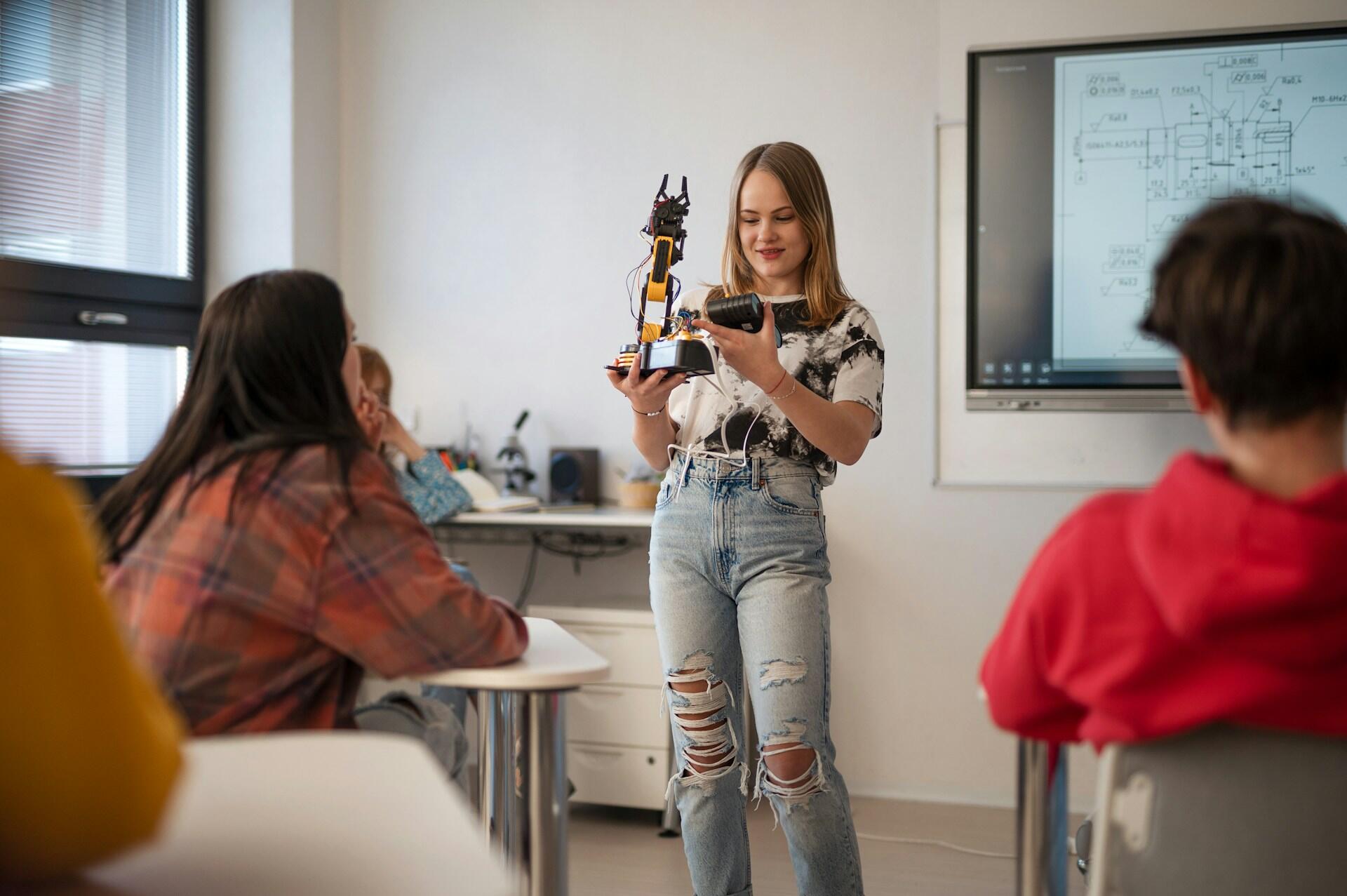
Give students an open-ended prompt for their homework and allow them to complete it in their own way. For example, they could make a drawing, diagram, or even a short film about the parts of a cell. Since every student learns best in a different way (visual, auditory, reading and writing, kinaesthetic), allowing them to engage with material in the way that works best for their brain allows them to absorb information better and discover more about their own learning style.
Teach Students and Parents About Homework and Study Skills
An often overlooked problem in schools is that students and parents are expected to have the skills, mindset, and understanding required for academic success. Yet, many students and parents are simply treading water.
Having an explainer at the beginning of the year, or during a parent-teacher conference, about how to stay organised with a diary, planner, or calendar, how to create an environment at home that helps students study, and how to develop effective learning skills can go a long way.

Keep Equity In Mind
Some students may not have access to things like a computer or a stable internet connection, a phenomenon known as the digital divide. Others may not have attentive parents or a quiet place to work. Some students may have a part-time job or are expected to help out around the house for many hours each day.
Additionally, many students also have illnesses, injuries, or cognitive or learning disabilities that may affect their ability to complete homework.
Teachers who keep all this in mind when creating assignments can help prevent academic inequities, since students who struggle with these things might get more demoralised rather than feel success, leading to even worse outcomes at school.
Overall, it is not homework itself that is the root of the complaints against homework; it’s too much homework, and assignments that are too low-quality.
The simple solution is to revamp the approach to homework, making sure that it acts as a valuable addition to a student’s workload. Paired with effective teaching in class, reasonable amounts of effective assignments are a boon to students, not a bane.
References
- Boryga, A. (2024). 5 Ways to Make Homework More Meaningful. In Edutopia. George Lucas Educational Foundation. https://www.edutopia.org/article/5-ways-to-make-homework-more-meaningful
- Good Schools Guide. (2018). Pros and cons of homework. In Good Schools Guide. Good Schools Guide. https://www.goodschools.com.au/insights/parental-advice/pros-and-cons-of-homework
- Homework. (n.d.). In Britannica. https://www.britannica.com/procon/homework-debate
- PhD, J. L. (2017). Is Homework Necessary? Education Inequity and Its Impact on Students. In University of San Diego Online Degrees. https://onlinedegrees.sandiego.edu/education-inequity-and-homework
- Why homework matters. (n.d.). In The Thomas B. Fordham Institute. https://fordhaminstitute.org/national/commentary/why-homework-matters
- Williams, C. (2019). High-Quality Homework: How to Assign the Right Amount, and the Most Effective Formats of Homework. In Center for Student Achievement Solutions. https://www.studentachievementsolutions.com/high-quality-homework-how-to-assign-the-right-amount-and-the-most-effective-formats-of-homework-for-the-2019-2020-school-year
- Homework. (2021). In Education Endowment Foundation, Teaching and Learning Toolkit. https://educationendowmentfoundation.org.uk/education-evidence/teaching-learning-toolkit/homework
- Working with Parents to Support Children's Learning. (2018). In Education Endowment Foundation. https://educationendowmentfoundation.org.uk/education-evidence/guidance-reports/supporting-parents
- Think Your Child Is Getting Too Much Homework? Here's What You Can Do. (2018). In HuffPost UK. https://www.huffingtonpost.co.uk/entry/child-getting-too-much-homework-advice_uk_5bd18579e4b0d38b58802819
- How Teenagers Are Using AI Chatbots: 2026 UK Study. (2026). In GoStudent. https://www.gostudent.org/en-gb/blog/how-teenagers-are-using-ai-chatbots
- Student Generative Artificial Intelligence Survey 2026. (2026). In Higher Education Policy Institute. https://www.hepi.ac.uk/reports/student-generative-ai-survey-2026
- Reilly, E. (2026). The DfE updates its Gen AI product safety standards. In Stone King. https://quickreads.stoneking.co.uk/post/102m2ic/the-dfe-updates-its-gen-ai-product-safety-standards
- Private Tutoring 2026. (2026). In The Sutton Trust. https://www.suttontrust.com/our-research/private-tutoring-2026
Summarise with AI:
Did you like this article? Leave a rating!

 Loading...